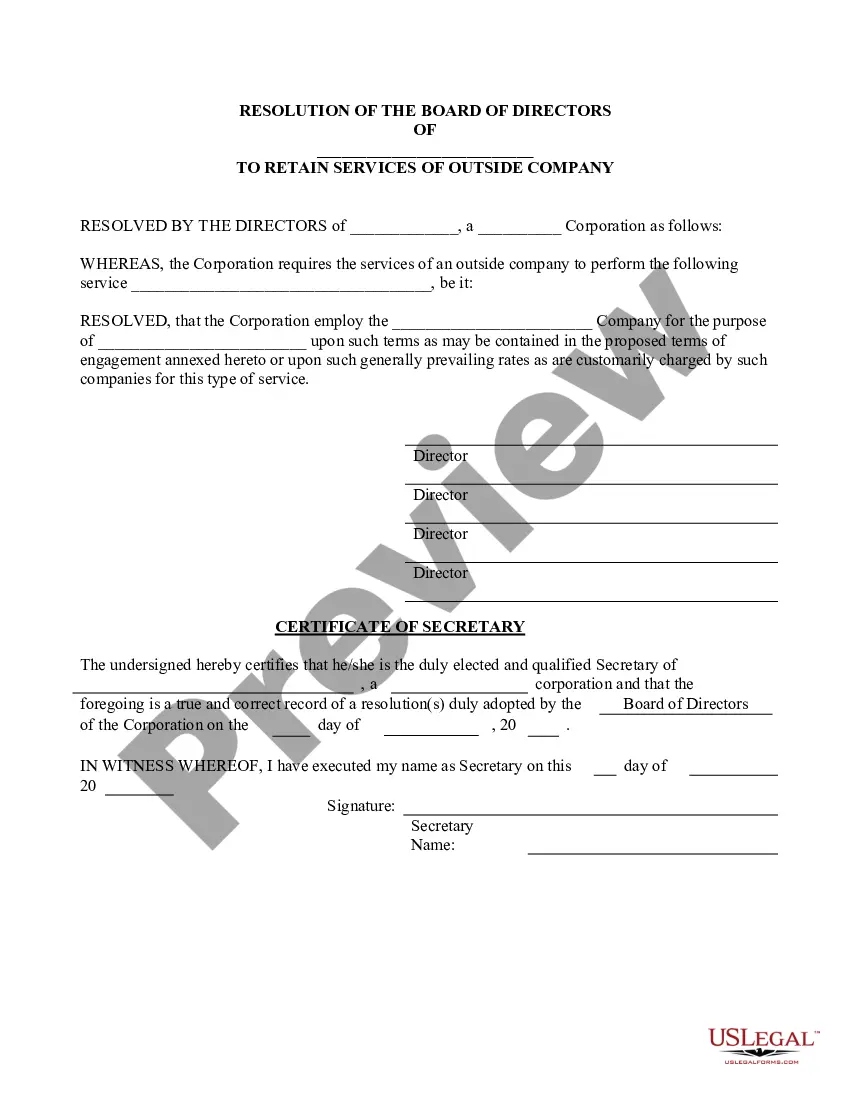
Corporate Resolution Form For Signing Authority In Travis
Description


Get your form ready online
Our built-in tools help you complete, sign, share, and store your documents in one place.
Make edits, fill in missing information, and update formatting in US Legal Forms—just like you would in MS Word.
Download a copy, print it, send it by email, or mail it via USPS—whatever works best for your next step.
Sign and collect signatures with our SignNow integration. Send to multiple recipients, set reminders, and more. Go Premium to unlock E-Sign.
If this form requires notarization, complete it online through a secure video call—no need to meet a notary in person or wait for an appointment.
We protect your documents and personal data by following strict security and privacy standards.

Make edits, fill in missing information, and update formatting in US Legal Forms—just like you would in MS Word.

Download a copy, print it, send it by email, or mail it via USPS—whatever works best for your next step.

Sign and collect signatures with our SignNow integration. Send to multiple recipients, set reminders, and more. Go Premium to unlock E-Sign.

If this form requires notarization, complete it online through a secure video call—no need to meet a notary in person or wait for an appointment.

We protect your documents and personal data by following strict security and privacy standards.
Looking for another form?







Form popularity
FAQ
Clearly state your name and that you're writing to grant authorization to another individual or organization. In the body of your letter, identify the parties involved, specify the authority you're granting, define the duration, and include any other necessary information.
“RESOLVED FURTHER THAT, any one of the above officials of the Company/Bank/Cooperative Society/Trust/legal entity, be and is hereby authorized to do all such acts, deeds, things, sign all such papers, documents, power of attorneys, indemnities, correspondence and to do and perform all such acts, deeds and things and ...
The purpose of an Authorization Letter is to: (a) demonstrate that the individual(s) signing contracts and reviewing and submitting invoices have been authorized to do so by the organization's Board of Directors; and (b) provide a sample of the signatures of the organization's authorized signatories.
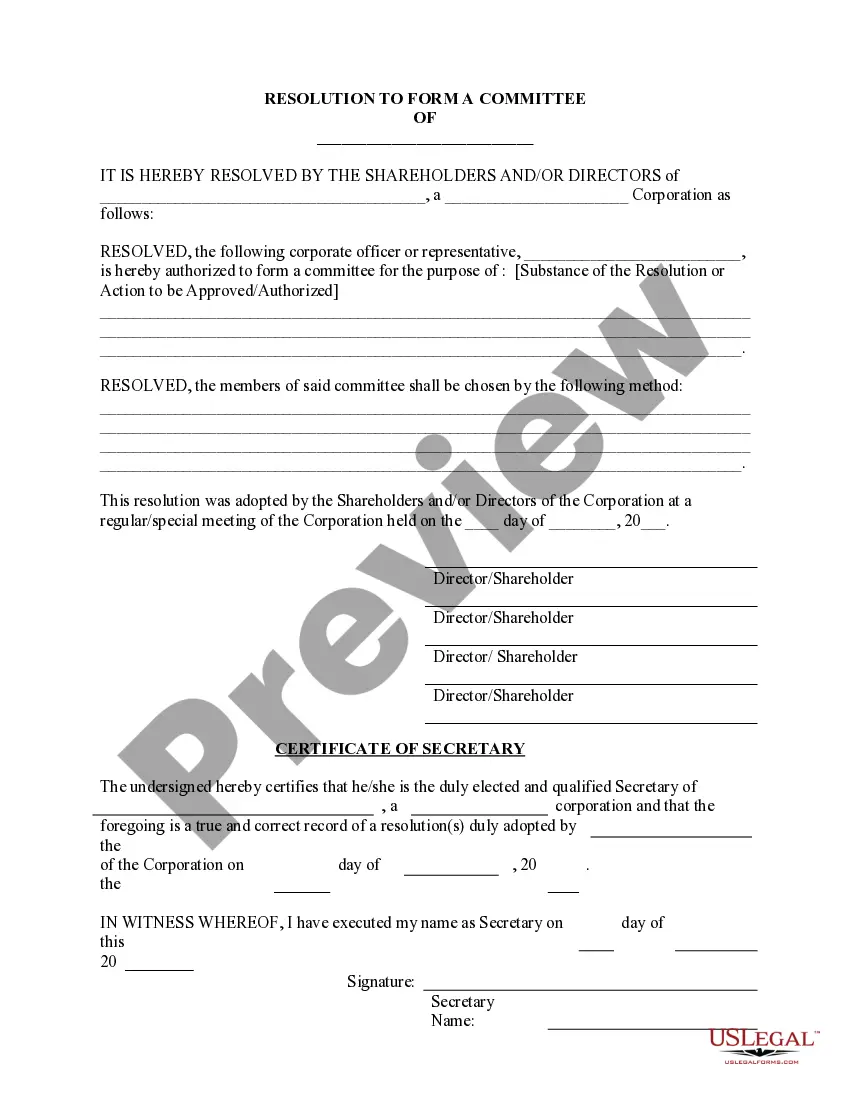
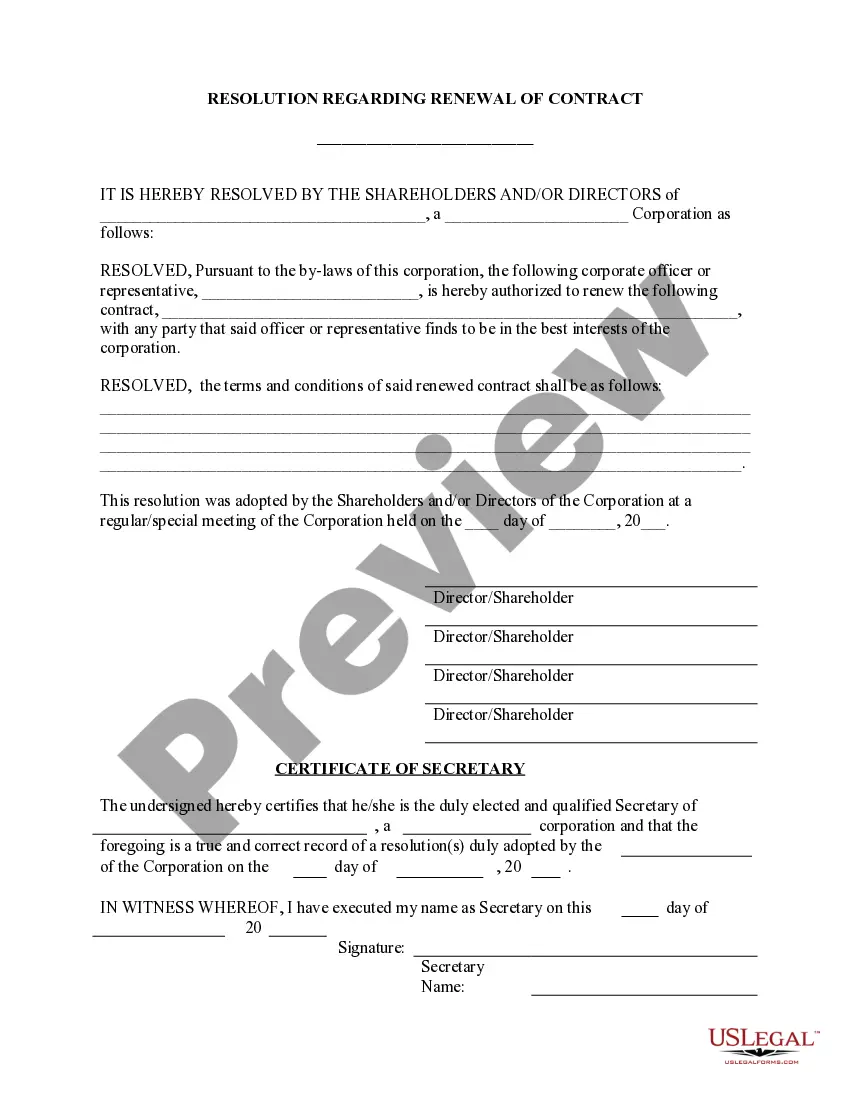
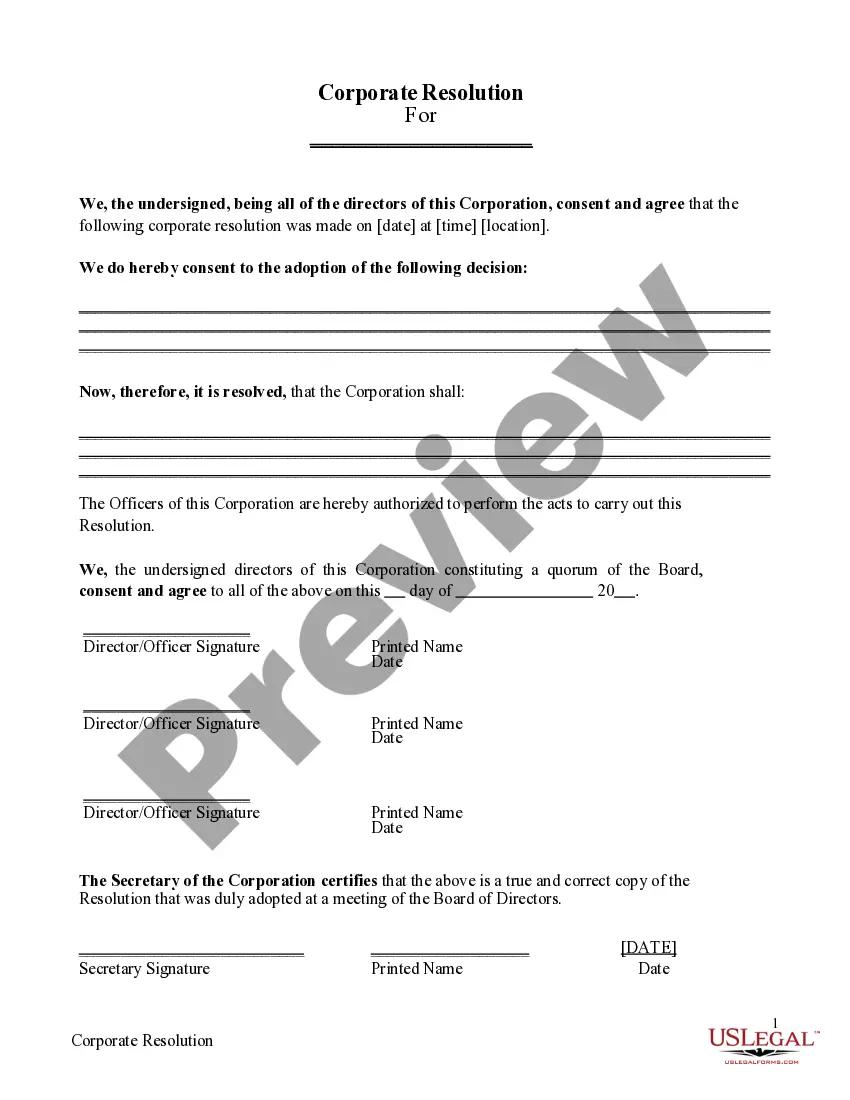
Examples of corporate resolutions include the adoption of new bylaws, the approval of changes in the board members, determining what board members have access to certain finances, such as bank accounts, deciding upon mergers and acquisitions, and deciding executive compensation.
What's included in a corporate resolution? Legal company identification. Company legal name. Title and purpose of the resolution. Signatures of the individual(s) designated to sign resolutions (typically a chairman) List of board members present at the meeting. Date, time, and location of a board meeting.
Corporate signing authority resolutions specify who has the legal authority to bind the corporation through contracts. Individuals with the authority to sign can create legally binding contracts such as employment contracts, real estate transactions, and other important agreements.
The corporate resolution for signing authority is a specific corporate resolution that authorizes specific corporate officers with the legal standing to sign contracts on behalf of the corporation.
The title of the resolution must appropriately reflect the intent. Resolutions begin with "Whereas" statements, which provides the basic facts and reasons for the resolution, and conclude with "Resolved" statements which, identifies the specific proposal for the requestor's course of action.
When there is a quorum of directors in office, a resolution in writing signed by all of the directors entitled to vote thereon at a meeting of the board or any committee thereof is as valid as if passed at such meeting.
The following are some steps to follow when granting signing permission: Identify the need for signing permission. Select the right person. Determine the scope of powers. Writing a letter of authorization. Review and revision of the letter of approval. Monitoring the use of the signature authority.