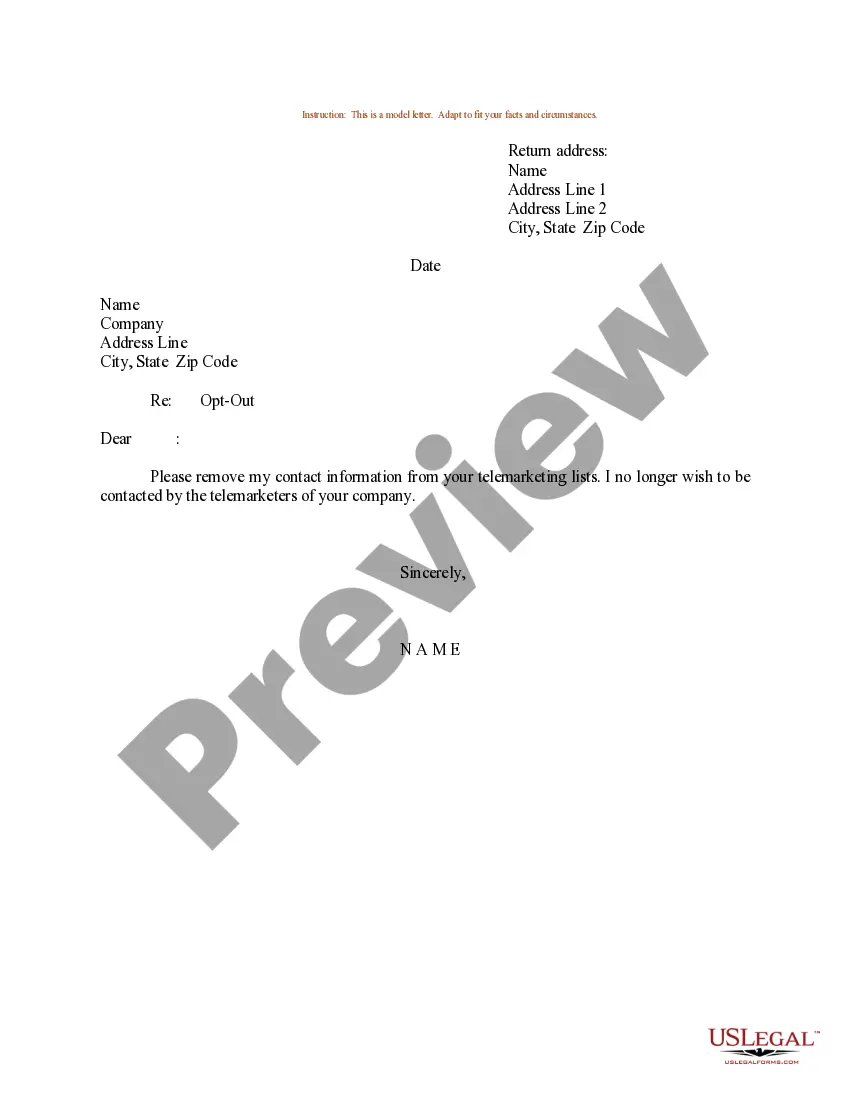
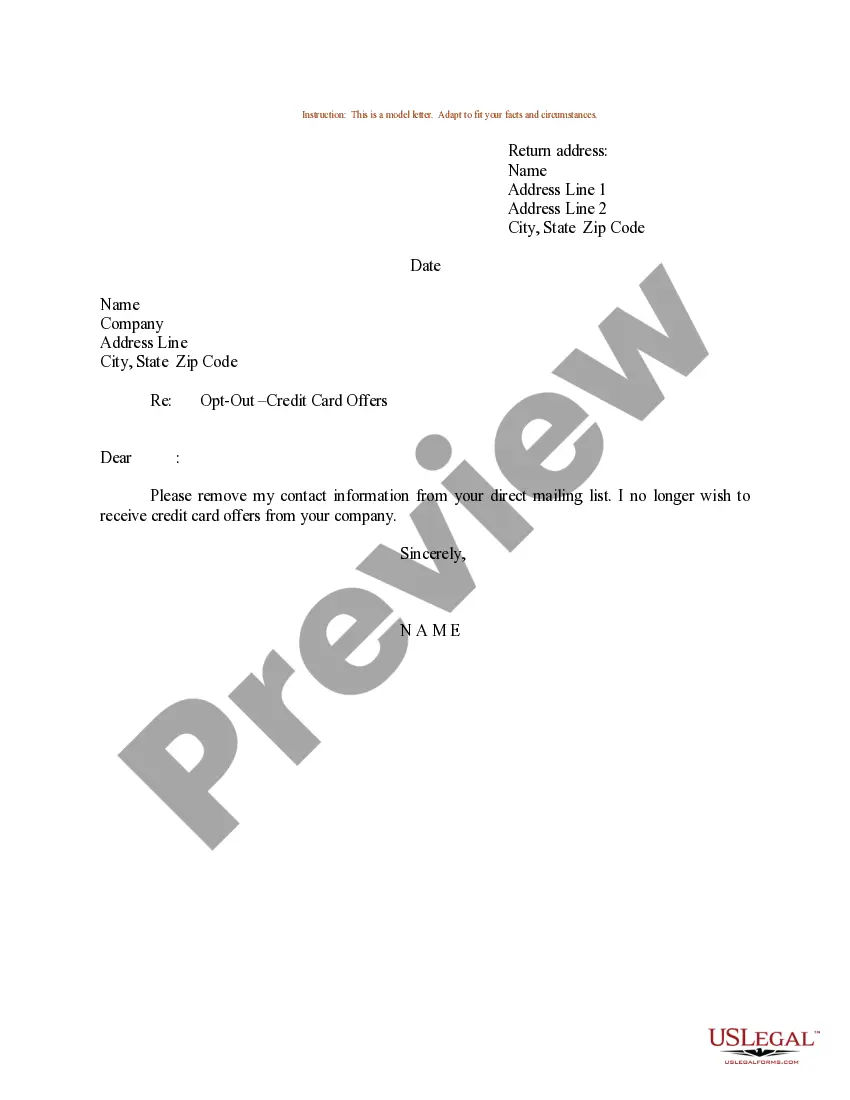
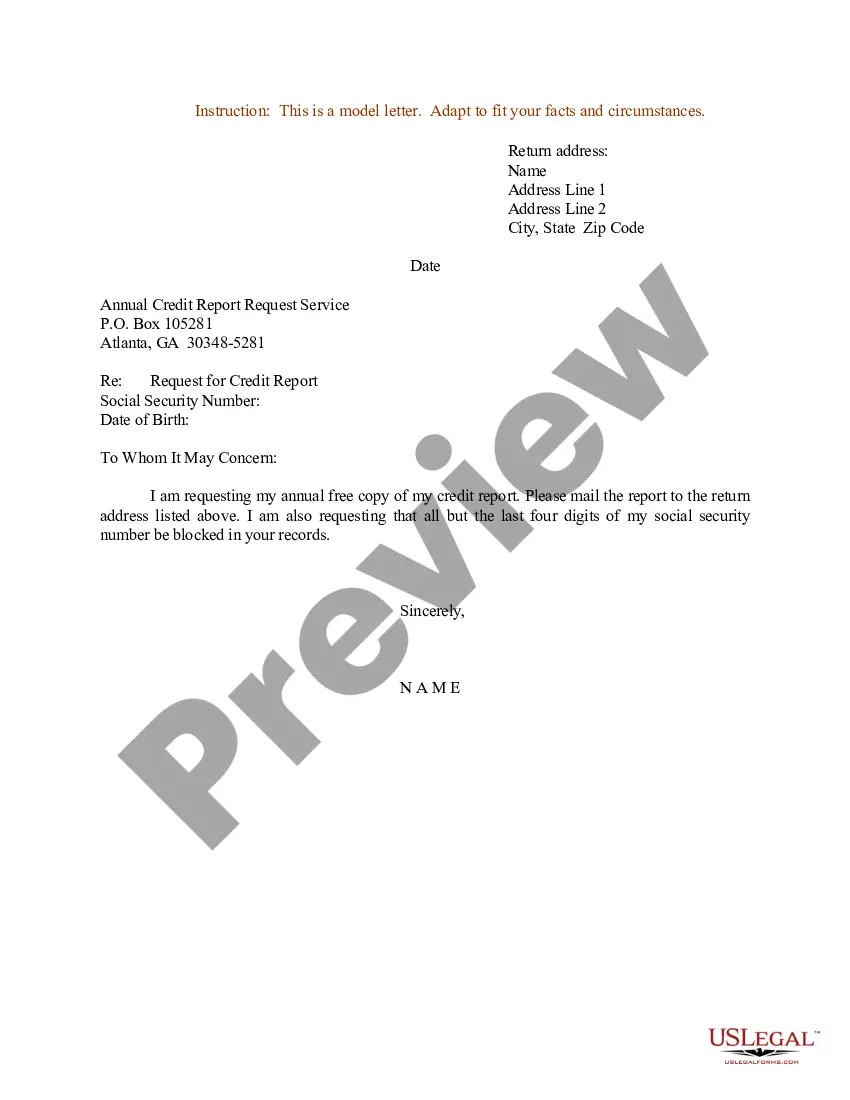
Opt Out Wording Example In California
Description
Get your form ready online
Our built-in tools help you complete, sign, share, and store your documents in one place.
Make edits, fill in missing information, and update formatting in US Legal Forms—just like you would in MS Word.
Download a copy, print it, send it by email, or mail it via USPS—whatever works best for your next step.
Sign and collect signatures with our SignNow integration. Send to multiple recipients, set reminders, and more. Go Premium to unlock E-Sign.
If this form requires notarization, complete it online through a secure video call—no need to meet a notary in person or wait for an appointment.
We protect your documents and personal data by following strict security and privacy standards.

Make edits, fill in missing information, and update formatting in US Legal Forms—just like you would in MS Word.

Download a copy, print it, send it by email, or mail it via USPS—whatever works best for your next step.

Sign and collect signatures with our SignNow integration. Send to multiple recipients, set reminders, and more. Go Premium to unlock E-Sign.

If this form requires notarization, complete it online through a secure video call—no need to meet a notary in person or wait for an appointment.

We protect your documents and personal data by following strict security and privacy standards.
Looking for another form?
Form popularity
FAQ
Opt-in Consent Examples Marketing Preferences: During online purchases, you might encounter a form asking if you want to receive promotional emails or special offers. You must check a box to opt in to receive these communications.
Opt-In Example: Users manually select preferences on a website, ensuring transparency and informed consent. Opt-Out Example: Websites offer a clear 'Do Not Sell My Personal Information' option, empowering users to control data usage.
A good opt-in message should be clear, concise, and transparent, effectively communicating what the recipient is signing up for, the frequency of messages, and how to opt-out. For example, an effective SMS opt-in message could be: “Get weekly updates on our latest products and special offers! Text YES to subscribe.
Opt-out example Not choosing to subscribe to newsletters, unticking a previously ticked checkbox, not consenting to save personal details, rejecting the use of cookies, etc. are some examples of opt-out. E.g. Companies add an unsubscribe link at the end of their emails to let users opt out of emails.
A basic opt-in option can be as simple as a disclaimer with a checkbox stating “I Agree” or something to that effect. A sign-up form collects additional information, like the person's name and contact information.
A checkbox in a newsletter subscription form is an example of opt-in. Whereas, adding an unsubscription link in marketing emails is an example of opt-out.
The California Consumer Privacy Act (CCPA) provides consumers with the right to opt-out – meaning, the right to tell a business to stop selling their personal information.
Opt-in forms are a type of form where customers "opt-in" (hence, the name). In other words, they actively choose to participate in the marketing activity you're presenting them. They allow you to gather information from your customers, process orders, and track interactions.