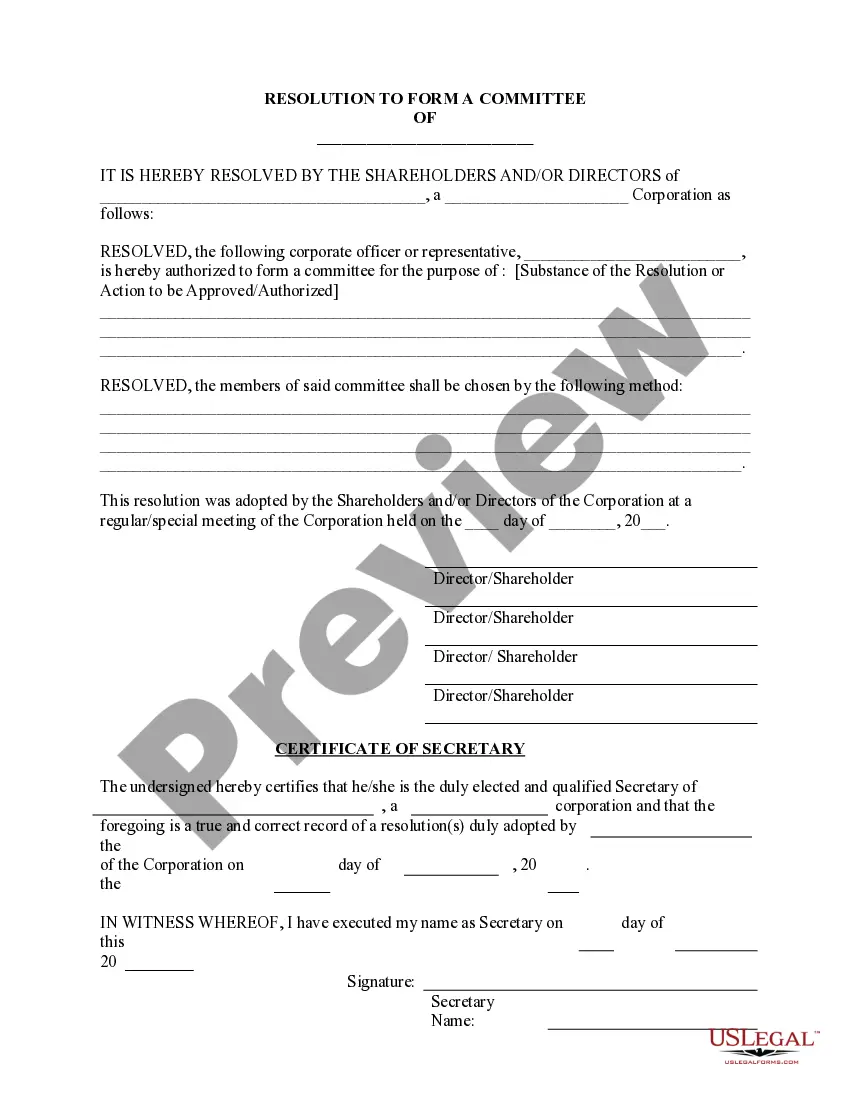
Official Resolution Form For Nonprofit In Salt Lake
Description



Get your form ready online
Our built-in tools help you complete, sign, share, and store your documents in one place.
Make edits, fill in missing information, and update formatting in US Legal Forms—just like you would in MS Word.
Download a copy, print it, send it by email, or mail it via USPS—whatever works best for your next step.
Sign and collect signatures with our SignNow integration. Send to multiple recipients, set reminders, and more. Go Premium to unlock E-Sign.
If this form requires notarization, complete it online through a secure video call—no need to meet a notary in person or wait for an appointment.
We protect your documents and personal data by following strict security and privacy standards.

Make edits, fill in missing information, and update formatting in US Legal Forms—just like you would in MS Word.

Download a copy, print it, send it by email, or mail it via USPS—whatever works best for your next step.

Sign and collect signatures with our SignNow integration. Send to multiple recipients, set reminders, and more. Go Premium to unlock E-Sign.

If this form requires notarization, complete it online through a secure video call—no need to meet a notary in person or wait for an appointment.

We protect your documents and personal data by following strict security and privacy standards.
Looking for another form?





Form popularity
FAQ
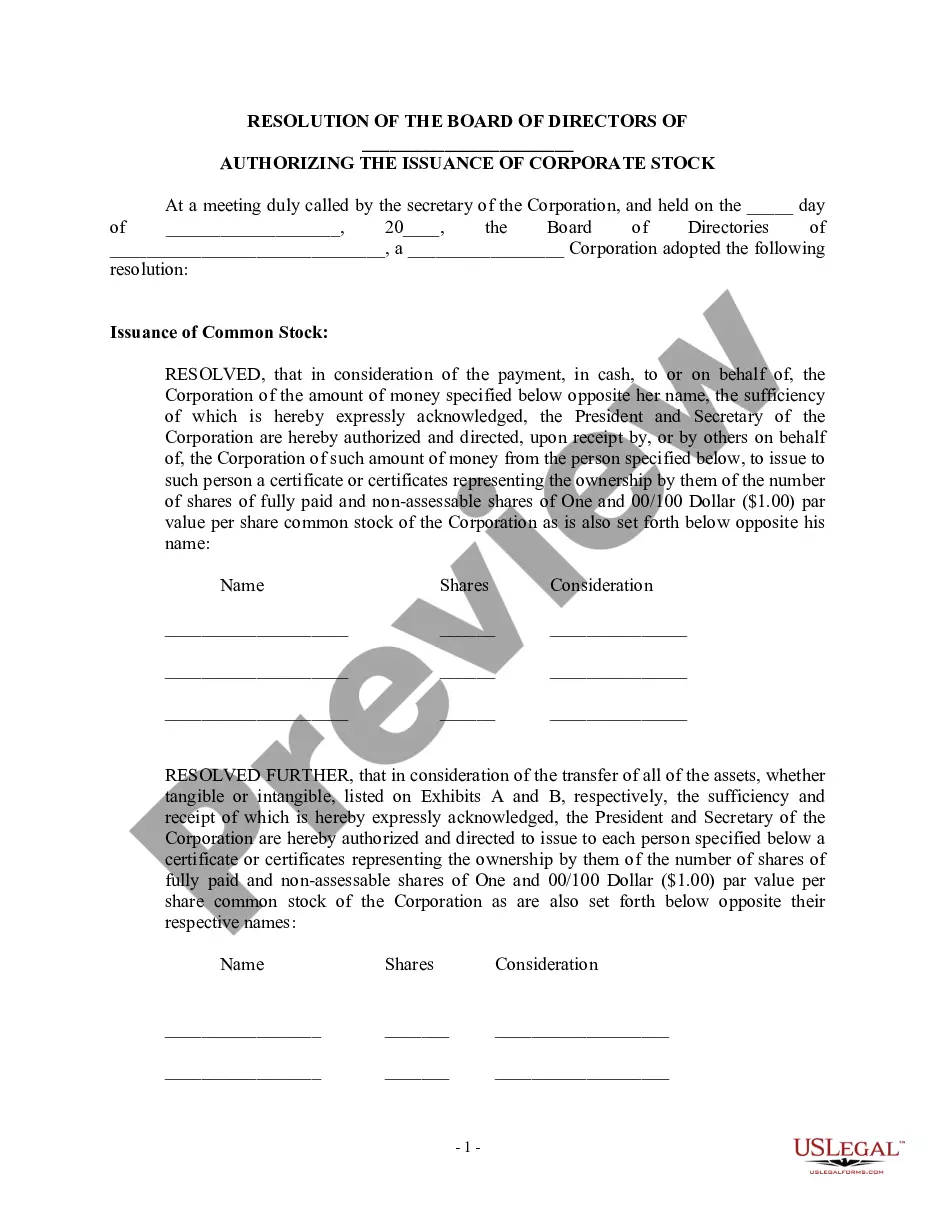
What Are the Components of a Nonprofit Board Resolution Template? The board meeting date. The number of the resolution. A title of the resolution. The resolution itself (what is being voted on) The name and vote of each voting member of the board. The Chairperson's name and signature.
First off, the federal law requires that all nonprofits have a board of directors with at least three members. The individuals on this committee should have the experience to help you work toward your nonprofit's vision statement. You can set up your board in different ways based on your goals.
All nonprofits need a board of directors for a variety of reasons. The first is that it is required by the IRS for all nonprofits to have a minimum of three board members who meet at least once per year.
Contrary to public charities, private foundations can, and do, elect family members on their boards because the nature of their revenue is not public and there are no limitation usually as long as they follow the laws.
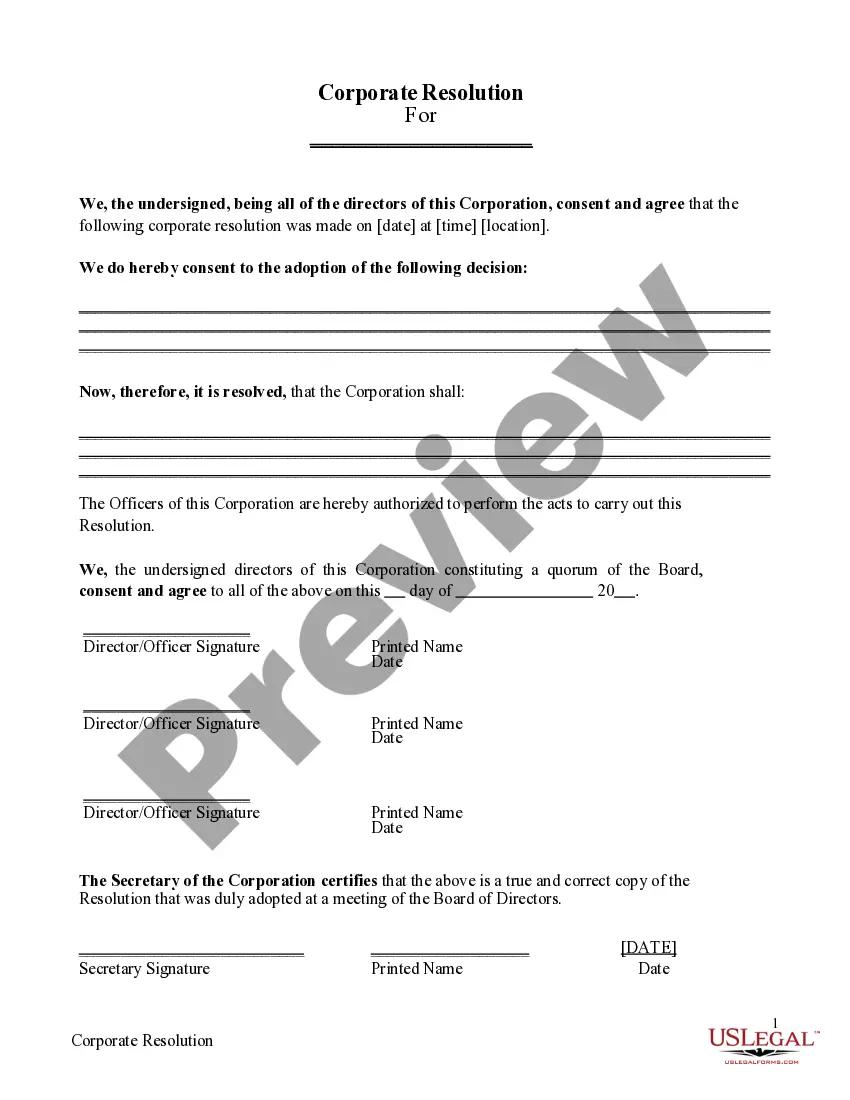
Corporate resolutions are necessary business documents for corporations, whether they be for-profit or nonprofit.
They aim to address the public's interest through the organization's work and act as the legal voice for the organization. While nonprofit boards typically range anywhere from three to fifty members, there are a handful of roles and positions that are almost always assigned to different members of the board.
The board of directors make up the governing body of the nonprofit corporation and are committed to the purpose and success of the organization. The IRS requires a minimum of three unrelated individuals and Utah law requires them to be 18 years of age or older.
