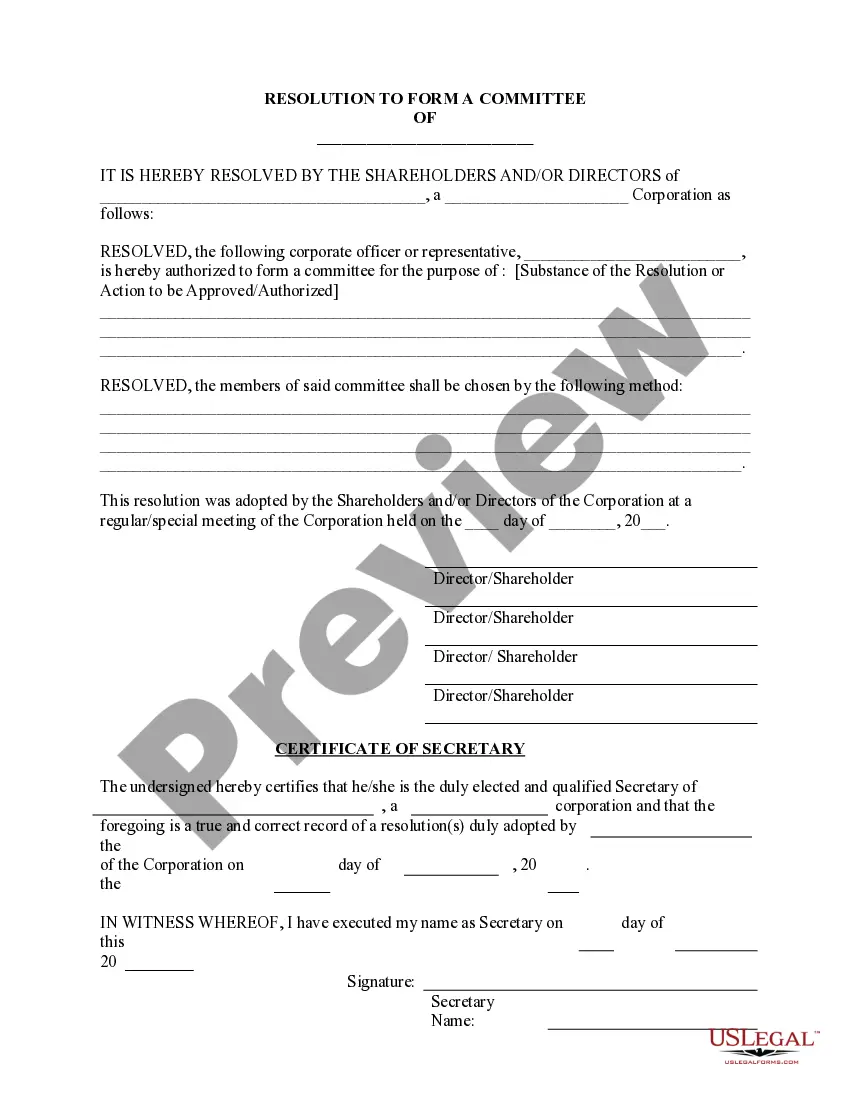
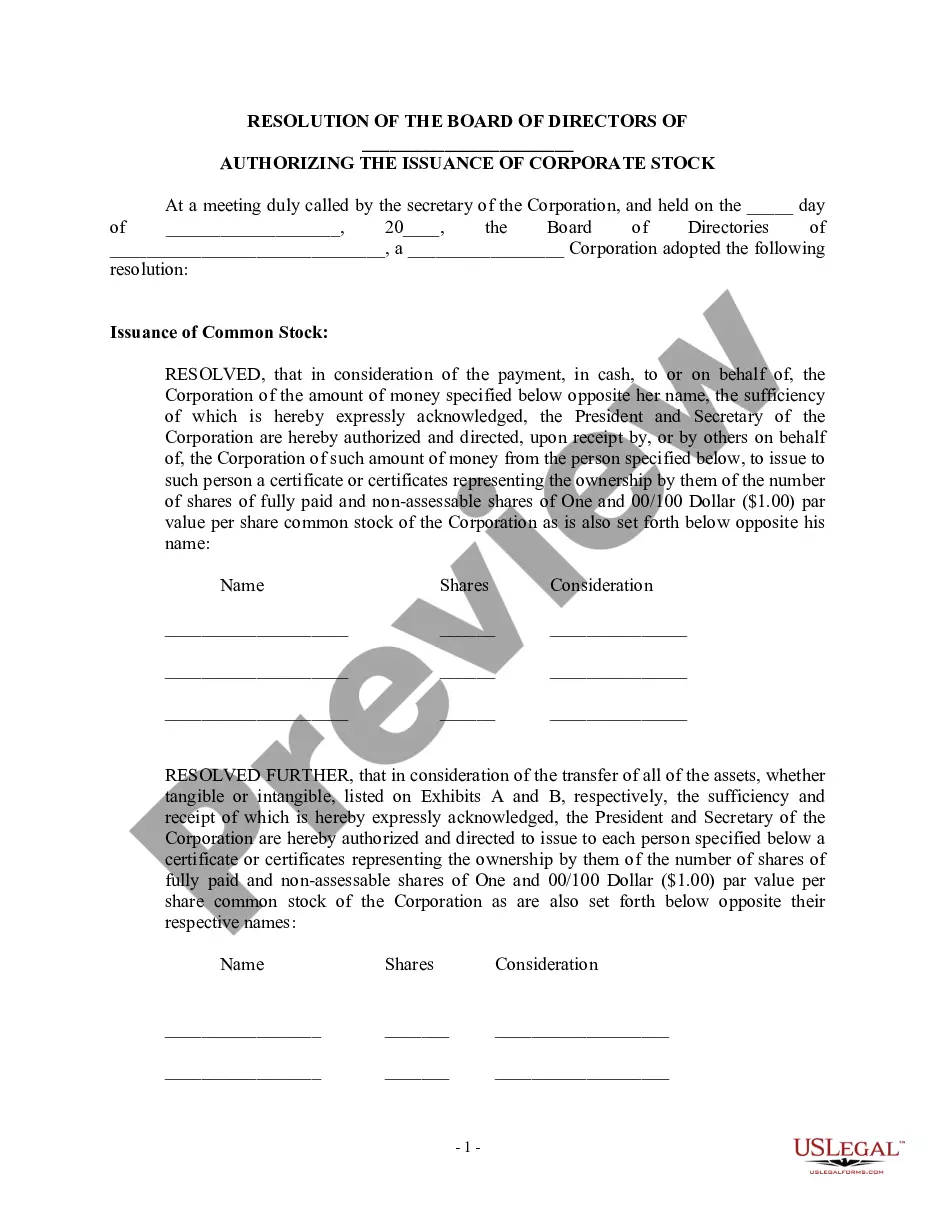
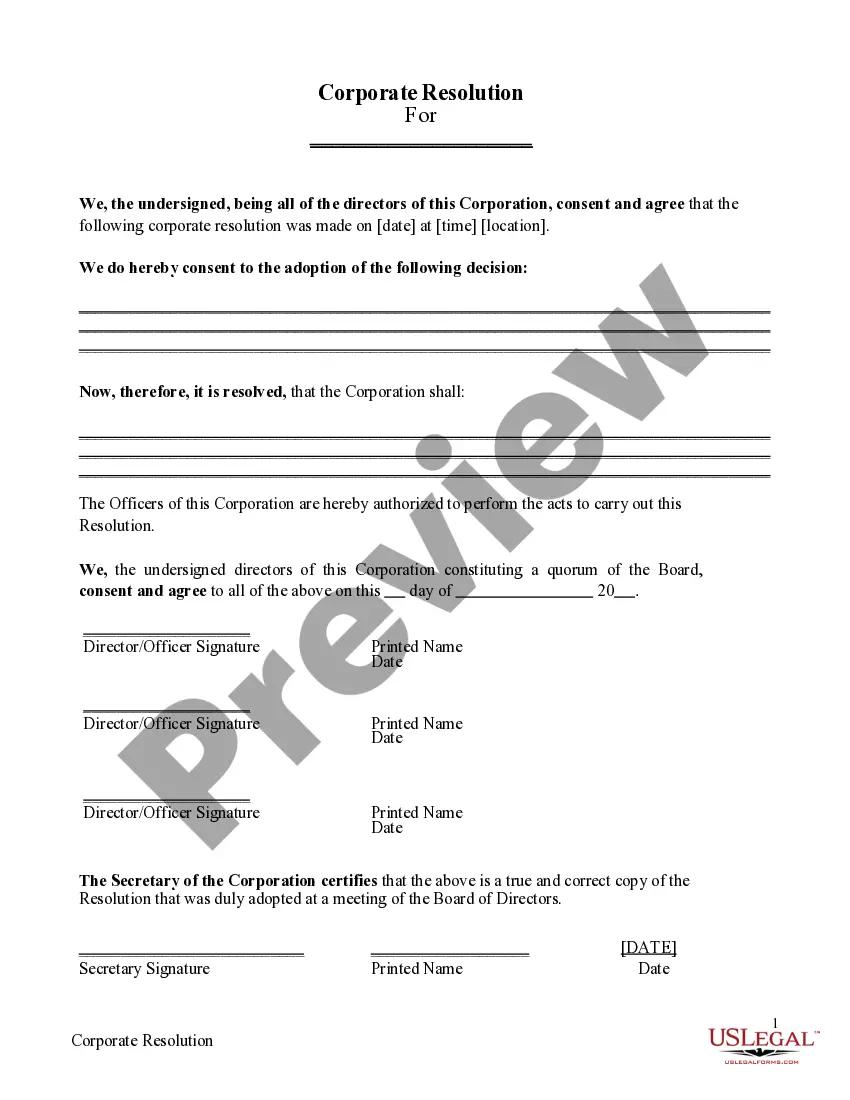
Official Resolution Form For S Corporation In Nassau
Description



Get your form ready online
Our built-in tools help you complete, sign, share, and store your documents in one place.
Make edits, fill in missing information, and update formatting in US Legal Forms—just like you would in MS Word.
Download a copy, print it, send it by email, or mail it via USPS—whatever works best for your next step.
Sign and collect signatures with our SignNow integration. Send to multiple recipients, set reminders, and more. Go Premium to unlock E-Sign.
If this form requires notarization, complete it online through a secure video call—no need to meet a notary in person or wait for an appointment.
We protect your documents and personal data by following strict security and privacy standards.

Make edits, fill in missing information, and update formatting in US Legal Forms—just like you would in MS Word.

Download a copy, print it, send it by email, or mail it via USPS—whatever works best for your next step.

Sign and collect signatures with our SignNow integration. Send to multiple recipients, set reminders, and more. Go Premium to unlock E-Sign.

If this form requires notarization, complete it online through a secure video call—no need to meet a notary in person or wait for an appointment.

We protect your documents and personal data by following strict security and privacy standards.
Looking for another form?









Form popularity
FAQ
Essentially, a board of directors must use a corporate resolution to document all corporate actions, which creates accountability for the board's decisions. A corporate resolution is considered a binding document, so it's stored in the corporate records book after the board members sign it.
Additionally, your S corporation must hold an organizational meeting (initial meeting of directors) where you adopt bylaws and undertake other initial corporate actions (such as appointing officers and approving a resolution to open a business bank account).
One major advantage of an S corporation is that it provides owners limited liability protection, regardless of its tax status. Limited liability protection means that the owners' personal assets are shielded from the claims of business creditors—whether the claims arise from contracts or litigation.
Typically, corporations require these documents when an agreement between the owners and the board may enable business transactions and decisions.
C Corporations, C Corporations that elect to be taxed as S Corporations, and other types of corporations use corporate resolutions. Limited Liability Companies (LLCs) or Limited Partnerships might also be required to issue resolutions to record their owners' (members or partners) decisions and actions.
Corporate resolutions are necessary business documents for corporations, whether they be for-profit or nonprofit. Limited liability companies (LLCs) are not required to create corporate resolutions, but oftentimes do so in order to document their decisions in a formal way.
The corporate resolution will be adopted at a board meeting, and can be found in the minutes of the meeting detailing the decisions made by the board.
