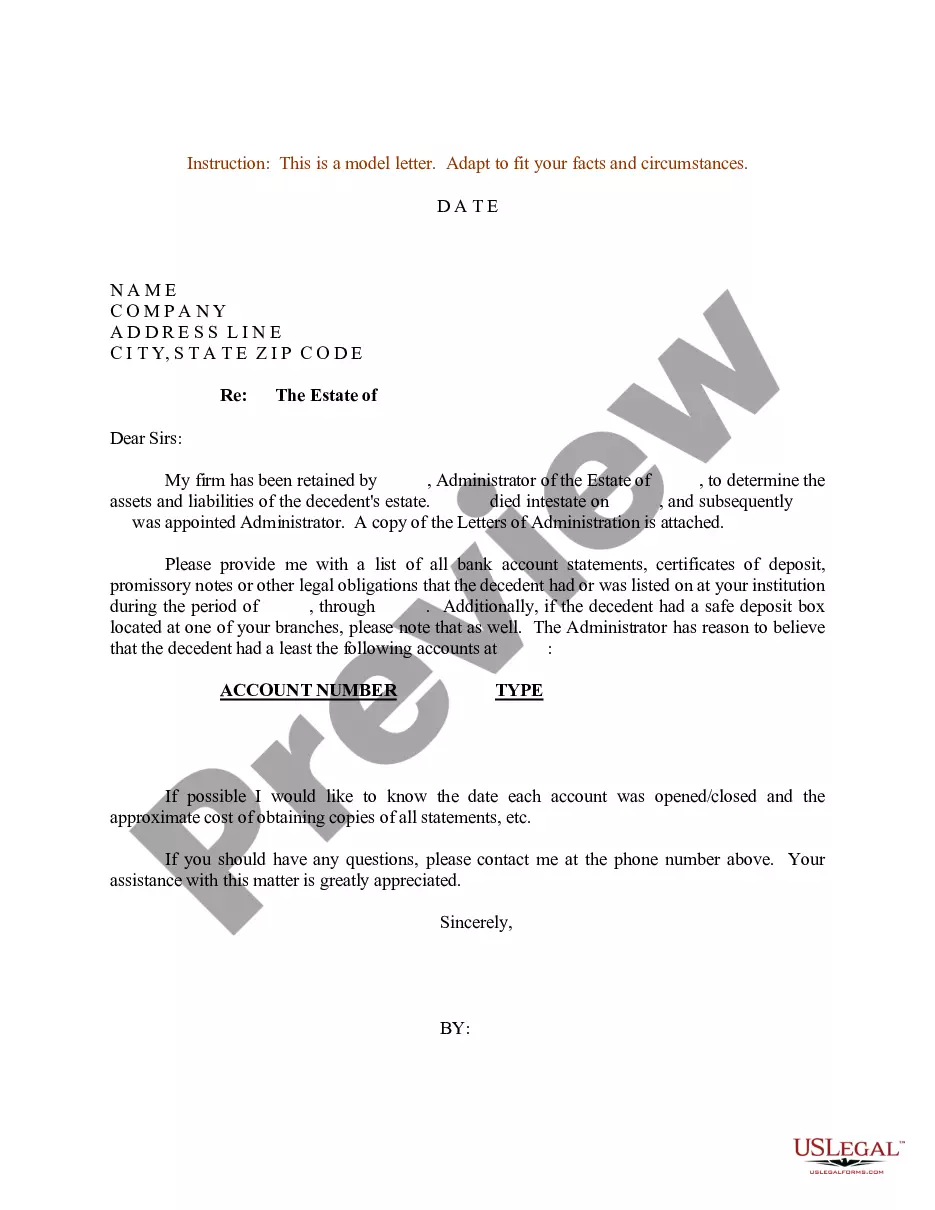
Letter To Close Account After Death Format In Washington
Description




Get your form ready online
Our built-in tools help you complete, sign, share, and store your documents in one place.
Make edits, fill in missing information, and update formatting in US Legal Forms—just like you would in MS Word.
Download a copy, print it, send it by email, or mail it via USPS—whatever works best for your next step.
Sign and collect signatures with our SignNow integration. Send to multiple recipients, set reminders, and more. Go Premium to unlock E-Sign.
If this form requires notarization, complete it online through a secure video call—no need to meet a notary in person or wait for an appointment.
We protect your documents and personal data by following strict security and privacy standards.

Make edits, fill in missing information, and update formatting in US Legal Forms—just like you would in MS Word.

Download a copy, print it, send it by email, or mail it via USPS—whatever works best for your next step.

Sign and collect signatures with our SignNow integration. Send to multiple recipients, set reminders, and more. Go Premium to unlock E-Sign.

If this form requires notarization, complete it online through a secure video call—no need to meet a notary in person or wait for an appointment.

We protect your documents and personal data by following strict security and privacy standards.
Looking for another form?



Form popularity
FAQ
“What that beneficiary has to do is just present a death certificate and ID to the bank. Then that asset will pass directly to who you want it to.”
The next of kin must notify their banks of the death when an account holder dies. This is usually done by delivering a certified copy of the death certificate to the bank, along with the deceased's name and Social Security number, bank account numbers, and other information.
The deceased person is likely to have ongoing standing orders and direct debits, so it's best to notify these organisations of the death as soon as possible to avoid receiving letters demanding outstanding payments.
Family members or next of kin generally notify the bank when a client passes. It can also be someone who was appointed by a court to handle the deceased's financial affairs. There are also times when the bank learns of a client's passing through probate.
Respected Sir/Madam, I am writing to you with a heavy heart to inform you of the demise of my husband, Mr. Rajeev Singh, who had a savings account in your esteemed bank. It is a difficult time for our family, and I need to settle his financial affairs.
If there's a will without a named executor, the court will issue a Letter of Testamentary; if there's no will, the court will issue a Letter of Administration. Present either of these letters to the bank along with the death certificate to close the account.
Application for letters of administration, or, application for an adjudication of intestacy and heirship without the issuance of letters of administration shall be made by petition in writing, signed and verified by the applicant or his or her attorney, and filed with the court, which petition shall set forth the facts ...
If there's no will, the bank could ask for evidence of your relationship to the deceased. You'll also need the death certificate. When you've registered the death, you will be issued with a death certificate. This will act as formal notification for the bank to begin closing the account.
Your valid ID, such as a state-issued driver's license or ID card, U.S. passport, or military ID. Proof of death, such as certified copies of the death certificate. Documentation about the account and its owner, including the deceased's full legal name, Social Security number, and the bank account number.
