Partnership Agreement Re Land
What this document covers
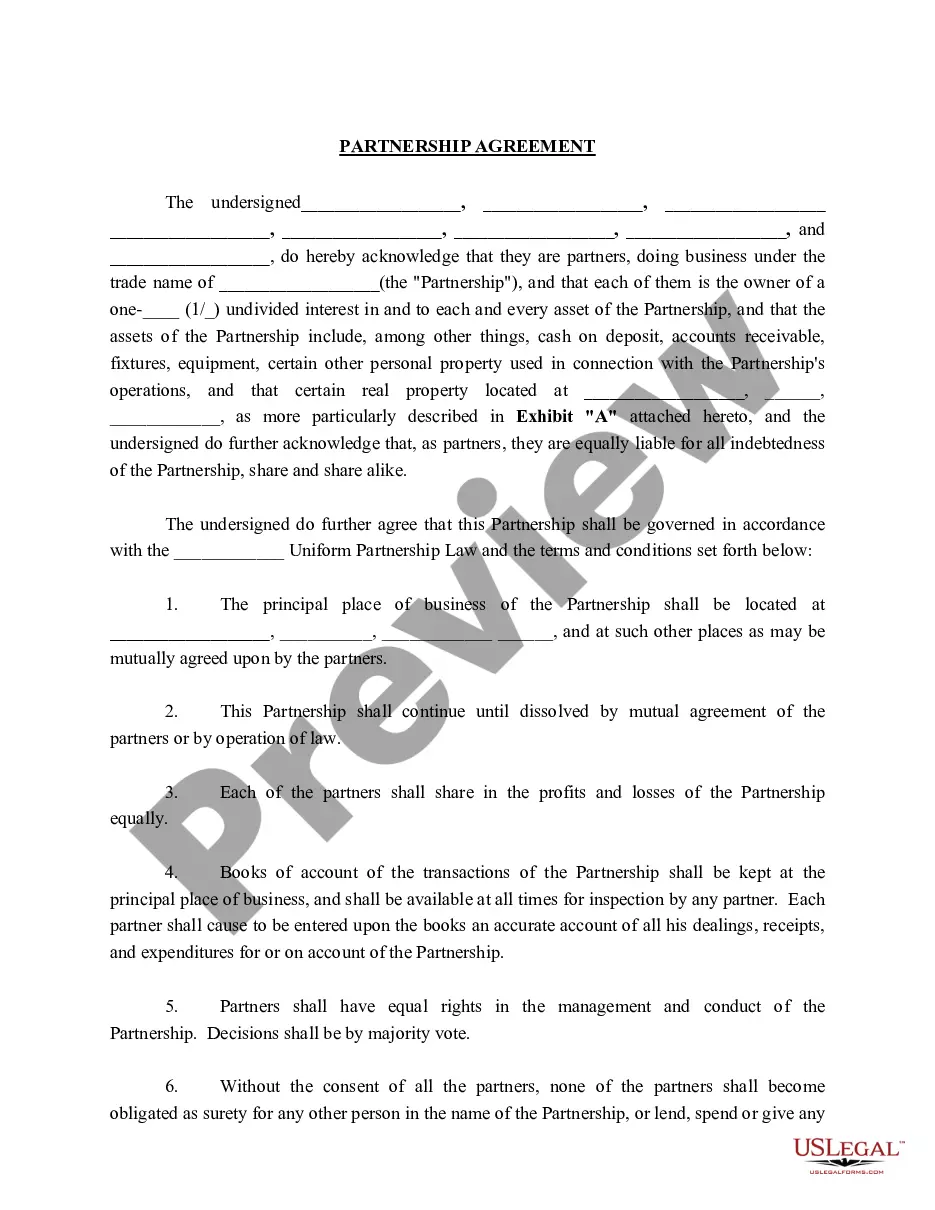
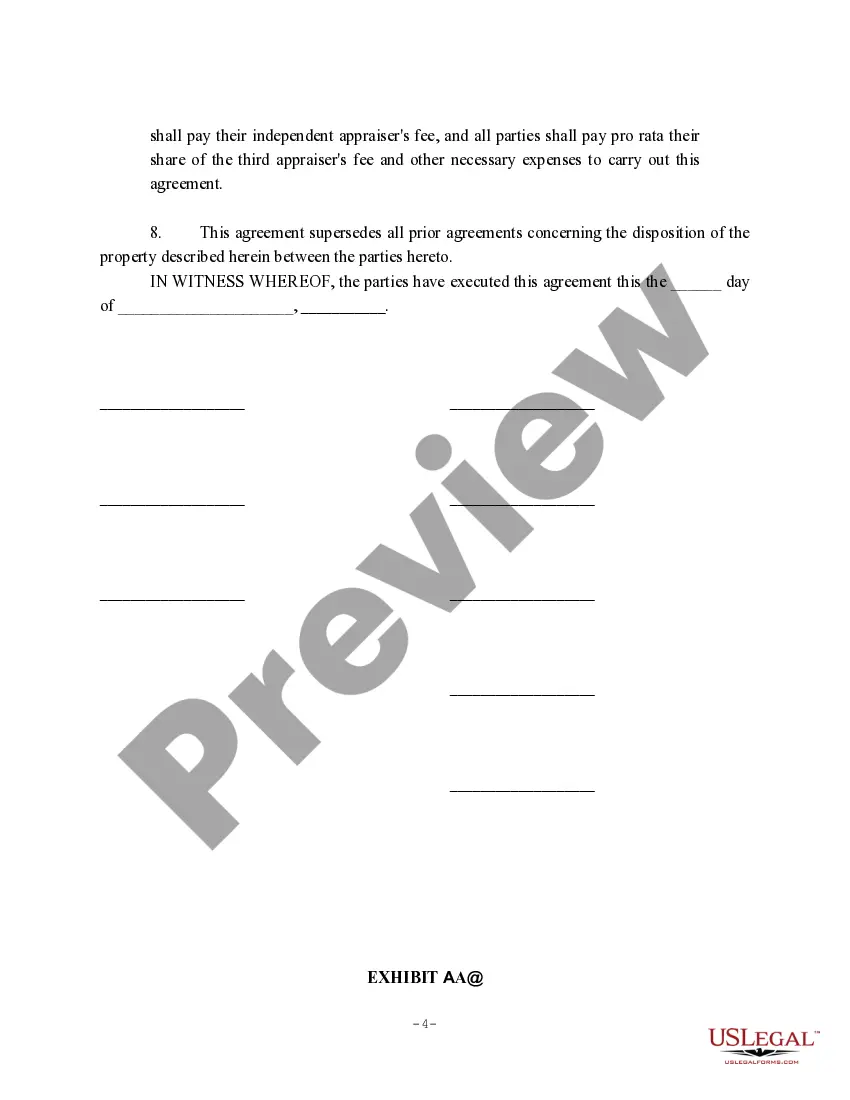
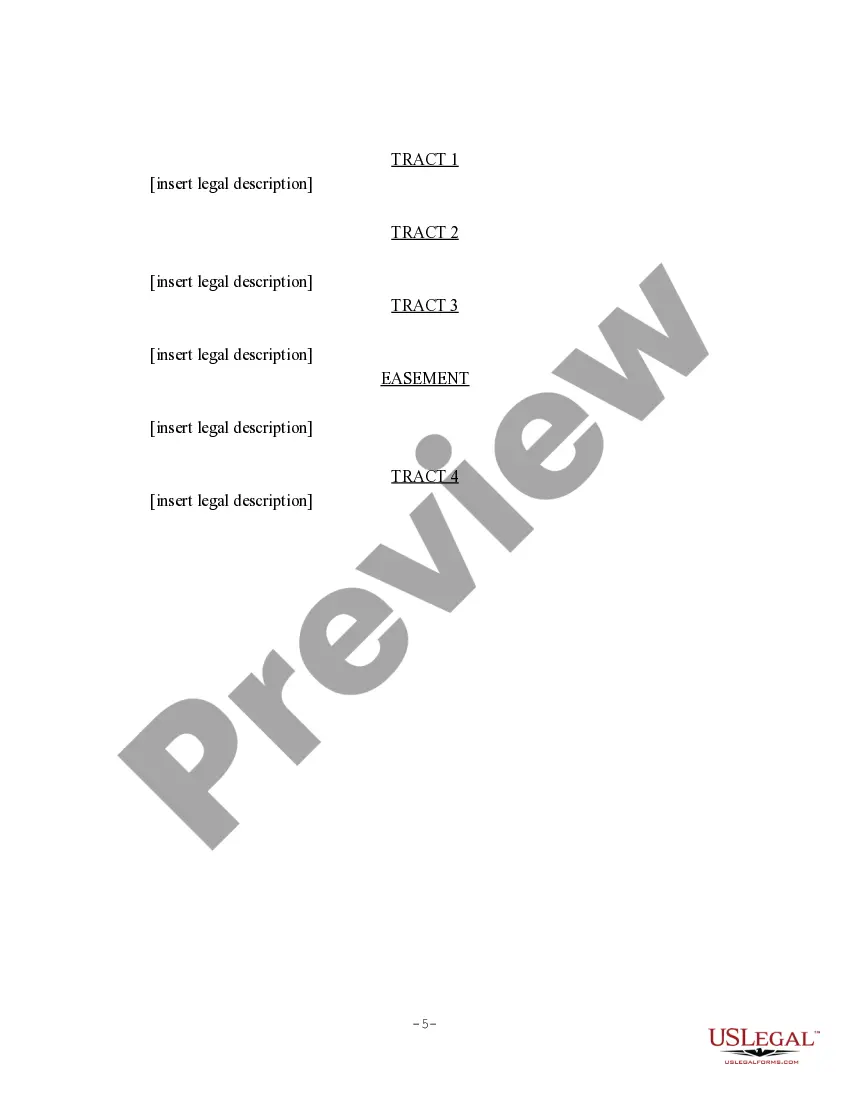
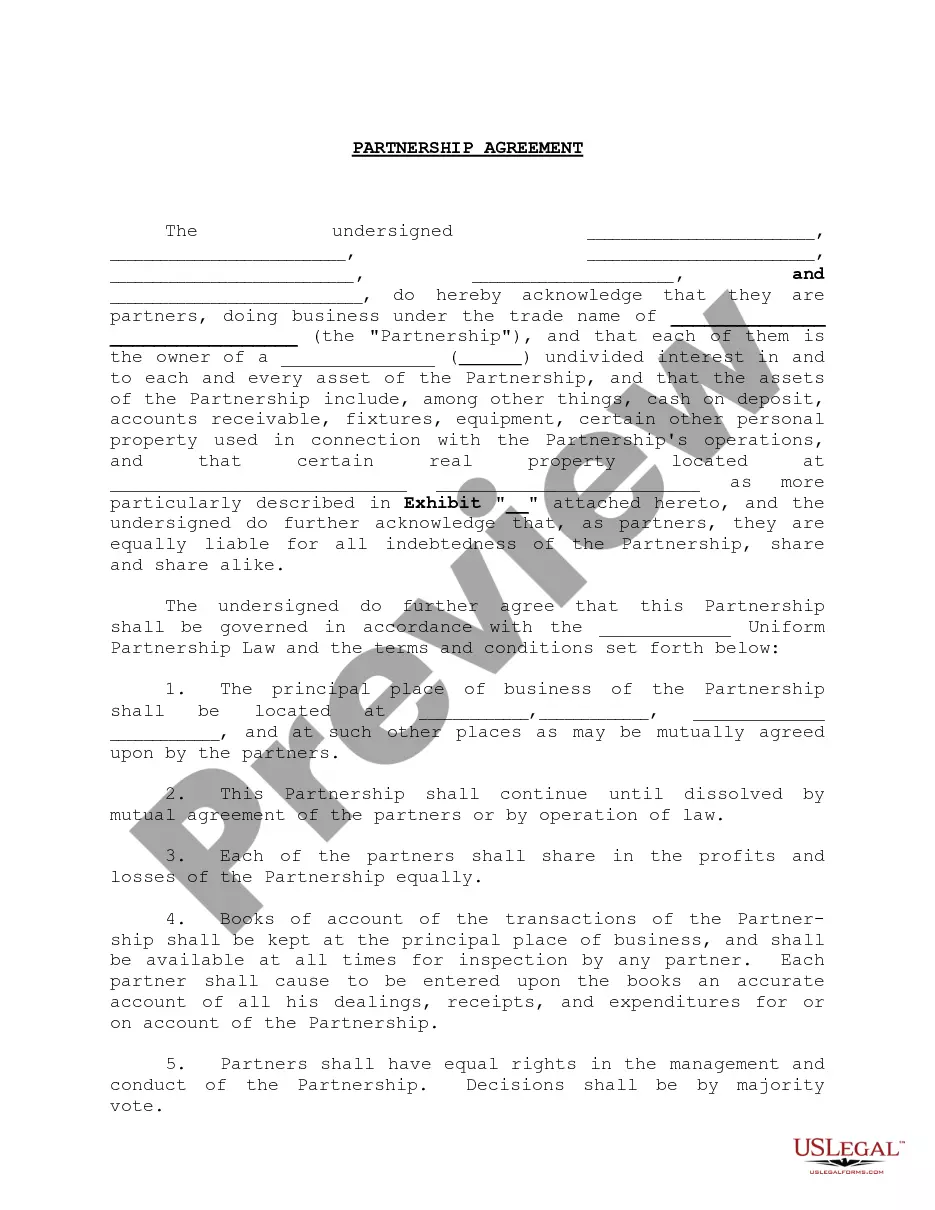
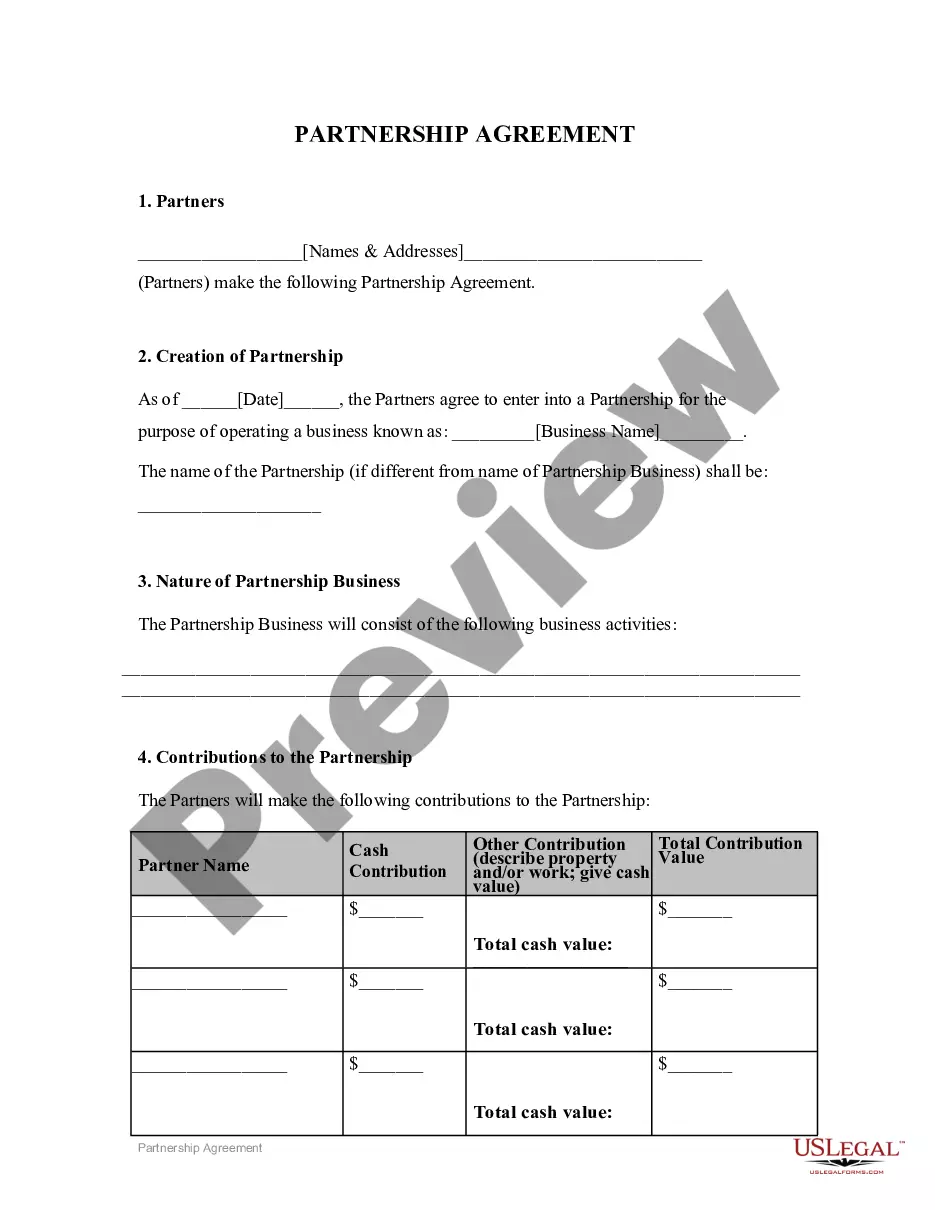
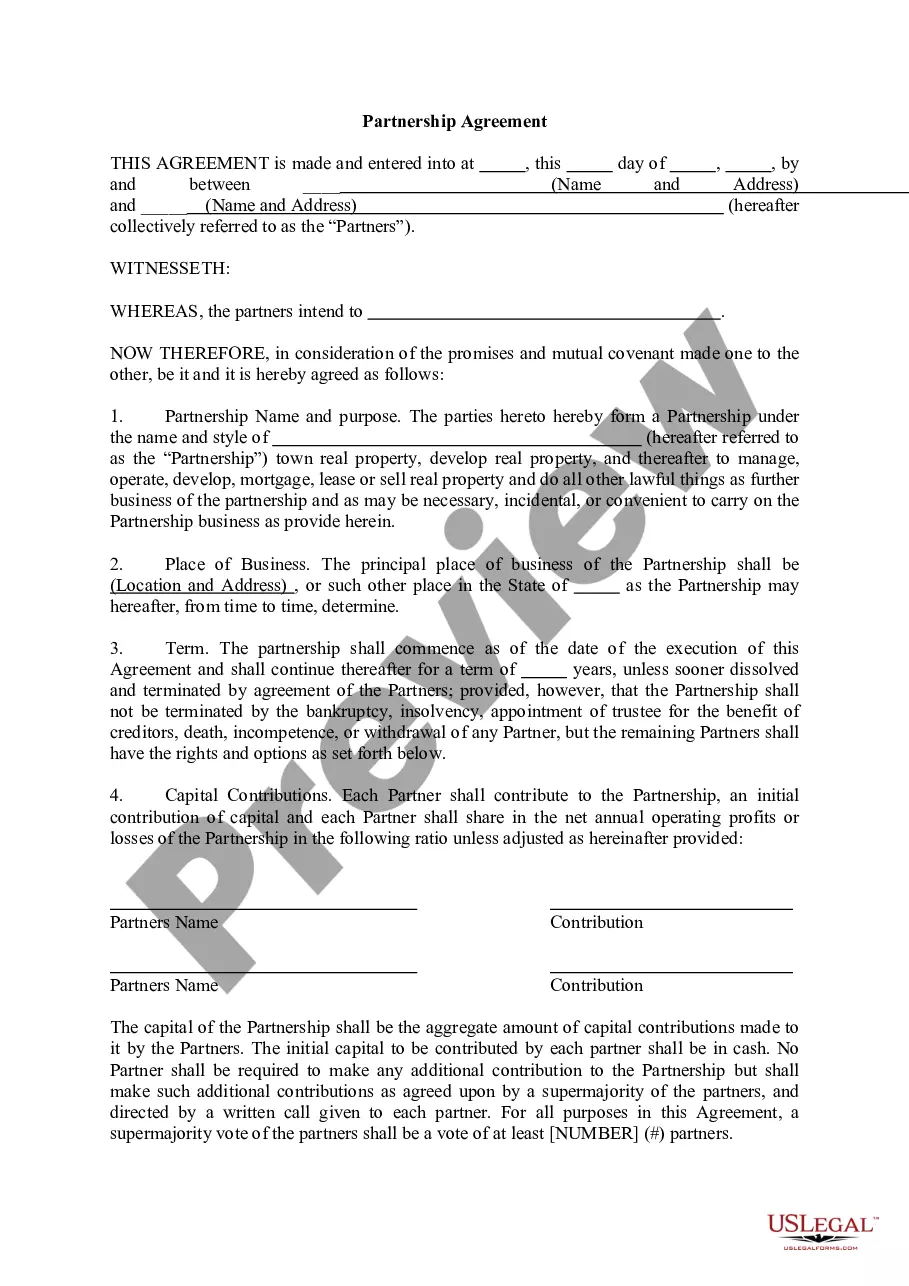
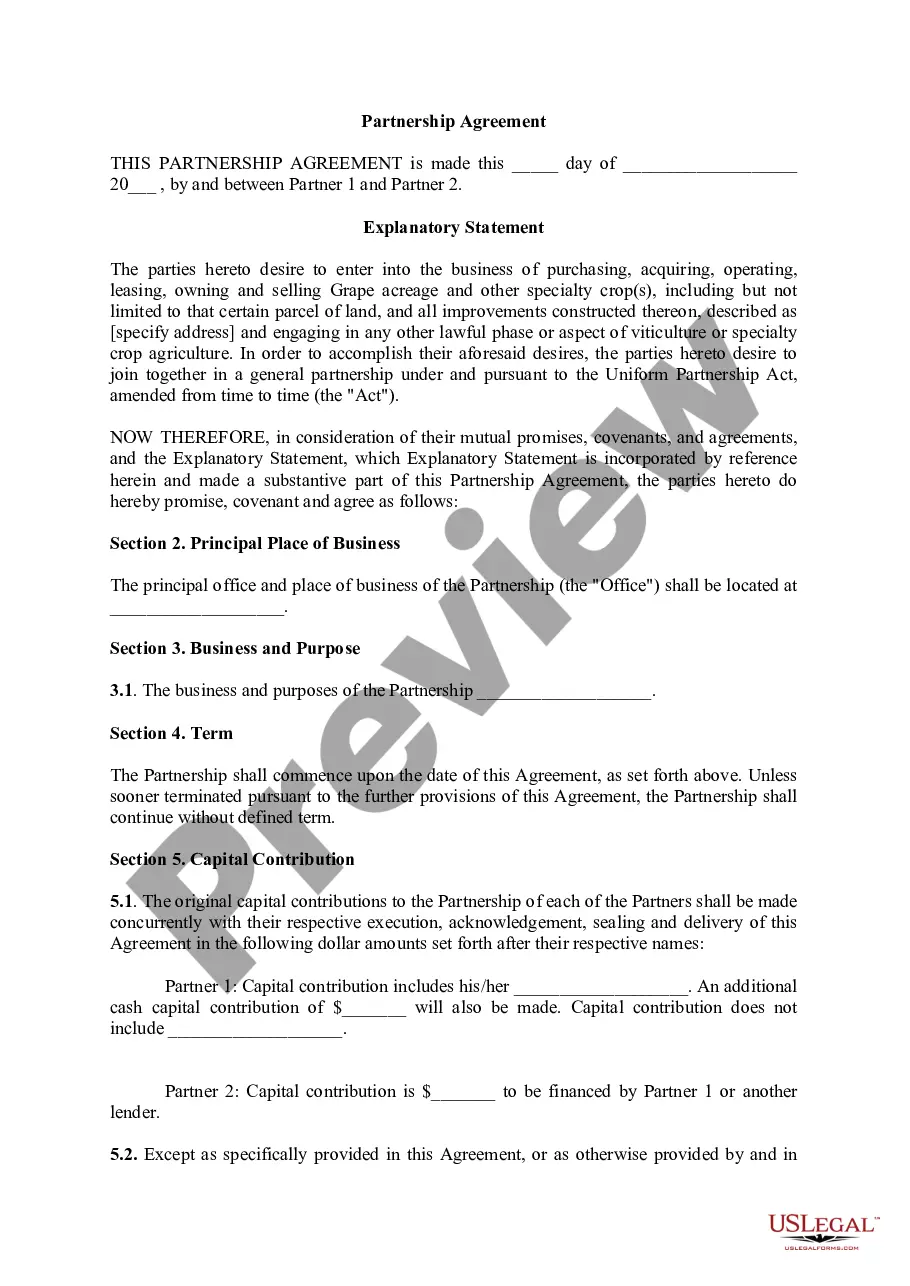
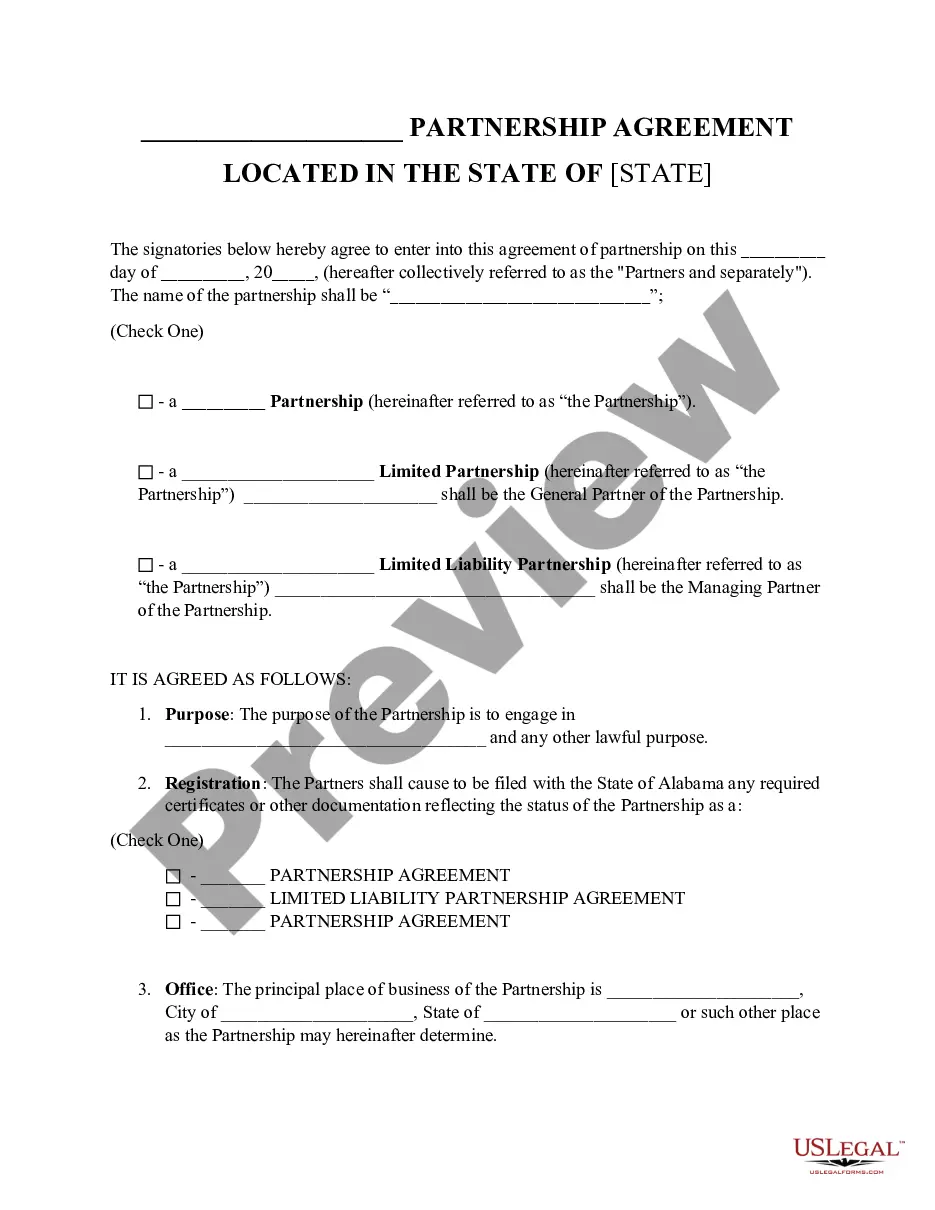
The Partnership Agreement Re Land is a legal document that formalizes the partnership between individuals managing property and business assets. This agreement outlines each partner's ownership interest, responsibilities, and the management structure of the partnership. Unlike other forms of partnership agreements, this document specifically addresses real property assets, making it essential for those involved in real estate or land partnerships.
Main sections of this form
- Parties Involved: Identification of all partners entering into the agreement.
- Ownership Interests: Specification of each partner's undivided interest in partnership assets.
- Management Rights: Equal rights for partners in decision-making and management activities.
- Profit and Loss Distribution: Details on how profits and losses will be shared among partners.
- Termination Clause: Conditions under which the partnership can be dissolved.
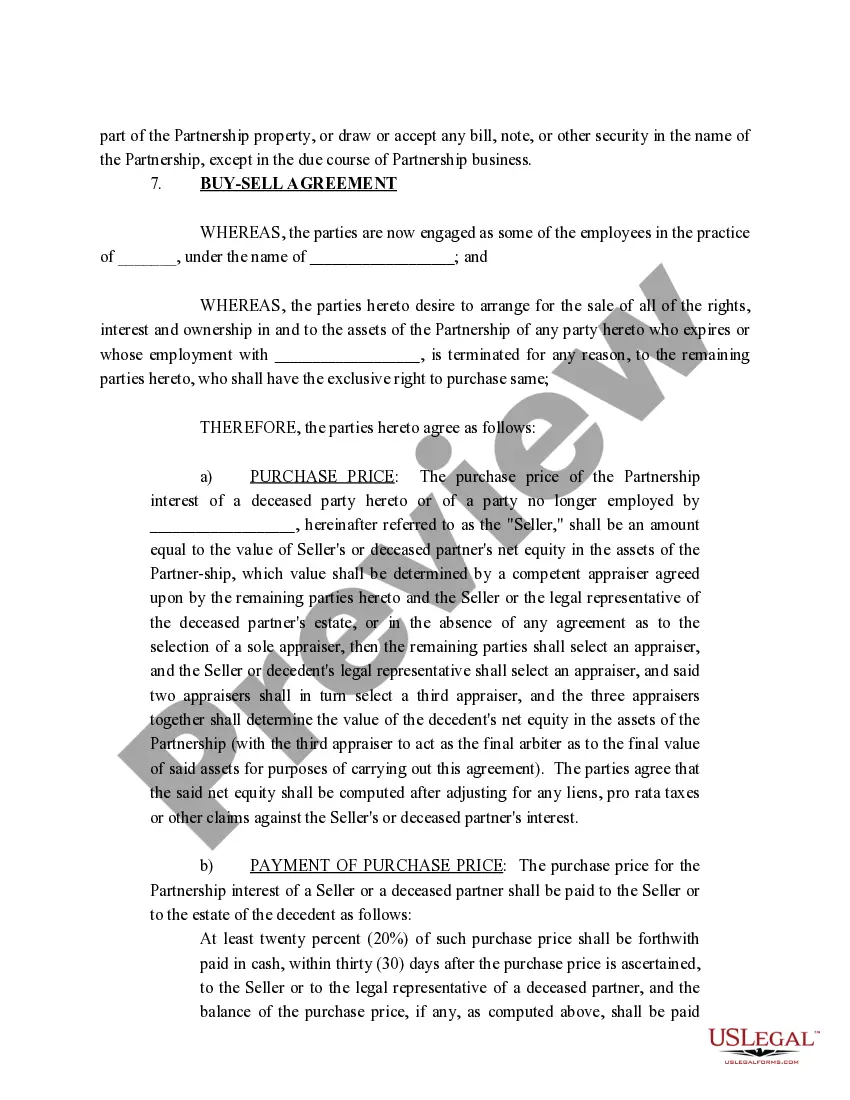
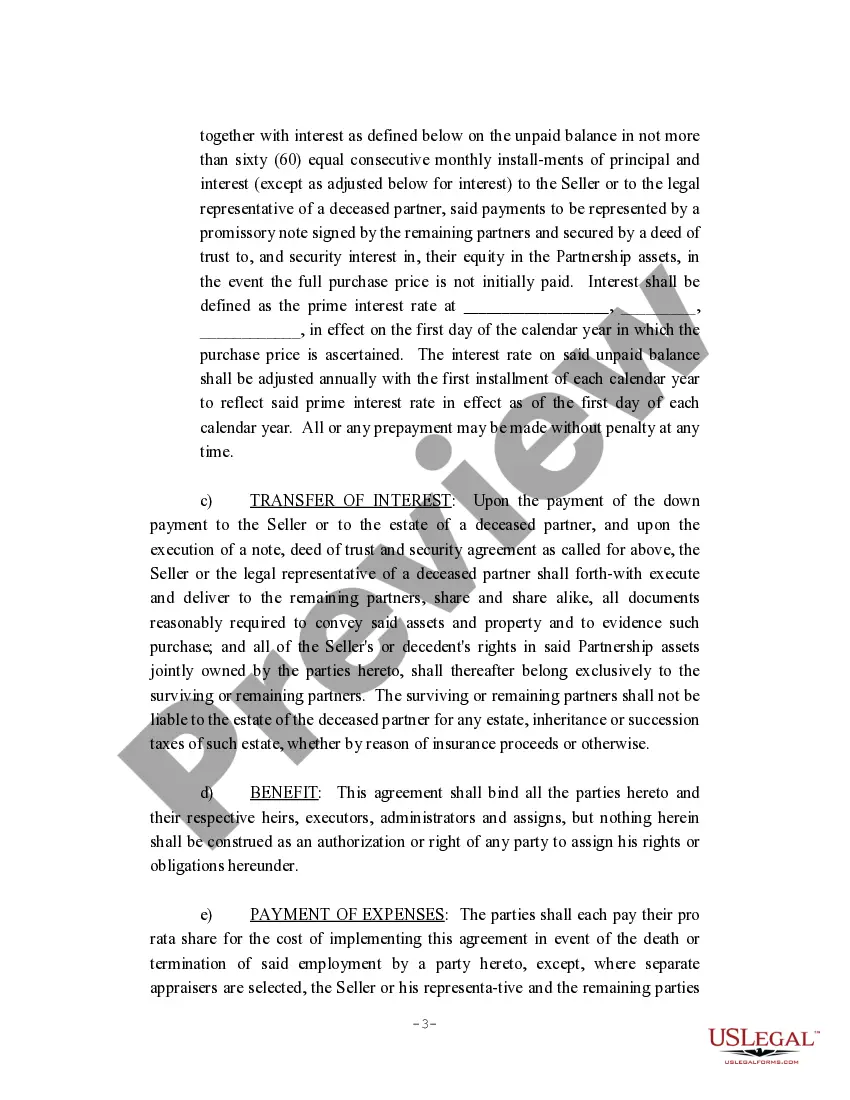
- Buy-Sell Agreement: Provisions related to sales of partnership interests due to a partnerâs departure or death.
Common use cases
This form should be used when two or more people decide to engage in a business partnership involving land or property. It is particularly relevant when partners wish to define their roles, rights, and responsibilities clearly, outline how profits and losses will be shared, and establish procedures for handling the exit of a partner.
Who should use this form
This partnership agreement is suitable for:
- Individuals planning to form a partnership related to real estate.
- Business partners who want to document their ownership interests and management rights.
- Partners needing to clarify profit and loss sharing arrangements.
- Those involved in partnerships where mutual contributions and terms of collaboration need to be formalized.
Steps to complete this form
- Identify the partners: Fill in the names and details of all partners involved.
- Specify ownership interests: Indicate the fraction of ownership for each partner.
- Detail management rights: Agree on how decisions will be made and specify equal rights in management.
- Outline financial arrangements: Describe how profits and losses will be distributed.
- Include buy-sell provisions: Establish rules for the transfer of partnership interests in case of a partner's exit.
- Sign and date the agreement: Ensure all partners sign the document to validate it.
Is notarization required?
This form does not typically require notarization unless specified by local law. However, it's a good practice to have an attorney review the agreement to ensure it meets all legal standards.
Get your form ready online
Our built-in tools help you complete, sign, share, and store your documents in one place.
Make edits, fill in missing information, and update formatting in US Legal Forms—just like you would in MS Word.
Download a copy, print it, send it by email, or mail it via USPS—whatever works best for your next step.
Sign and collect signatures with our SignNow integration. Send to multiple recipients, set reminders, and more. Go Premium to unlock E-Sign.
If this form requires notarization, complete it online through a secure video call—no need to meet a notary in person or wait for an appointment.
We protect your documents and personal data by following strict security and privacy standards.

Make edits, fill in missing information, and update formatting in US Legal Forms—just like you would in MS Word.

Download a copy, print it, send it by email, or mail it via USPS—whatever works best for your next step.

Sign and collect signatures with our SignNow integration. Send to multiple recipients, set reminders, and more. Go Premium to unlock E-Sign.

If this form requires notarization, complete it online through a secure video call—no need to meet a notary in person or wait for an appointment.

We protect your documents and personal data by following strict security and privacy standards.
Common mistakes to avoid
- Failing to specify ownership percentages clearly.
- Not including a provision for handling the departure of a partner.
- Overlooking state-specific legal requirements.
- Leaving out important details related to the management of partnership assets.
- Not gathering all partners' signatures to validate the agreement.
Why complete this form online
- Convenience: Easily prepare and download the form from your home or office.
- Editability: Modify the document as necessary to suit the unique needs of your partnership.
- Reliability: Access forms drafted by licensed attorneys, ensuring legal compliance.
Legal use & context
- An executed partnership agreement is legally binding and enforceable in a court of law.
- It is essential to fully understand each clause to avoid future disputes.
- Partnership agreements also outline liabilities, so partners should comprehend their financial obligations clearly.
What to keep in mind
- A Partnership Agreement Re Land is essential for any business partnership involving real estate.
- It clearly defines the rights, responsibilities, and ownership interests of each partner.
- Properly completing this form helps prevent conflicts and clarifies partnership operations.
Looking for another form?
Form popularity
FAQ
Name of your partnership. Contributions to the partnership and percentage of ownership. Division of profits, losses and draws. Partners' authority. Withdrawal or death of a partner.
A Limited Liability Partnership (LLP) or Limited Partnership can own partnership property in the same way as any individual or company. A general partnership cannot own property and the partners have to own the property in their own names. In law only a maximum of four partners can own property.
Decide How You'll Split Profits In a business partnership, you can split the profits any way you wantif everyone is in agreement. You could split the profits equally, or each partner could receive a different base salary and then split any remaining profits.
Your Partnership's Name. Partnership Contributions. Allocations profits and losses. Partners' Authority and Decision Making Powers. Management. Departure (withdrawal) or Death. New Partners. Dispute Resolution.
A Partnership agreement must clearly specify the name of the partnership firm, the names of the partners, the capital to be contributed by each partner, the profit or loss sharing ratio between partners, the business of the partnership, the duties, rights, powers and obligations of each partner and other relevant
Although each partnership agreement differs based on business objectives, certain terms should be detailed in the document, including percentage of ownership, division of profit and loss, length of the partnership, decision making and resolving disputes, partner authority, and withdrawal or death of a partner.
Name of the partnership. Contributions to the partnership. Allocation of profits, losses, and draws. Partners' authority. Partnership decision-making. Management duties. Admitting new partners. Withdrawal or death of a partner.
Share the same values. Choose a partner with complementary skills. Have a track record together. Clearly define each partner's role and responsibilities. Select the right business structure. Put it in writing. Be honest with each other.