Service Interrogatories With Questions In Wake
Description



Get your form ready online
Our built-in tools help you complete, sign, share, and store your documents in one place.
Make edits, fill in missing information, and update formatting in US Legal Forms—just like you would in MS Word.
Download a copy, print it, send it by email, or mail it via USPS—whatever works best for your next step.
Sign and collect signatures with our SignNow integration. Send to multiple recipients, set reminders, and more. Go Premium to unlock E-Sign.
If this form requires notarization, complete it online through a secure video call—no need to meet a notary in person or wait for an appointment.
We protect your documents and personal data by following strict security and privacy standards.

Make edits, fill in missing information, and update formatting in US Legal Forms—just like you would in MS Word.

Download a copy, print it, send it by email, or mail it via USPS—whatever works best for your next step.

Sign and collect signatures with our SignNow integration. Send to multiple recipients, set reminders, and more. Go Premium to unlock E-Sign.

If this form requires notarization, complete it online through a secure video call—no need to meet a notary in person or wait for an appointment.

We protect your documents and personal data by following strict security and privacy standards.
Looking for another form?









Form popularity
FAQ
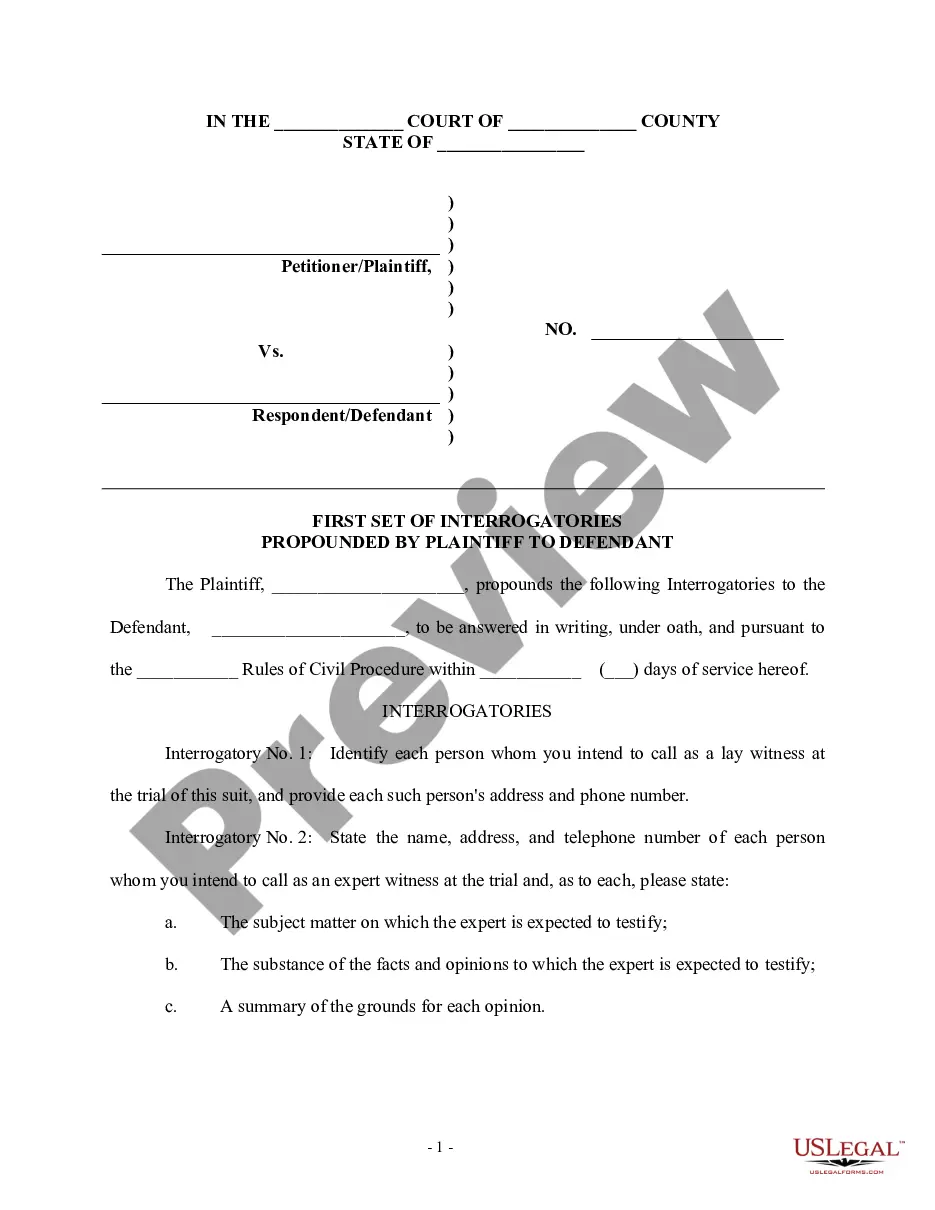
You can use interrogatories to find out facts about a case but they cannot be used for questions that draw a legal conclusion.
However, you can object to interrogatories that call for legal conclusions. You can also object to questions if they are not at all related to the court case. To object, you need to write out the reasons for the objection instead of answering the question.
NUMBER AND SCOPE OF INTERROGATORIES. Rule 33 (a), Federal Rules of Civil Procedure , restricts to 25 (including all discrete subparts) the number of interrogatories a party may serve on any other party.
Interrogatories may, without leave of court, be served upon the plaintiff after filing of the complaint and upon any other party with or after service of the summons and complaint upon that party.
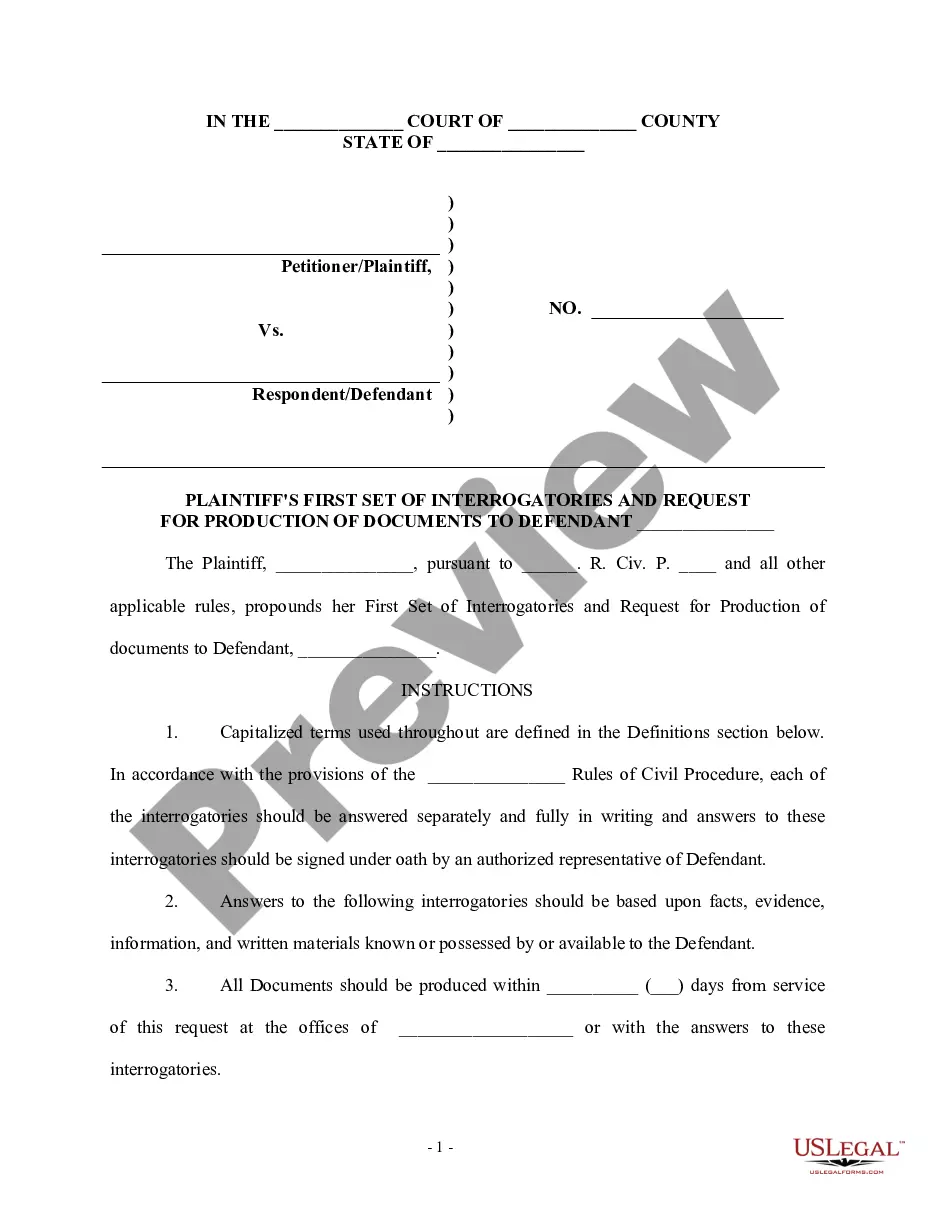
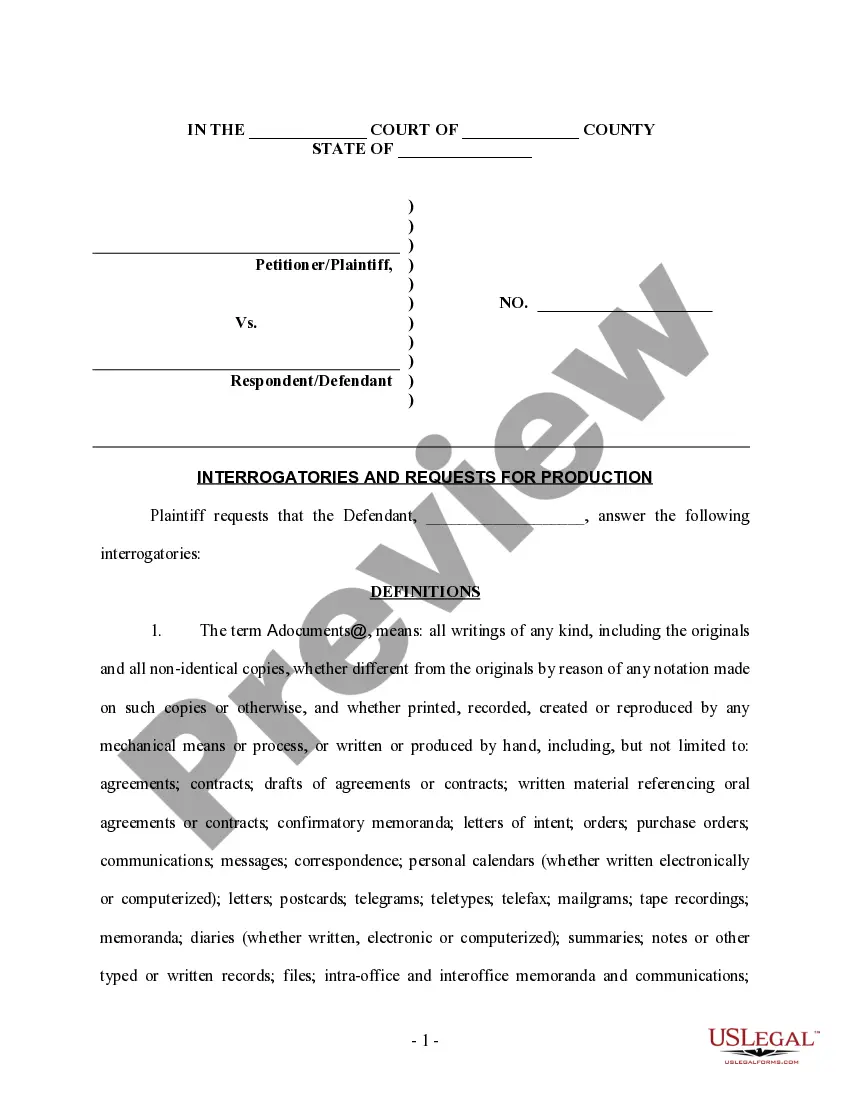
For interrogatories, action words such as “list,” “describe,” “identify,” or “state” are very useful. You may ask the other side to identify a document but you cannot use this form of discovery to get them to give it to you. Requesting documents requires a different kind of discovery process.
Common objections include: The request is impermissibly compound. The propounding party may ask you to answer only one question with each interrogatory. You may object to any request that asks you to answer two or more different questions in a single request.
How to respond to form interrogatories Download the blank response template and fill in basic information. Prepare the template for your responses. Read and answer the questions. Sign the document.
The original form interrogatories and signed proof of service should be retained for your records. If the other party does not respond to your requests, you may use these documents to support a motion to have the court compel responses.
Interrogatories are lists of questions sent to the other party that s/he must respond to in writing. You can use interrogatories to find out facts about a case but they cannot be used for questions that draw a legal conclusion.