Louisiana Motion to Cancel Judgment, with Order
Overview of this form
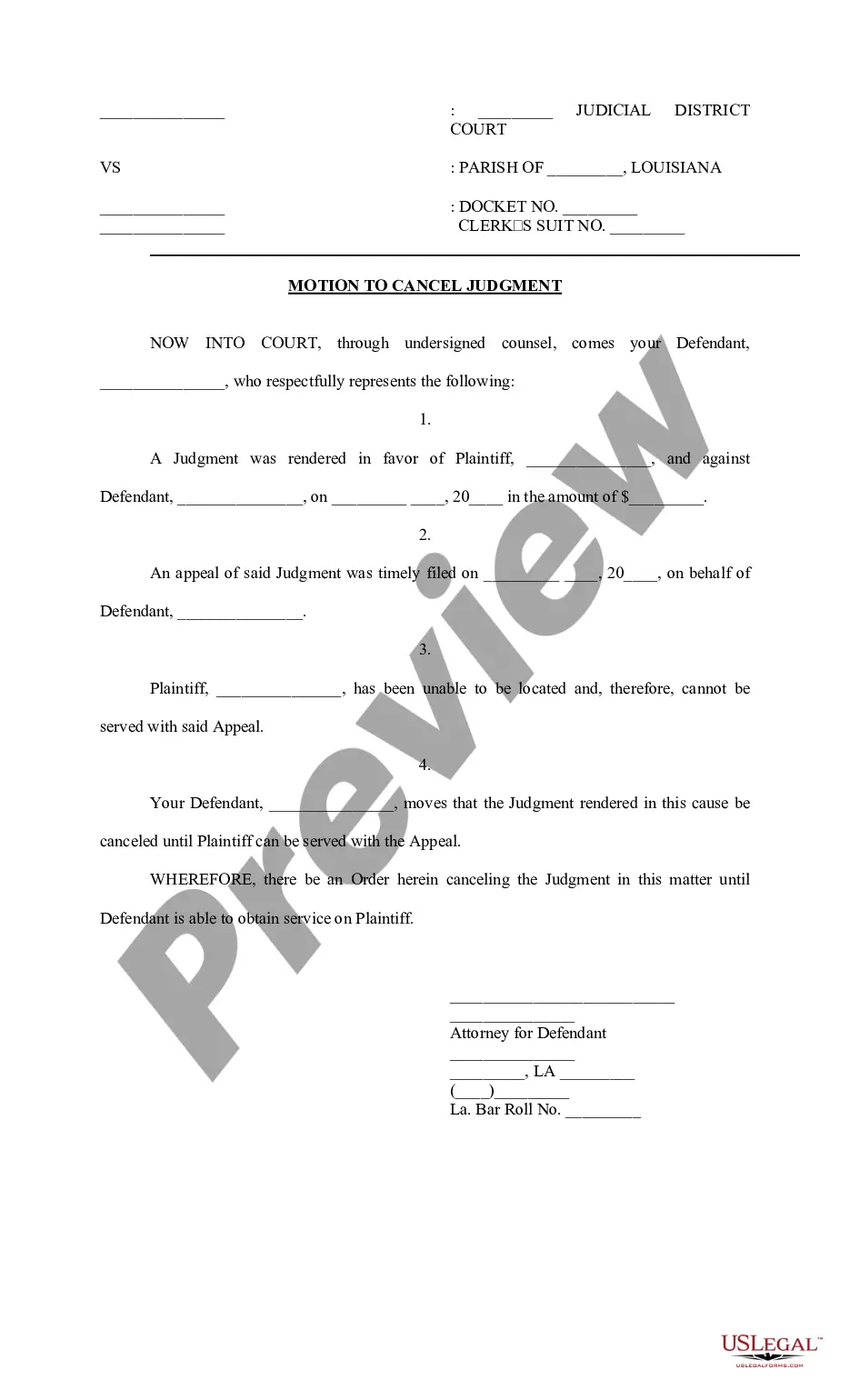
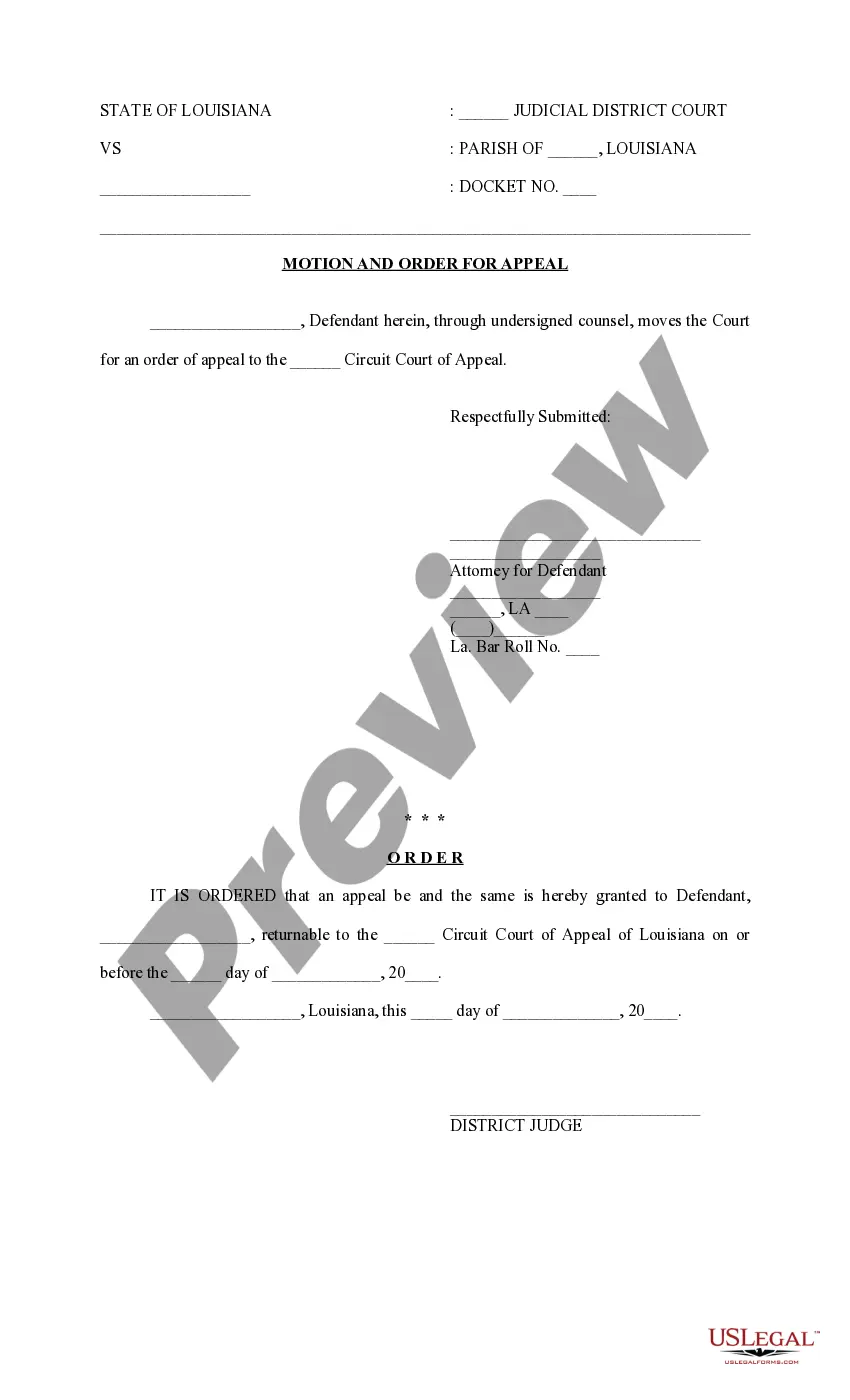
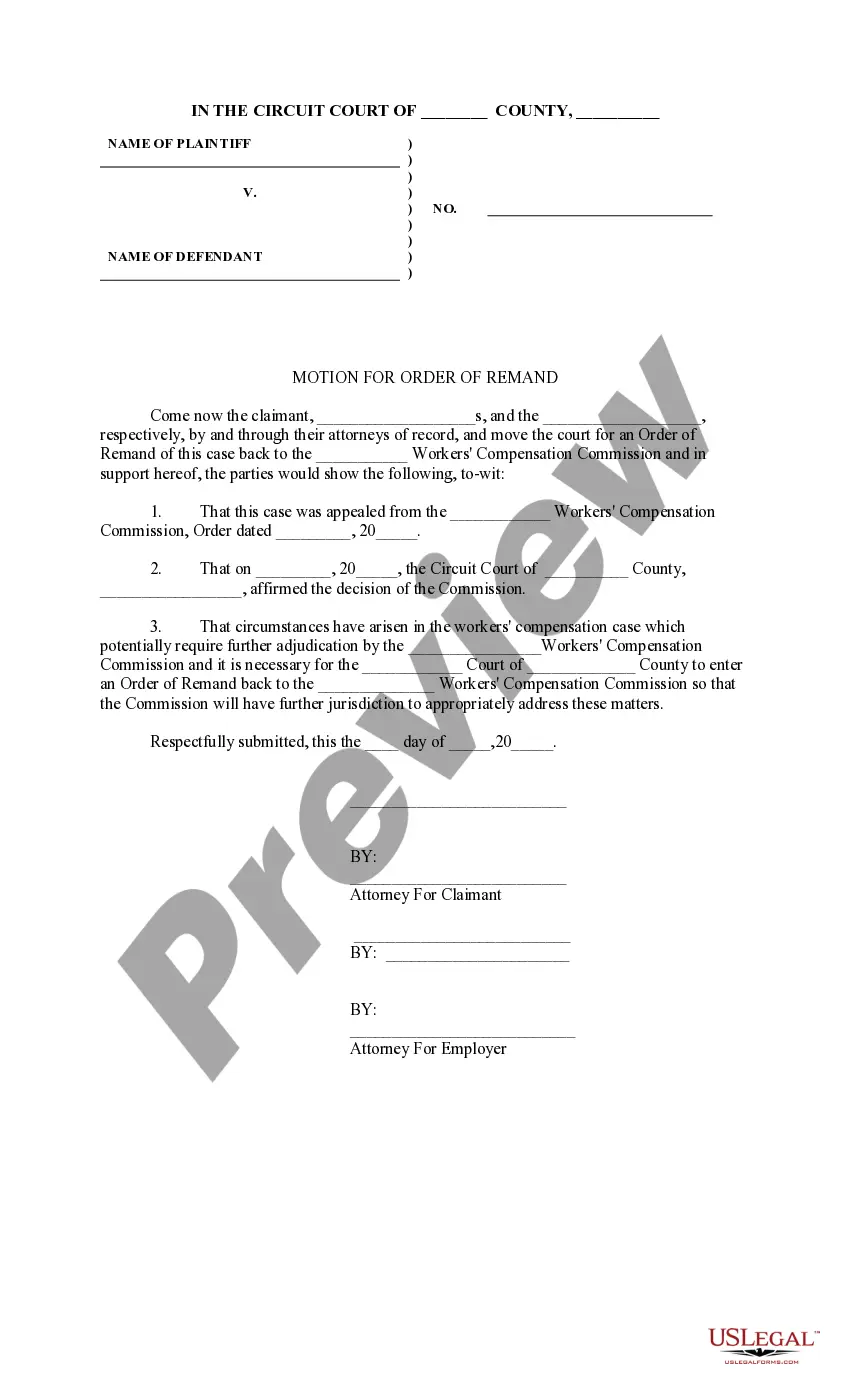
The Motion to Cancel Judgment with Order is a legal document used by a defendant in a civil case to request the cancellation of a judgment while awaiting the ability to serve the plaintiff with an appeal. This motion ensures that the judgment is paused, allowing the defendant to pursue their legal rights effectively without the judgment affecting them until proper service is completed.
Main sections of this form
- Defendant's identification: Includes the name of the defendant filing the motion.
- Judgment details: Specifies the judgment made in favor of the plaintiff, including the date and amount.
- Appeal information: Indicates that an appeal has been timely filed with the court.
- Service issue: States the difficulty in locating the plaintiff for service of the appeal.
- Request for cancellation: A formal request to cancel the judgment until service can be achieved.
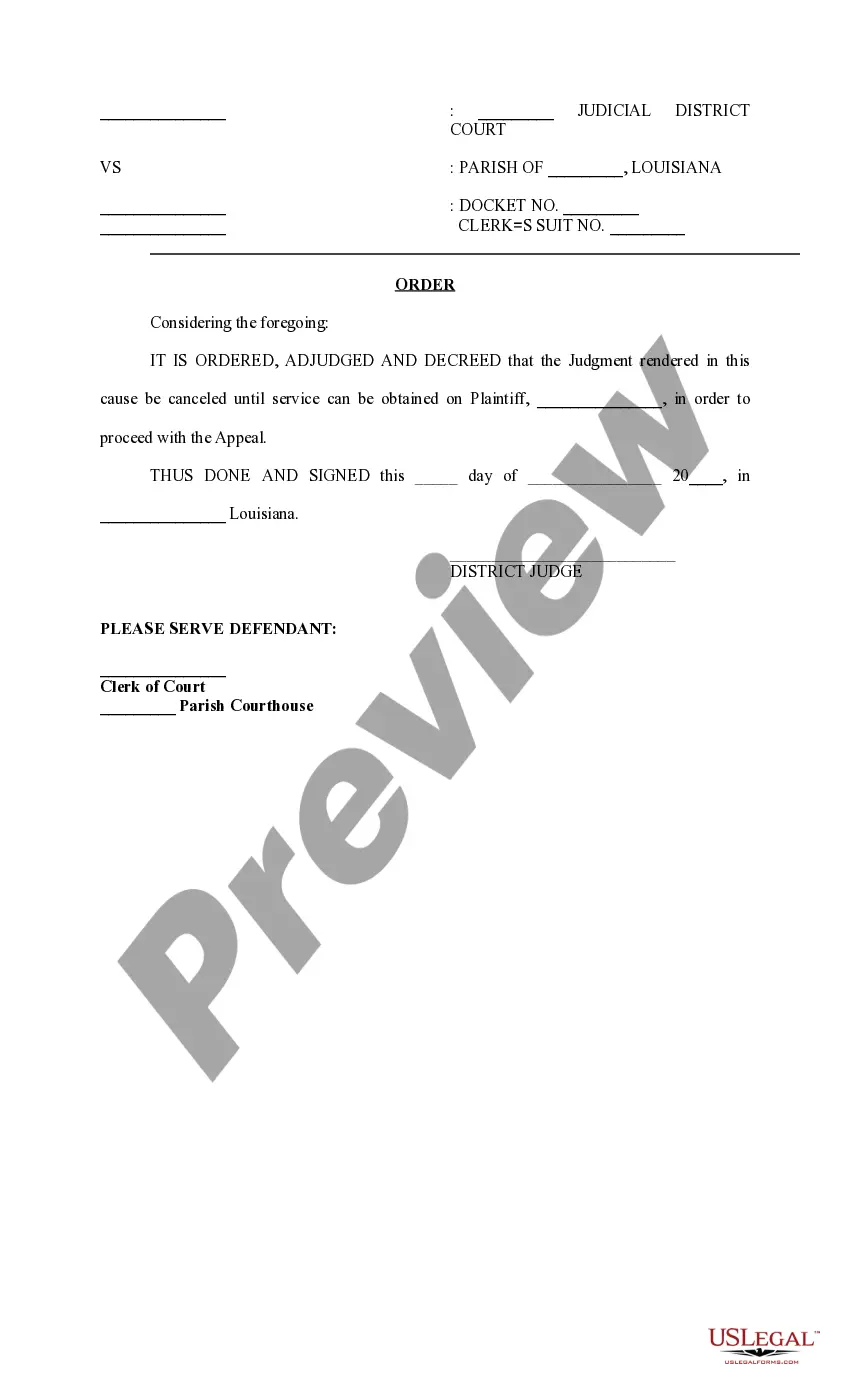
- Attached order: Includes an order to be signed by the judge regarding the cancellation of the judgment.
Situations where this form applies
This form should be used when a defendant has received a judgment in a civil case but is unable to serve the plaintiff with a notice of appeal due to the plaintiff's unavailability. It is essential to use this motion to prevent the enforcement of the judgment while the defendant seeks to have their appeal considered by the court.
Who needs this form
- Defendants in a civil lawsuit who have received a judgment against them.
- Individuals or businesses planning to appeal a judgment but facing challenges in serving the opposing party.
- Anyone requiring a formal pause of the legal judgment to secure their rights during the appeal process.
Instructions for completing this form
- Identify the parties: Enter the names of the defendant and plaintiff in the spaces provided.
- Provide judgment details: Fill in the relevant information about the judgment, including the date and amount.
- Document the appeal: Indicate the date the appeal was filed on behalf of the defendant.
- State the service issue: Clearly describe the challenges in locating the plaintiff for service.
- Sign and date the motion: Ensure the defendantâs attorney signs the document and includes their contact information.
Does this document require notarization?
This form does not typically require notarization unless specified by local law. However, it's advisable to check specific local requirements to ensure compliance.
Get your form ready online
Our built-in tools help you complete, sign, share, and store your documents in one place.
Make edits, fill in missing information, and update formatting in US Legal Forms—just like you would in MS Word.
Download a copy, print it, send it by email, or mail it via USPS—whatever works best for your next step.
Sign and collect signatures with our SignNow integration. Send to multiple recipients, set reminders, and more. Go Premium to unlock E-Sign.
If this form requires notarization, complete it online through a secure video call—no need to meet a notary in person or wait for an appointment.
We protect your documents and personal data by following strict security and privacy standards.

Make edits, fill in missing information, and update formatting in US Legal Forms—just like you would in MS Word.

Download a copy, print it, send it by email, or mail it via USPS—whatever works best for your next step.

Sign and collect signatures with our SignNow integration. Send to multiple recipients, set reminders, and more. Go Premium to unlock E-Sign.

If this form requires notarization, complete it online through a secure video call—no need to meet a notary in person or wait for an appointment.

We protect your documents and personal data by following strict security and privacy standards.
Mistakes to watch out for
- Failing to provide accurate judgment details, which can delay processing.
- Not timely filing the motion after the judgment has been rendered.
- Neglecting to sign the motion, resulting in it being deemed incomplete.
Advantages of online completion
- Convenience of immediate access and ability to download the form at any time.
- Editability allows for easy customization to fit specific case details.
- Reliability of receiving a form drafted by licensed attorneys familiar with legal requirements.
Key takeaways
- The Motion to Cancel Judgment allows defendants to pause a judgment while serving notice of an appeal.
- Accurate completion of this form is essential to protect legal rights during the appeal process.
- Always ensure all required sections are filled out correctly to avoid delays.
Looking for another form?

Form popularity
FAQ
In Louisiana, the statute of limitations for enforcing a judgment is typically ten years. After this period, the judgment becomes unenforceable unless you have filed a Louisiana Motion to Cancel Judgment, with Order to extend its validity. It is crucial to understand these timelines to effectively manage your legal rights. If you are unsure about the specifics, platforms like uslegalforms can provide valuable resources to help you navigate your situation.
A motion to amend a judgment in Louisiana allows a party to request changes or corrections to an existing judgment. This can include adjusting factual inaccuracies or modifying the terms of the judgment itself. If you believe there are valid reasons for this action, understanding how to proceed with a Louisiana Motion to Cancel Judgment, with Order, can be beneficial.
In Louisiana, various types of personal property can be seized under a judgment, including bank accounts, vehicles, and other tangible assets. However, certain exemptions exist, protecting necessities like household items and personal clothing from seizure. Knowing which properties are at risk can help you navigate your options, including filing a Louisiana Motion to Cancel Judgment, with Order.
In Louisiana, a judgment is generally valid for ten years. This period begins from the date the judgment is rendered. After this time frame, a creditor must take action to renew the judgment to maintain its enforceability. Understanding the lifecycle of a judgment is crucial, especially if you're considering a Louisiana Motion to Cancel Judgment, with Order.
A vacated judgment makes a previous legal judgment legally void. A vacated judgment is usually the result of the judgment of an appellate court, which overturns, reverses, or sets aside the judgment of a lower court. An appellate court may also vacate its own decisions.
Just because the judgment is vacated doesn't mean that the lawsuit disappears. In fact, vacating the judgment means that the lawsuit is active once again. The lawsuit will continue to show up on your credit report, though the judgment will not longer be reported to the credit reporting agencies.
You cannot appeal this kind of judgment and have a new trial until you vacate the default judgment, that is, until you have the judgment removed or erased. To vacate a default judgment, do the following:Get the form called Notice of Motion to Vacate Judgment from the small claims clerk.
First, you can ask the court to set aside the default judgment and give you an opportunity to contest it. Next, you can settle the debt with the debt buyer for an amount less than what the default judgment is for. And finally you can eliminate the default judgment completely by filing for bankruptcy.
If you do not think the default judgment was appropriately entered against you, you must file a motion with the court asking the judge to set aside (void or nullify) the judgment. If the judge grants your motion, the case starts back up again.
In order to vacate a judgment in California, You must file a motion with the court asking the judge to vacate or set aside the judgment. Among other things, you must tell the judge why you did not respond to the lawsuit (this can be done by written declaration).