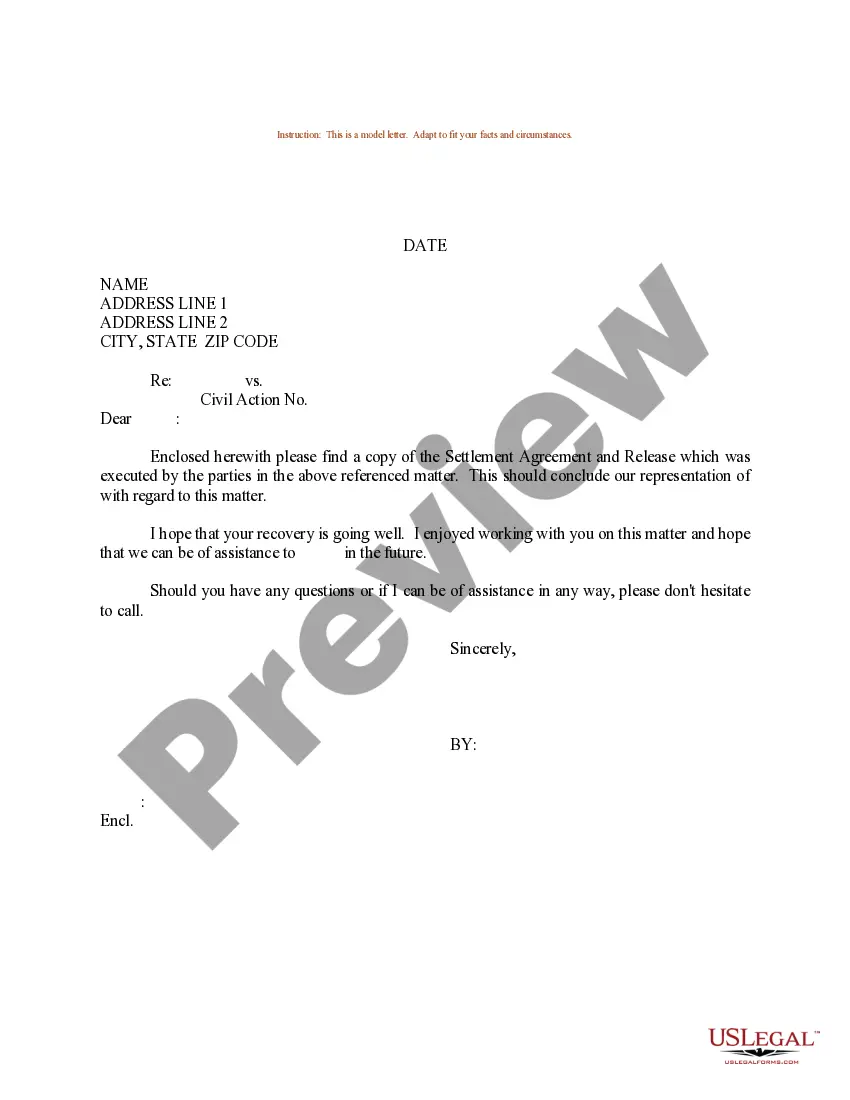
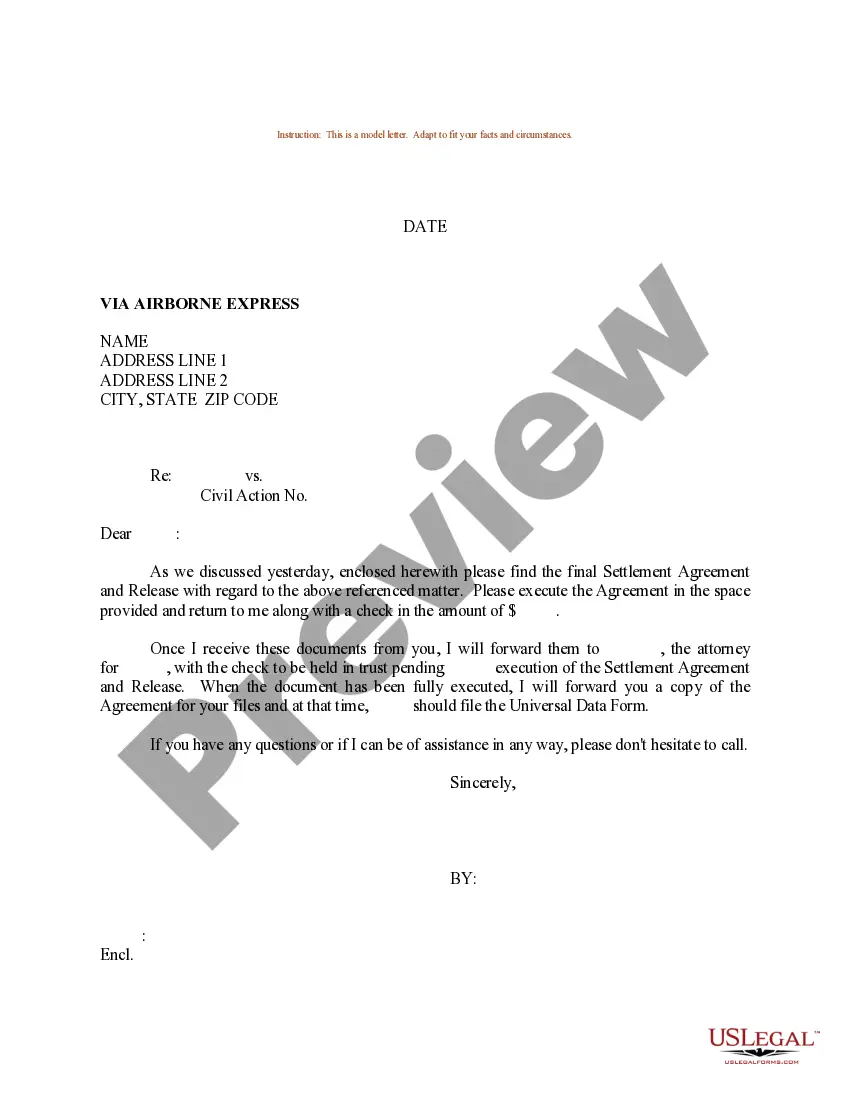
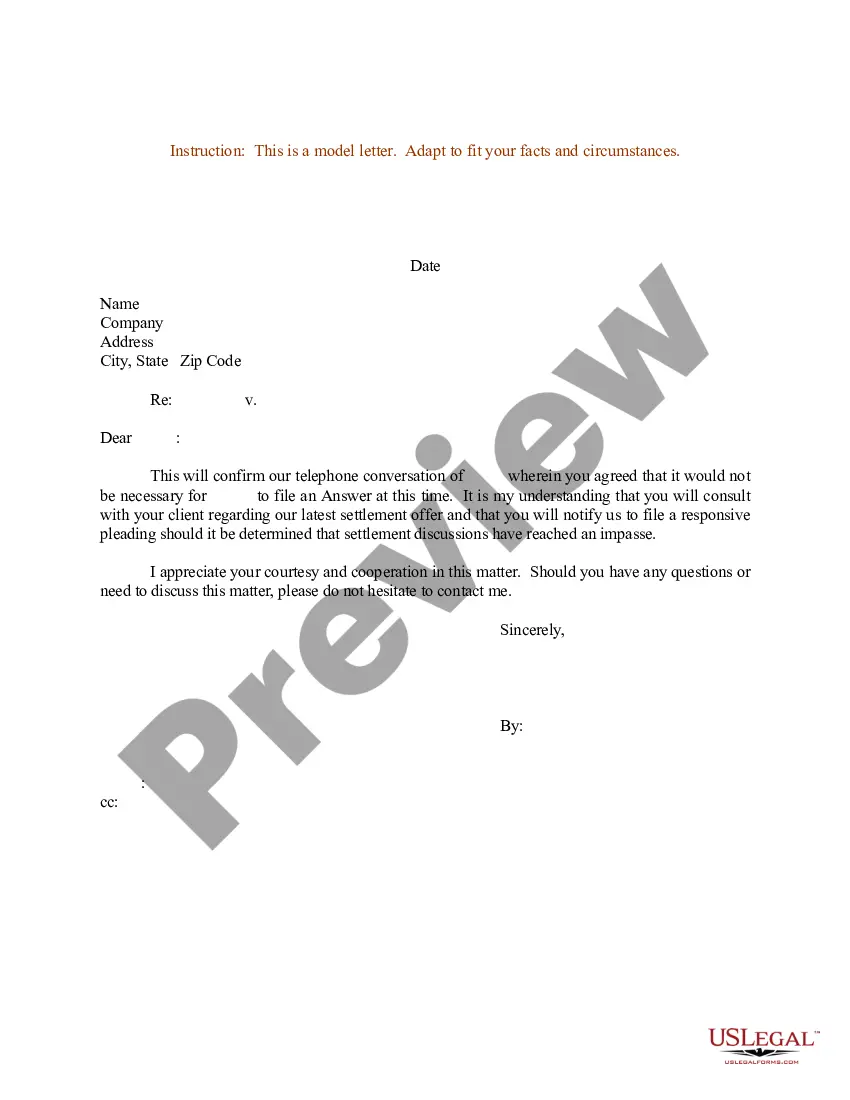
Settlement Letter Example In Suffolk
Description


Get your form ready online
Our built-in tools help you complete, sign, share, and store your documents in one place.
Make edits, fill in missing information, and update formatting in US Legal Forms—just like you would in MS Word.
Download a copy, print it, send it by email, or mail it via USPS—whatever works best for your next step.
Sign and collect signatures with our SignNow integration. Send to multiple recipients, set reminders, and more. Go Premium to unlock E-Sign.
If this form requires notarization, complete it online through a secure video call—no need to meet a notary in person or wait for an appointment.
We protect your documents and personal data by following strict security and privacy standards.

Make edits, fill in missing information, and update formatting in US Legal Forms—just like you would in MS Word.

Download a copy, print it, send it by email, or mail it via USPS—whatever works best for your next step.

Sign and collect signatures with our SignNow integration. Send to multiple recipients, set reminders, and more. Go Premium to unlock E-Sign.

If this form requires notarization, complete it online through a secure video call—no need to meet a notary in person or wait for an appointment.

We protect your documents and personal data by following strict security and privacy standards.
Looking for another form?

Form popularity
FAQ
For example, if a defendant believes the evidence against them is strong and the potential outcome of a trial is unfavorable, they may choose to settle to minimize damages or penalties. Settling out of court is common in both criminal and civil cases, as it offers benefits to both parties involved.
Treat the following as a set of general guidelines: Gather complete information before you start writing. Describe your injuries and medical treatment. List your medical expenses, lost wages, and non-economic damages. Make a settlement demand. Include a deadline for legal action if you want to, but don't bluff.
Settlements can be reached at any time throughout the litigation process, and many cases are settled before a formal lawsuit is filed.
Even after a case is filed, the parties in a civil case are allowed to settle via mutual agreement before beginning the trial, while the trial is taking place, as the jury deliberates, and as late as after the rendering of a verdict.
Under New York law, and in other US jurisdictions, settlement agreements are treated like any other contract. ingly to establish the existence of a settlement agreement, “a plaintiff must establish an offer, acceptance of the offer, consideration, mutual assent and an intent to be bound” (Kowalchuk v.
Roy Comer: Statistically we know that 98 per cent of civil cases settle before trial. There are multiple reasons why this happens. In my opinion, the primary reason for pre-trial settlement is the plaintiff does not want to go through the gantlet of having a judge and jury scrutinize them. There is some wisdom in this.
It depends on the situation, but yes, a letter of intent to sue (with settlement demand) may be required in some cases. For example, a court may require you to send a demand letter before pursuing a lawsuit that pertains to cases involving: Claims against governmental authorities.