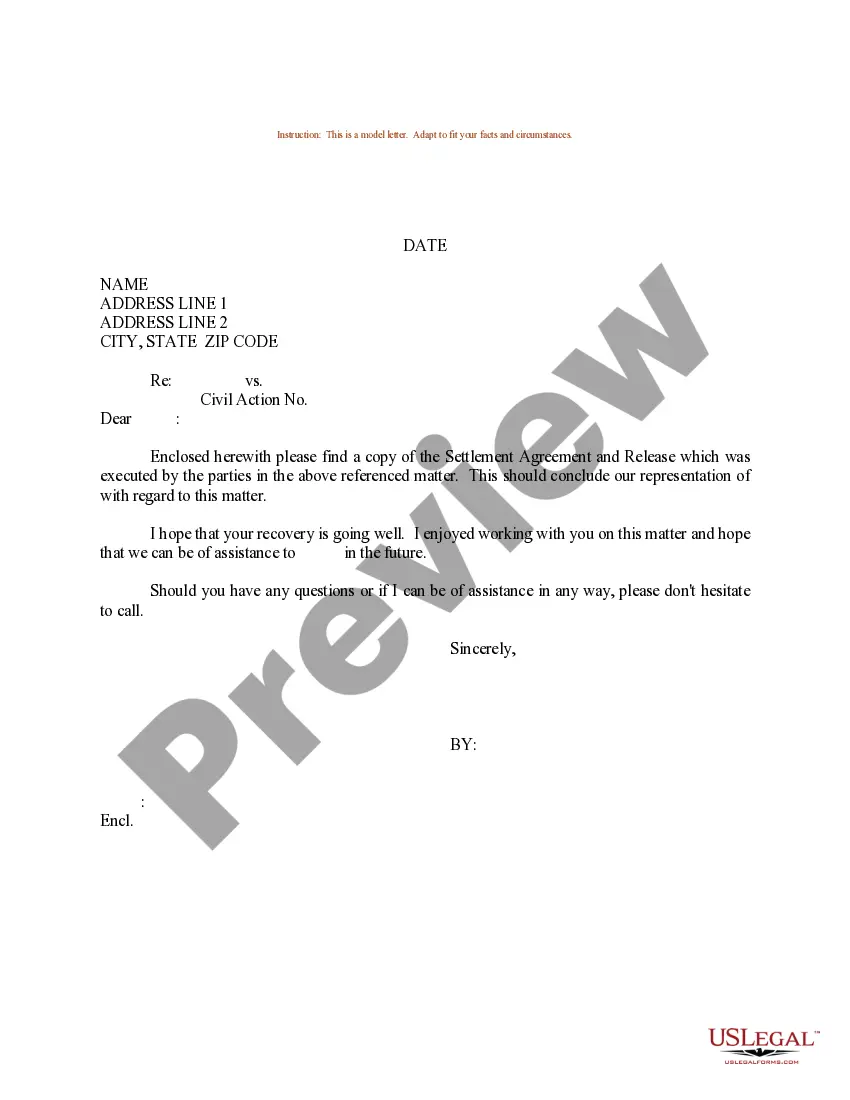
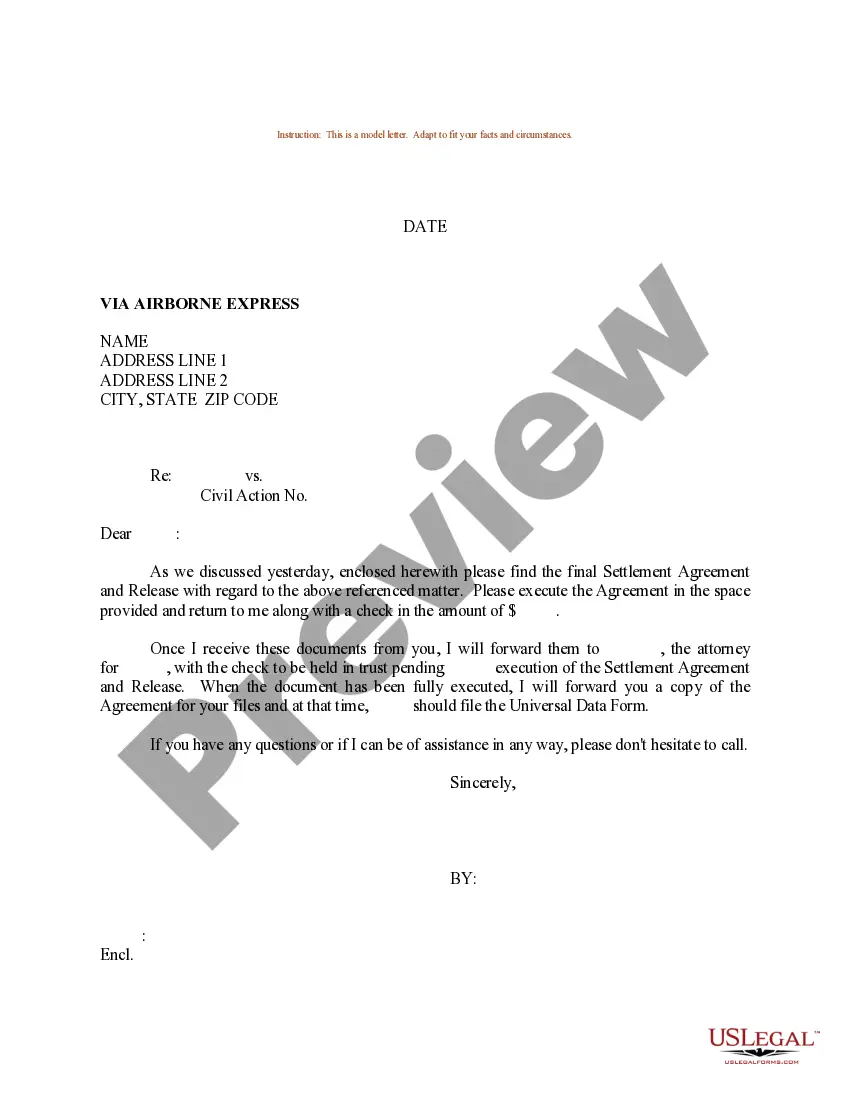
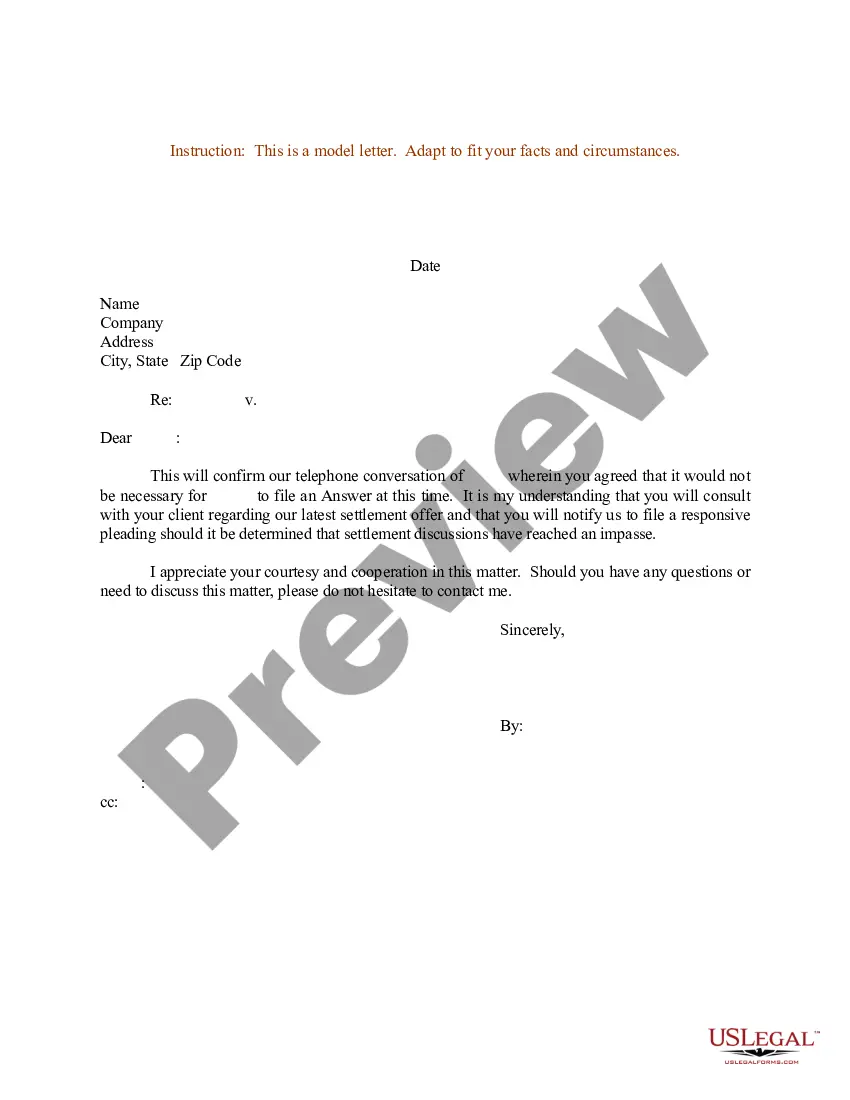
Confirmation Letter For Settlement In San Diego
Description


Get your form ready online
Our built-in tools help you complete, sign, share, and store your documents in one place.
Make edits, fill in missing information, and update formatting in US Legal Forms—just like you would in MS Word.
Download a copy, print it, send it by email, or mail it via USPS—whatever works best for your next step.
Sign and collect signatures with our SignNow integration. Send to multiple recipients, set reminders, and more. Go Premium to unlock E-Sign.
If this form requires notarization, complete it online through a secure video call—no need to meet a notary in person or wait for an appointment.
We protect your documents and personal data by following strict security and privacy standards.

Make edits, fill in missing information, and update formatting in US Legal Forms—just like you would in MS Word.

Download a copy, print it, send it by email, or mail it via USPS—whatever works best for your next step.

Sign and collect signatures with our SignNow integration. Send to multiple recipients, set reminders, and more. Go Premium to unlock E-Sign.

If this form requires notarization, complete it online through a secure video call—no need to meet a notary in person or wait for an appointment.

We protect your documents and personal data by following strict security and privacy standards.
Looking for another form?








Form popularity
FAQ
Treat the following as a set of general guidelines: Gather complete information before you start writing. Describe your injuries and medical treatment. List your medical expenses, lost wages, and non-economic damages. Make a settlement demand. Include a deadline for legal action if you want to, but don't bluff.
Superior Court of California - County of San Diego.
If everything is in order, the court grants 'Letters Testamentary' or 'Letters of Administration,' officially appointing the executor or administrator. This person is now legally able to manage the estate and is often referred to as the personal representative of the estate.
There are several benefits to a settlement, but there may also be some potential down-sides. PRO: Cannot Be Used Against You. PRO: Gives You Control Over the Outcome. PRO: Quicker Resolution. PRO: Cheaper than Trial. CON: You Don't Get 100%. CON: Might Show “Weakness:” ... CON: Might Tip Your Hand:
The goal of a settlement conference is to assist the parties in negotiating a resolution of all or part of their dispute. A settlement conference may either be voluntary or ordered by the court.
The server tries to give the papers in person but can't find the tenant. If no adult is home, the server writes down each attempt to serve the papers. This is called a "declaration of due diligence."
The goal of a settlement conference is to assist the parties in negotiating a resolution of all or part of their dispute. A settlement conference may either be voluntary or ordered by the court.
On the day of the MSC, the parties will either reach a settlement agreement and begin the process of filing a Judgment with the Court to finalize their case, or, if no agreement can be reached, the Court will determine if another MSC is needed, or set the matter for a Trial Readiness Conference (TRC).
Tells the court that you had legal papers in a civil case - other than a summons - delivered to (served on) the other party.
In a settlement conference, a judge or volunteer attorney will be there to help you and the other party find a solution to your dispute. They won't make any decisions or orders in the case, but they will evaluate the strengths and weaknesses of your arguments and try to negotiate a settlement.