Settlement Letter Example In Nassau
Description


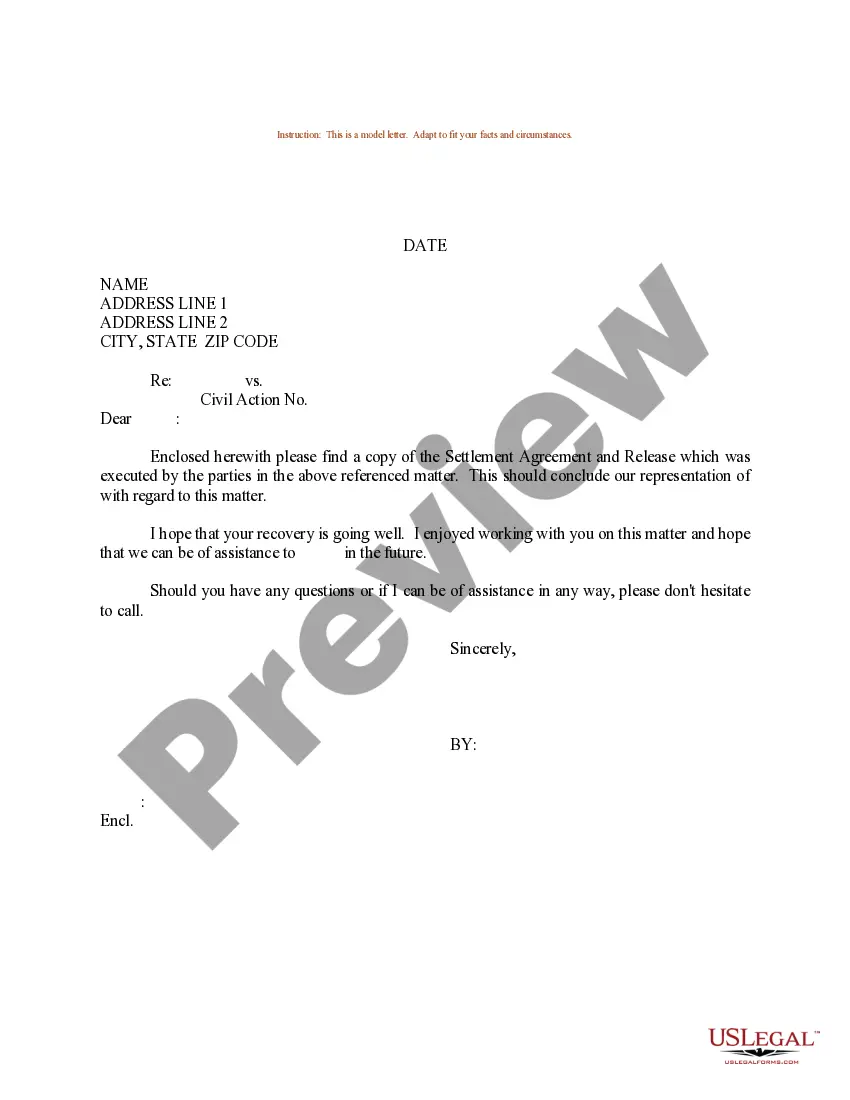
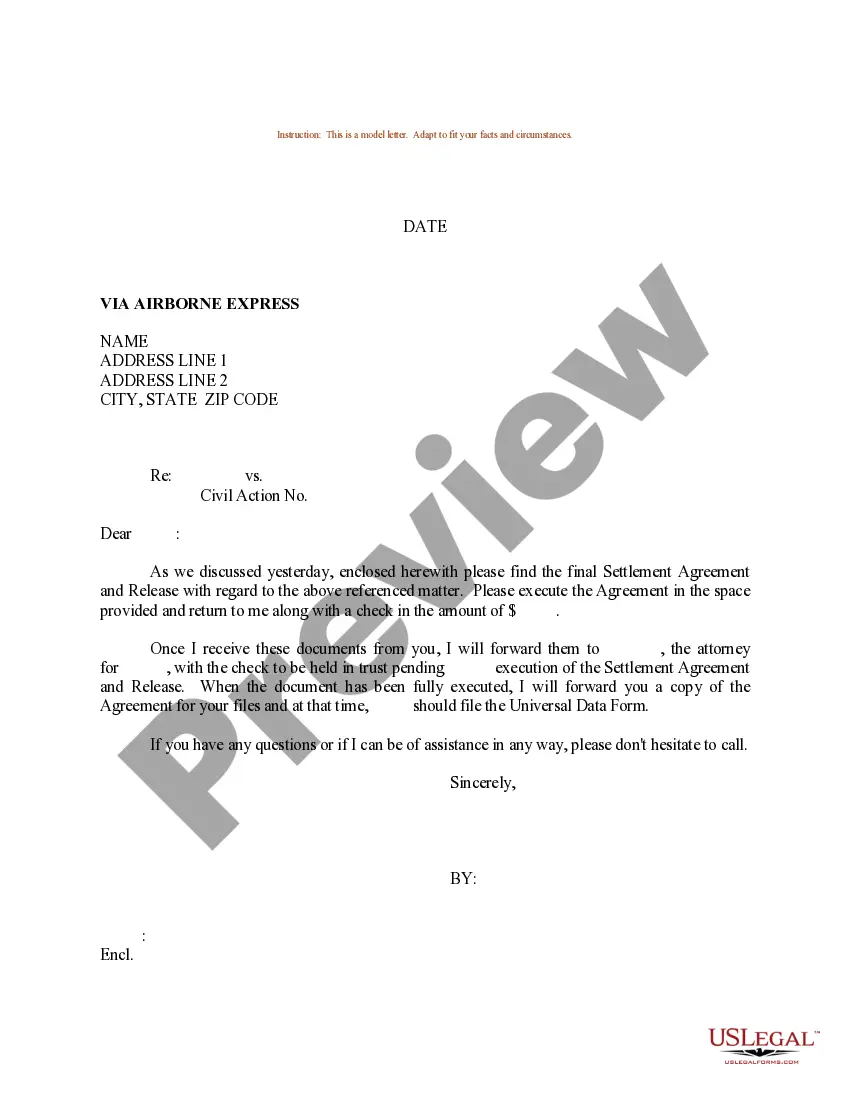
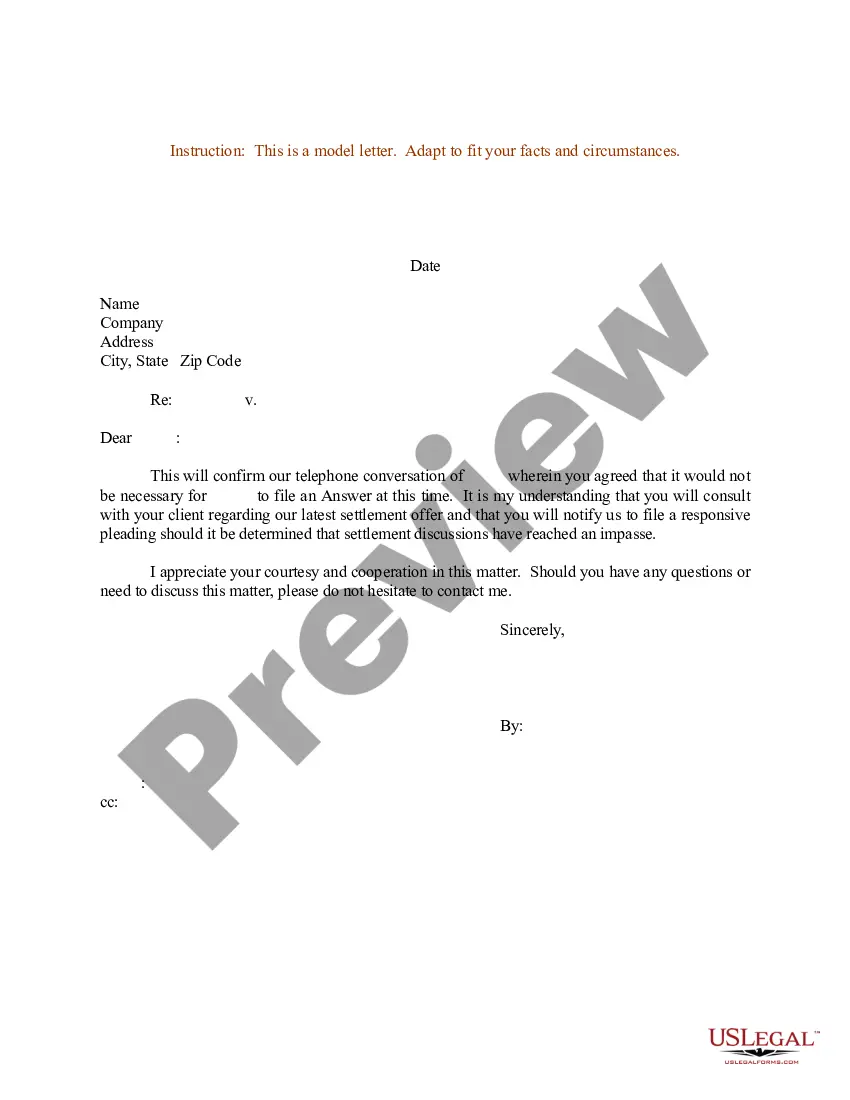
Get your form ready online
Our built-in tools help you complete, sign, share, and store your documents in one place.
Make edits, fill in missing information, and update formatting in US Legal Forms—just like you would in MS Word.
Download a copy, print it, send it by email, or mail it via USPS—whatever works best for your next step.
Sign and collect signatures with our SignNow integration. Send to multiple recipients, set reminders, and more. Go Premium to unlock E-Sign.
If this form requires notarization, complete it online through a secure video call—no need to meet a notary in person or wait for an appointment.
We protect your documents and personal data by following strict security and privacy standards.

Make edits, fill in missing information, and update formatting in US Legal Forms—just like you would in MS Word.

Download a copy, print it, send it by email, or mail it via USPS—whatever works best for your next step.

Sign and collect signatures with our SignNow integration. Send to multiple recipients, set reminders, and more. Go Premium to unlock E-Sign.

If this form requires notarization, complete it online through a secure video call—no need to meet a notary in person or wait for an appointment.

We protect your documents and personal data by following strict security and privacy standards.
Looking for another form?







Form popularity
FAQ
Under New York law, and in other US jurisdictions, settlement agreements are treated like any other contract. ingly to establish the existence of a settlement agreement, “a plaintiff must establish an offer, acceptance of the offer, consideration, mutual assent and an intent to be bound” (Kowalchuk v.
How do I start my small claims case? You or someone else may start your case by filling out a court form. You may file by mail if you have a small claims case in Western Suffolk County or if you live outside New York City and you want to sue a party within New York City. The form describes your claim to the Court.
At the outset of settlement negotiations, list all individuals and entities—both for the plaintiff and the defendant—that the agreement will cover. ✔ List all legal issues to be settled. List all claims your adversary may legally release via settlement. Verify the agreement covers these claims.
Can I sue for more than $5,000 in Small Claims Court? If your claim is for more than $5,000 in either Nassau or Suffolk county you must start a civil case. In NYC you may sue for up to $10,000 in Small Claims Court. You cannot split your claim into smaller claims to get around the limit.
You or someone else may start your case by filling out a court form. You may file by mail if you have a small claims case in Western Suffolk County or if you live outside New York City and you want to sue a party within New York City. The form describes your claim to the Court.
A summons is a pre-printed legal form that tells a defendant that he or she is being sued. The defendant must file an appearance and responsive pleading or answer within 30 days of being served with the summons.
A plaintiff's concern about the financial resources of a defendant may also play a major role in settlement. A plaintiff with a strong case will often be forced to accept a lower-value settlement if the de- fendant is financially incapable of paying the likely judgment.
After the defendant has filed an answer or a motion to dismiss the complaint, the judge holds a pretrial conference, sometimes referred to as a case management conference. A schedule for discovery is generally set at this conference, and a trial date is sometimes also scheduled.
After a summons with notice is served, the defendant will demand that the plaintiff serve a complaint. The plaintiff must then have the complaint served within 20 days after being served with the demand, or the case may be dismissed.
The written response must be made within 20 days of personal service, or within 30 days of the time when service by any other means is complete. If the defendant fails to respond he or she is in default and plaintiff may be able to obtain a default judgment against the defendant.