Settlement Agreement Example In Hillsborough
Description


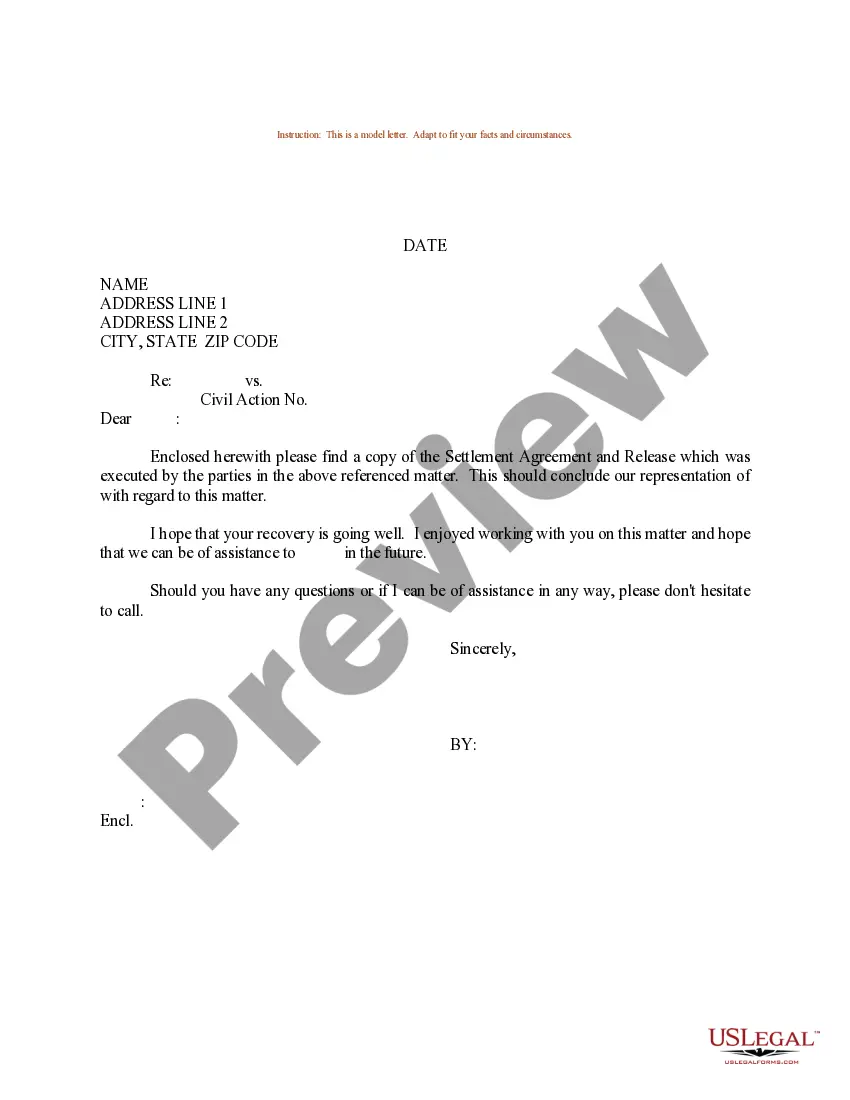
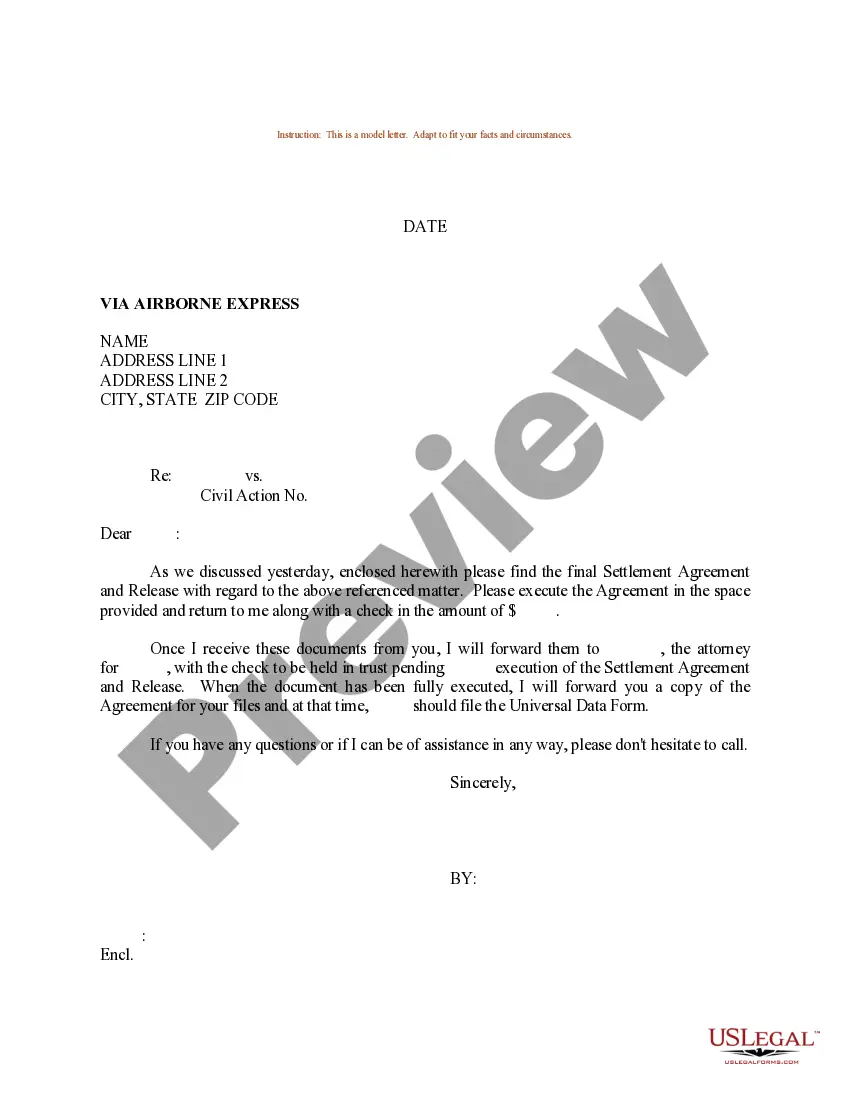
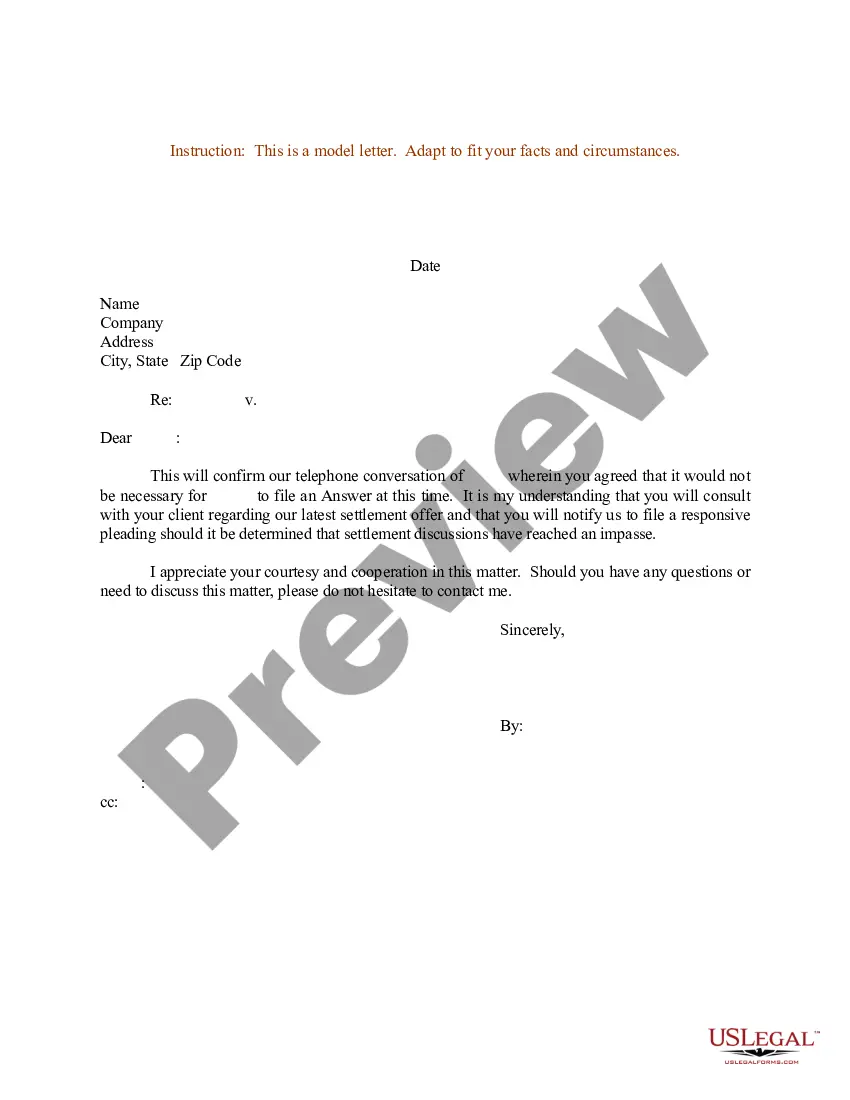
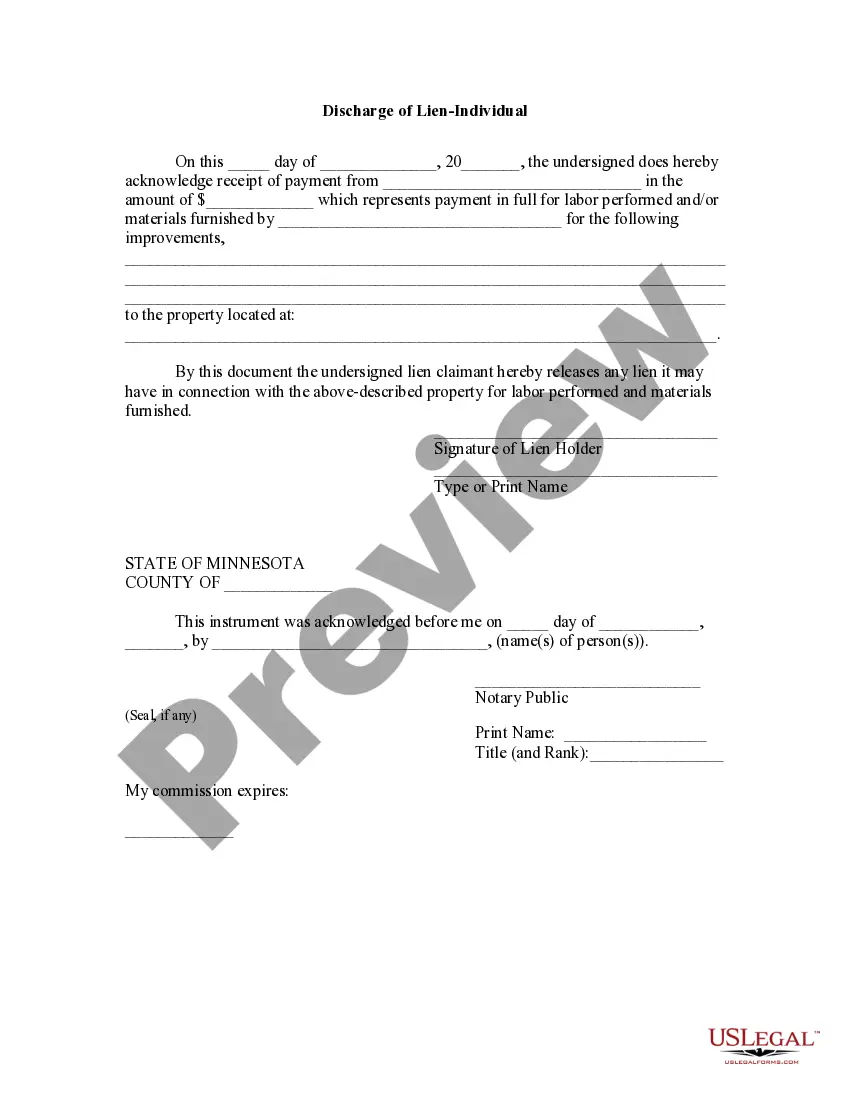
Get your form ready online
Our built-in tools help you complete, sign, share, and store your documents in one place.
Make edits, fill in missing information, and update formatting in US Legal Forms—just like you would in MS Word.
Download a copy, print it, send it by email, or mail it via USPS—whatever works best for your next step.
Sign and collect signatures with our SignNow integration. Send to multiple recipients, set reminders, and more. Go Premium to unlock E-Sign.
If this form requires notarization, complete it online through a secure video call—no need to meet a notary in person or wait for an appointment.
We protect your documents and personal data by following strict security and privacy standards.

Make edits, fill in missing information, and update formatting in US Legal Forms—just like you would in MS Word.

Download a copy, print it, send it by email, or mail it via USPS—whatever works best for your next step.

Sign and collect signatures with our SignNow integration. Send to multiple recipients, set reminders, and more. Go Premium to unlock E-Sign.

If this form requires notarization, complete it online through a secure video call—no need to meet a notary in person or wait for an appointment.

We protect your documents and personal data by following strict security and privacy standards.
Looking for another form?








Form popularity
FAQ
What Should Be Included in a Settlement Agreement? Identifying information for all involved parties. A description of the issue you're seeking to settle. An offer of resolutions that both parties agree to. Proof of valid consideration from both parties without coercion or duress. Legal purpose.
How to Draft a Family Settlement Agreement Define the objective of the settlement agreement. Determine the people involved in the agreement. Collect relevant details. Negotiate the provisions of the family settlement agreement. Prepare the family settlement agreement. Check and revise the agreement.
In Florida, a proposal for settlement must be in writing and must state that it is being made pursuant to Florida Statute 768.79. It must be served to the other party by certified mail or hand delivery and must give the other party 30 days to accept or reject the offer.
Family settlement agreements are useful in many situations involving the probate of a loved one's estate. These are used when there is a dispute about the distribution of property to heirs or when the family agrees the distribution should be different than what the will states.
Like baking your favorite meal requires the correct ingredients, when creating a family contract it's important to include several necessary elements. Precise Wording. Clear Rewards and Consequences. Bonus Clause. Child & Parent as Co-Creators. Re-negotiation. Signatures. Inspect What You Expect.
Connecticut is considered an equitable distribution state, meaning that jointly-owned assets are distributed between two spouses equitably but not necessarily equally. For example, if a couple does not have children, the marital home may be sold and the profits split down the middle.
Many spouses with similar incomes split assets 50/50 and forgo spousal support. Spouses with uneven incomes typically try to make things equitable through asset division and several years of spousal support. Parents settling a divorce generally agree to use their state child support calculation.
A 70/30 split, while less common than equal or 60/40 divisions, is not unusual in certain circumstances. When there is a marked disparity in financial resources or future earning capacity, the court may consider such a division to be fair and equitable.
Here's a step-by-step guide to drafting your own settlement agreement in California: Gather Information About Assets, Debts, and Child Custody Needs. Draft a Clear Outline of the Agreement. Specify Terms for Property Division and Debt Allocation. Address Spousal Support and Child Custody Arrangements.