Severance Termination Without Cause In Riverside
Description



Form popularity
FAQ
California is an at-will state, which means that an employer can fire you for any reason at any time, with or without cause. This means that if your boss doesn't like your personality, if you run out of work, if they think you're lazy, or if they just don't need you anymore, they can fire you at any time.
Wrongful termination occurs when an employer fires a worker for unlawful reasons. Common unlawful reasons for unlawful termination includes firing employees for discriminatory reasons based on age, disability or pregnancy. Employees may be able to sue former employers for wrongful termination in California.
2. Termination for convenience. Termination for convenience, on the other hand, enables parties to terminate the contract without needing to prove blame or breach. This type of contract termination is used to end relationships more amicably and exit contracts that no longer benefit either of the parties involved.
California passed a new landlord-tenant law that will provide additional protections for renters around just cause evictions. The law took effect on April 1, 2024, and requires landlords to have just cause to terminate tenancy after a California tenant has been placed in the unit for 12 months.
This allows for the “7 minute rule,” where: the first 7 minutes to the increment, 1 through 7, are rounded down, and. the final 7 minutes, or 8-15, are rounded up.
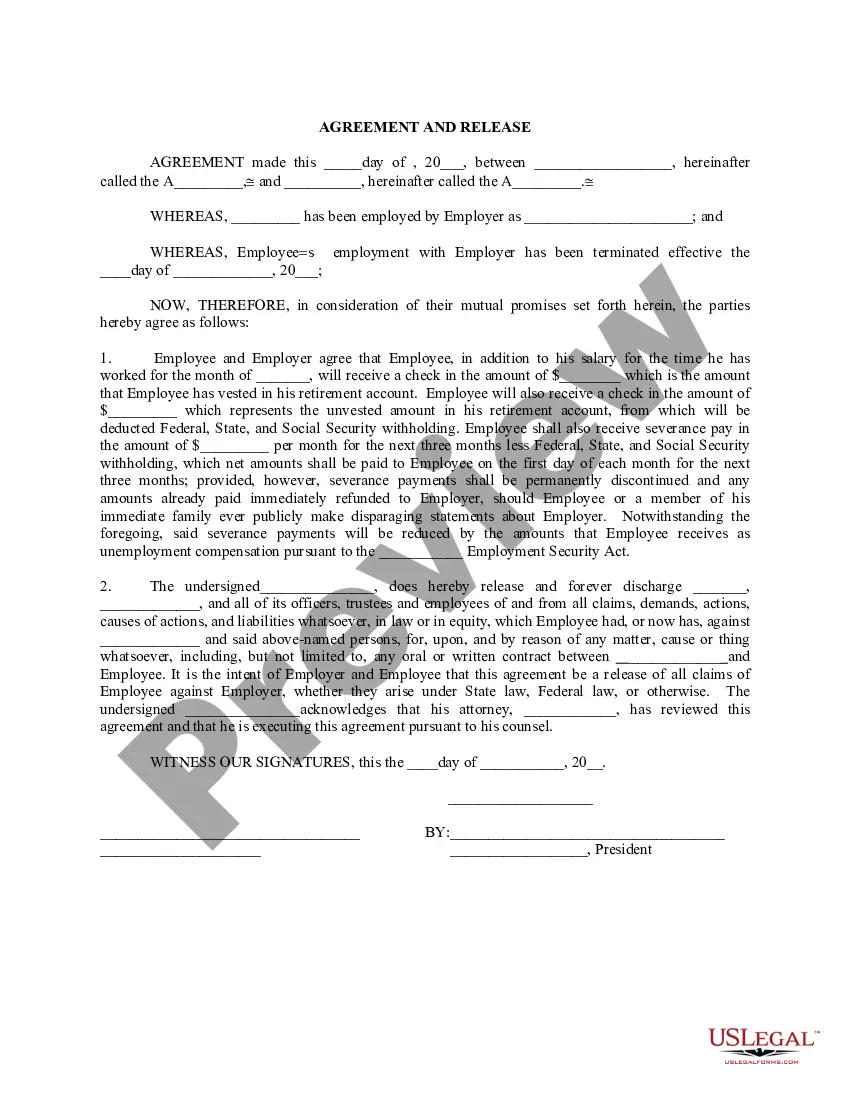
Specifically, California Gov Code 12964.5(b)(4) sets a mandatory waiting period of at least five business days. This period allows employees the necessary time to review the severance agreement thoroughly and consult with legal counsel to ensure the terms are fair and in their best interest.
The new rule mandates that businesses inform their employees that they have at least five days to review any separation or severance arrangements.
Lack of Voluntary Consent: Under California law, a severance agreement can be considered valid and enforceable only if the parties entered into it voluntarily. If your consent was obtained through coercion, duress, or fraud, the agreement will be deemed invalid.
Understanding termination without cause In Canada, a termination without cause occurs when an employer ends an employee's job without specific reasons related to serious workplace misconduct or insubordination (known as termination “for cause”). It's akin to being laid off or let go without being at fault.
Unemployment Insurance You may be eligible for regular unemployment if you received a W-2 and you meet any of these requirements: You are fully or partially unemployed because of a layoff, furlough, reduced wages, or reduced hours.