Employer Pay Severance In Pima
Description

Get your form ready online
Our built-in tools help you complete, sign, share, and store your documents in one place.
Make edits, fill in missing information, and update formatting in US Legal Forms—just like you would in MS Word.
Download a copy, print it, send it by email, or mail it via USPS—whatever works best for your next step.
Sign and collect signatures with our SignNow integration. Send to multiple recipients, set reminders, and more. Go Premium to unlock E-Sign.
If this form requires notarization, complete it online through a secure video call—no need to meet a notary in person or wait for an appointment.
We protect your documents and personal data by following strict security and privacy standards.

Make edits, fill in missing information, and update formatting in US Legal Forms—just like you would in MS Word.

Download a copy, print it, send it by email, or mail it via USPS—whatever works best for your next step.

Sign and collect signatures with our SignNow integration. Send to multiple recipients, set reminders, and more. Go Premium to unlock E-Sign.

If this form requires notarization, complete it online through a secure video call—no need to meet a notary in person or wait for an appointment.

We protect your documents and personal data by following strict security and privacy standards.
Looking for another form?




Form popularity
FAQ
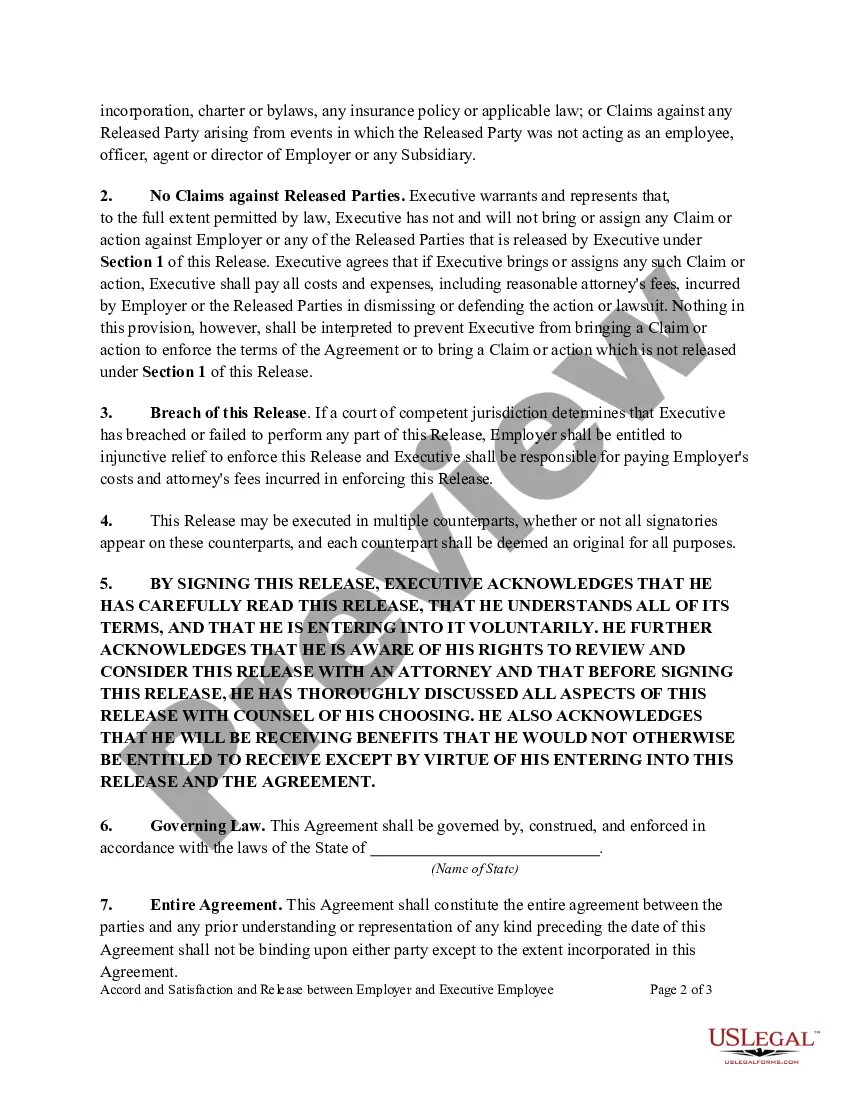
Like many other states, Arizona is an “at-will” employment state. This generally means that employers can terminate employees at any time for any reason—or even no reason at all—without incurring legal liability. Likewise, an employee can quit at any time without providing a reason or advanced notice.
Arizona law provides that an employer may terminate an employee at any time. The term is called “at-will employment.” The legal basis for this is that the employment relationship is considered to be like a contract and at any time either party may decide to end the employment relationship. (A.R.S. § 23-1501).
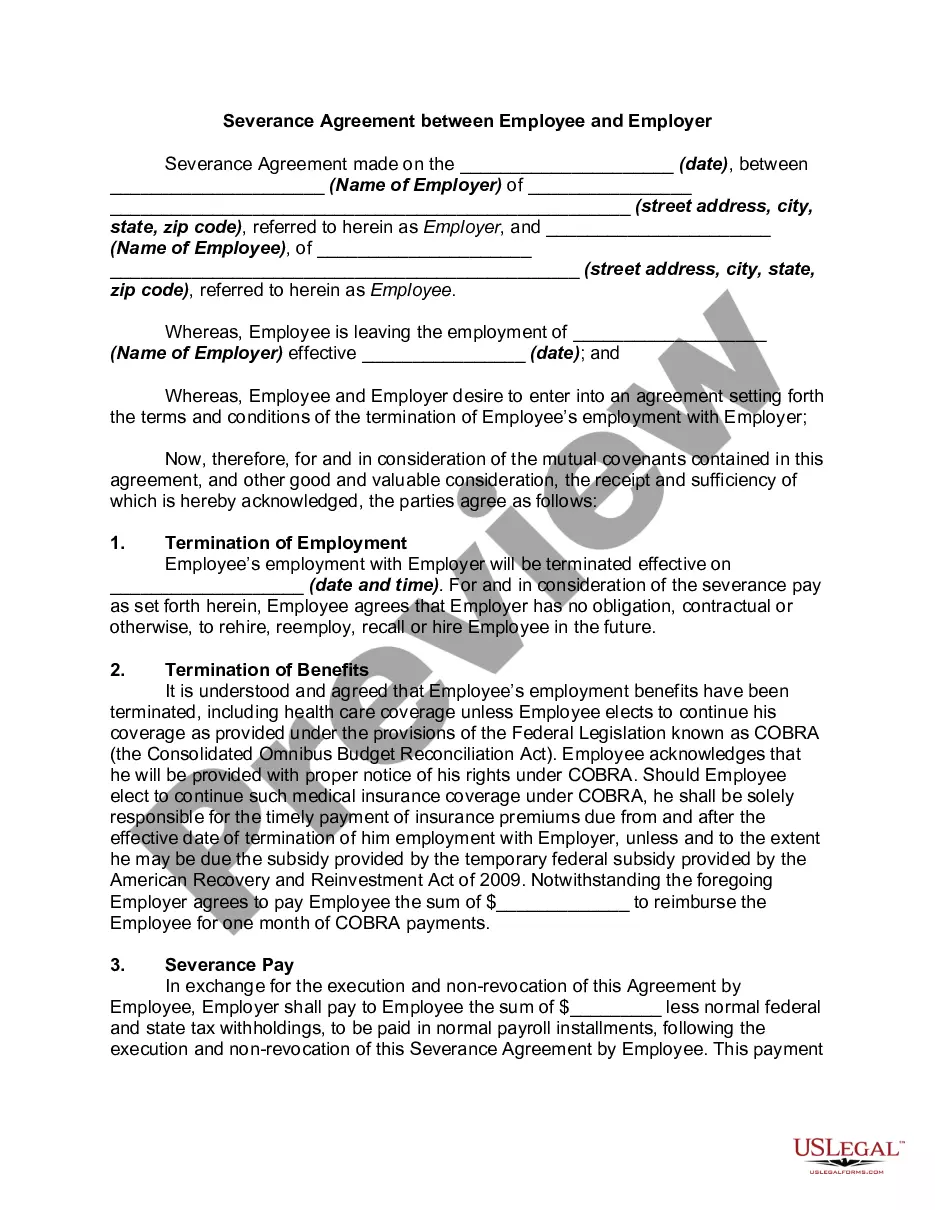
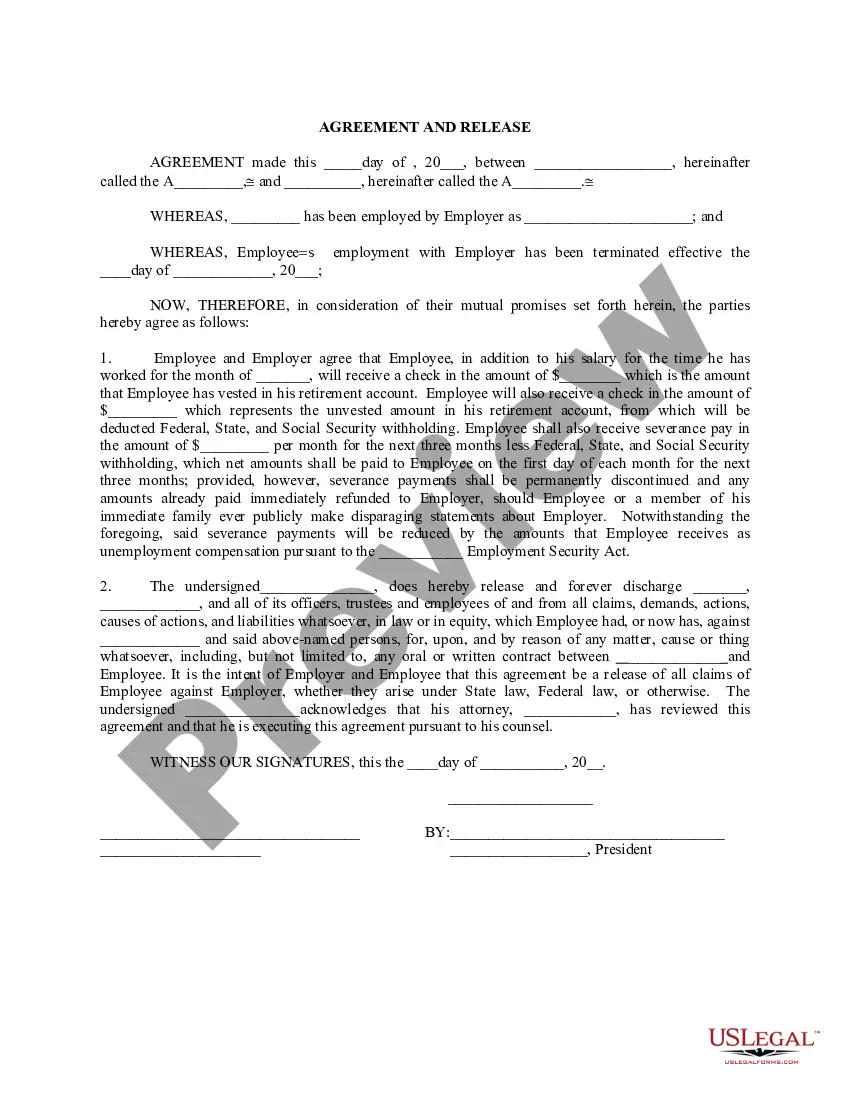
What should be included in a severance agreement? Compensation details. Confidentiality rules following termination. Date of employee's termination. Agreement from both parties in the form of a signature. Details about how long the employee will continue to have access to benefits.
Firing in Arizona Firing can occur due to poor performance, misconduct, or a violation of company policies. Arizona follows the “at-will” employment doctrine, allowing employers to terminate employees without cause as long as the termination is not discriminatory or retaliatory.
Arizona law provides for a disqualification from benefits for a variety of reasons, including voluntarily quitting work without good cause related to the employment or discharge for wilful or negligent misconduct connected with the employment.
Nevada. The weekly benefit amount in Nevada is 1/25th of your earnings in the highest quarter of your base period. The minimum weekly benefit amount a Nevadan could receive is $16 and the maximum is $469. If you collect income while on unemployment benefits, Nevada will disregard 1/4 of your wages.
What is the downside to severance? The downside to severance includes financial drawbacks such as loss of steady income, potential loss of benefits, and uncertainty about future job prospects, as well as the impact on retirement savings and benefits.