Termination With Severance Letter In Miami-Dade
Description

Get your form ready online
Our built-in tools help you complete, sign, share, and store your documents in one place.
Make edits, fill in missing information, and update formatting in US Legal Forms—just like you would in MS Word.
Download a copy, print it, send it by email, or mail it via USPS—whatever works best for your next step.
Sign and collect signatures with our SignNow integration. Send to multiple recipients, set reminders, and more. Go Premium to unlock E-Sign.
If this form requires notarization, complete it online through a secure video call—no need to meet a notary in person or wait for an appointment.
We protect your documents and personal data by following strict security and privacy standards.

Make edits, fill in missing information, and update formatting in US Legal Forms—just like you would in MS Word.

Download a copy, print it, send it by email, or mail it via USPS—whatever works best for your next step.

Sign and collect signatures with our SignNow integration. Send to multiple recipients, set reminders, and more. Go Premium to unlock E-Sign.

If this form requires notarization, complete it online through a secure video call—no need to meet a notary in person or wait for an appointment.

We protect your documents and personal data by following strict security and privacy standards.
Looking for another form?








Form popularity
FAQ
Is a Letter of Termination Required? For the most part, the Federal Labor Standards Act (FLSA) doesn't require organizations to provide letters of termination. The exceptions are when employees are part of a union, a collective bargaining agreement, or certain mass layoffs or corporate closures.
The State of Florida is an employment-at-will jurisdiction. What that means is employers can terminate their employees with or without cause. In most situations, employers don't have to provide advance termination notice.
Most termination clauses are an agreement between the employer and the employee that in the event the employer elects to dismiss the employee without cause, the employee will only receive what they are entitled to under the Employment Standards Code.
A Florida Notice of Termination must include all of the information contained in the Notice of Commencement, the NOC recording information (book/page numbers), the date of effectiveness, statement identifying the termination of the entire project or a portion of the real property, a statement that all lienors have been ...
While not required by law in Florida, providing a termination letter or document to the employee is advisable to help protect the employer in case of legal action.
What is proof of employee termination? This could include a written notice from the employer to the employee, a signed separation agreement, payroll records showing no further payments were made after a certain date, and other documents that prove there was an official ending to the employment relationship.
The State of Florida is an employment-at-will jurisdiction. What that means is employers can terminate their employees with or without cause. In most situations, employers don't have to provide advance termination notice.
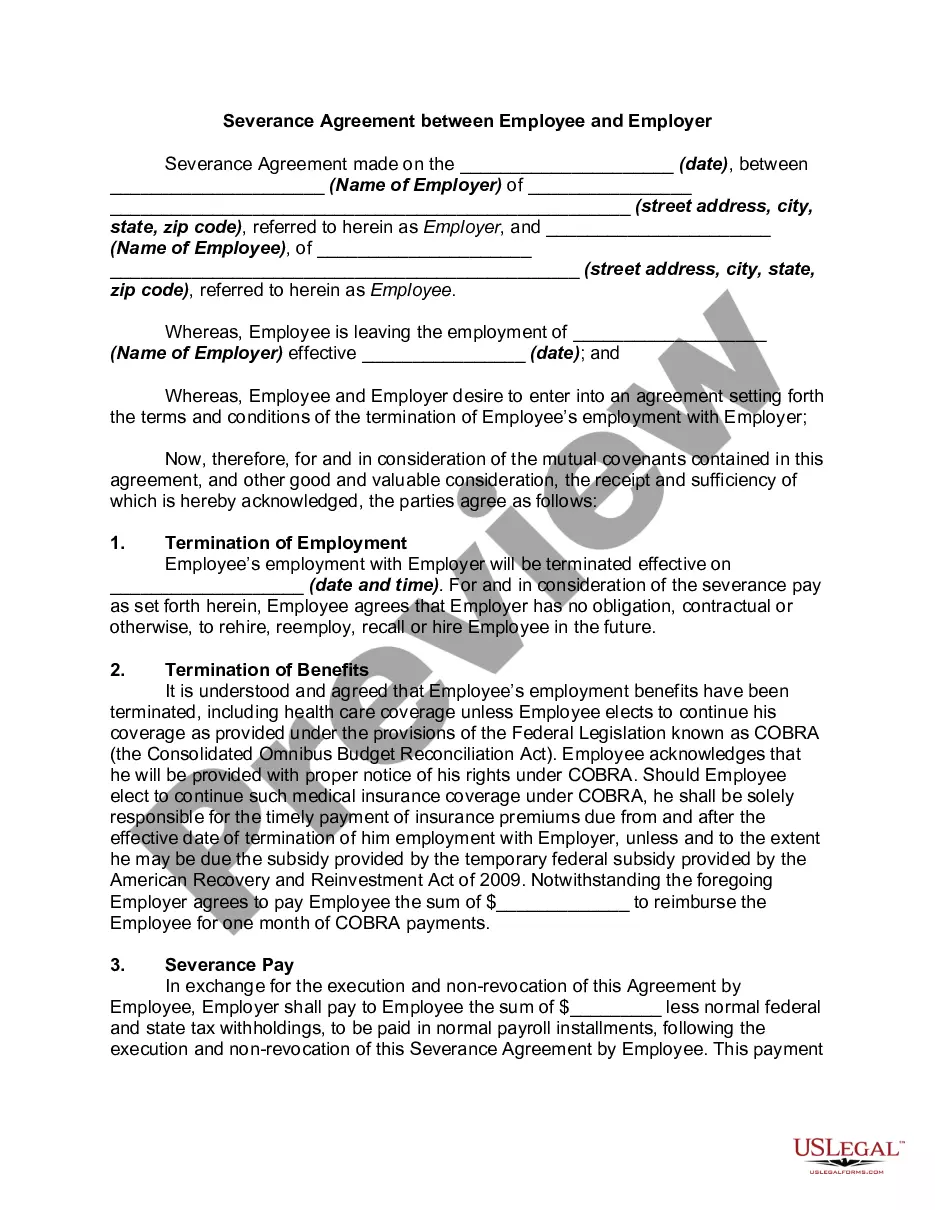
A letter of termination should include the following: The termination date. Reason(s) for termination. An explanation of next steps for compensation and benefits. A list of company property employees need to return. Notification of agreements employees signed, such as non-disclosure agreements.
The NOC must be signed and notarized by the property owner or their authorized agent. If it's not notarized, the NOC won't be valid, leaving the property owner at risk of legal problems.