Termination Without Severance In Fairfax
Description

Form popularity
FAQ
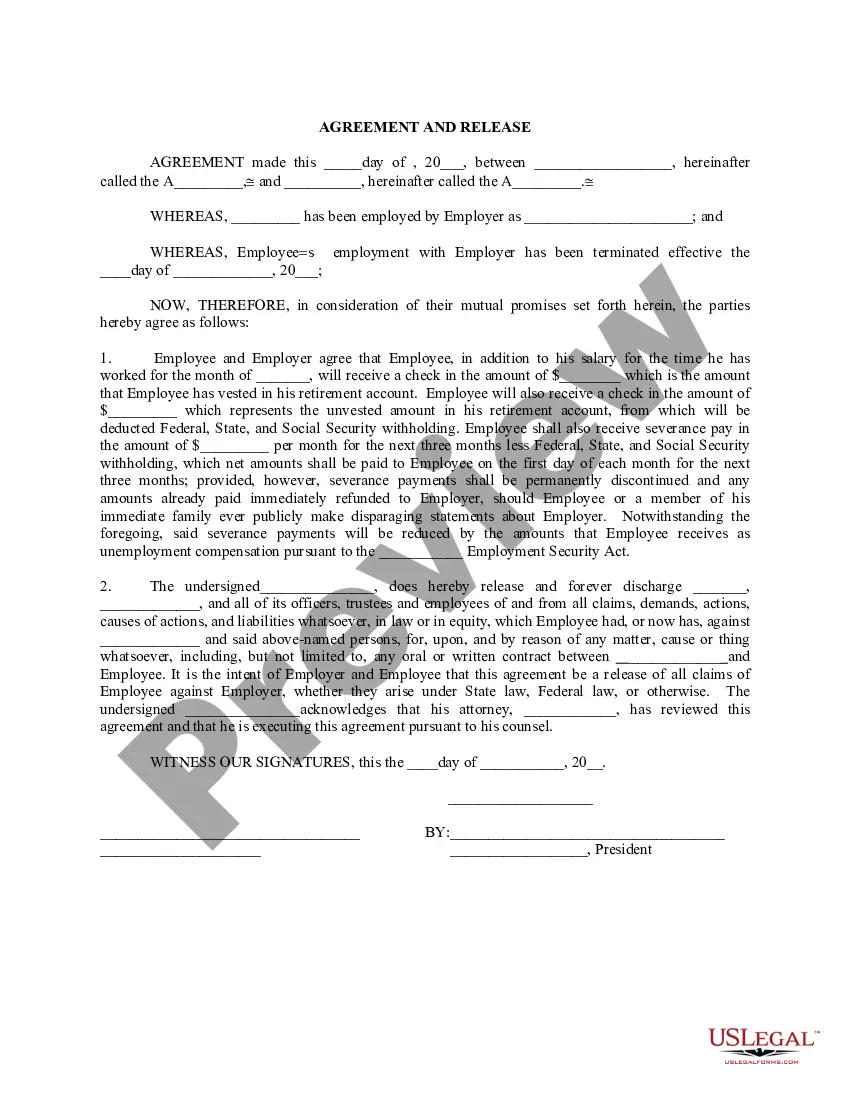
Typically, there may be an express or implied right to terminate the contract, allowing a party to cease the agreement under a termination clause before the agreed end date. Usually, termination clauses link to causes like a breach of contract and insolvency.
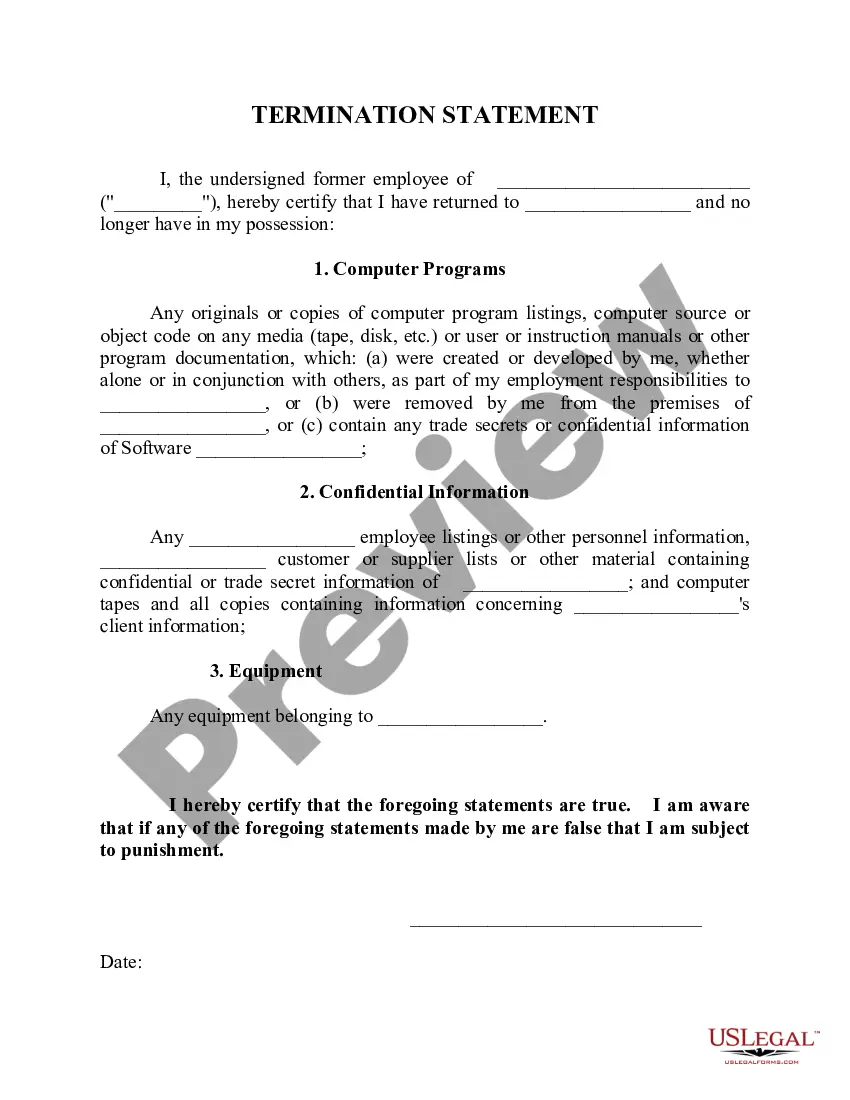
Understanding termination letters The date of termination. The reason for the termination (while not always required, many include it) Any severance benefits or other compensation the employee is entitled to. Instructions for the return of company property. Details regarding the final paycheck and accrued vacation time.
Virginia is an employment-at-will state; this means the employer may terminate any employee at any time, for any reason, or for no reason. As a general rule, therefore, the employee has no right to challenge the termination. There are a few very limited exceptions.
A plaintiff has two years to file a common law claim for wrongful termination in Virginia but only one year to file claims under the Fraud and Abuse Whistleblower Protection Act. As always, you should move as quickly as you can to protect your rights so that you are not barred by any statute of limitations.
Termination signifies the end of any employment contract and can take various forms like retrenchment, discharge, or dismissal. Dismissal, on the other hand, is a type of termination specifically imposed as a disciplinary action for severe misconduct, such as habitual lateness, fraud, or breach of confidentiality.
Wrongful Termination In Virginia The second is when the employer terminates an employee who refuses to act illegally. An example of this could be being ordered to hack into a competitor's system and cancel orders or raise prices.
Grounds for Termination In Brazil, employments are at will, meaning that any party may terminate the employment agreement without cause upon the mandatory prior notice and payment of the severance. It is not necessary to mention any reason for termination, except if it is a termination with cause.
A Termination Without Cause clause is a contractual provision that allows one or both parties to terminate the agreement without stating a specific reason or cause, typically upon providing advance written notice and subject to certain conditions or consequences.
Yes, Virginia follows the doctrine of “at-will” employment, meaning that employers can terminate employees at any time and for any reason, as long as it is not prohibited by law or public policy.