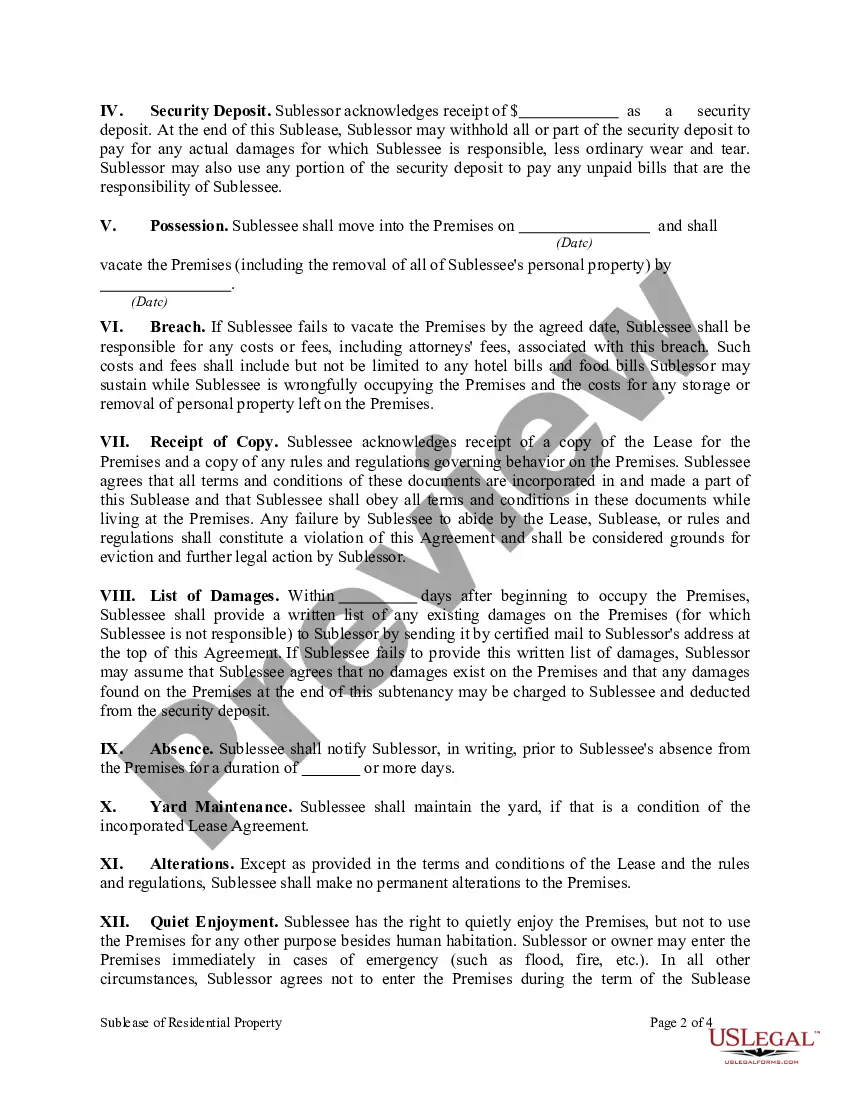
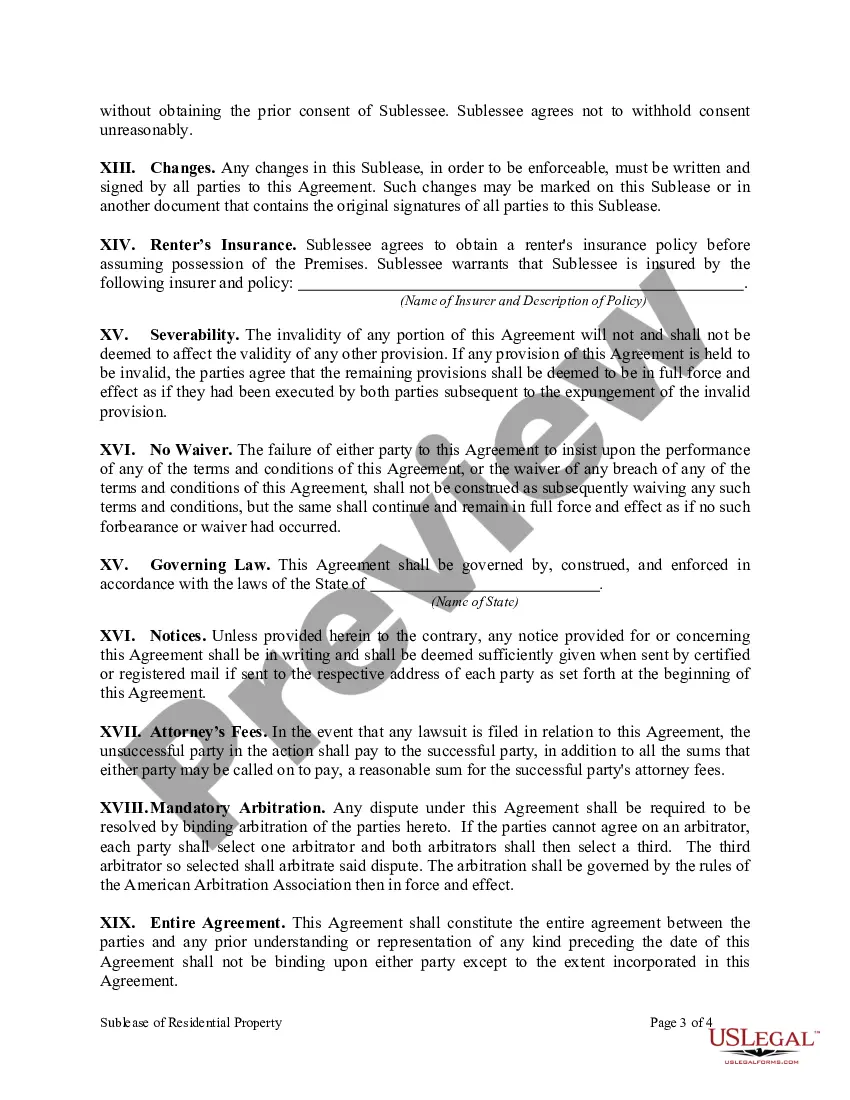
Sublease Requirements In Santa Clara
Description


Get your form ready online
Our built-in tools help you complete, sign, share, and store your documents in one place.
Make edits, fill in missing information, and update formatting in US Legal Forms—just like you would in MS Word.
Download a copy, print it, send it by email, or mail it via USPS—whatever works best for your next step.
Sign and collect signatures with our SignNow integration. Send to multiple recipients, set reminders, and more. Go Premium to unlock E-Sign.
If this form requires notarization, complete it online through a secure video call—no need to meet a notary in person or wait for an appointment.
We protect your documents and personal data by following strict security and privacy standards.

Make edits, fill in missing information, and update formatting in US Legal Forms—just like you would in MS Word.

Download a copy, print it, send it by email, or mail it via USPS—whatever works best for your next step.

Sign and collect signatures with our SignNow integration. Send to multiple recipients, set reminders, and more. Go Premium to unlock E-Sign.

If this form requires notarization, complete it online through a secure video call—no need to meet a notary in person or wait for an appointment.

We protect your documents and personal data by following strict security and privacy standards.
Looking for another form?





Form popularity
FAQ
The terms sublet and sublease are often used synonymously, but they have very different meanings. The gist is that a sublet occurs when you find a new renter for the property who will sign a new lease with the landlord, while a sublease occupies the space without signing a lease directly with the landlord.
All units in California are covered by the rent-ceiling limitations of State of California rent control except: Affordable housing units, BMR units, project-based subsidized housing and Section 8 voucher units. Dorms constructed and maintained by a university and occupied by enrolled students.
California law requires tenants to seek explicit, written permission from their landlords to sublet if it is not already allowed in the lease. Landlords have the right to approve or deny these requests unless prohibited by a local ordinance.
In Santa Clara County, landlords will not be able to raise rent in one year more than an estimated 8.3% per year. If you have rented your unit for over a year, your landlord will not be able to evict you without a good reason, like not paying rent or violating your lease agreement.
Under California law, unless the lease specifically prohibits subletting, tenants may have the right to sublease their rental unit. In this case, you would not be able to unreasonably withhold consent.
However, a new law was passed in October 2019, AB 1482, which provides protections for many renters throughout California starting on January 1, 2020. Under AB 1482, if your unit is covered by the new law, your landlord can only increase your rent by about 8.3% per year (in Santa Clara County).
You can generally use Schedule E (Form 1040), Supplemental Income and Loss to report income and expenses related to real estate rentals.
Accounting for Subleases under GAAP: The CORRECT way Record a liability calculated as the present value of the remaining minimum lease payments due under the original (head) lease, reduced by the present value of any estimated sublease income, Write off the deferred rent from the original lease, and.
If you are in the US, that would be considered income and taxable. You are getting “rent”, even though you don't own the property. And, since you don't own the property and have no investment at risk, you would have no deductions to offset the income.
If you are the tenant under the lease and you sublet space, they will have to issue a 1099 at the end of the year for rental payments made to you. You should provide the business that is subletting a form W-9 for your records. A complete form W-9 will allow you to property complete a 1099 at the end of the year.
