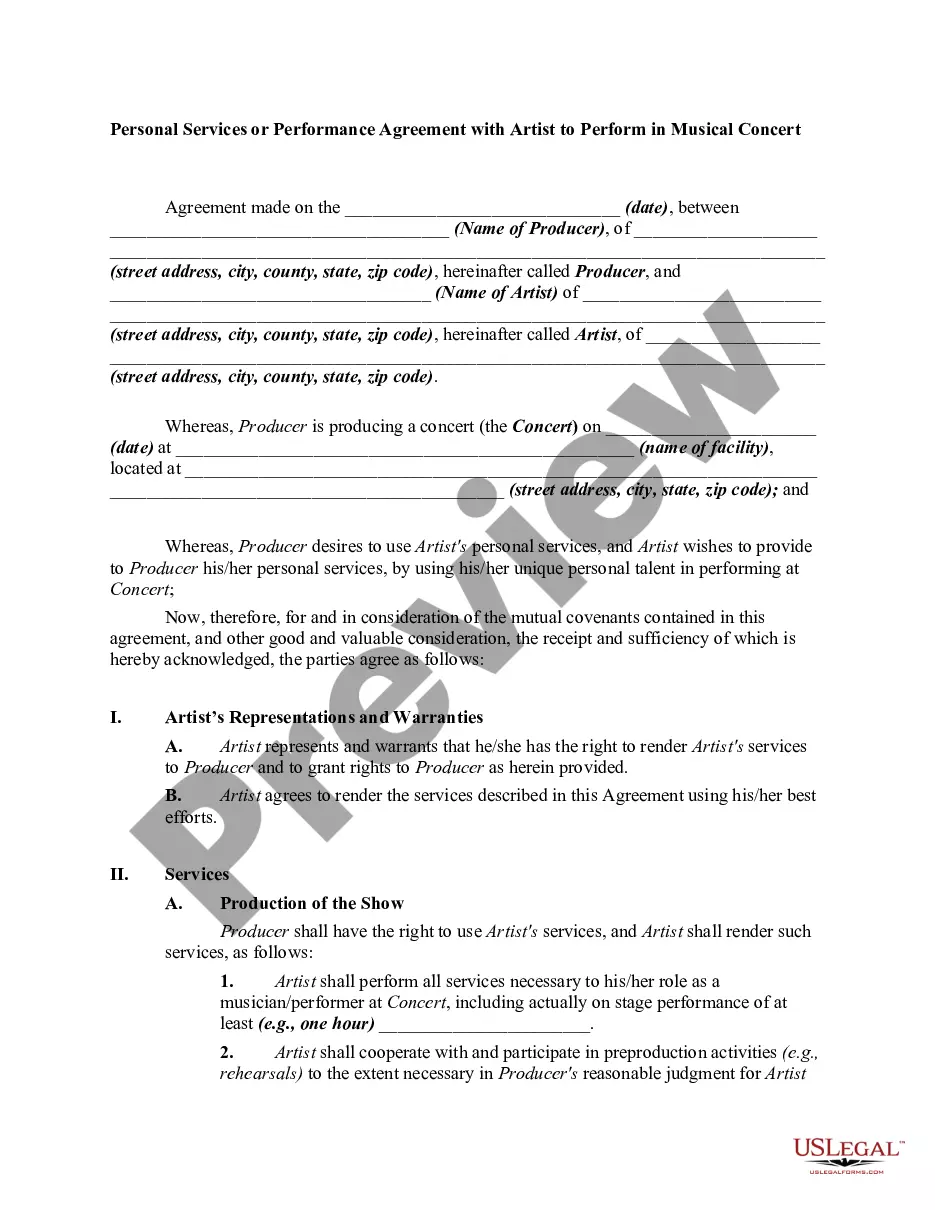
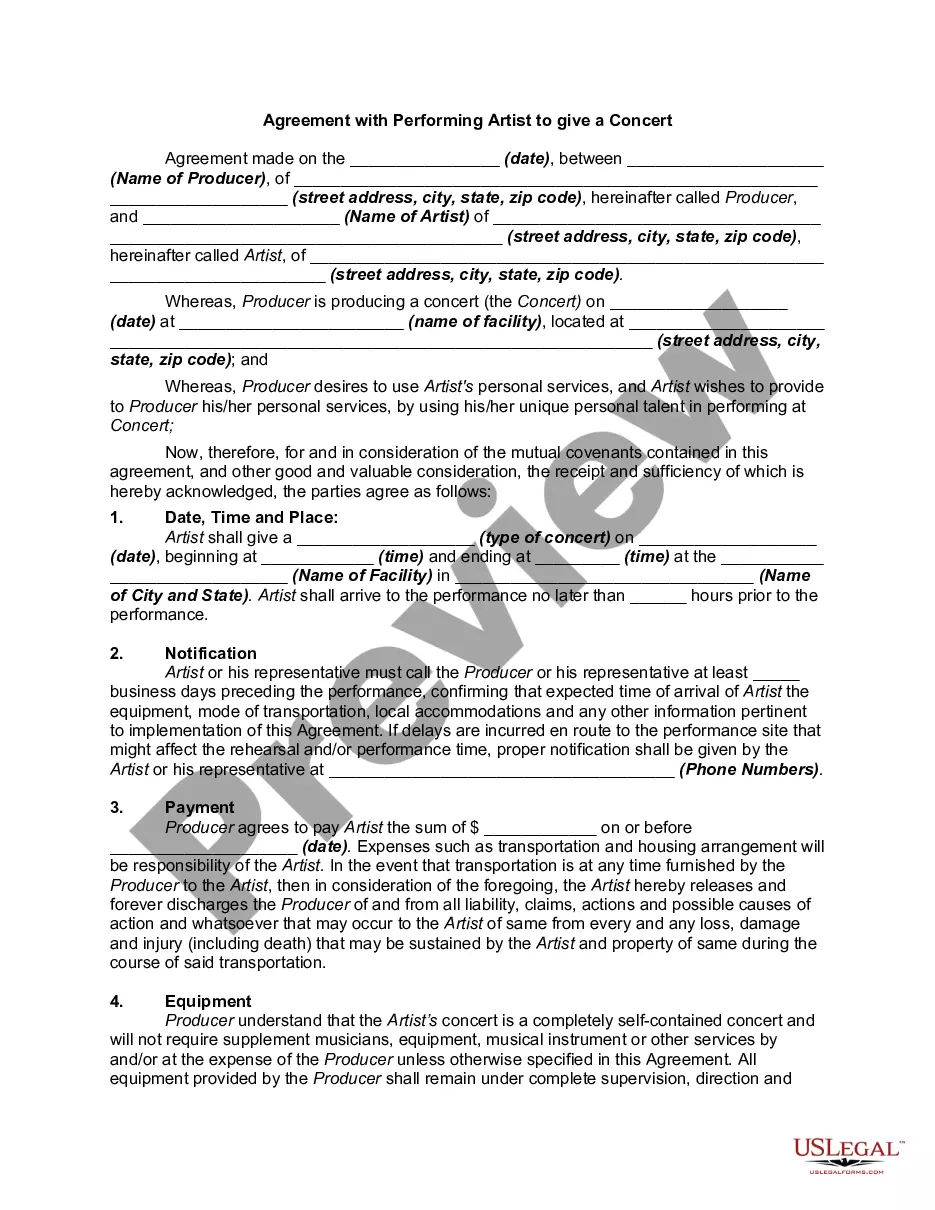
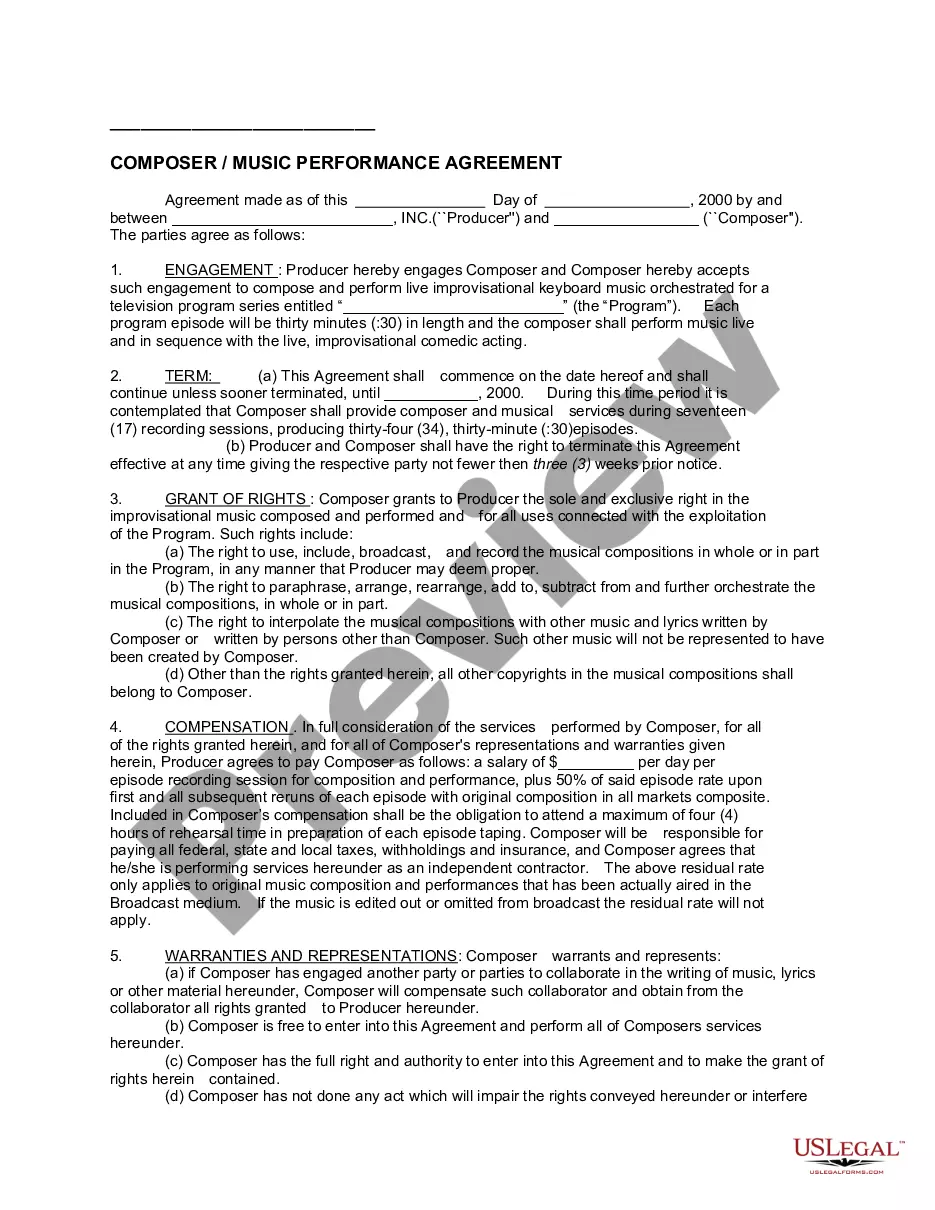
Performance Agreement For In Houston
Description

Get your form ready online
Our built-in tools help you complete, sign, share, and store your documents in one place.
Make edits, fill in missing information, and update formatting in US Legal Forms—just like you would in MS Word.
Download a copy, print it, send it by email, or mail it via USPS—whatever works best for your next step.
Sign and collect signatures with our SignNow integration. Send to multiple recipients, set reminders, and more. Go Premium to unlock E-Sign.
If this form requires notarization, complete it online through a secure video call—no need to meet a notary in person or wait for an appointment.
We protect your documents and personal data by following strict security and privacy standards.

Make edits, fill in missing information, and update formatting in US Legal Forms—just like you would in MS Word.

Download a copy, print it, send it by email, or mail it via USPS—whatever works best for your next step.

Sign and collect signatures with our SignNow integration. Send to multiple recipients, set reminders, and more. Go Premium to unlock E-Sign.

If this form requires notarization, complete it online through a secure video call—no need to meet a notary in person or wait for an appointment.

We protect your documents and personal data by following strict security and privacy standards.
Looking for another form?








Form popularity
FAQ
Follow these steps to put an effective performance agreement in place for your staff: Start With Clear Expectations. Build in Milestones. Agree on the Terms. Schedule Accountability Meetings. Establish Outcome Results and Consequences. Sign and Date the Agreement.
Suggested steps for developing a performance agreement Step 1: Plan. The first step is to plan by looking at your business goals for the year ahead. Step 2: Discuss. The next step is to arrange a time to meet with the employee to discuss and set up the performance agreement. Step 3: Monitor. Step 4: Review.
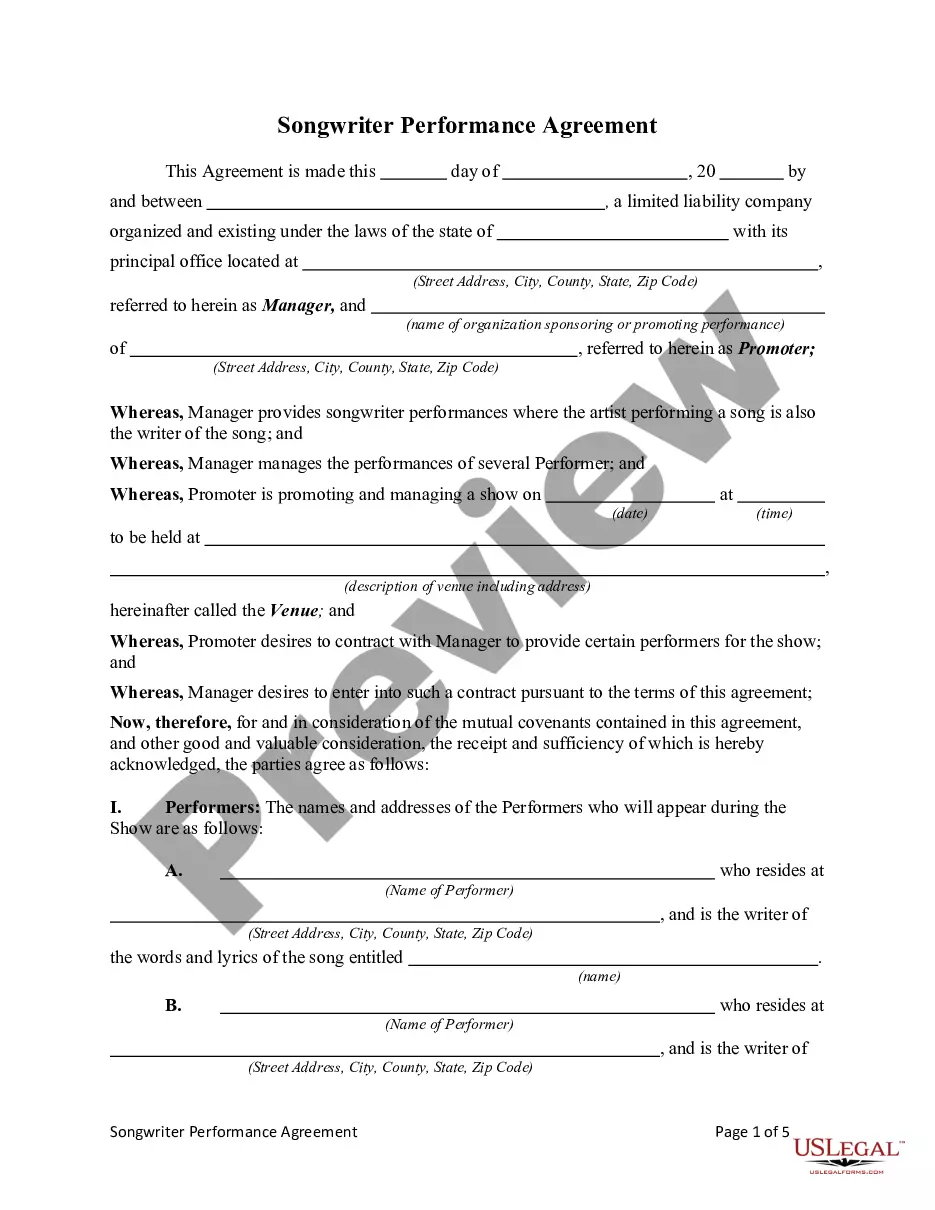
A Performance Agreement or Classification Worksheet is used to hire individuals or groups to provide a musical, dance or theatrical performances. The individual or group is the marquee/headlining performer who the audience is specifically coming to see.
Having a performance agreement in place will help your employee understand what you expect from them. It also sets out what support or assistance will be provided to help the employee achieve their goals.
To perform is to work towards completing a party's obligations under in a contractual agreement . In any contract , one party makes a promise in exchange for either a return promise or the performance of some action. Each party must perform their obligation to effectively discharge the contract.
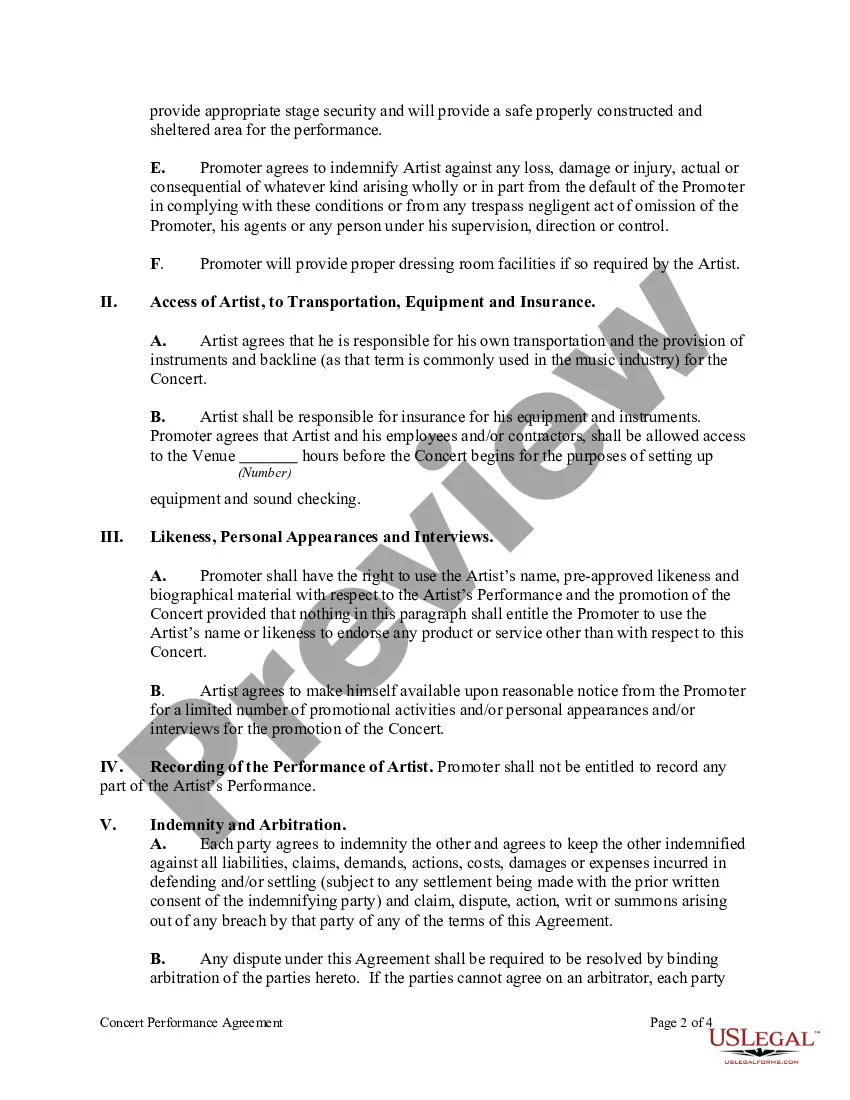
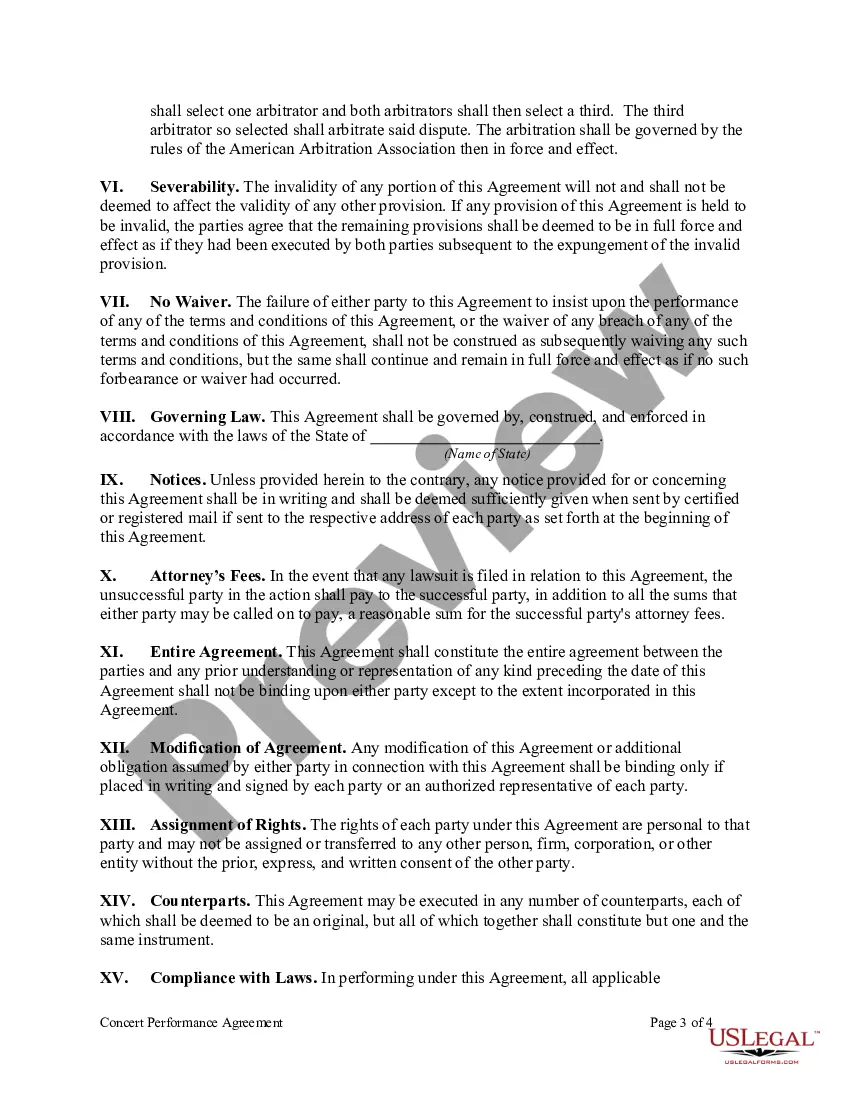
A live performance contract is a contract between the client (the venue) and a performer when the performer is hired to provide entertainment services at an event.
The key elements of a PBSC PWS are: a statement of the required services in terms of output; a measurable performance standard for the output; and an AQL or allowable error rate.
What does Performance of Contract mean? The performance of a contract is the carrying out of promises made by the parties. It can be done in several ways, including through action or inaction. For a contract to be valid, both parties must perform their obligations as laid out in the contract as agreed.
A Performance Agreement is a document that outlines the expectations of both parties in a work relationship. It is a way to ensure that both parties have agreed to the same terms and conditions, and is used to outline performance expectations, roles and responsibilities, timelines, and other pertinent information.
