Letter For Recovery In Montgomery
Description




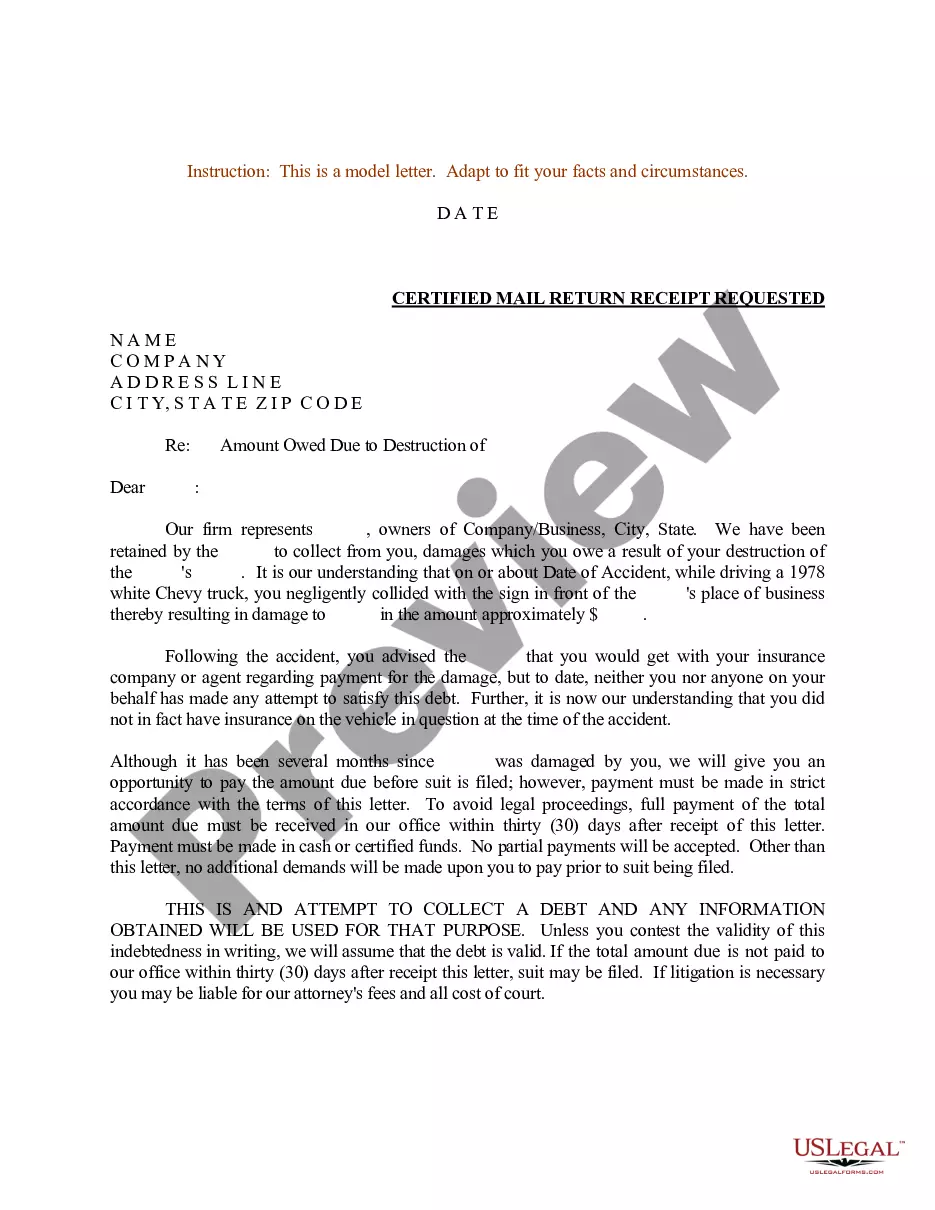

Get your form ready online
Our built-in tools help you complete, sign, share, and store your documents in one place.
Make edits, fill in missing information, and update formatting in US Legal Forms—just like you would in MS Word.
Download a copy, print it, send it by email, or mail it via USPS—whatever works best for your next step.
Sign and collect signatures with our SignNow integration. Send to multiple recipients, set reminders, and more. Go Premium to unlock E-Sign.
If this form requires notarization, complete it online through a secure video call—no need to meet a notary in person or wait for an appointment.
We protect your documents and personal data by following strict security and privacy standards.

Make edits, fill in missing information, and update formatting in US Legal Forms—just like you would in MS Word.

Download a copy, print it, send it by email, or mail it via USPS—whatever works best for your next step.

Sign and collect signatures with our SignNow integration. Send to multiple recipients, set reminders, and more. Go Premium to unlock E-Sign.

If this form requires notarization, complete it online through a secure video call—no need to meet a notary in person or wait for an appointment.

We protect your documents and personal data by following strict security and privacy standards.
Looking for another form?
Form popularity
FAQ
Once the executor retrieves the testator's current will, they must file that will with the Register of Wills. The Register of Wills has many locations within Pennsylvania. An executor must be sure to file the document with the Register of Wills in the county where the decedent resided.
Original wills are not filed with the Register of Wills until after death. Before death, wills are usually kept by the person who wrote the will. However, in some instances, the original will may be retained by the attorney who prepared the will or may be held by a bank trust department.
What are letters testamentary and letters of administration? This is a document issued by the Register of Wills authorizing a particular person (s) to act as the personal representative of the decedent's estate. If the person died with a will, the document is referred to as letters testamentary.
Once the executor retrieves the testator's current will, they must file that will with the Register of Wills. The Register of Wills has many locations within Pennsylvania. An executor must be sure to file the document with the Register of Wills in the county where the decedent resided.
Similarly, in Pennsylvania, you must make your will via a hard copy. This means it cannot be a digital, audio, or video will, as the state has not adopted electronic wills as valid. A will also requires the signature of two witnesses in Pennsylvania, who must sign the will in front of the testator.
The Register of Wills office is the filing and docketing office for the Orphans' Court division. The office is located on the third floor, in the Courthouse Annex.
If a person dies without a will, a Petition for Letters of Administration may be filed. The petitioner must be a resident of the State and is required by law to acquire a bond that will cover the amount of the estate. Forms are also available in Montgomery County's Probate Court for filing this petition.
