Letter For Recovery In Los Angeles
Description



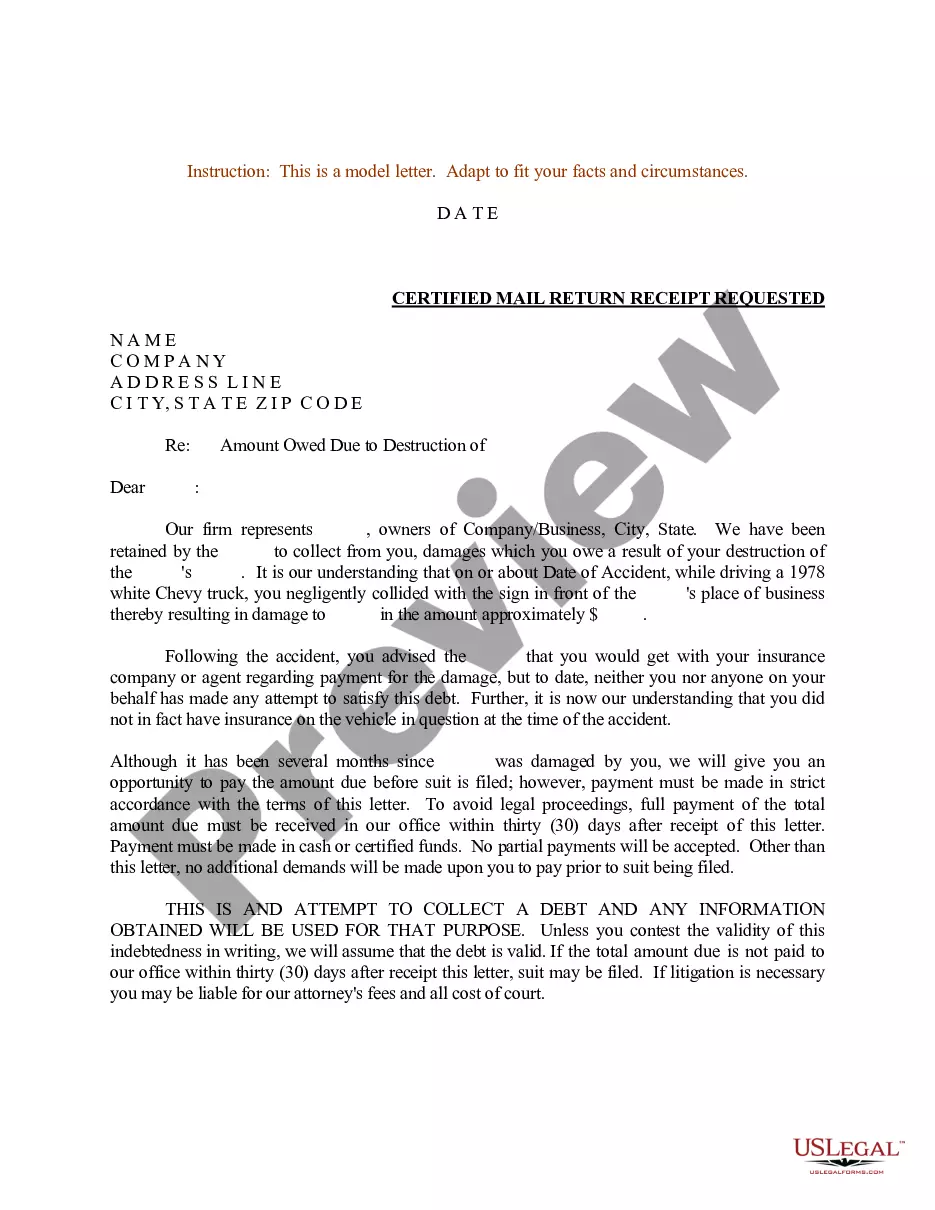

Get your form ready online
Our built-in tools help you complete, sign, share, and store your documents in one place.
Make edits, fill in missing information, and update formatting in US Legal Forms—just like you would in MS Word.
Download a copy, print it, send it by email, or mail it via USPS—whatever works best for your next step.
Sign and collect signatures with our SignNow integration. Send to multiple recipients, set reminders, and more. Go Premium to unlock E-Sign.
If this form requires notarization, complete it online through a secure video call—no need to meet a notary in person or wait for an appointment.
We protect your documents and personal data by following strict security and privacy standards.

Make edits, fill in missing information, and update formatting in US Legal Forms—just like you would in MS Word.

Download a copy, print it, send it by email, or mail it via USPS—whatever works best for your next step.

Sign and collect signatures with our SignNow integration. Send to multiple recipients, set reminders, and more. Go Premium to unlock E-Sign.

If this form requires notarization, complete it online through a secure video call—no need to meet a notary in person or wait for an appointment.

We protect your documents and personal data by following strict security and privacy standards.
Looking for another form?




Form popularity
FAQ
Some brief guidelines, letters should: Be addressed to 'Dear You' Written in the first person e.g. 'I felt that...' Be up to 1,000 words in length, preferably less. Be supportive and give comfort to the person reading the letter. Use your first name or a pseudonym to end the letter.
Share how their addiction has affected you, your relationship, and others around them. Be honest and specific about the emotional, physical, and financial impacts. Use personal anecdotes and examples to illustrate the consequences of their addiction.
Use strong words specific details. The most important thing when you're writing any letter is to use not fancy words, complicated words, or long words, but to use the right words. Writing your heart out means that you need to use correct words to express what you're feeling.
Remember, this is a letter that must come from a place of ownership and empathy, a heartfelt, honest, and sincere letter. Acknowledge the pain your spouse experienced and take responsibility for it. The big idea is empathizing with your wife and her pain not in a pretend way but from the heart.
Example: Over the past months and years, I have witnessed the toll that addiction has taken on our family. I have seen the pain in your eyes, the missed opportunities, and the strained relationships. It hurts me deeply to see you in this state, knowing the vibrant, caring, and talented person you truly are.
Some of the critical parts of an impact statement are: Why. Explaining why you are writing your message and what you hope to gain from telling your side of the story. Impact. Write down how your partner's betrayal impacted your physical, emotional, sexual, and mental experience. Experience. Future Needs. Gratitude.
Below are some sample messages you can use. “I'm so happy to see you taking care of yourself.” “You've grown into such a strong and independent person.” “I'm so proud of you and the progress you've made.” “You deserve to be happy.” “I'm happy you're doing so well. “You are deserving of a happy and sober life.”
