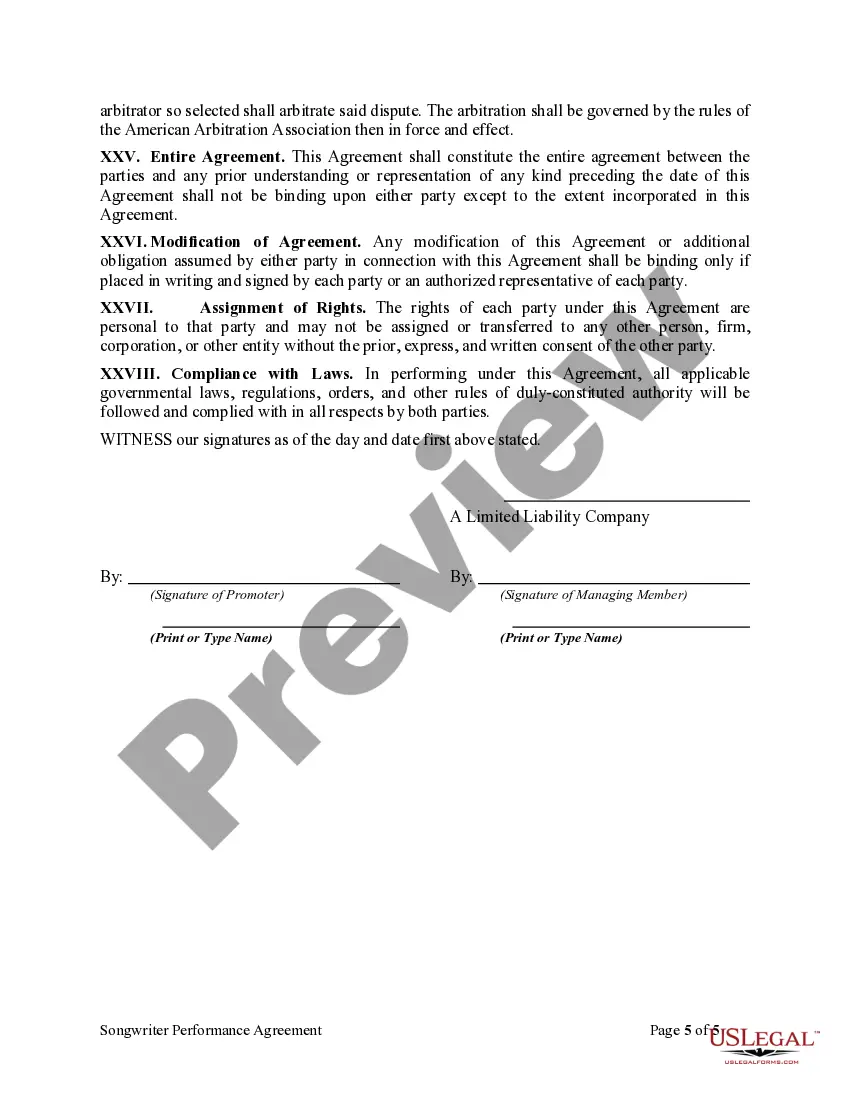
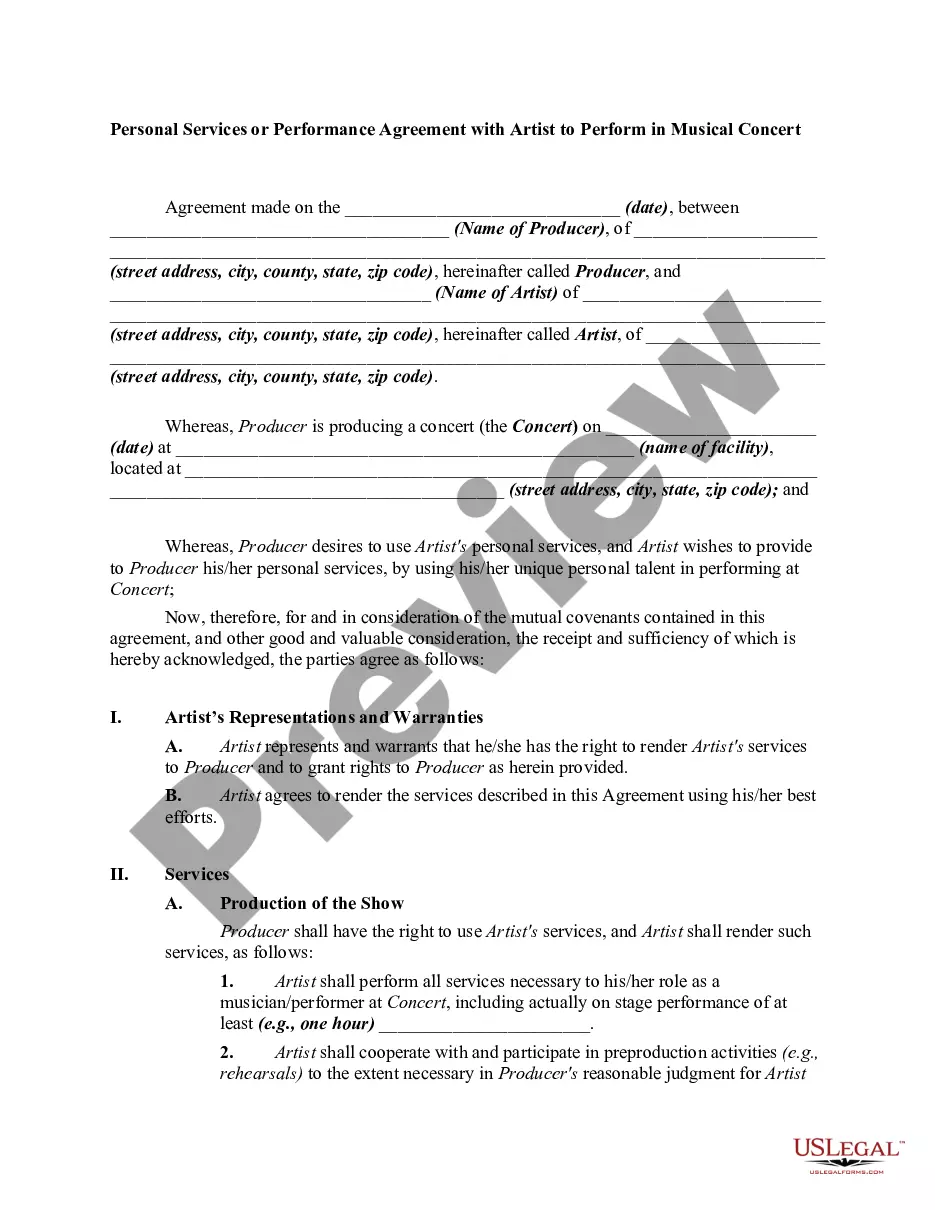
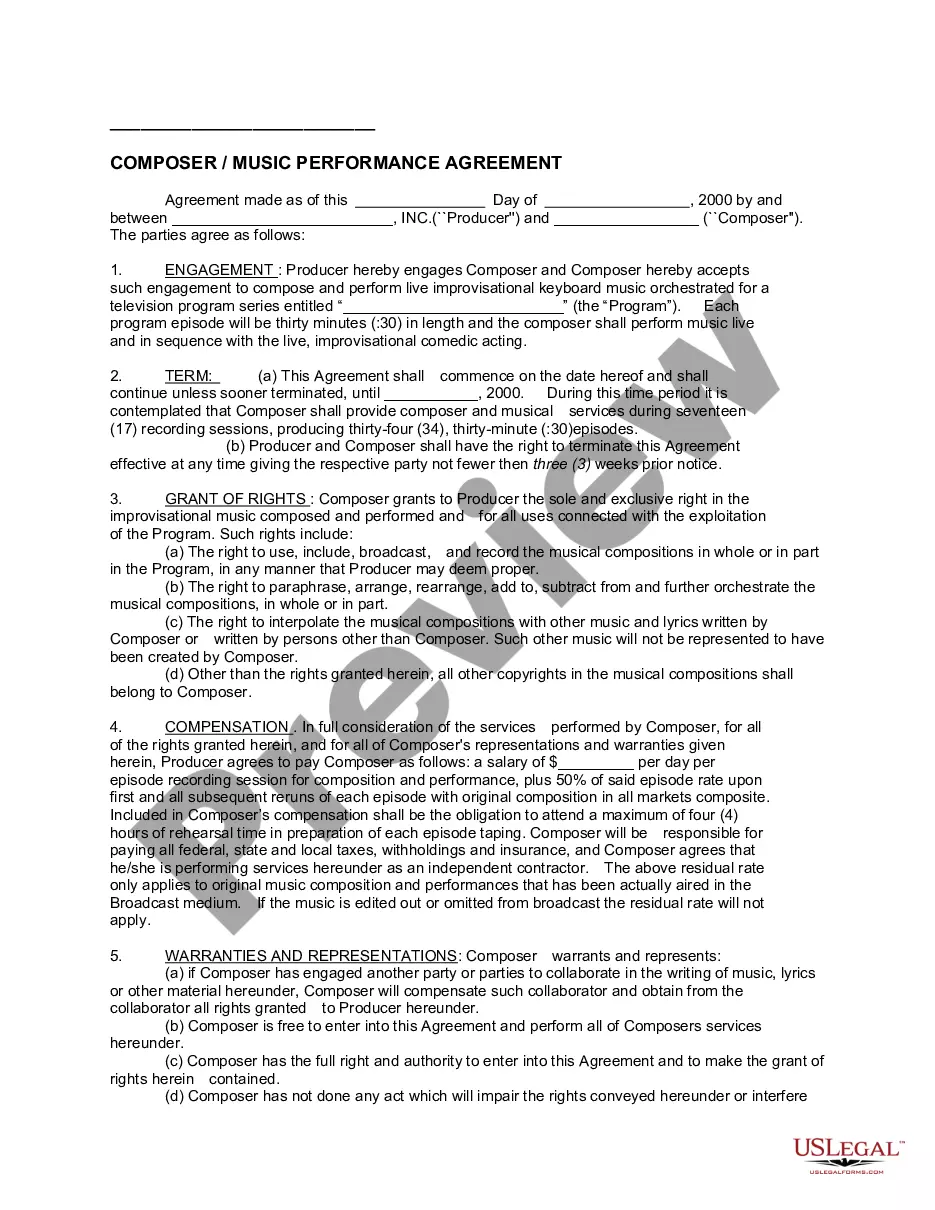
Songwriter Agreement Template For House In Riverside
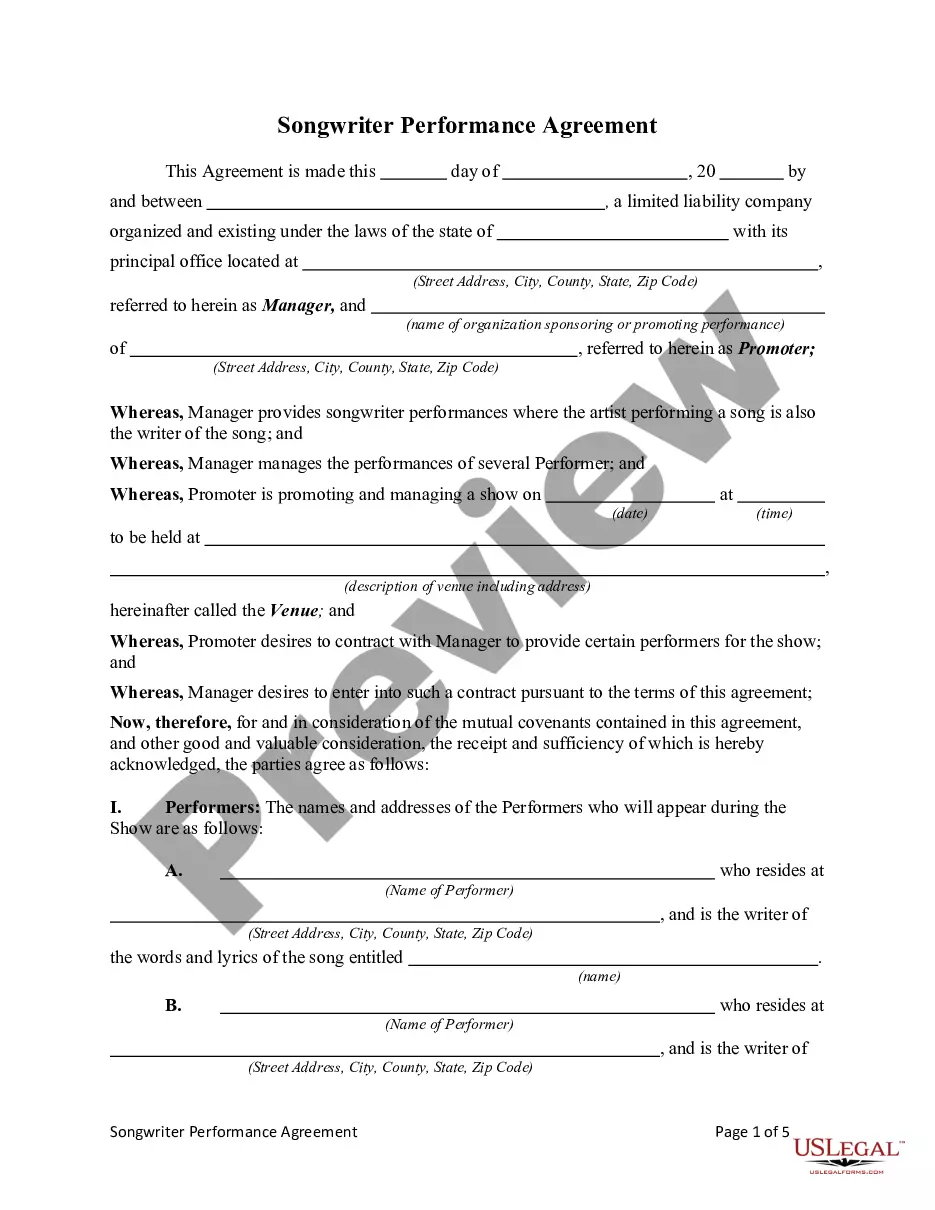
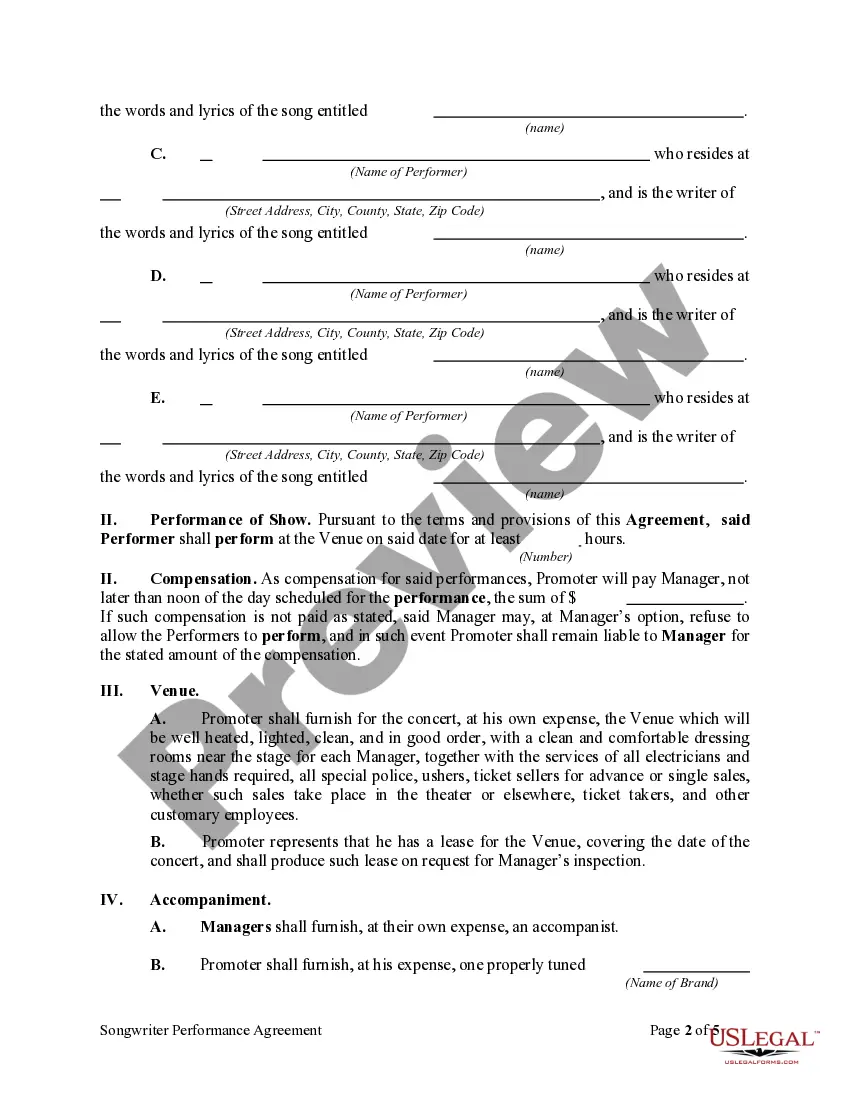
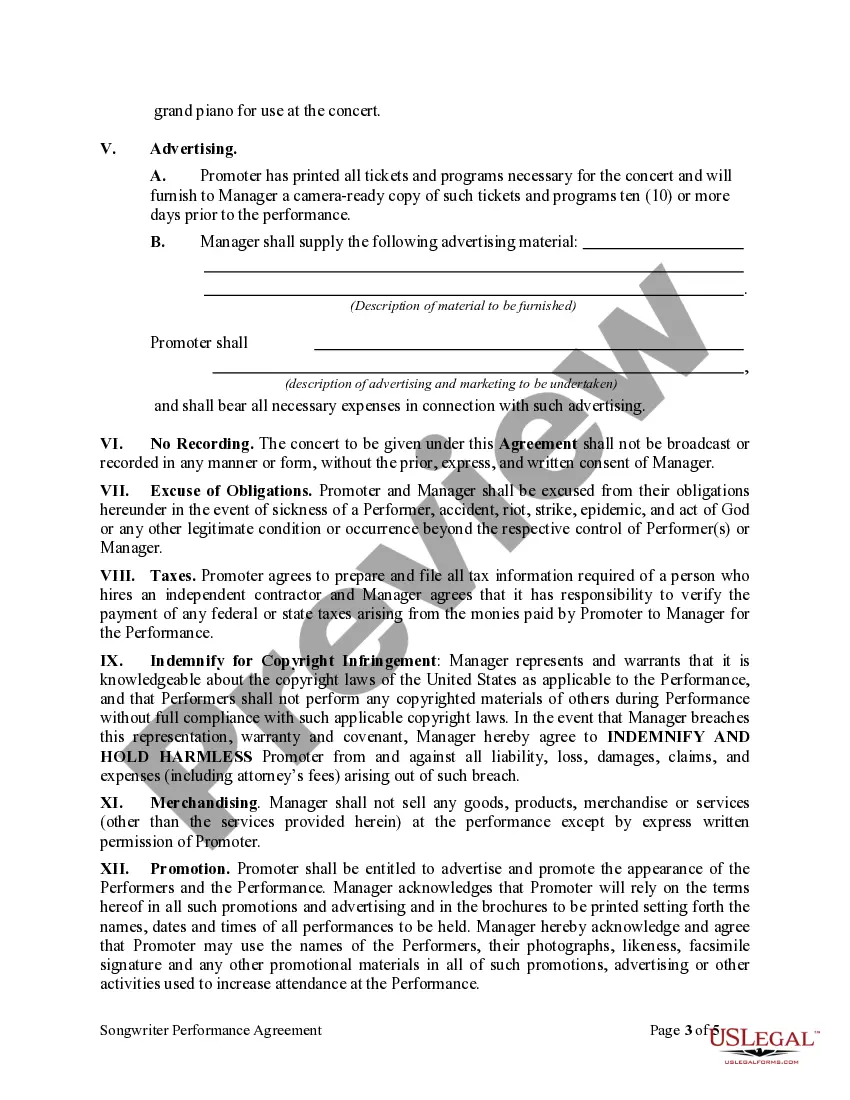
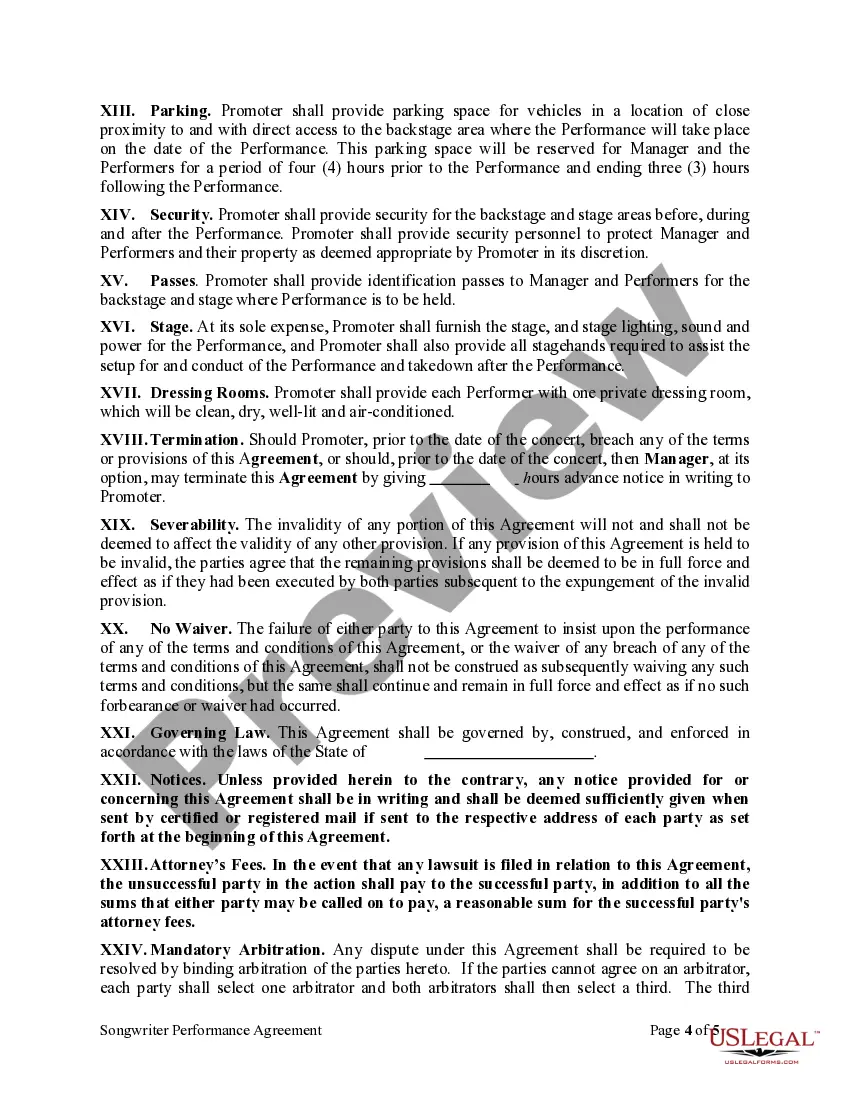
Description




Form popularity
FAQ
There are 6 basic types of agreements that songwriters sign with a music publisher. They are the Individual Song Agreement, the Exclusive Songwriter's Agreement, the Co-Publishing Agreement, the Participation Agreement, the Administration Agreement and the Foreign Sub-Publishing Agreement.
Write the contract in six steps Start with a contract template. Open with the basic information. Describe in detail what you have agreed to. Include a description of how the contract will be ended. Write into the contract which laws apply and how disputes will be resolved. Include space for signatures.
Under the exclusive agreement, the songwriter agrees to assign all compositions written during a specified term (for example, 2 years from January 1 or 1 year with four options), with the guarantee of a share of the income generated and usually a proviso for weekly or monthly payments.
Out of all of the types of music contracts, co-publishing (co-pub) agreements are the most frequently used. Under this agreement, the music publishing company and the artist are partners, and both parties co-own the copyrights to the music. Terms can vary widely, but a 50/50 split is common.
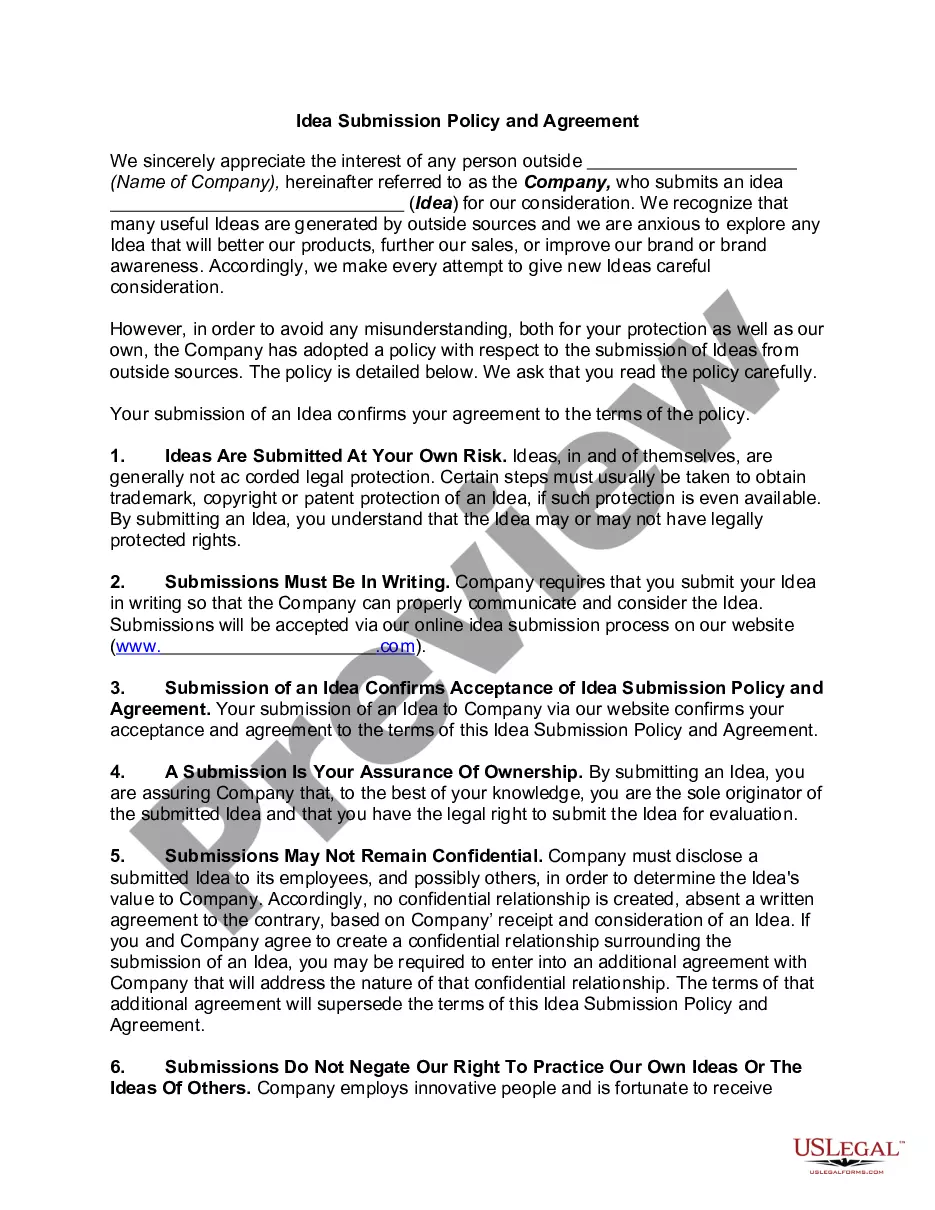
A Publishing or Song-writing Agreement is the document by which a songwriter assigns the copyright in their compositions to a music publisher in exchange for royalties and, in appropriate cases, an advance against those royalties.
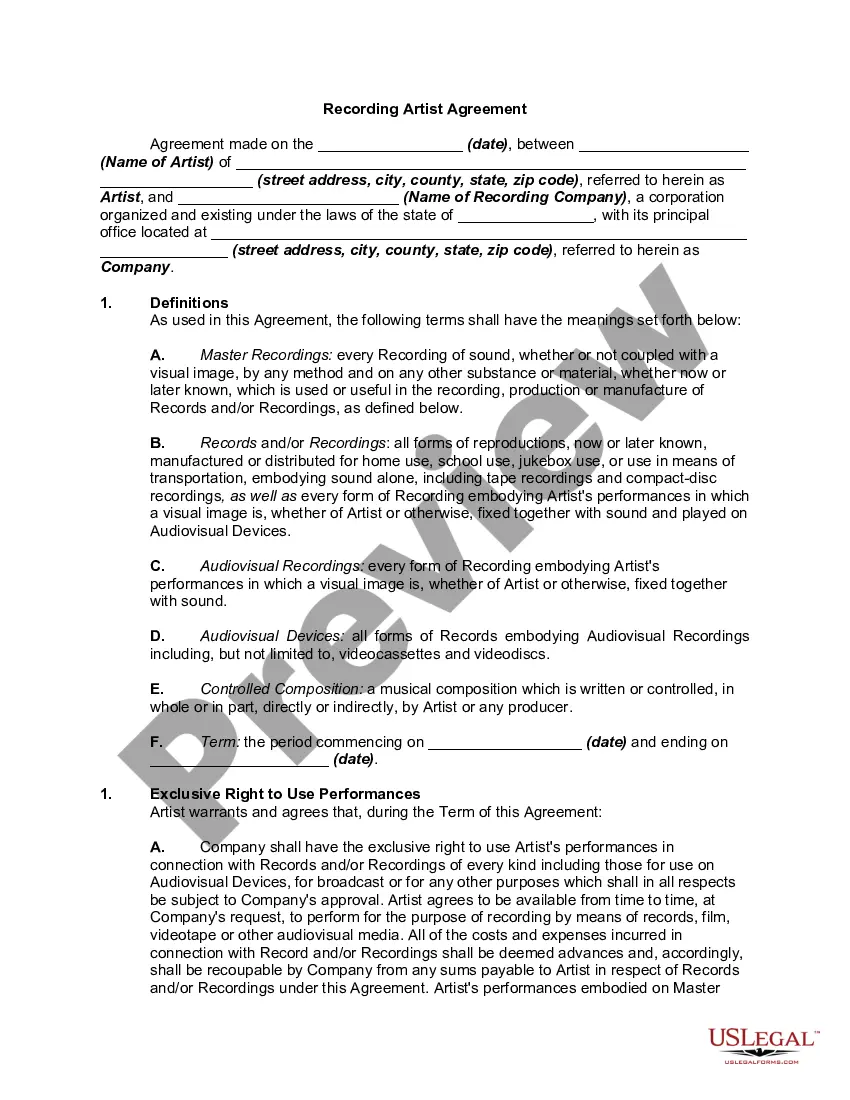
Your Music Recording Contract should cover details like: Compensation and royalties. Where and when the album will be recorded. The album's release date. Who has creative control over specific elements of the album. The termination clause. The exclusive agreement clause. Dispute resolution. Promotional appearances.
