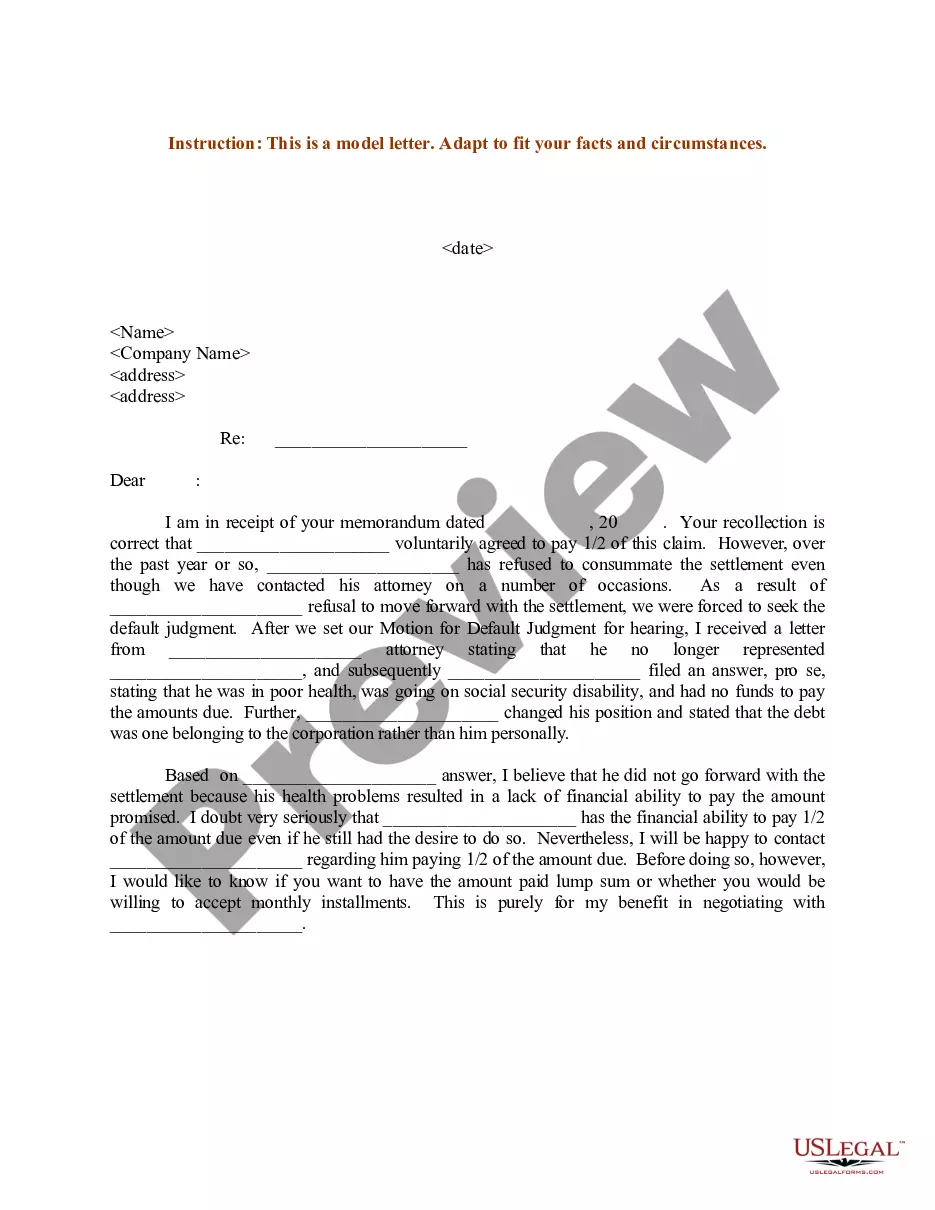
Letter For Judgment In Texas
Description




Get your form ready online
Our built-in tools help you complete, sign, share, and store your documents in one place.
Make edits, fill in missing information, and update formatting in US Legal Forms—just like you would in MS Word.
Download a copy, print it, send it by email, or mail it via USPS—whatever works best for your next step.
Sign and collect signatures with our SignNow integration. Send to multiple recipients, set reminders, and more. Go Premium to unlock E-Sign.
If this form requires notarization, complete it online through a secure video call—no need to meet a notary in person or wait for an appointment.
We protect your documents and personal data by following strict security and privacy standards.

Make edits, fill in missing information, and update formatting in US Legal Forms—just like you would in MS Word.

Download a copy, print it, send it by email, or mail it via USPS—whatever works best for your next step.

Sign and collect signatures with our SignNow integration. Send to multiple recipients, set reminders, and more. Go Premium to unlock E-Sign.

If this form requires notarization, complete it online through a secure video call—no need to meet a notary in person or wait for an appointment.

We protect your documents and personal data by following strict security and privacy standards.
Looking for another form?








Form popularity
FAQ
Judicial records are open to the public unless exempt from disclosure, and where a respondent does not raise exemptions and the special committee cannot conclude any apply the records must be released.
Do judgments expire in Texas? Judgments awarded in Texas to a non-government creditor are generally valid for ten years but can be renewed for longer. If a judgment is not renewed, it will become dormant. A creditor can request to revive a dormant judgment to continue to try and collect the debt.
If your local courts do not have an online record search system or if only some of them do, you can try calling your court and asking the clerks there to check their records for a judgment (or active case) naming you as a defendant.
If your local courts do not have an online record search system or if only some of them do, you can try calling your court and asking the clerks there to check their records for a judgment (or active case) naming you as a defendant.
Texas exempts only two types of real property: (1) one or more cemetery plots: and (2) a homestead. Texas Property Code § 41.001(a). Either families or single adults may claim homesteads. The homestead may be either rural or urban.
Parties without lawyers can also file case documents in person at the Court during normal business hours or by mail. Most case documents are posted to the Court's website, except clerk's records, reporter's records, and sealed documents. You can search for your case at search.txcourts/.
Generally, to file a judgment lien, an abstract of judgment must be issued by the justice court. Some justice courts have a form available on their website to request an abstract of judgment.
Judgment creditors can only seize property that isn't protected by an exemption. This includes real property and personal property.
If you do not have any assets that are not exempt from seizure, such as your primary place of residence, household items, your car, and the tools of your trade, someone who has obtained a judgment against you may be unable to collect on it.
What does it mean to be "judgment proof"? If you do not have any assets that are not exempt from seizure, such as your primary place of residence, household items, your car, and the tools of your trade, someone who has obtained a judgment against you may be unable to collect on it.

