Mississippi Driveway Easement and Shared Parking Agreement
What is this form?
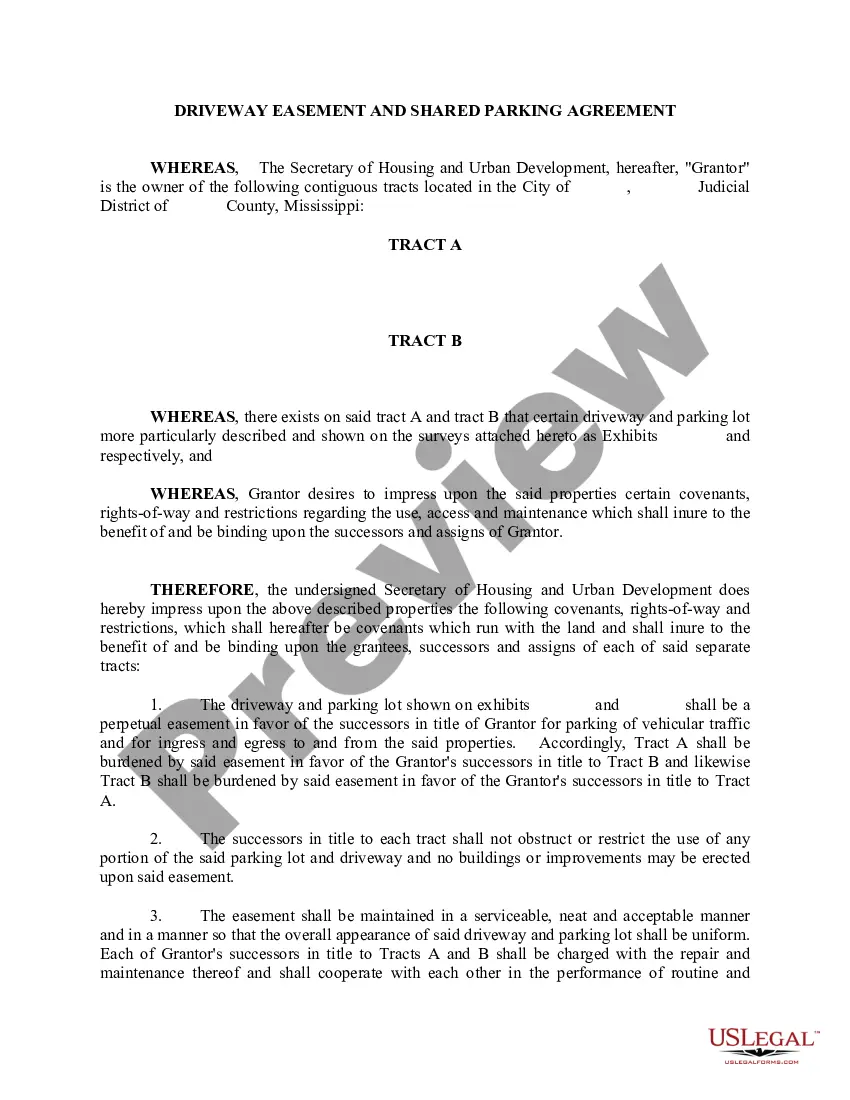
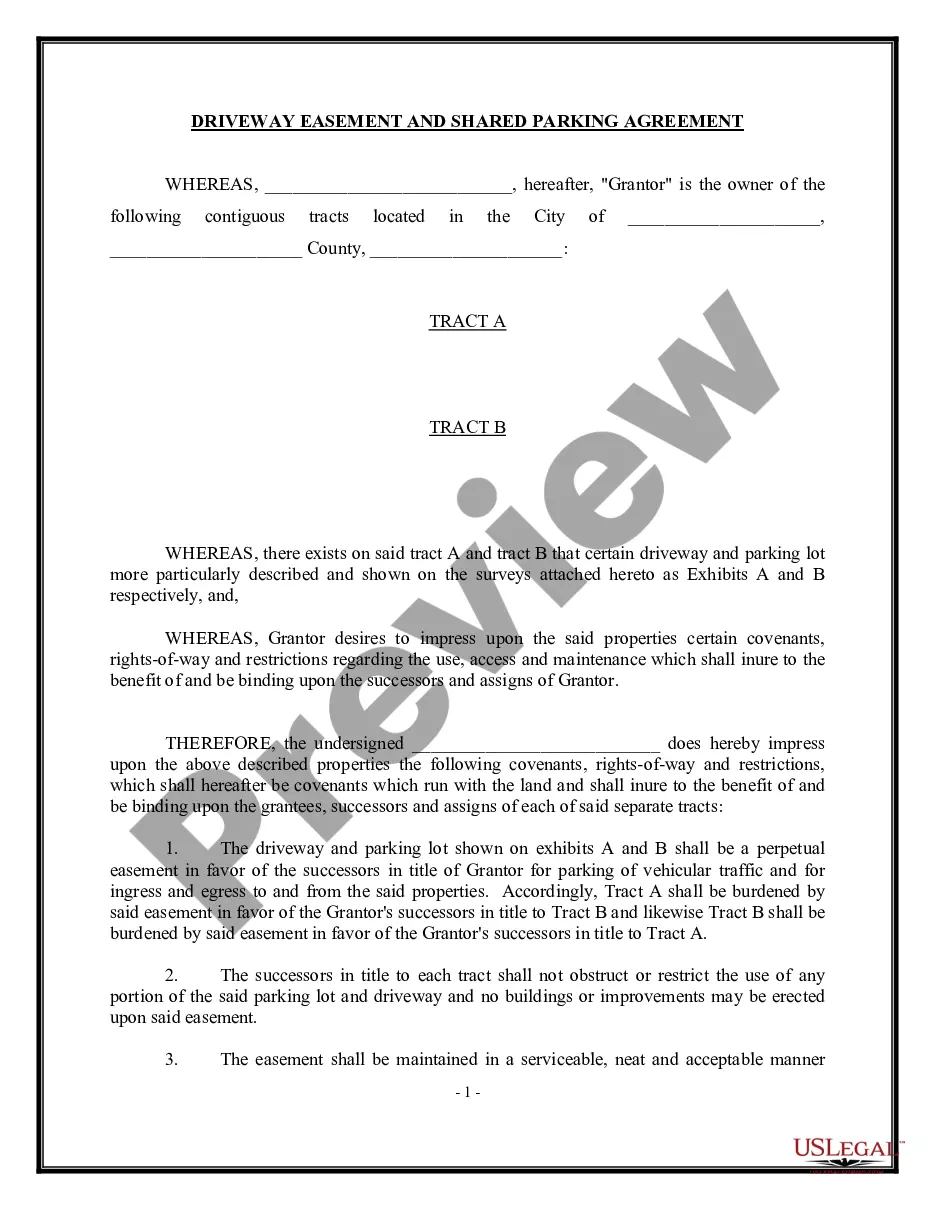
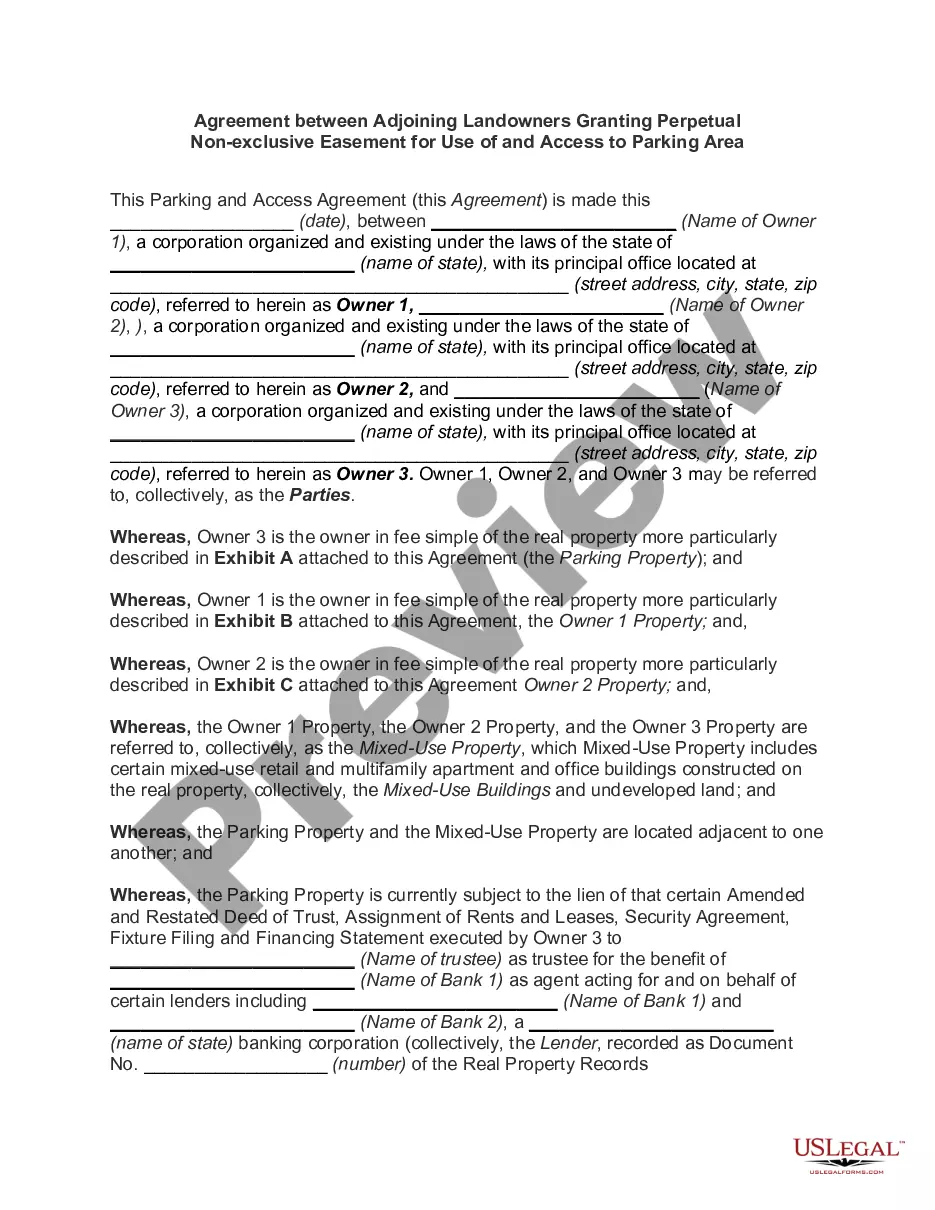
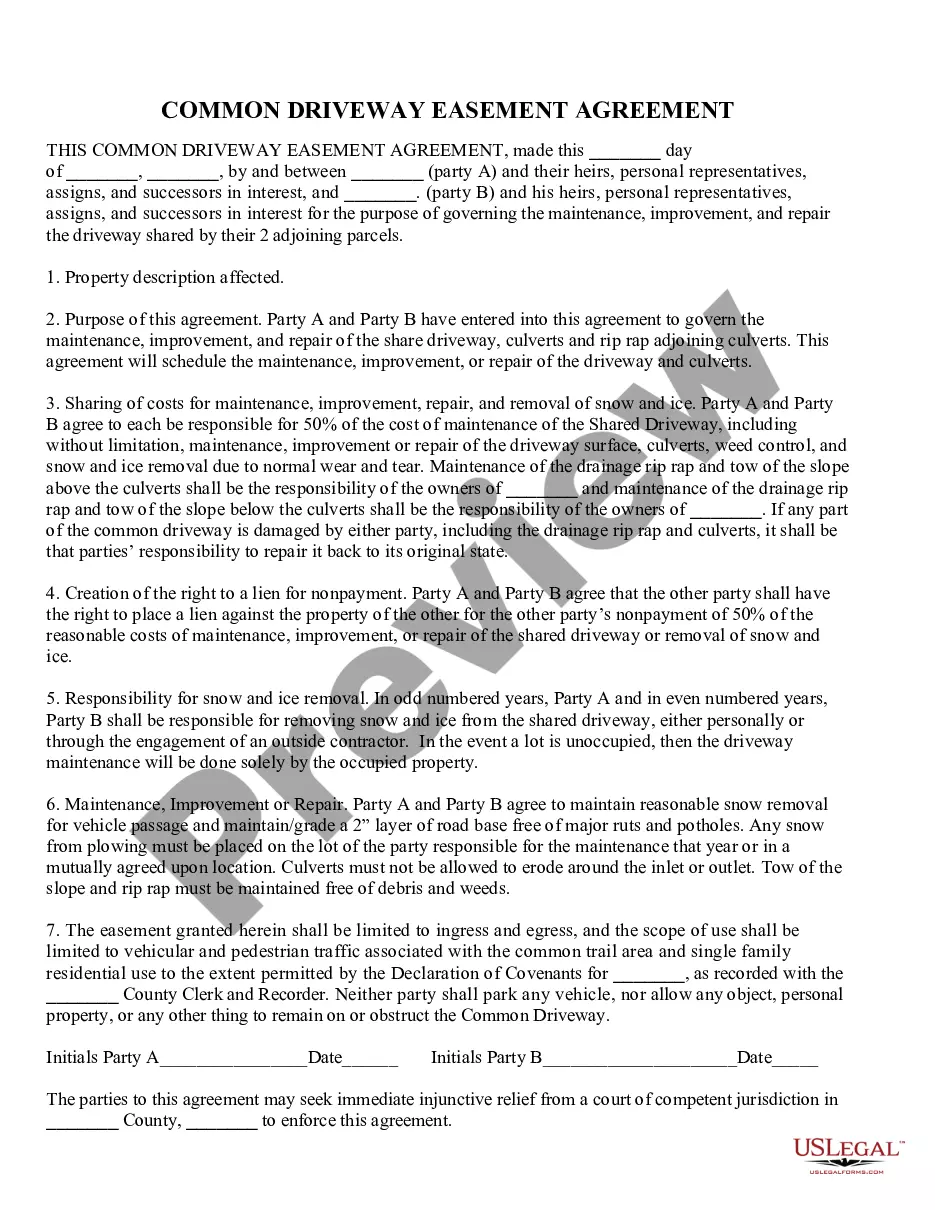
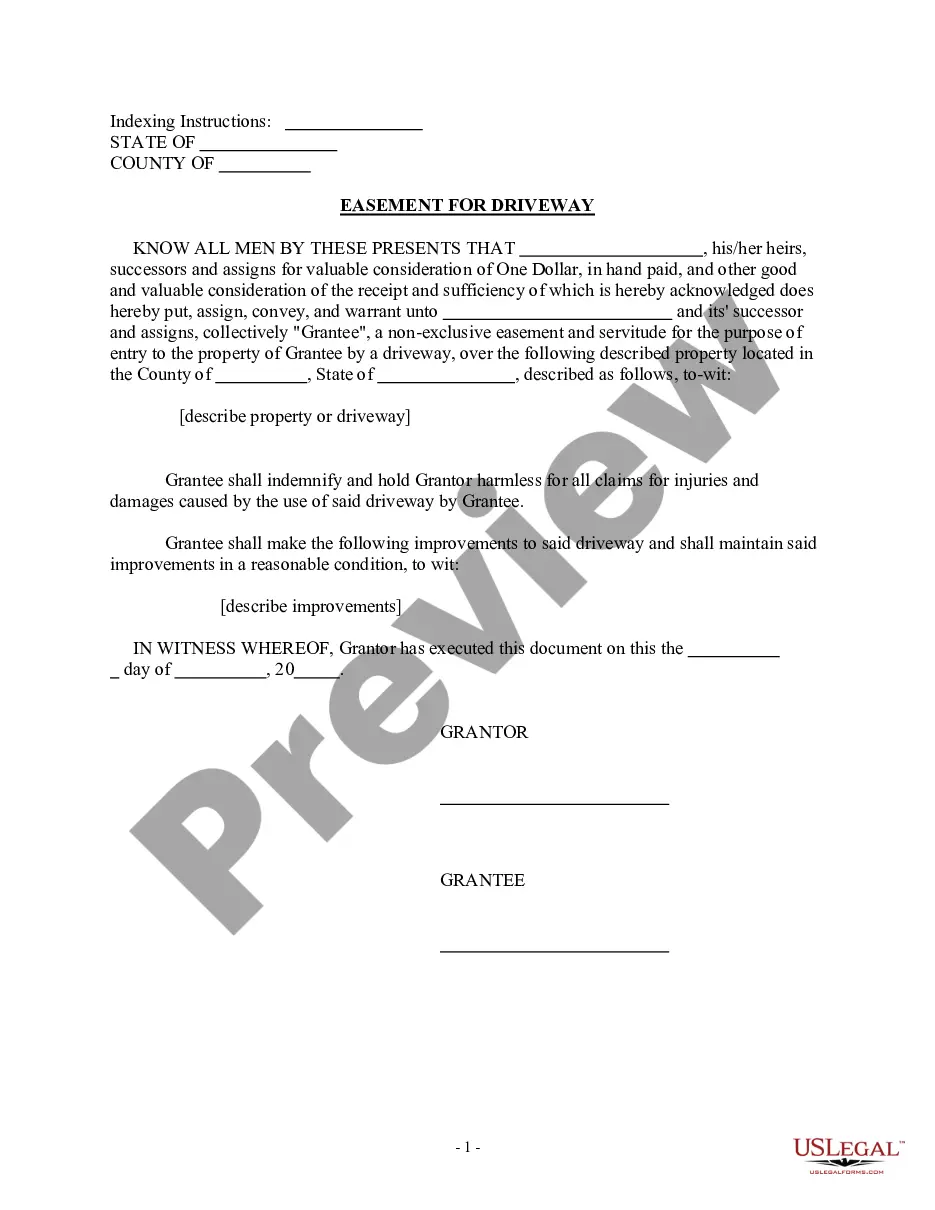
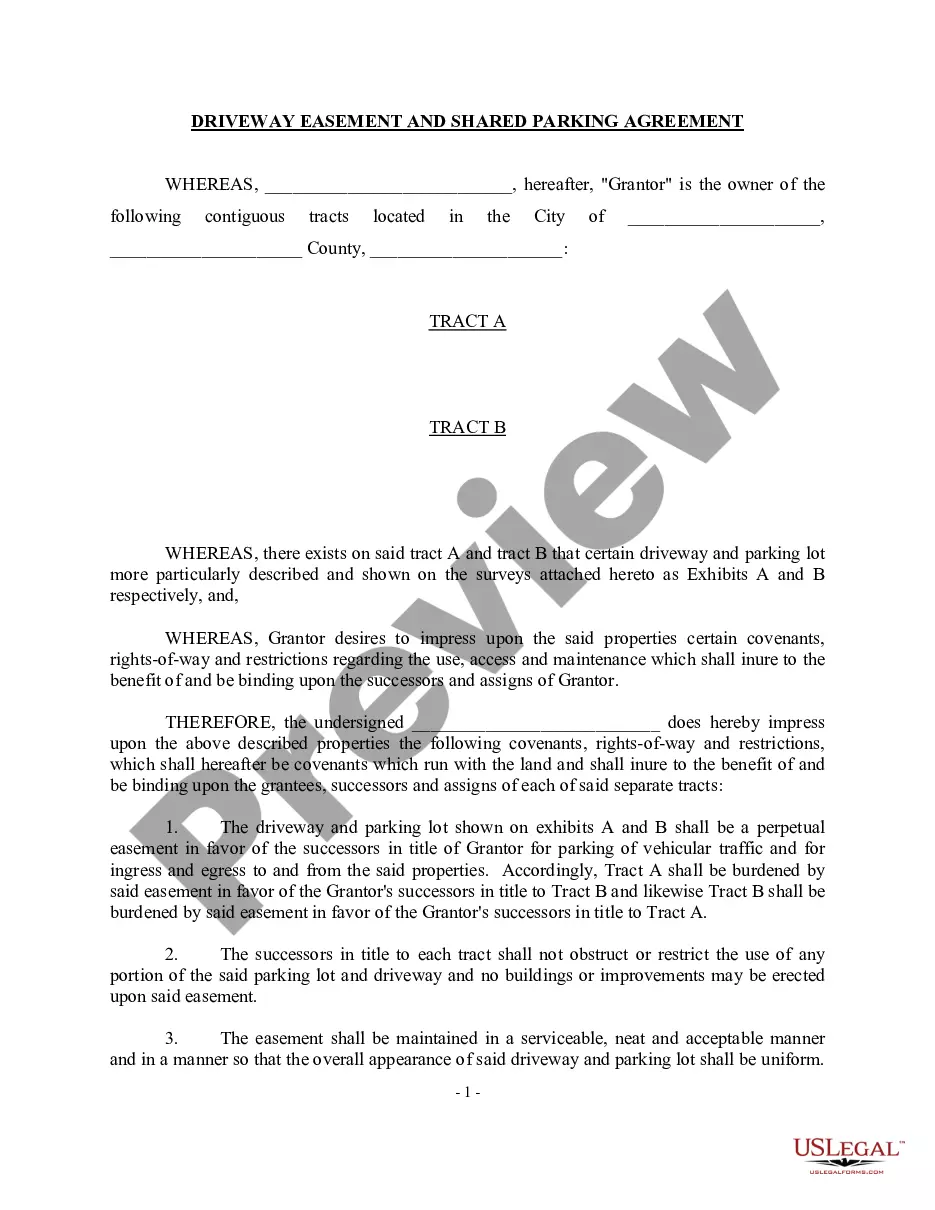
The Driveway Easement and Shared Parking Agreement is a legal document that grants access rights to property owners regarding shared driveway and parking areas. This form defines the terms of the easement, including responsibilities for maintenance and the duration of the agreement. It differs from similar forms by specifically addressing the shared use of parking spaces between two contiguous tracts of land, ensuring clarity in usage and obligations for all parties involved.
Form components explained
- Identification of the parties involved, specifically the Grantor and Grantee.
- Description of the property and the easement area as specified in the attached exhibits.
- Details regarding the permitted use of the driveway and parking lot, ensuring unrestricted access.
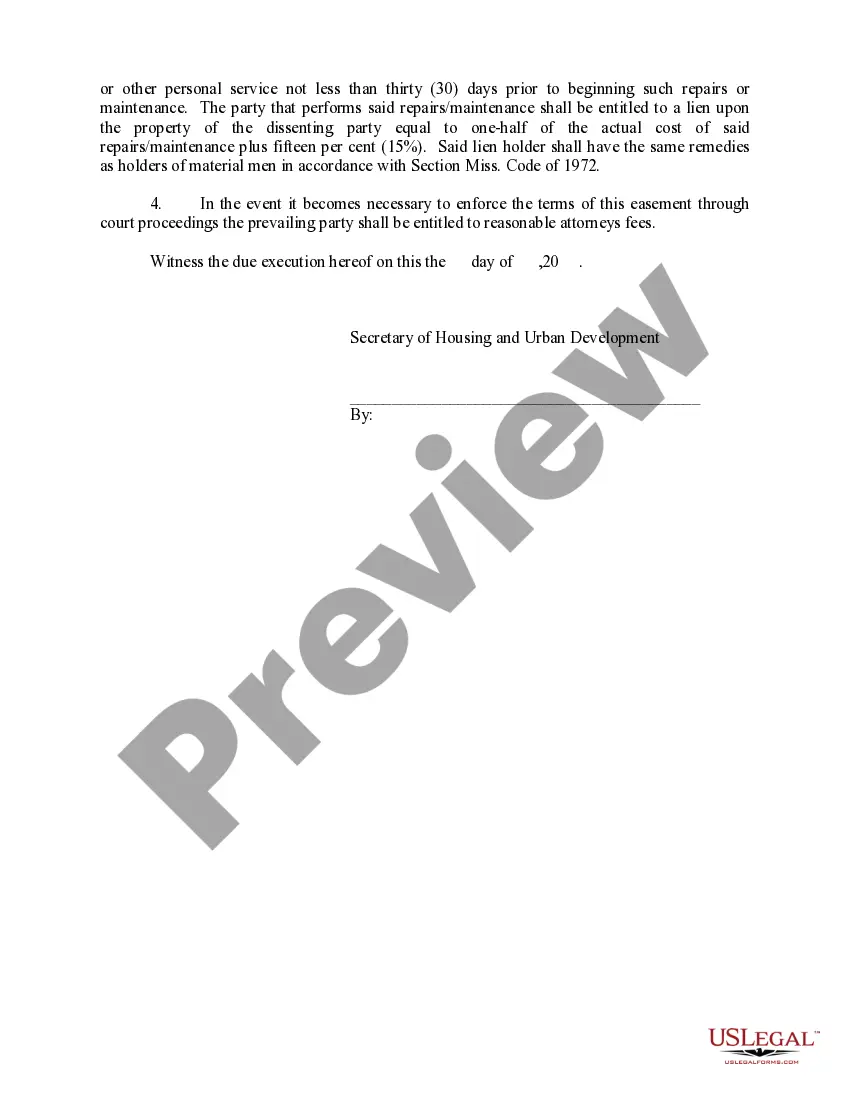
- Maintenance responsibilities and procedures for repairs to the shared areas, including notice requirements.
- Provision for enforcement of the agreement, including attorney fees for the prevailing party in disputes.
Common use cases
This form is useful when two property owners wish to formalize an agreement for shared parking and driveway access. It is typically used in situations where properties are adjacent and the owners wish to avoid conflicts regarding the use and maintenance of shared spaces, ensuring all parties have a clear understanding of their rights and responsibilities.
Who this form is for
- Property owners looking to share driveway access with adjacent landowners.
- Individuals who own or manage property that requires coordinated parking arrangements.
- Real estate professionals involved in property transactions that may impact land use agreements.
Steps to complete this form
- Identify the parties involved, including full legal names and addresses of the Grantor and Grantee.
- Provide a detailed description of the properties and the specific areas designated for the easement.
- Enter the terms of maintenance responsibilities and procedures for repairs.
- Specify the notice requirements for any repairs or maintenance conducted by either party.
- Collect signatures from both parties to formalize the agreement.
Is notarization required?
To make this form legally binding, it must be notarized. Our online notarization service, powered by Notarize, lets you verify and sign documents remotely through an encrypted video session.
Get your form ready online
Our built-in tools help you complete, sign, share, and store your documents in one place.
Make edits, fill in missing information, and update formatting in US Legal Forms—just like you would in MS Word.
Download a copy, print it, send it by email, or mail it via USPS—whatever works best for your next step.
Sign and collect signatures with our SignNow integration. Send to multiple recipients, set reminders, and more. Go Premium to unlock E-Sign.
If this form requires notarization, complete it online through a secure video call—no need to meet a notary in person or wait for an appointment.
We protect your documents and personal data by following strict security and privacy standards.

Make edits, fill in missing information, and update formatting in US Legal Forms—just like you would in MS Word.

Download a copy, print it, send it by email, or mail it via USPS—whatever works best for your next step.

Sign and collect signatures with our SignNow integration. Send to multiple recipients, set reminders, and more. Go Premium to unlock E-Sign.

If this form requires notarization, complete it online through a secure video call—no need to meet a notary in person or wait for an appointment.

We protect your documents and personal data by following strict security and privacy standards.
Avoid these common issues
- Failing to clearly identify the properties involved in the agreement.
- Omitting details about maintenance responsibilities and repair procedures.
- Not including signature lines for both parties or neglecting to date the document.
Benefits of completing this form online
- Convenience of downloading and completing the form at your own pace.
- Editability to customize the document according to specific needs.
- Accessibility of professionally drafted legal content to ensure compliance with state laws.
Looking for another form?
Form popularity
FAQ
Easement holders have the right to use the land to their enjoyment as long as it does not place an unreasonable burden on the servient estate. Landowners have the right to make whatever use of the land as long as it doesn't unduly affect the easement.
The party gaining the benefit of the easement is the dominant estate (or dominant tenement), while the party granting the benefit or suffering the burden is the servient estate (or servient tenement). For example, the owner of parcel A holds an easement to use a driveway on parcel B to gain access to A's house.
A property easement is a legal situation in which the title to a specific piece land remains with the landowner, but another person or organization is given the right to use that land for a distinct purpose.
When one of the owners of either the dominant estate which an easement benefits or the servient estate over which the easement runs becomes the owner of both properties, then there is a unity of the two titles, and since an owner does not need an easement over the owner's own property, according to Florida law, the
The owner of the land that has the benefit of the right of way (the user) also has no obligation to maintain and repair but is entitled to maintain and repair the way but if he does so, he has to do so at his own cost.
When you're buying a house, you might find out that the property has an easement on it. Essentially this means that someone other than you could have access to the land. This isn't necessarily a bad thing. For example, utility companies typically hold easements in case they need to access pipes or cables.
An easement can decrease the value of a real estate, increase the value of the real estate or it can have no impact on the value of the real estate at all. The most important fact is that each property and situation should be evaluated on individual basis, taking into account all the circumstances.
Give the document a simple title: Grant of Easement is sufficient. Identify the parties. You need to explain who the parties are to the agreement. The person granting the easement to his property is the Grantor and the person gaining access to the property is the Grantee.
Basically, the person or party using an easement, known as an easement holder, has a duty to maintain it. Easement holders don't become owners of the land attached to their easements, though, and within limits the actual landowners retain most rights over it.