Letter Of Judgment Meaning In Florida
Description





Get your form ready online
Our built-in tools help you complete, sign, share, and store your documents in one place.
Make edits, fill in missing information, and update formatting in US Legal Forms—just like you would in MS Word.
Download a copy, print it, send it by email, or mail it via USPS—whatever works best for your next step.
Sign and collect signatures with our SignNow integration. Send to multiple recipients, set reminders, and more. Go Premium to unlock E-Sign.
If this form requires notarization, complete it online through a secure video call—no need to meet a notary in person or wait for an appointment.
We protect your documents and personal data by following strict security and privacy standards.

Make edits, fill in missing information, and update formatting in US Legal Forms—just like you would in MS Word.

Download a copy, print it, send it by email, or mail it via USPS—whatever works best for your next step.

Sign and collect signatures with our SignNow integration. Send to multiple recipients, set reminders, and more. Go Premium to unlock E-Sign.

If this form requires notarization, complete it online through a secure video call—no need to meet a notary in person or wait for an appointment.

We protect your documents and personal data by following strict security and privacy standards.
Looking for another form?
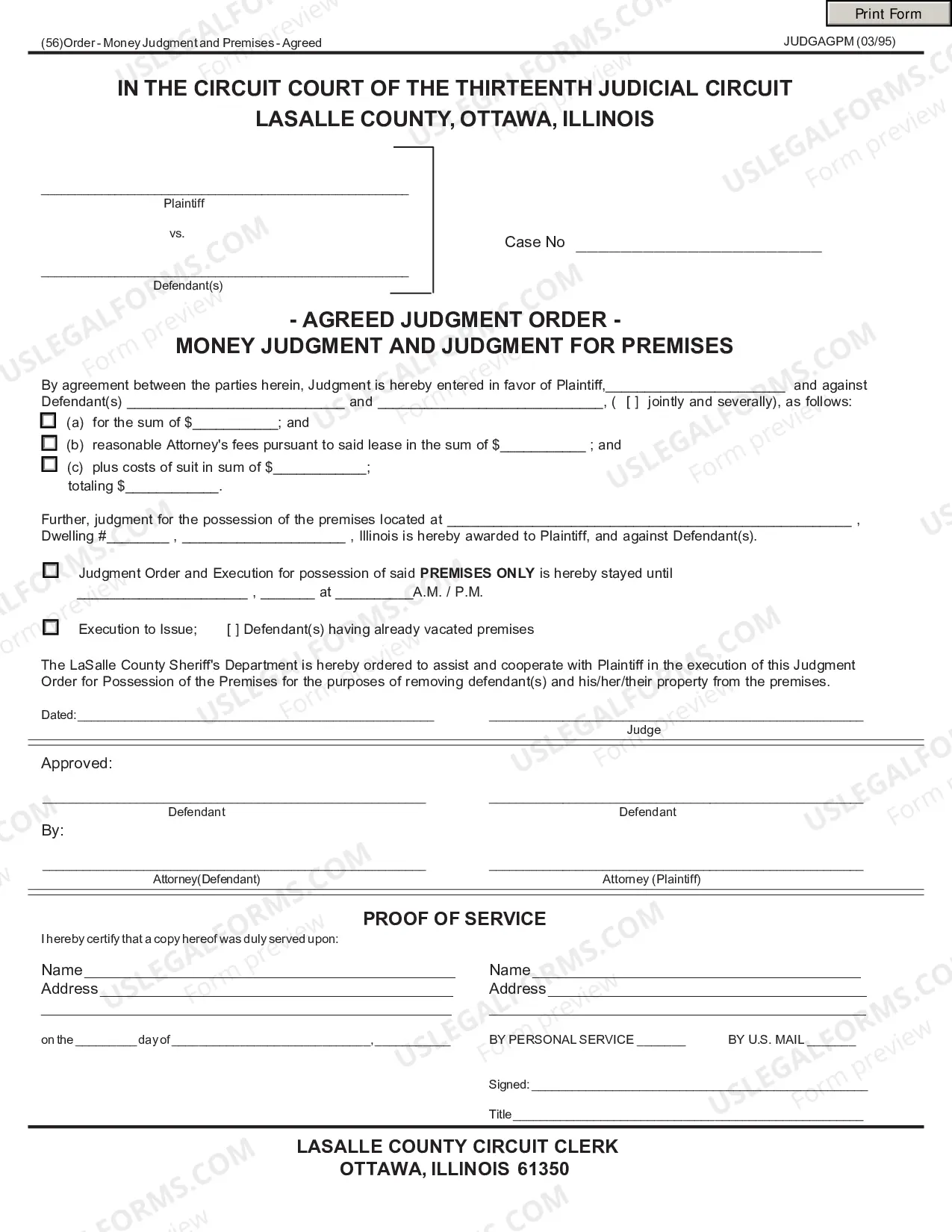

Form popularity
FAQ
Florida Statute of Limitations on a Judgment Lasts 20 Years. Until recently, there has been some debate on this litigation question caused by the interpretation of some Courts that a Florida judgment is subject to a five year statute of limitations. However, the Florida Supreme Court, in Salinas v.
Presently there is a Florida statute that limits judgment liens to 20 years,3 and there is a Florida statute that limits “actions” on certain judgments to 20 years and other judgments to five years. There is, however, no statute or court rule that places a time limit on the execution of judgments.
Final judgments issued in Florida are the culmination of a lawsuit. They can come at the end of the process from a trial or beforehand through certain procedural mechanisms like default or summary judgment or from an unperformed settlement agreement.
The statute of limitations on court judgments ranges from three years (Oklahoma) to 21 years (Ohio), with most states somewhere around 10 years.
The Length of a Judgment A judgment is good, and can be enforced, for up to 20 years. That seems like a long time, and it is. A judgment is good for 10 years and Florida allows a creditor to “renew” a judgment before the expiration of the 10 years for an additional 10 years, thus giving a judgment almost unending life.
The judgment becomes a matter of public record, and is indexed with the clerk of the court. It shows up on your credit report as well as on any background checks. The judgment is considered a lien against your property, including any real estate that you have, in the state in which the judgment is filed.
Q: Where can I find judgments, filings, complaints, and divorce decrees (orders), or other case documents or information? A: You must contact the clerk's office at the court where your case was handled. You may find trial court clerks' phone numbers, street addresses, and website addresses through .flclerks.
Florida Statute of Limitations on a Judgment Lasts 20 Years. Until recently, there has been some debate on this litigation question caused by the interpretation of some Courts that a Florida judgment is subject to a five year statute of limitations. However, the Florida Supreme Court, in Salinas v.
After the judge signs an Order or Judgment, it is entered on the court docket and served on required parties. The Order or Judgment begins a timeline for filing appeals or filing motions to change the ruling.

