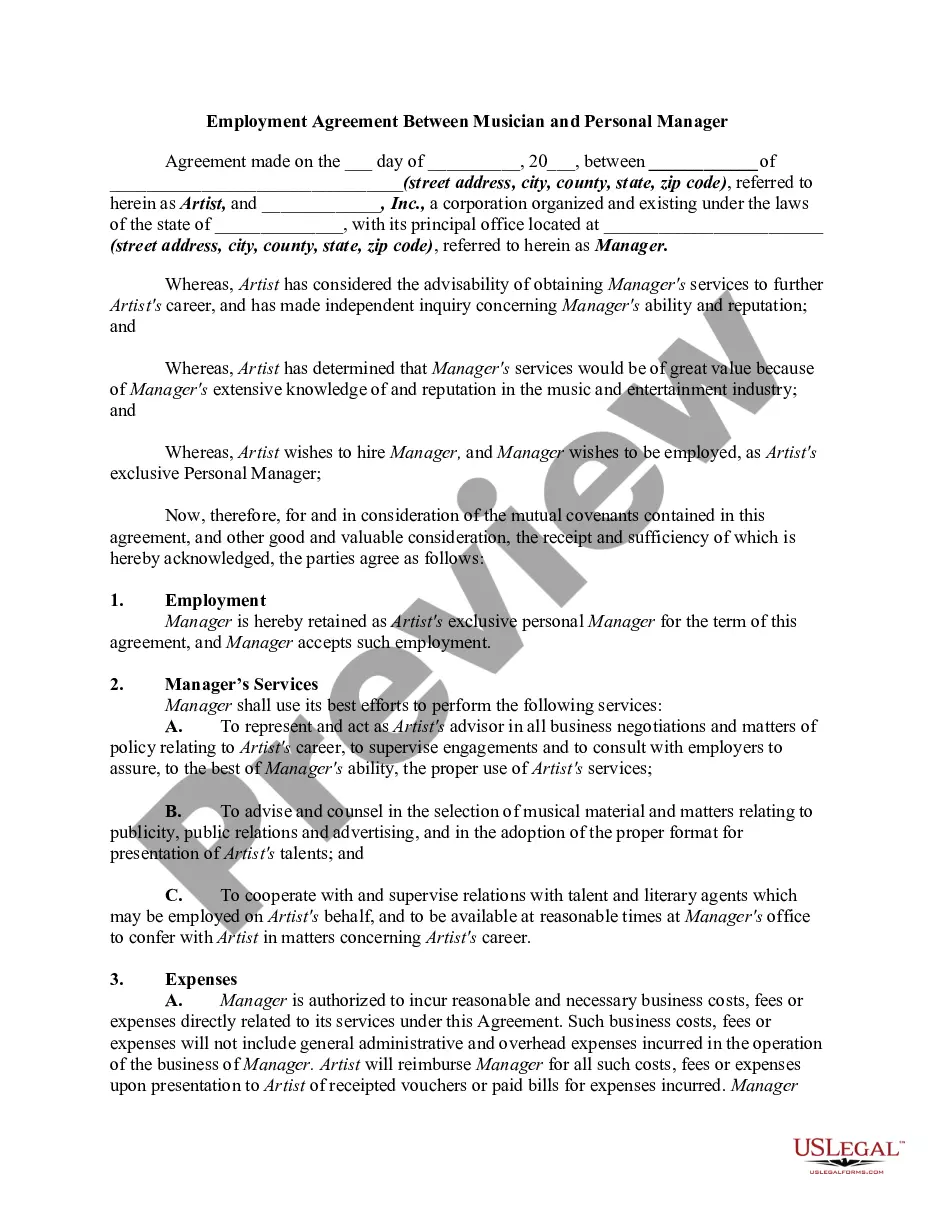
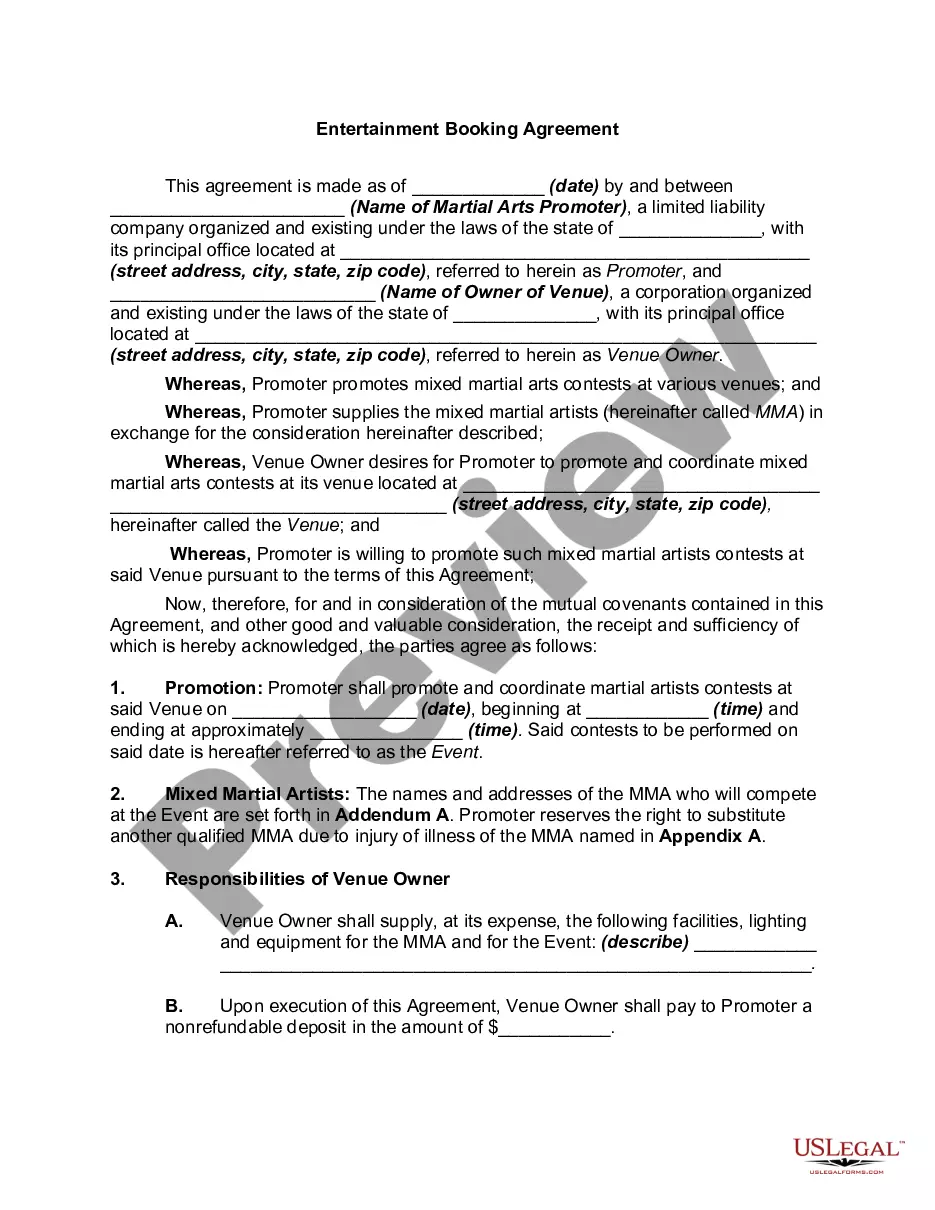
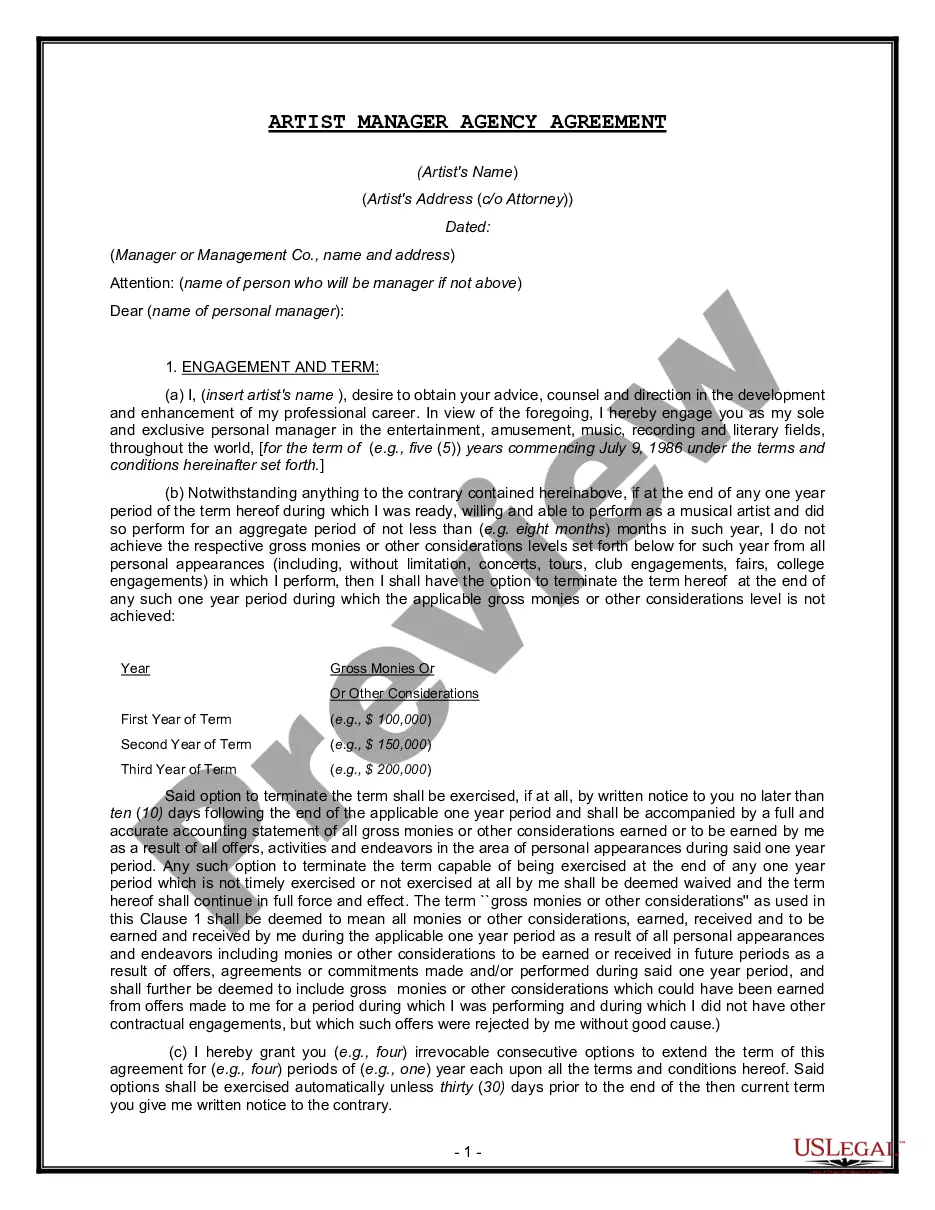
Basic Artist Management Contract For Artists In Los Angeles
Description

Get your form ready online
Our built-in tools help you complete, sign, share, and store your documents in one place.
Make edits, fill in missing information, and update formatting in US Legal Forms—just like you would in MS Word.
Download a copy, print it, send it by email, or mail it via USPS—whatever works best for your next step.
Sign and collect signatures with our SignNow integration. Send to multiple recipients, set reminders, and more. Go Premium to unlock E-Sign.
If this form requires notarization, complete it online through a secure video call—no need to meet a notary in person or wait for an appointment.
We protect your documents and personal data by following strict security and privacy standards.

Make edits, fill in missing information, and update formatting in US Legal Forms—just like you would in MS Word.

Download a copy, print it, send it by email, or mail it via USPS—whatever works best for your next step.

Sign and collect signatures with our SignNow integration. Send to multiple recipients, set reminders, and more. Go Premium to unlock E-Sign.

If this form requires notarization, complete it online through a secure video call—no need to meet a notary in person or wait for an appointment.

We protect your documents and personal data by following strict security and privacy standards.
Looking for another form?







Form popularity
FAQ
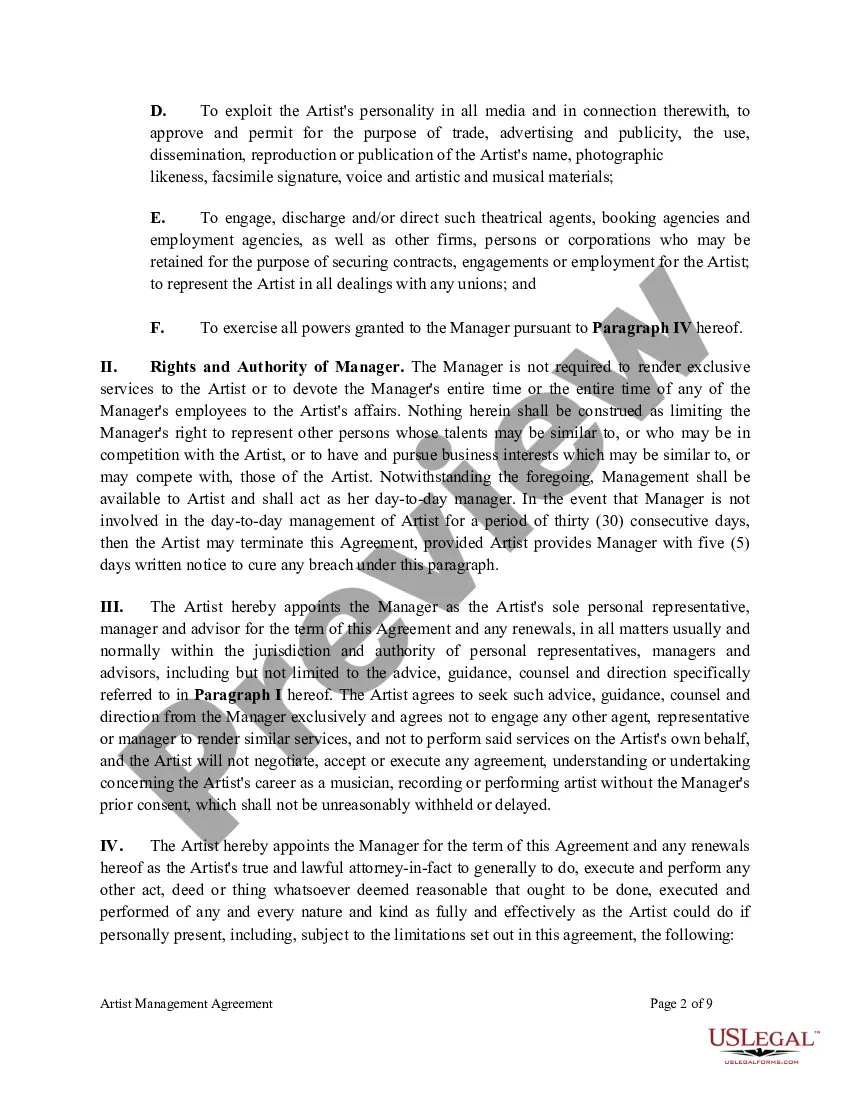
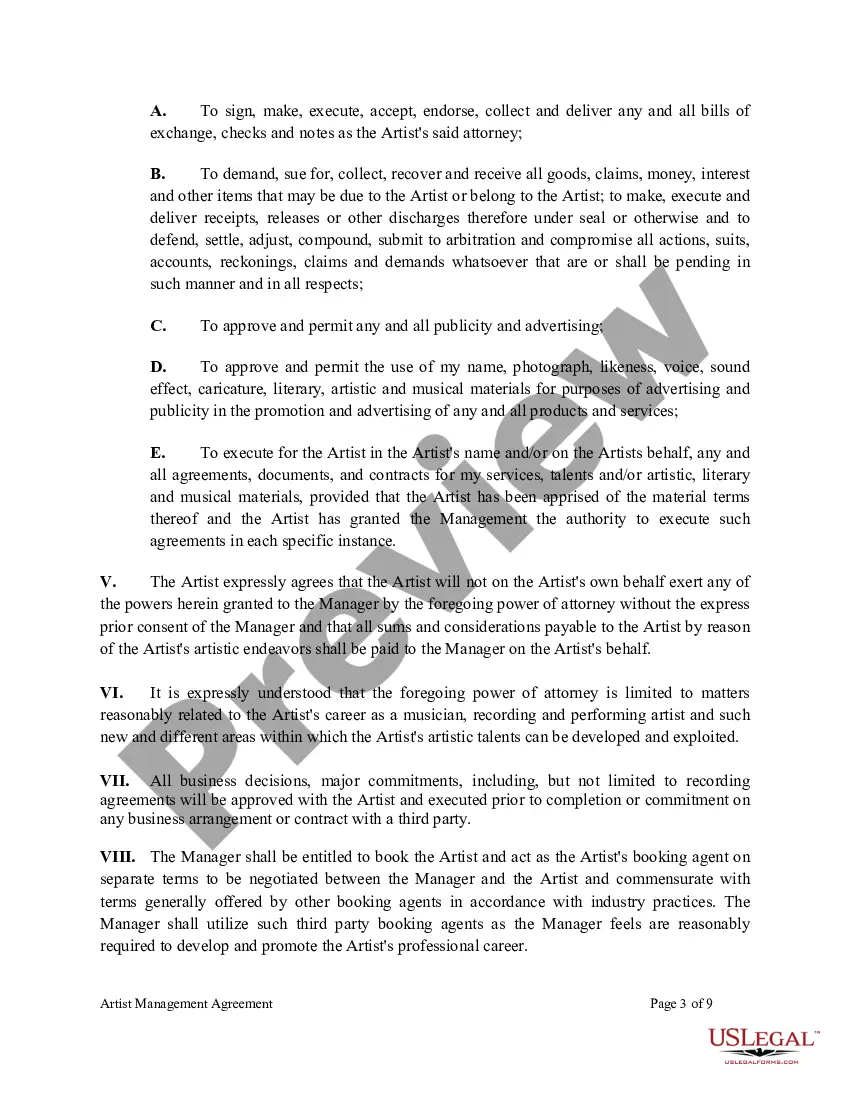
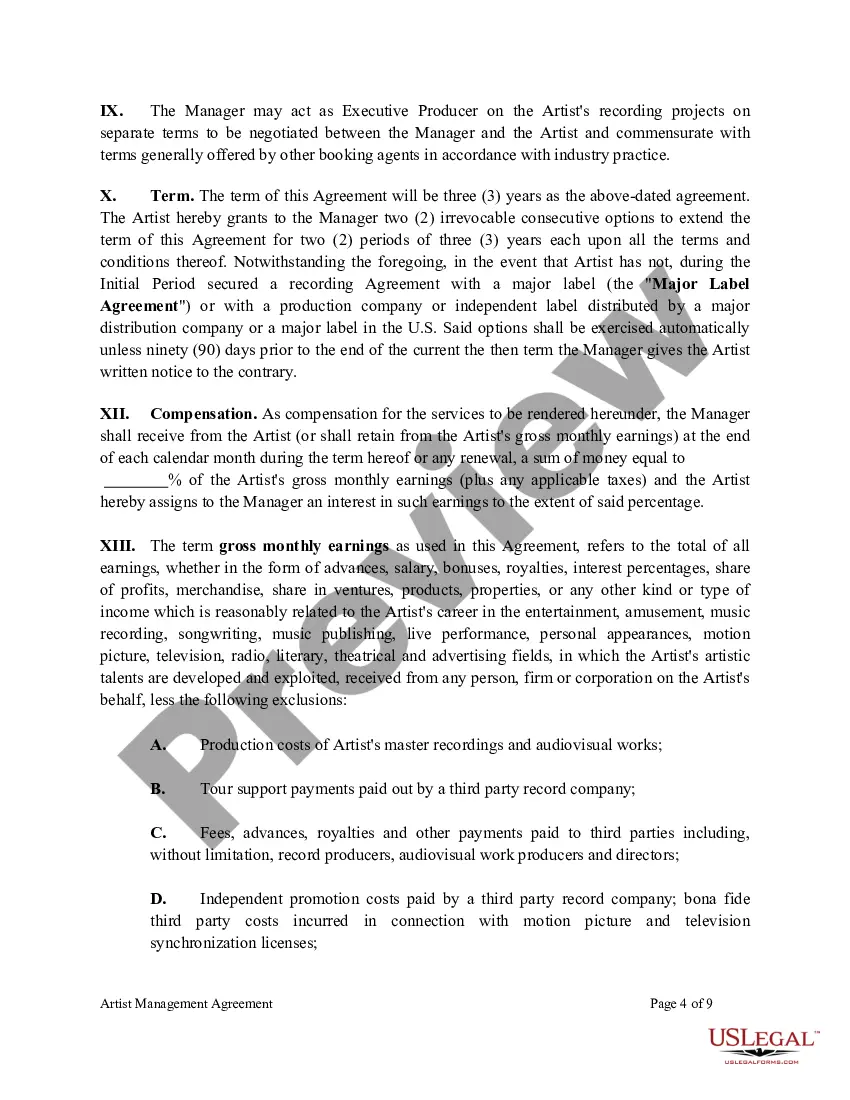
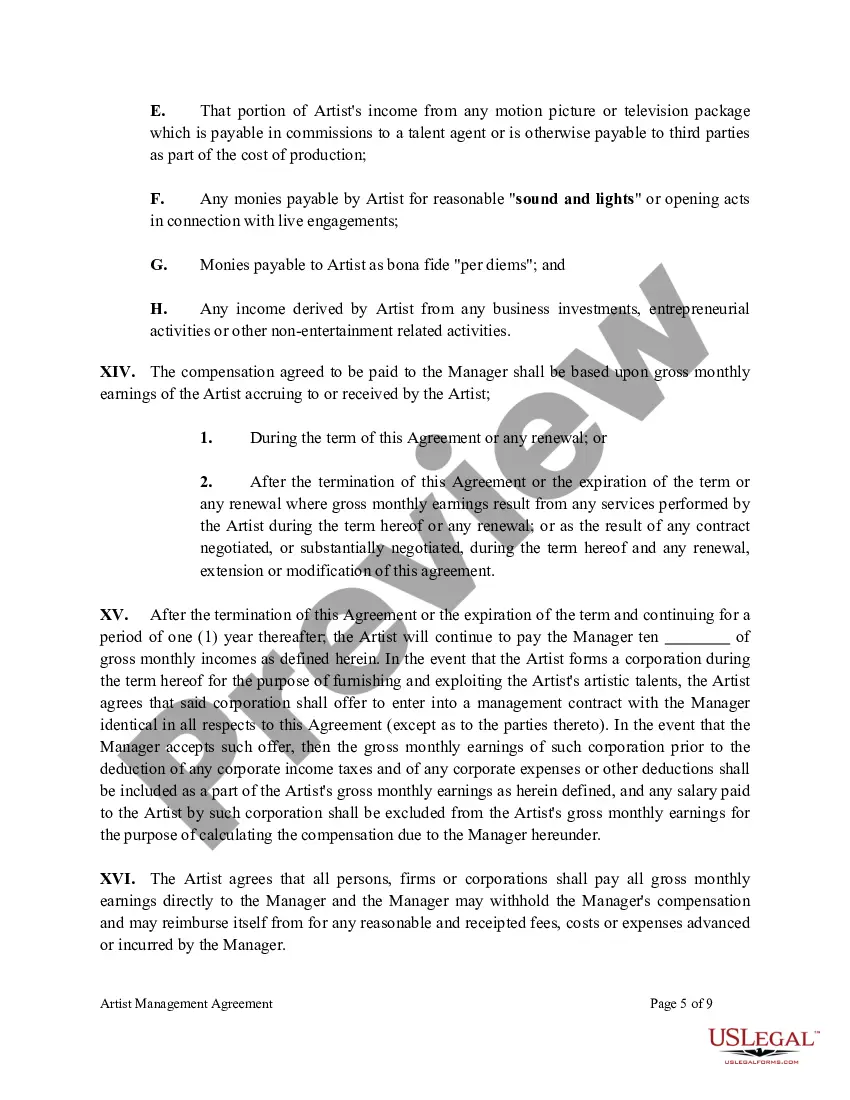
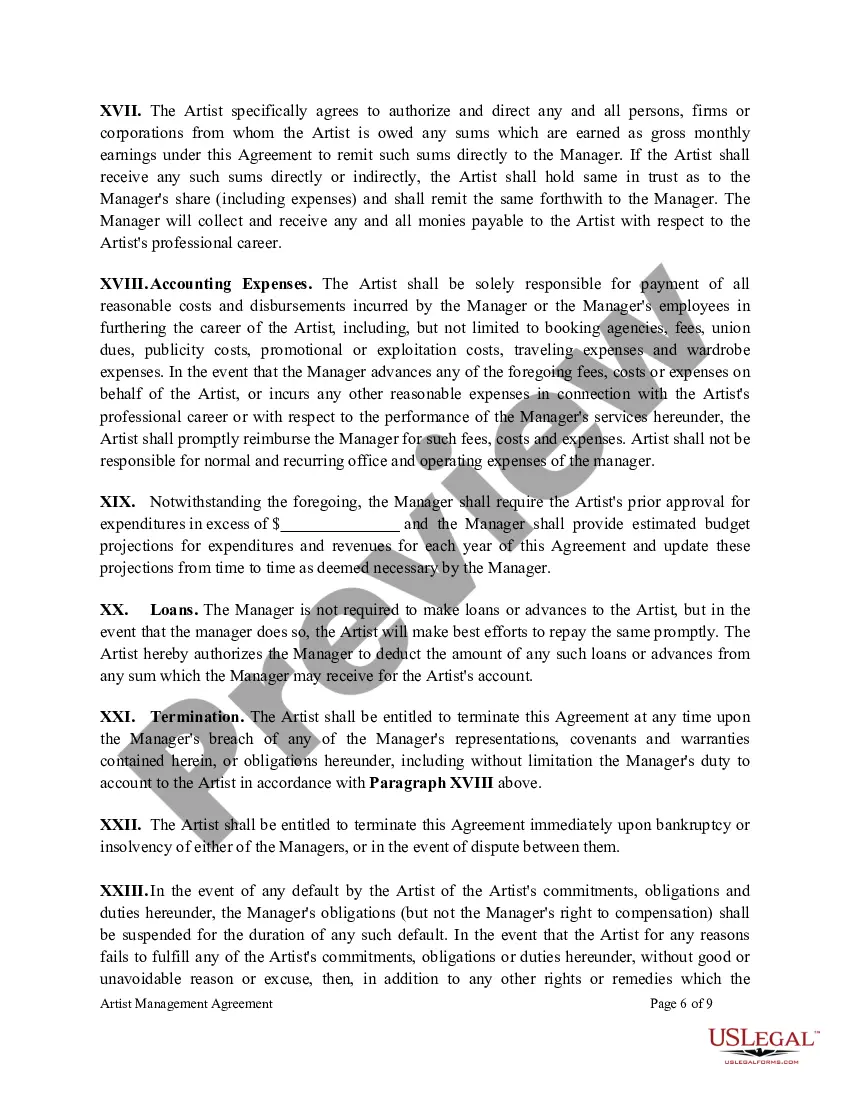
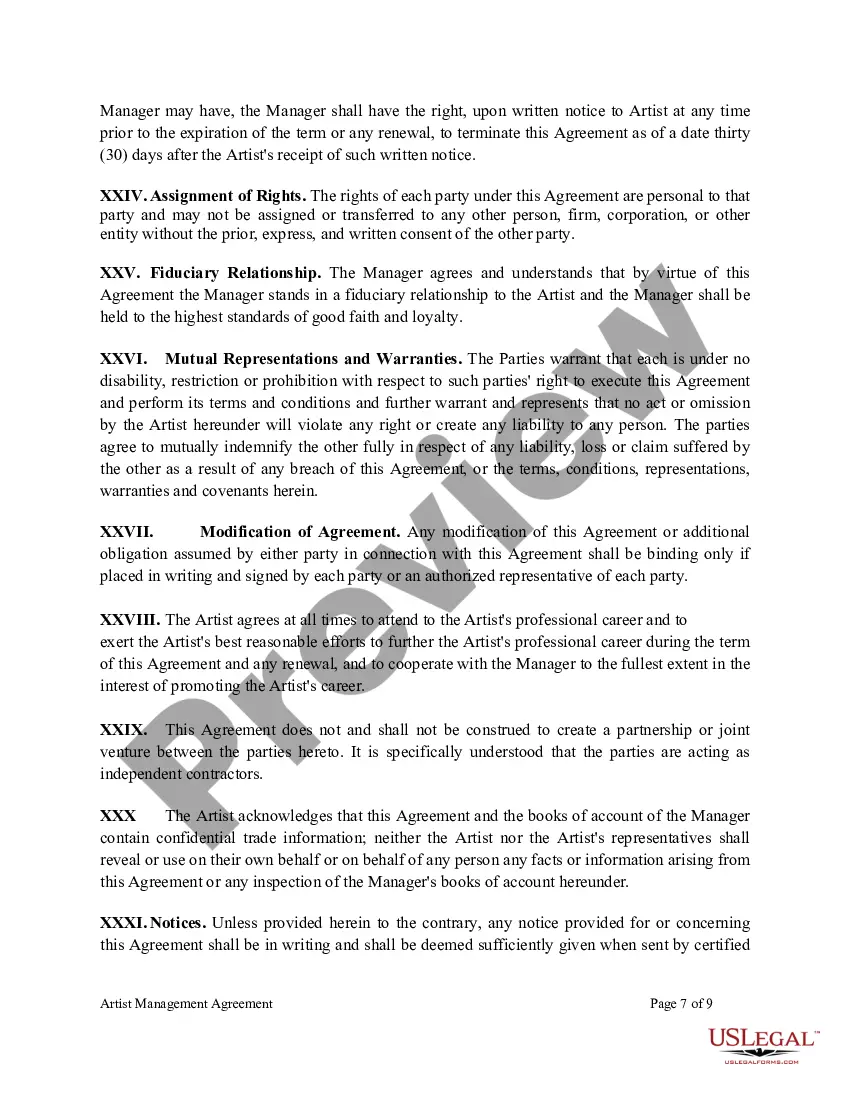
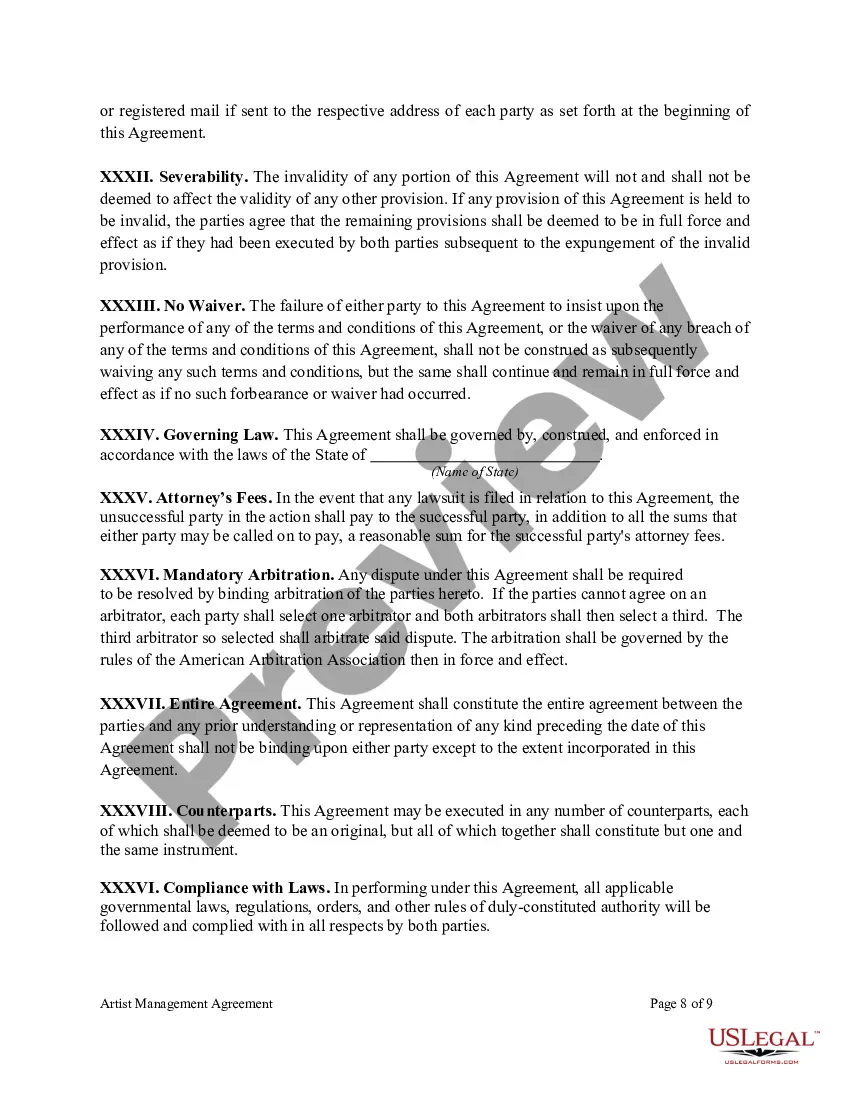
Contracts like an artist agreement help avoid miscommunications and confusion over the rights and responsibilities of both parties involved. Artist agreements typically include availability expectations, performance markers, and licensing or ownership rights of the works created during the partnership.
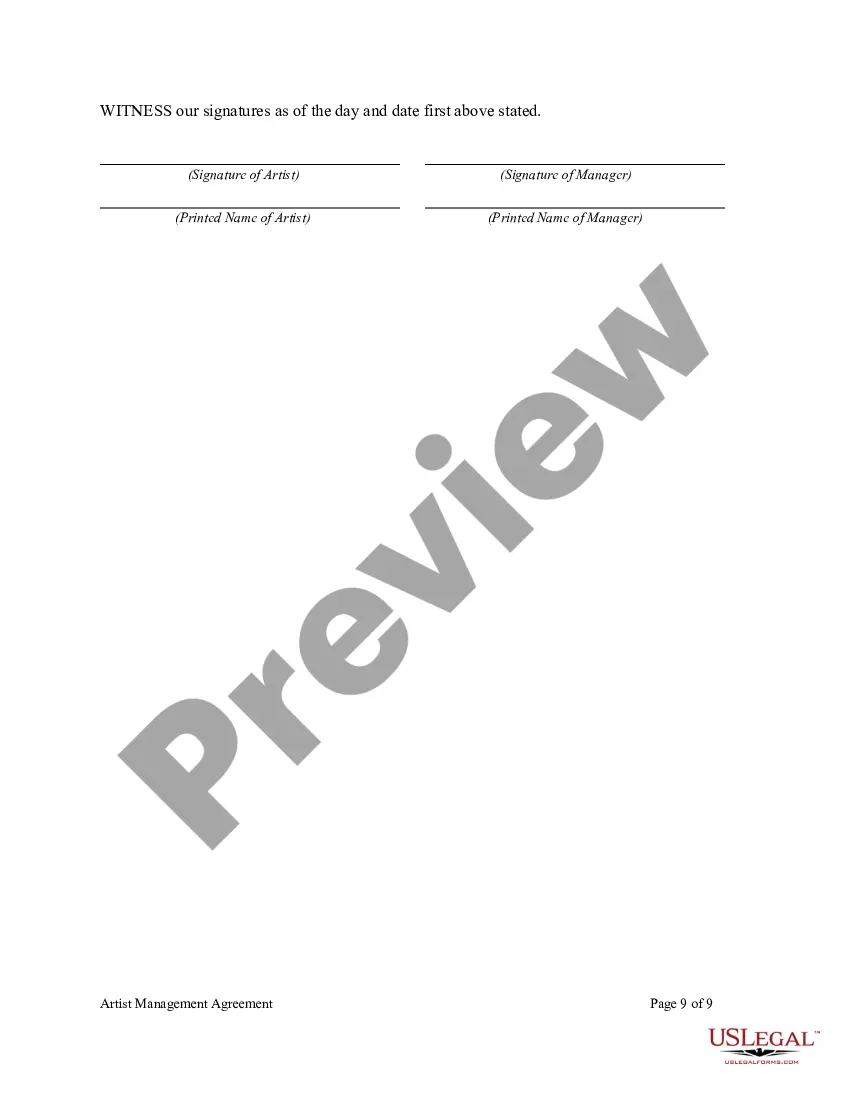
Write the contract in six steps Start with a contract template. Open with the basic information. Describe in detail what you have agreed to. Include a description of how the contract will be ended. Write into the contract which laws apply and how disputes will be resolved. Include space for signatures.
5 Must-Have Clauses in Artist Management Contracts Commission Rates. Term Length in Management Agreements. Decision-Making Authority. Sunset Clause (place after Term) ... Exclusivity.
Managers' commissions are typically between 15 to 20% of an artist's gross income. Whether it's 15% or 20% really depends on the level of the band and the bargaining power of each party. I've seen some net deals, but they are extremely rare. That being said, I always push for a net commission on merchandise.
A contract is mandatory for any commission. Write down every detail in the contract, such as the size and media of the artwork, your compensation, due dates for payments, who is responsible for framing, installation, delivery of the artwork, etc. If your client balks at signing a contract, WALK AWAY.
As a general rule, managers take a percentage of all income generated by the artist in exchange for their management services. Commission rates typically range from 15-25% of the artist's gross income from: Recording royalties: Sales, streaming and licensing of recorded music.
Being an artist manager is not an easy task. It requires a lot of hard work, dedication, and passion for music. Artist managers are responsible for guiding and supporting artists in every aspect of their career, from booking gigs to negotiating contracts and managing finances.
How To Become An Artist Manager Understand Your Role: Managing Artists' Expectations. Educate Yourself. Become a Student Manager. Make College Friends. Join College Radio. Promote College Events. Acquire Your Own Clients. Help A Friend.
Education: Considering music managers are responsible for all the legal and business aspects of an artist's career, they usually must have a bachelor's degree in the music business (or business in general). Several schools offer music management or business management degrees.
Here are some steps you can follow to start your career as a music manager: Earn a bachelor's degree. Complete an internship. Stay updated on trends in the industry. Apply for jobs with established artists or companies. Find your own clients.
