Talent Management Contract For The Twenty-first Century In Dallas
Description









Get your form ready online
Our built-in tools help you complete, sign, share, and store your documents in one place.
Make edits, fill in missing information, and update formatting in US Legal Forms—just like you would in MS Word.
Download a copy, print it, send it by email, or mail it via USPS—whatever works best for your next step.
Sign and collect signatures with our SignNow integration. Send to multiple recipients, set reminders, and more. Go Premium to unlock E-Sign.
If this form requires notarization, complete it online through a secure video call—no need to meet a notary in person or wait for an appointment.
We protect your documents and personal data by following strict security and privacy standards.

Make edits, fill in missing information, and update formatting in US Legal Forms—just like you would in MS Word.

Download a copy, print it, send it by email, or mail it via USPS—whatever works best for your next step.

Sign and collect signatures with our SignNow integration. Send to multiple recipients, set reminders, and more. Go Premium to unlock E-Sign.

If this form requires notarization, complete it online through a secure video call—no need to meet a notary in person or wait for an appointment.

We protect your documents and personal data by following strict security and privacy standards.
Looking for another form?




Form popularity
FAQ
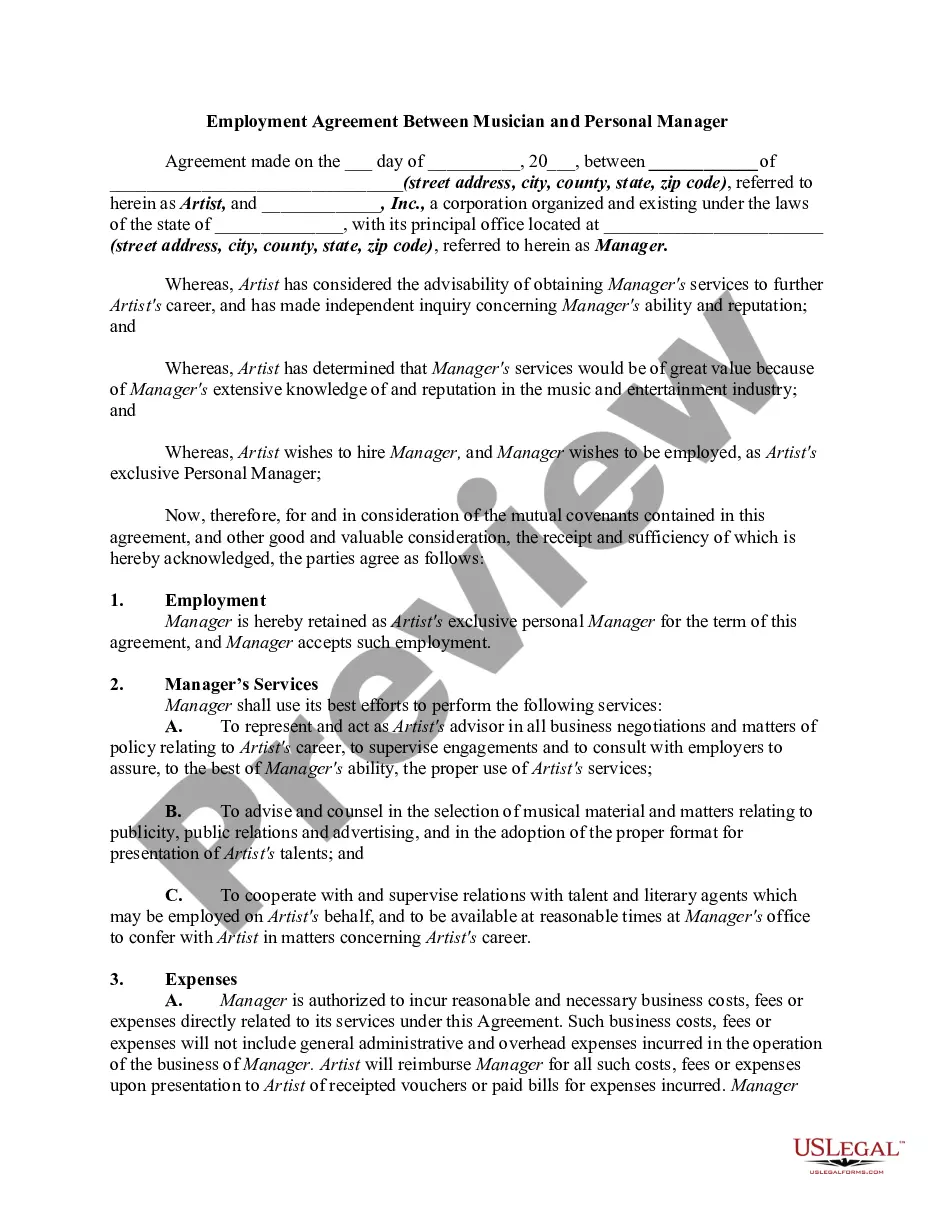
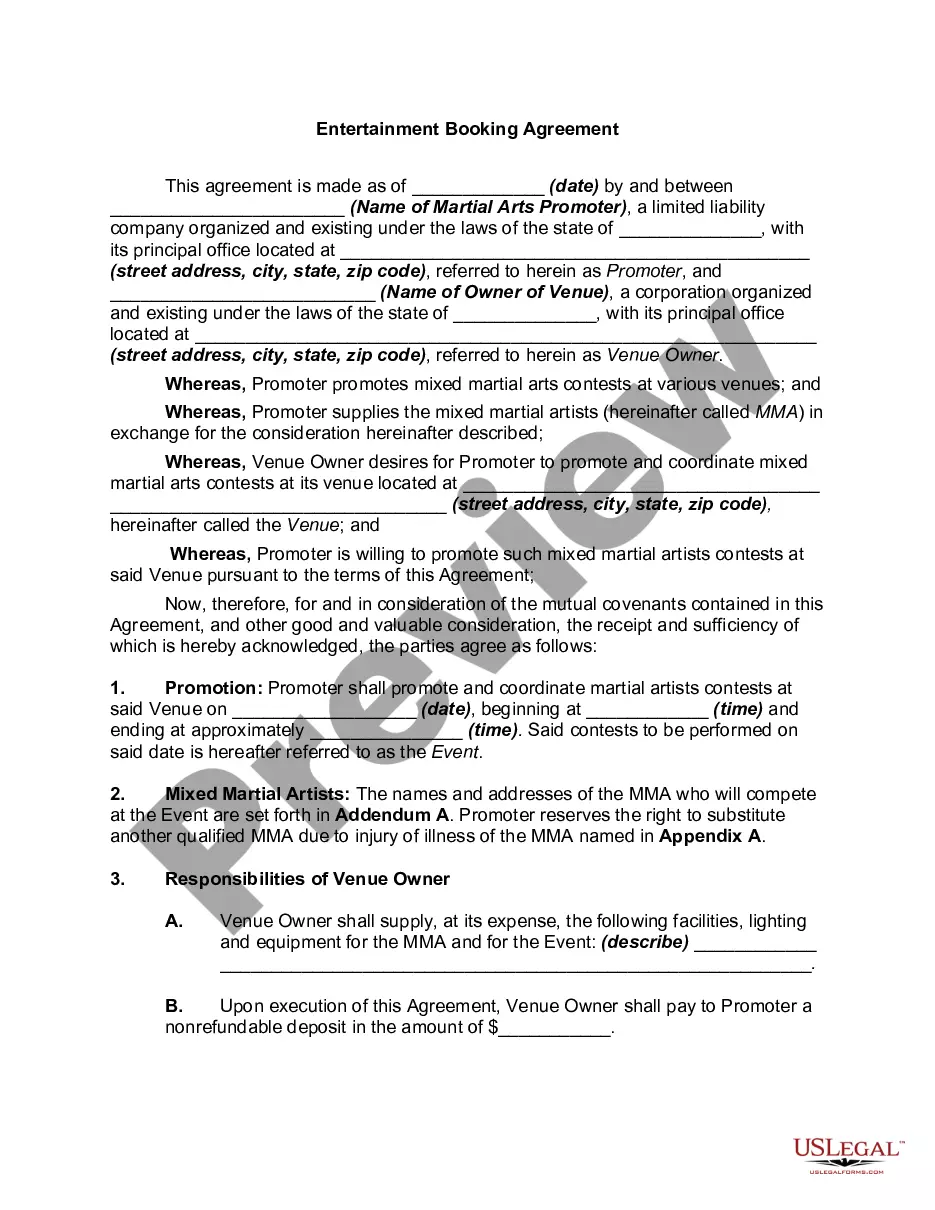
This contract outlines the terms and conditions under which the talent agency will represent the talent and seek out opportunities for them to work in their industry. Talent agency contracts are common in the entertainment industry and are designed to protect the interests of both the talent and the agency.
As a general rule, managers take a percentage of all income generated by the artist in exchange for their management services. Commission rates typically range from 15-25% of the artist's gross income from: Recording royalties: Sales, streaming and licensing of recorded music.
As a general rule, managers take a percentage of all income generated by the artist in exchange for their management services. Commission rates typically range from 15-25% of the artist's gross income from: Recording royalties: Sales, streaming and licensing of recorded music.
The most common distribution is 15-20% for the artists and 75-80% for labels but it can go up to 50-50 with indie labels. For example, if you sign a 360° contract, your record label manages all aspects of your music project, from manufacturing to distribution, from marketing to publishing to sub-licensing, and more.
A talent agency contract is a legal agreement between a talent agency and a talent, such as an actor, musician, or model. This contract outlines the terms and conditions under which the talent agency will represent the talent and seek out opportunities for them to work in their industry.
As of 2022, the top three Hollywood talent agencies are William Morris Endeavor (WME), Creative Artists Agency (CAA), and United Talent Agency (UTA). Except for ICM Partners, each agency has its own affiliated production company, which may hire the agency's clients.
Termination of Agency Contracts The Actor has notified the Agent in writing of his unavailability. The Actor is employed and is therefore unavailable. The Actor is unable to respond to a call for his services by reason of mental or physical incapacity.
As a general rule, managers take a percentage of all income generated by the artist in exchange for their management services. Commission rates typically range from 15-25% of the artist's gross income from: Recording royalties: Sales, streaming and licensing of recorded music.
Typically, the term of a Talent Agency Agreement will range anywhere between six months to three years. For Talent engaging their first Agency, it is advisable for Talent to try to negotiate a relatively short initial term (e.g., a one-year initial term).
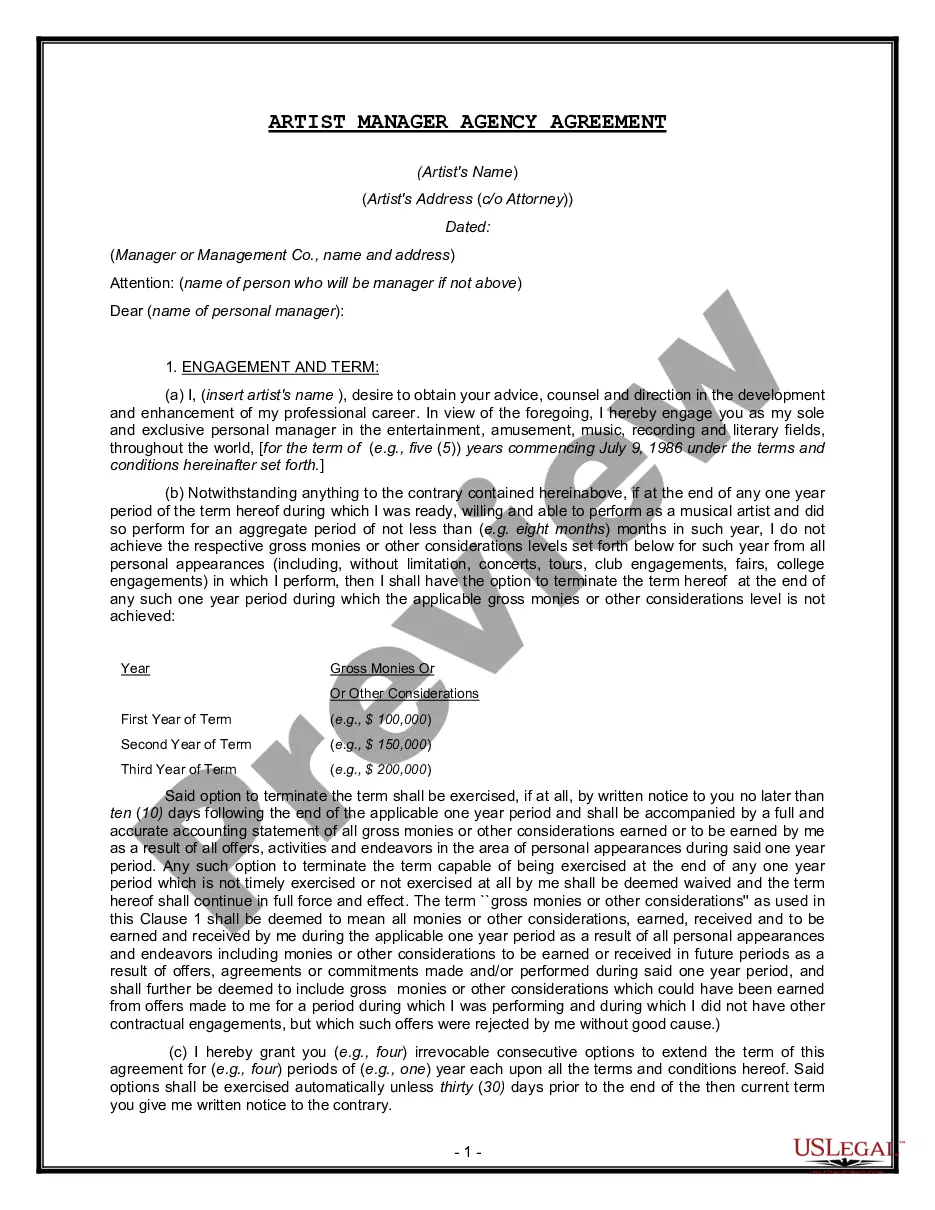
Most actors or other entertainment talents retain an agent or manager to represent them. This usually involves signing a talent representation agreement that defines the services provided by the agent and the compensation received in return.
