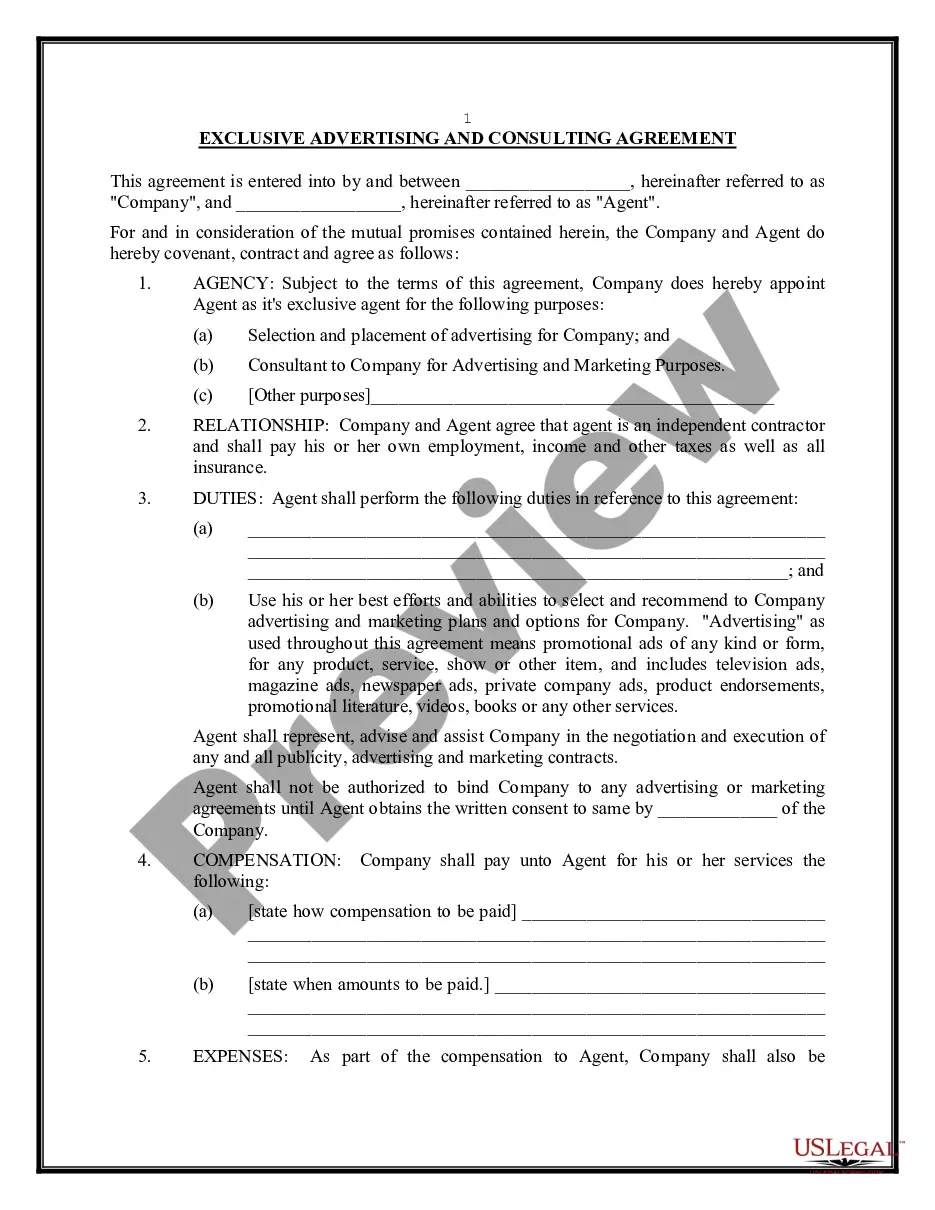
Agreement For Management Services In Bronx
Description









Get your form ready online
Our built-in tools help you complete, sign, share, and store your documents in one place.
Make edits, fill in missing information, and update formatting in US Legal Forms—just like you would in MS Word.
Download a copy, print it, send it by email, or mail it via USPS—whatever works best for your next step.
Sign and collect signatures with our SignNow integration. Send to multiple recipients, set reminders, and more. Go Premium to unlock E-Sign.
If this form requires notarization, complete it online through a secure video call—no need to meet a notary in person or wait for an appointment.
We protect your documents and personal data by following strict security and privacy standards.

Make edits, fill in missing information, and update formatting in US Legal Forms—just like you would in MS Word.

Download a copy, print it, send it by email, or mail it via USPS—whatever works best for your next step.

Sign and collect signatures with our SignNow integration. Send to multiple recipients, set reminders, and more. Go Premium to unlock E-Sign.

If this form requires notarization, complete it online through a secure video call—no need to meet a notary in person or wait for an appointment.

We protect your documents and personal data by following strict security and privacy standards.
Looking for another form?


Form popularity
FAQ
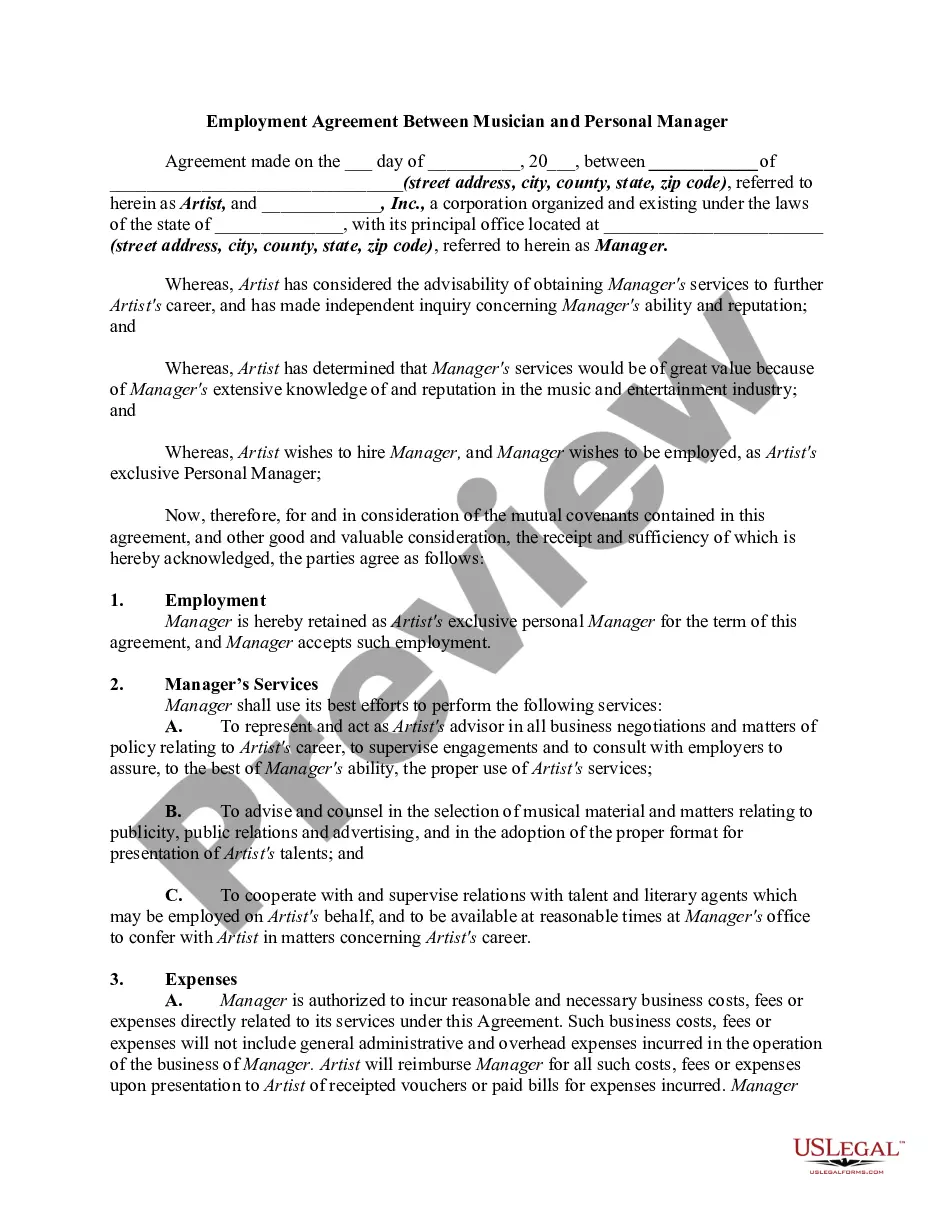
A management services agreement is a contract between an external management or administrative professional and a company. The contract specifies the details of the relationship and when the professional relationship ends.
How do I write a Service Agreement? State how long the services are needed. Include the state where the work is taking place. Provide the contractor's and client's information. Describe the service being provided. Outline the compensation. State the agreement's terms. Include any additional clauses.
How to write a service level agreement in 5 steps Define the service. Your SLA will need to define and outline the service clearly. Verify service levels. Determine performance metrics. Prepare the service level agreement document. Review the SLA with all stakeholders.
Management contracts give business owners an assurance of the continuity of their business. This can be illustrated through an example. A manager or any employee may terminate their job, leaving the business a hole in its team for the smooth functioning of the operations.
An MSA, or Master Service Agreement, is a comprehensive contract between two parties that outlines the general terms and conditions governing their business relationship. It serves as a foundation for future transactions or agreements. Its primary purpose is to speed up and simplify future agreements between parties.
A Managed Service Agreement (MSA) is the contract between the MSO and the healthcare practice. The contract sets forth the duties and obligations of the MSO – what the MSO can do and can't do on behalf of the medical practice.
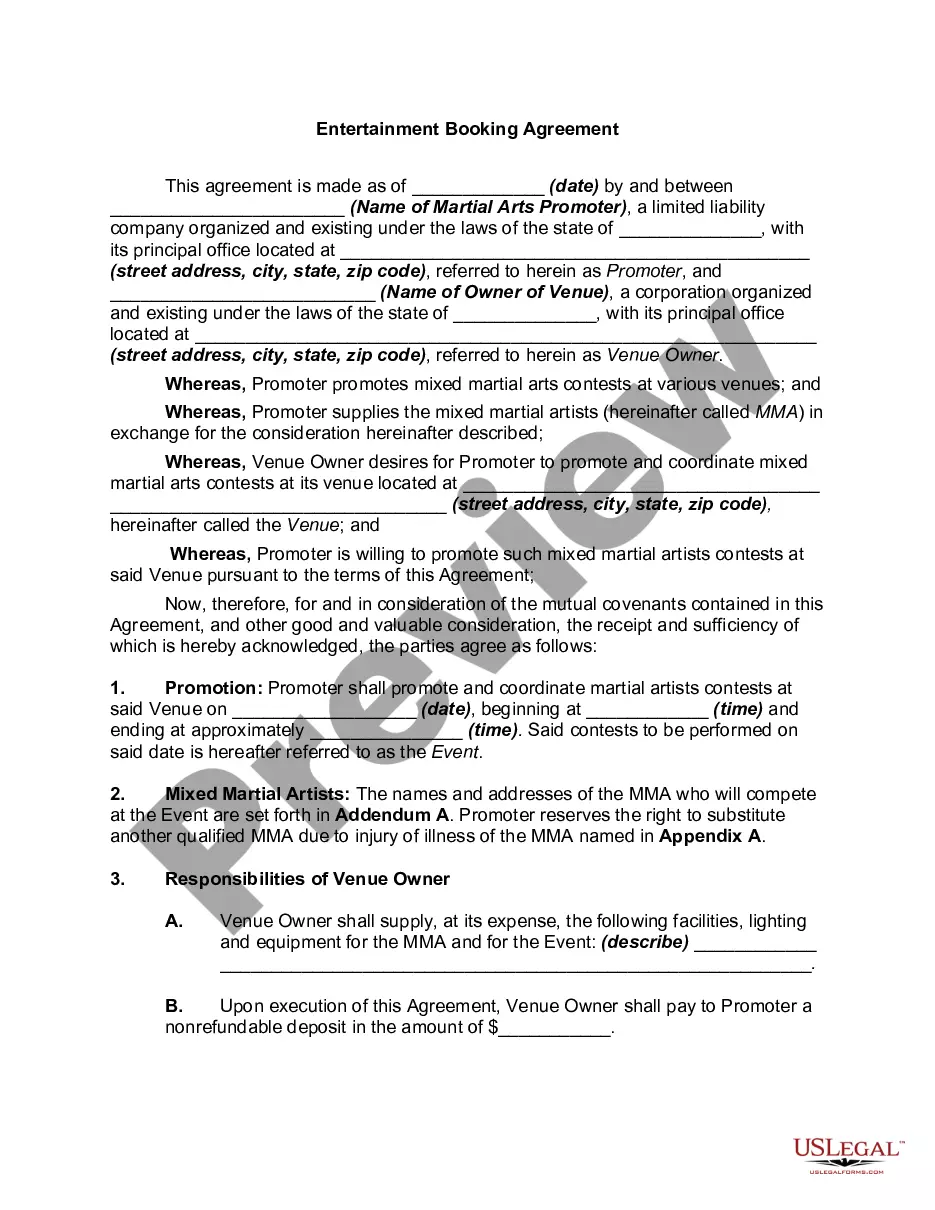
The agreement establishes the relationship between the owner and the manager for a fixed period, defines the manager's authority and compensation for services provided, outlines procedures, specifies limits of the manager's authority and actions, and states financial and other obligations of the property owner."
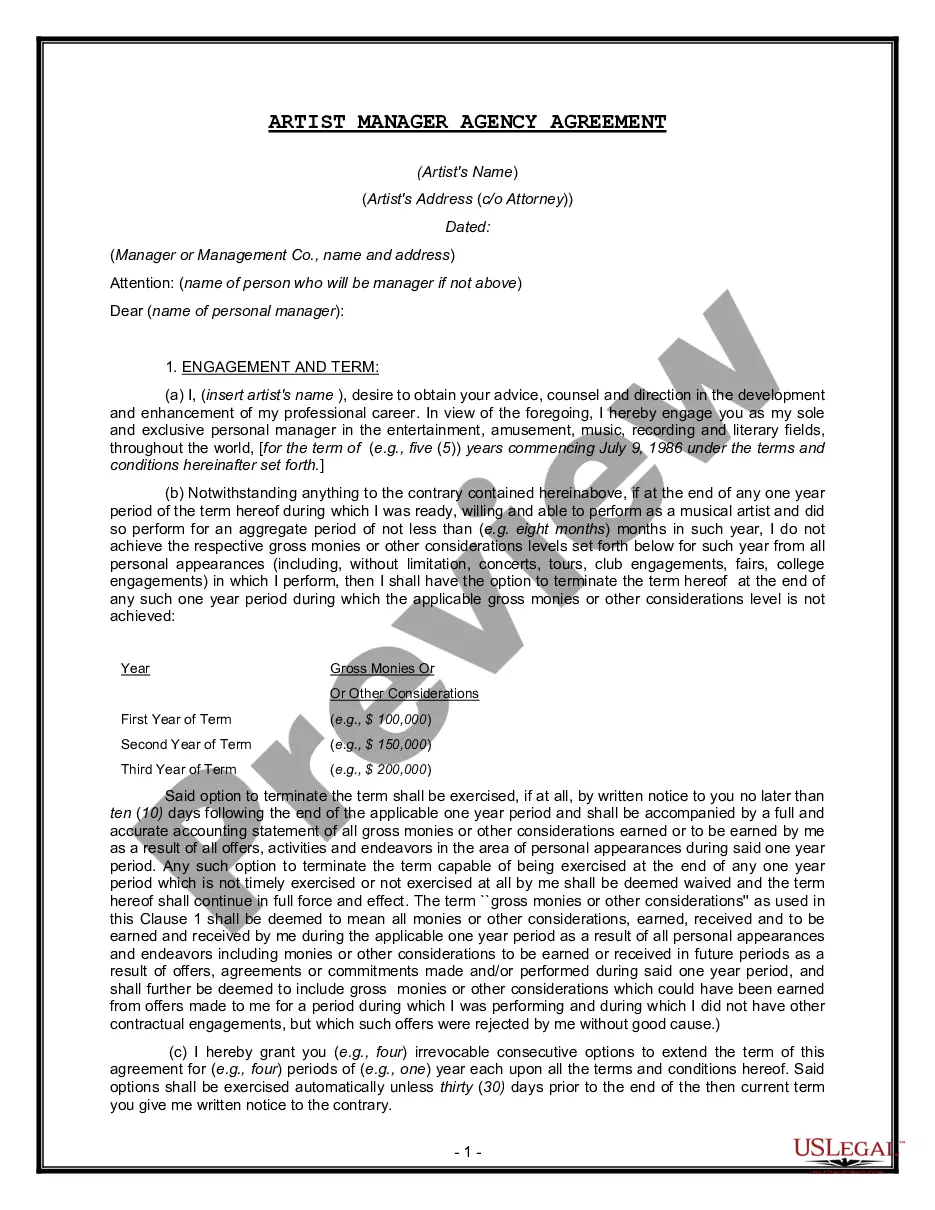
A business management agreement formalizes the working relationship between a business and its manager. The contract will include information such as budgeting, the percentage of business revenue owed to the manager, and confidentiality requirements.