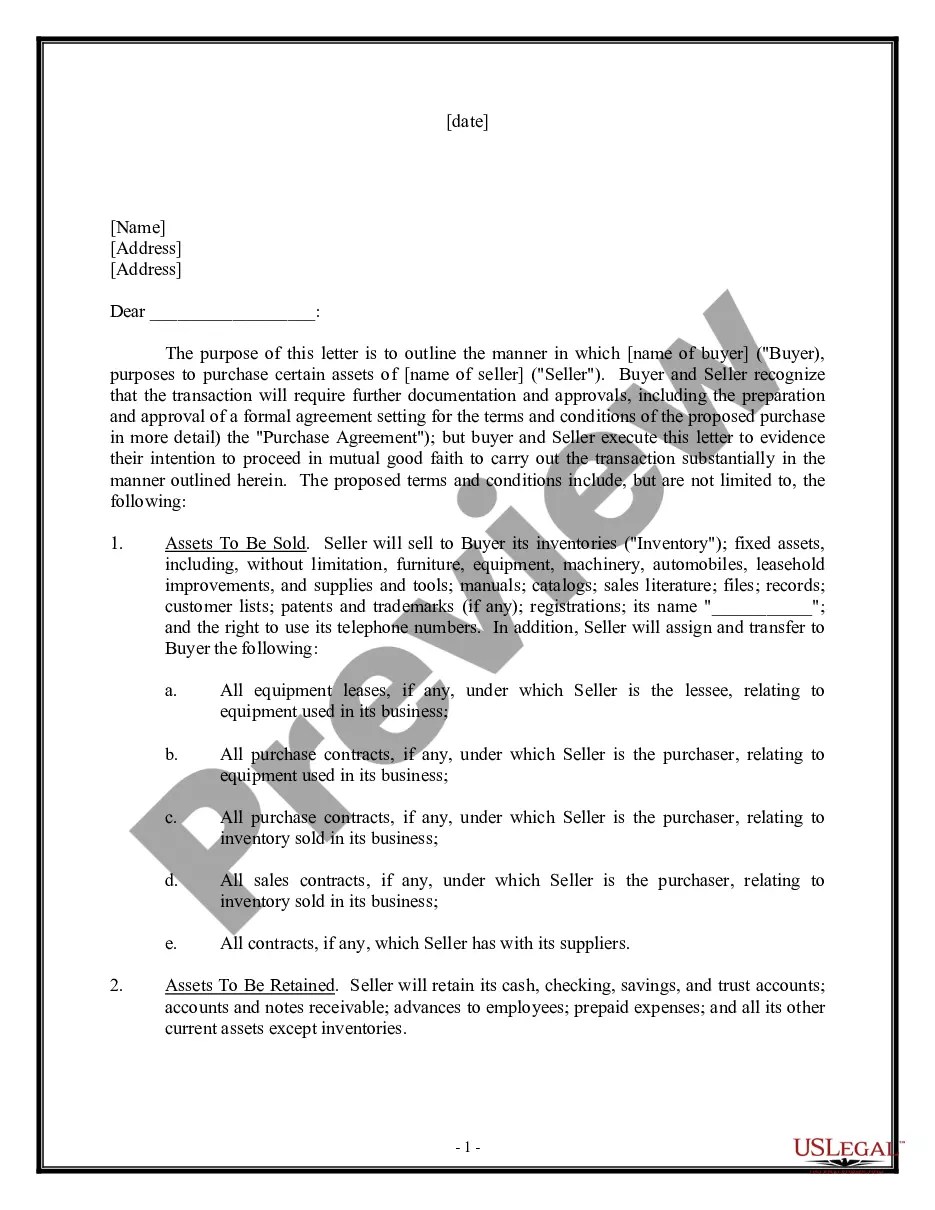
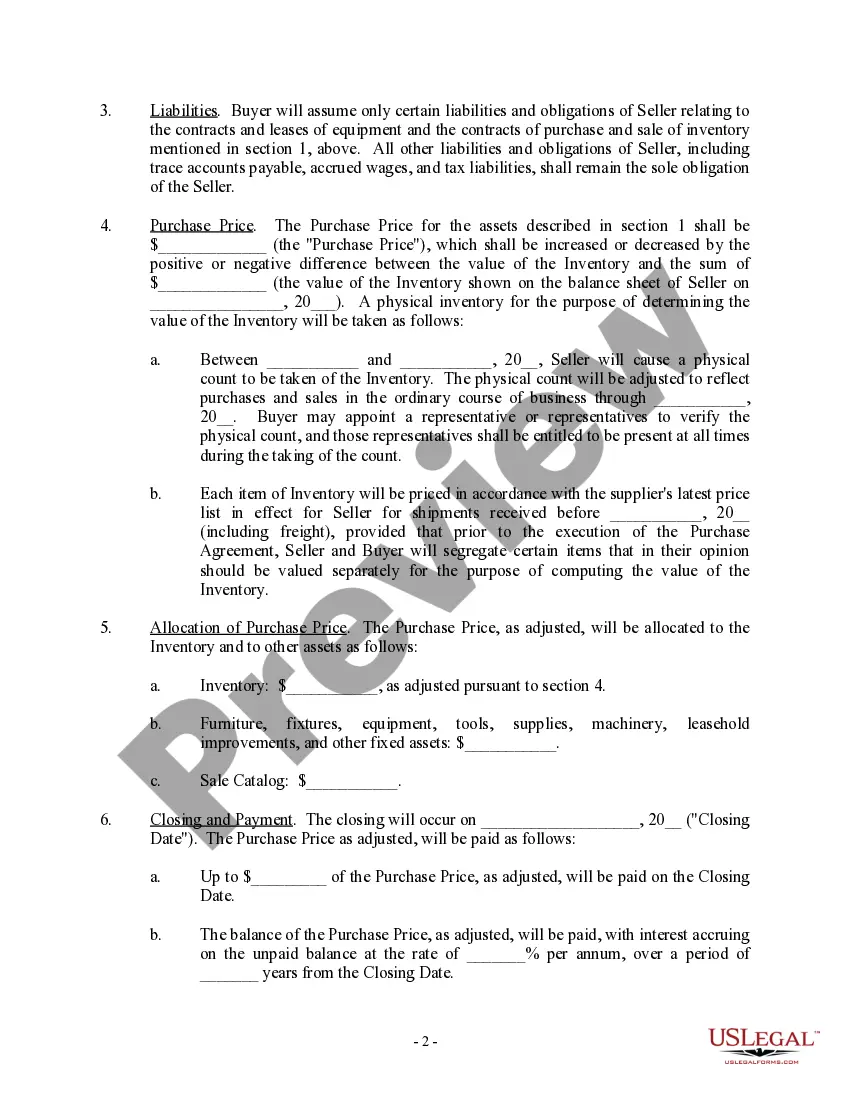
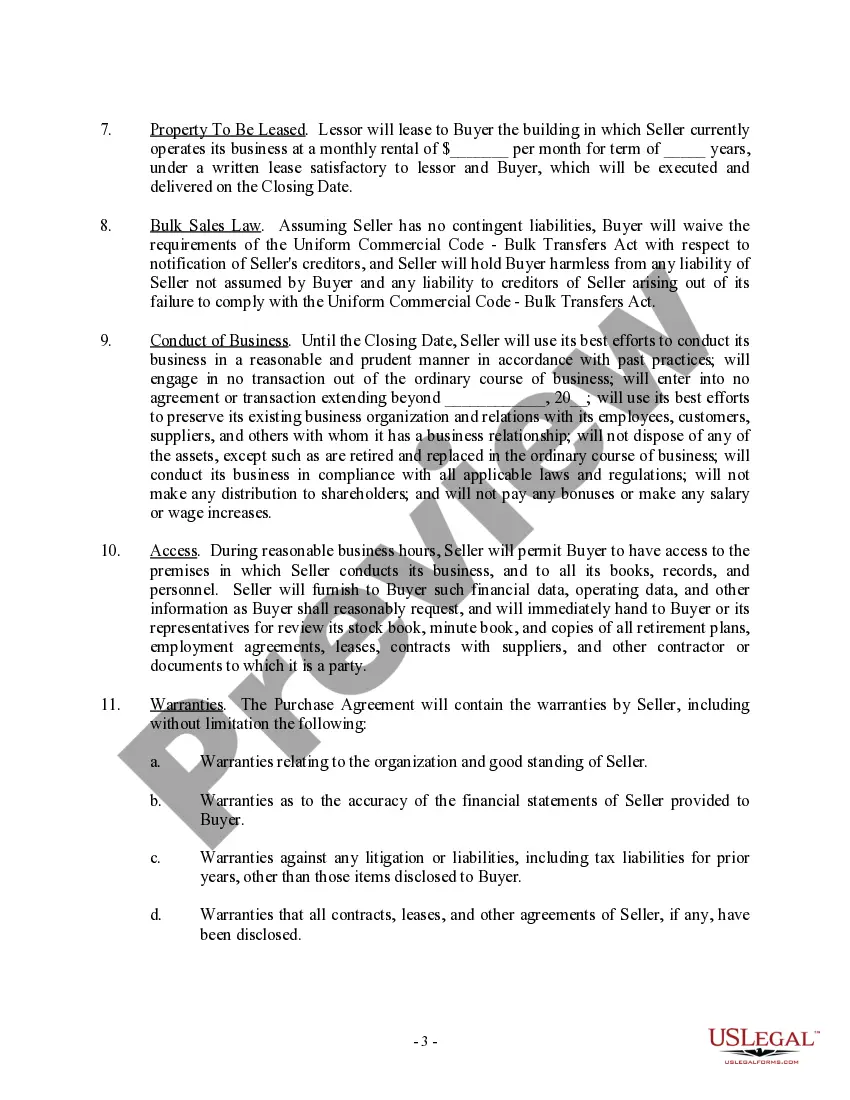
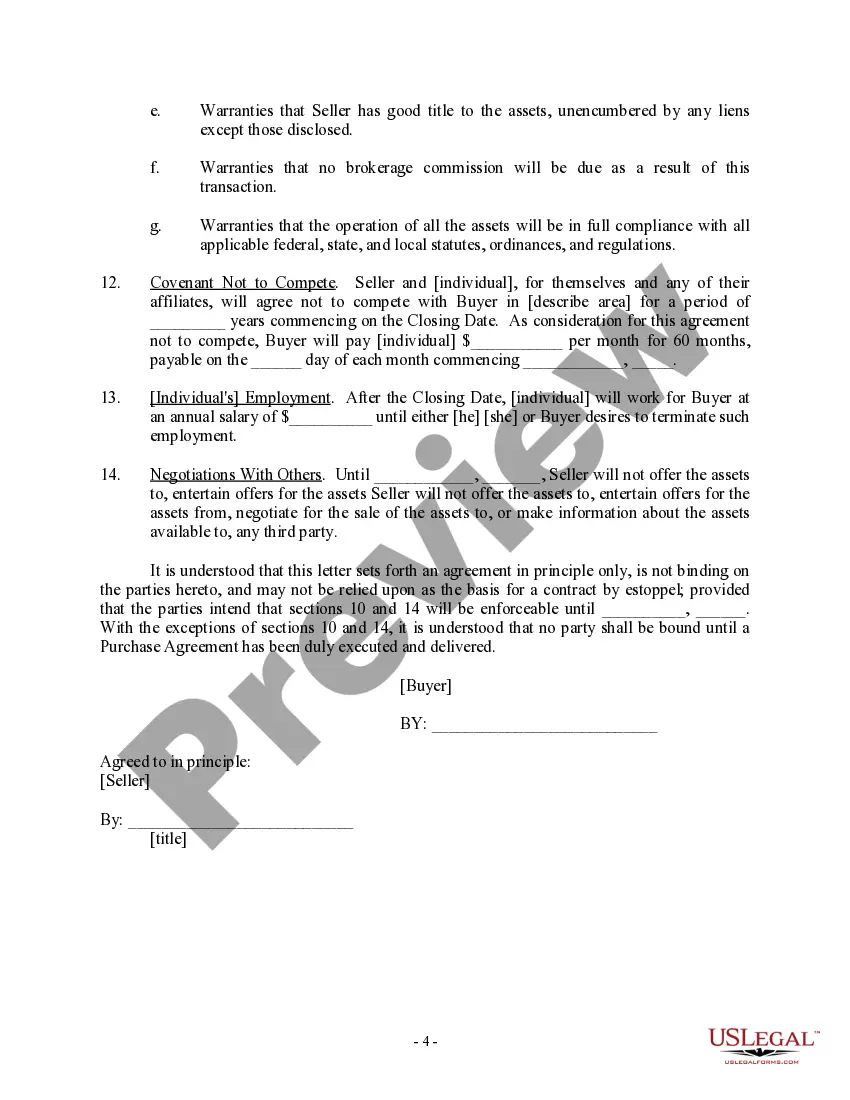
Assets Asset Purchase With Lease In San Diego
Description

Form popularity
FAQ
A state law doctrine that allows a creditor to seek recovery from the purchaser of assets for liabilities that were not assumed as part of an acquisition.
“When you do a lease option, you're betting that you're going to qualify for a mortgage and be able to execute and buy the property,” says Timothy McFarlin, a California real estate attorney. “Make sure you have a path to do that.”
The lessor in a lease agreement is the person or legal entity who grants a lease to an individual or family, often a lease on a property. The lessor is the owner of the asset in the lease agreement.
Asset management is the process of planning and controlling the acquisition, operation, maintenance, renewal, and disposal of organizational assets. This process improves the delivery potential of assets and minimizes the costs and risks involved.
In this article, we discuss successor liability based on the “merely a continuation” doctrine. As noted, under California law, the general rule is that when one business entity sells or transfers all of its assets to another business, the latter is not liable for the debts and liabilities of the former.
The assets bought are usually key to the continued operation of the business. These assets may include tangible items such as property, machinery, inventory, stock, office equipment or vehicles. They could also include intangible assets such as intellectual property, goodwill, trade secrets, and licences.
