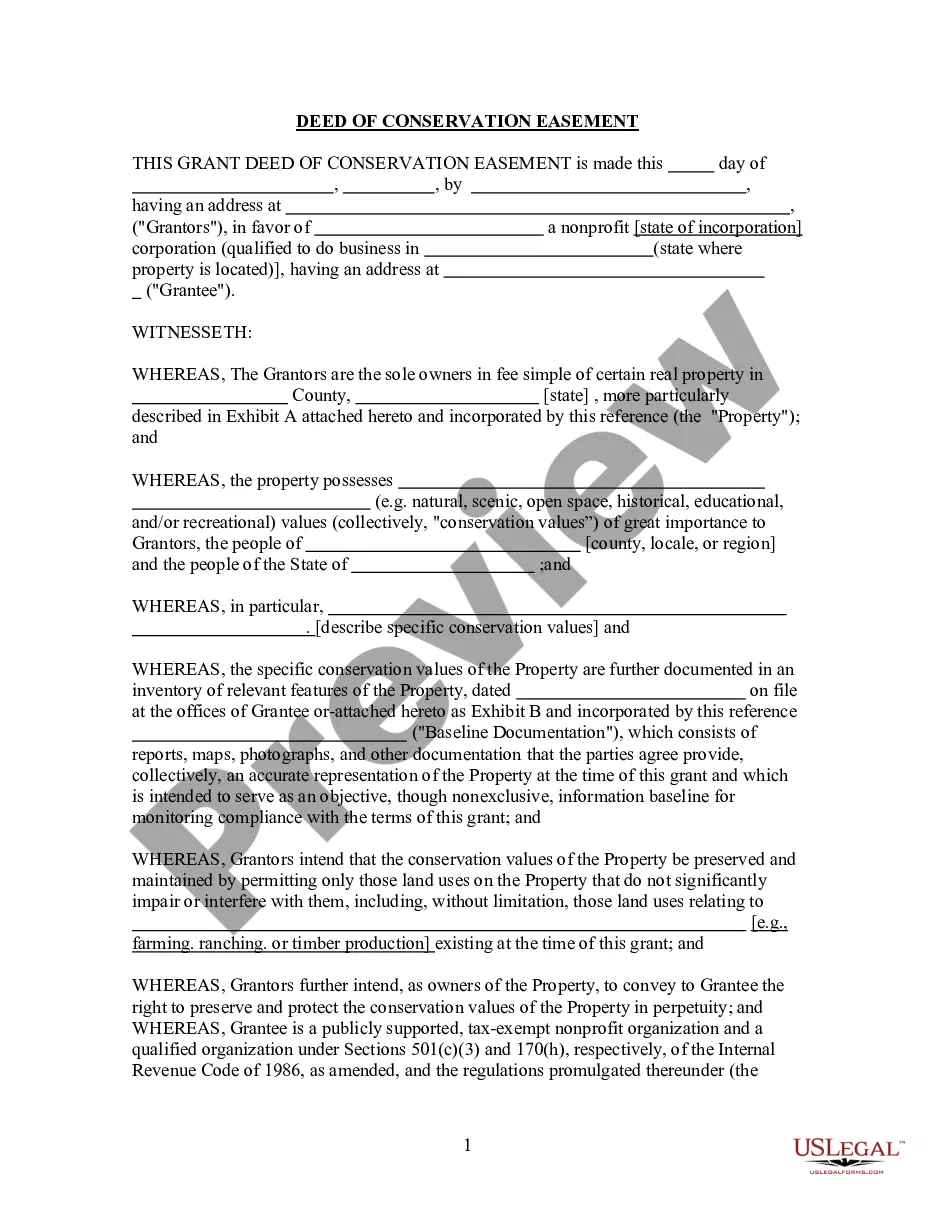
Donate Land For Conservation In King
Description
Get your form ready online
Our built-in tools help you complete, sign, share, and store your documents in one place.
Make edits, fill in missing information, and update formatting in US Legal Forms—just like you would in MS Word.
Download a copy, print it, send it by email, or mail it via USPS—whatever works best for your next step.
Sign and collect signatures with our SignNow integration. Send to multiple recipients, set reminders, and more. Go Premium to unlock E-Sign.
If this form requires notarization, complete it online through a secure video call—no need to meet a notary in person or wait for an appointment.
We protect your documents and personal data by following strict security and privacy standards.

Make edits, fill in missing information, and update formatting in US Legal Forms—just like you would in MS Word.

Download a copy, print it, send it by email, or mail it via USPS—whatever works best for your next step.

Sign and collect signatures with our SignNow integration. Send to multiple recipients, set reminders, and more. Go Premium to unlock E-Sign.

If this form requires notarization, complete it online through a secure video call—no need to meet a notary in person or wait for an appointment.

We protect your documents and personal data by following strict security and privacy standards.
Looking for another form?



Form popularity
FAQ
If you give property to a qualified organization, you can generally deduct the fair market value (FMV) of the property at the time of the contribution.
Drawbacks Of Conservation Easements Most conservation easements are permanent and bind all future landowners (including heirs). Conservation easement holders and farmers may not always share a common vision. Conservation easements can reduce the property's overall value, making the land worth less for future sales.
A conservation easement is just one of many options. You may also donate or sell property, donate or sell development rights, or do a bargain sale with a land trust. The opportunity of a permanent conservation easement can protect a family farm or ranch, allowing for future generations to continue in agriculture.
Land conservation is the process of protecting natural land and returning developed land to its natural state.
The agency or land trust board will decide whether to approve the agreement. If it does, and if your title, mortgage (if any) and IRS requirements are met, you may finalize the conservation easement. The signed documents will need to be recorded at the county courthouse. Build your partnership.
Contact land trusts and government agencies that work to assist landowners in your community who are interested in conservation. Get to know their policies and services, and discuss what you'd like to accomplish on your land and what rights you'd like to keep.
