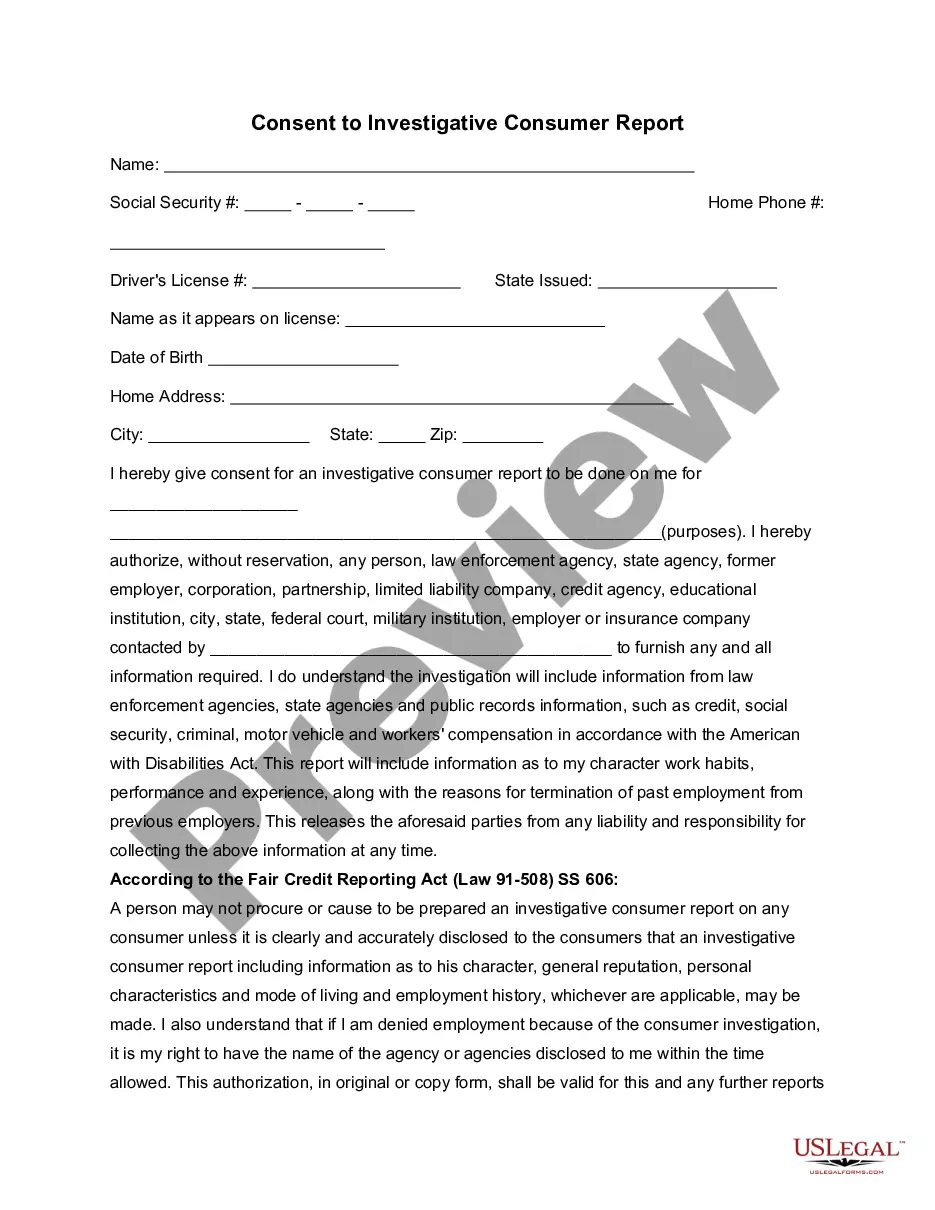
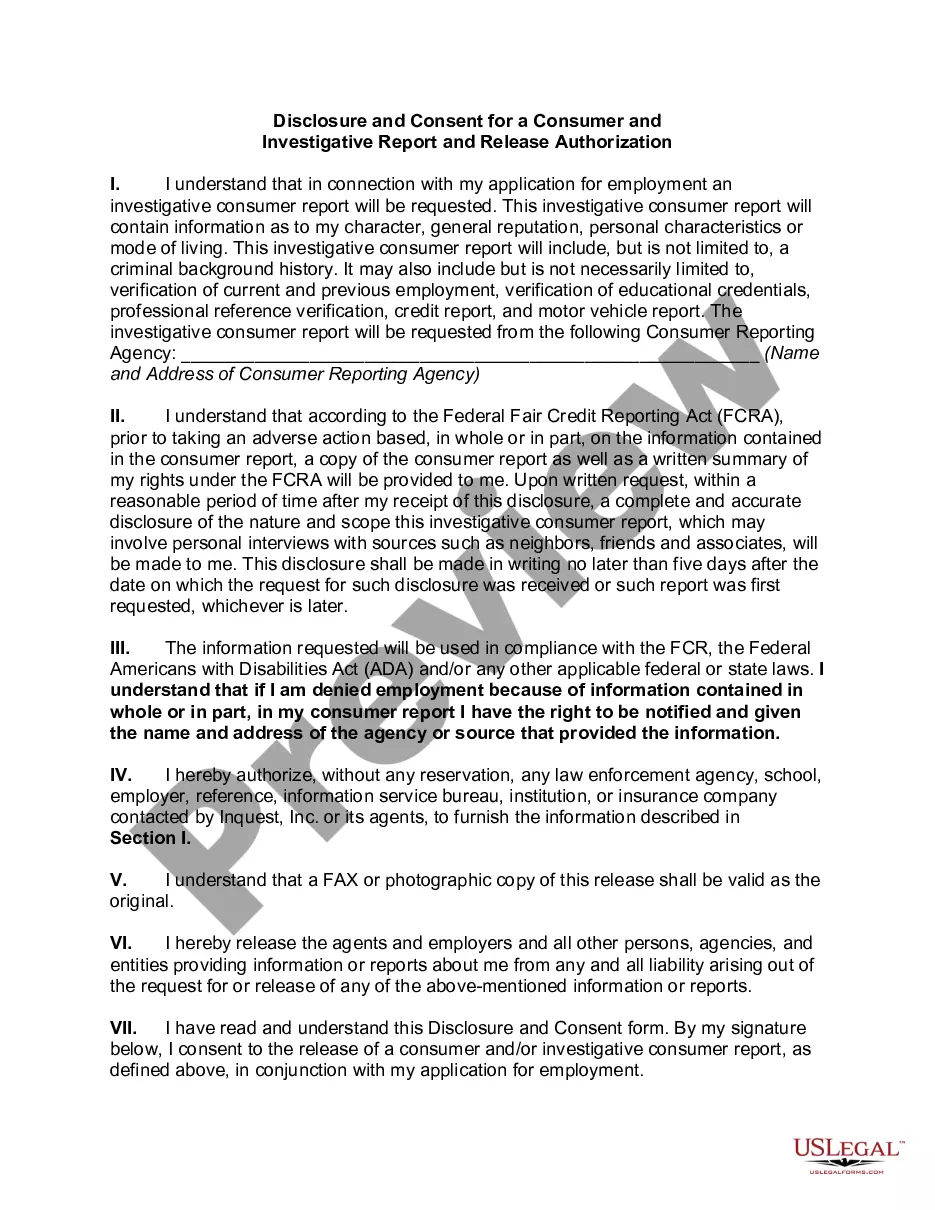
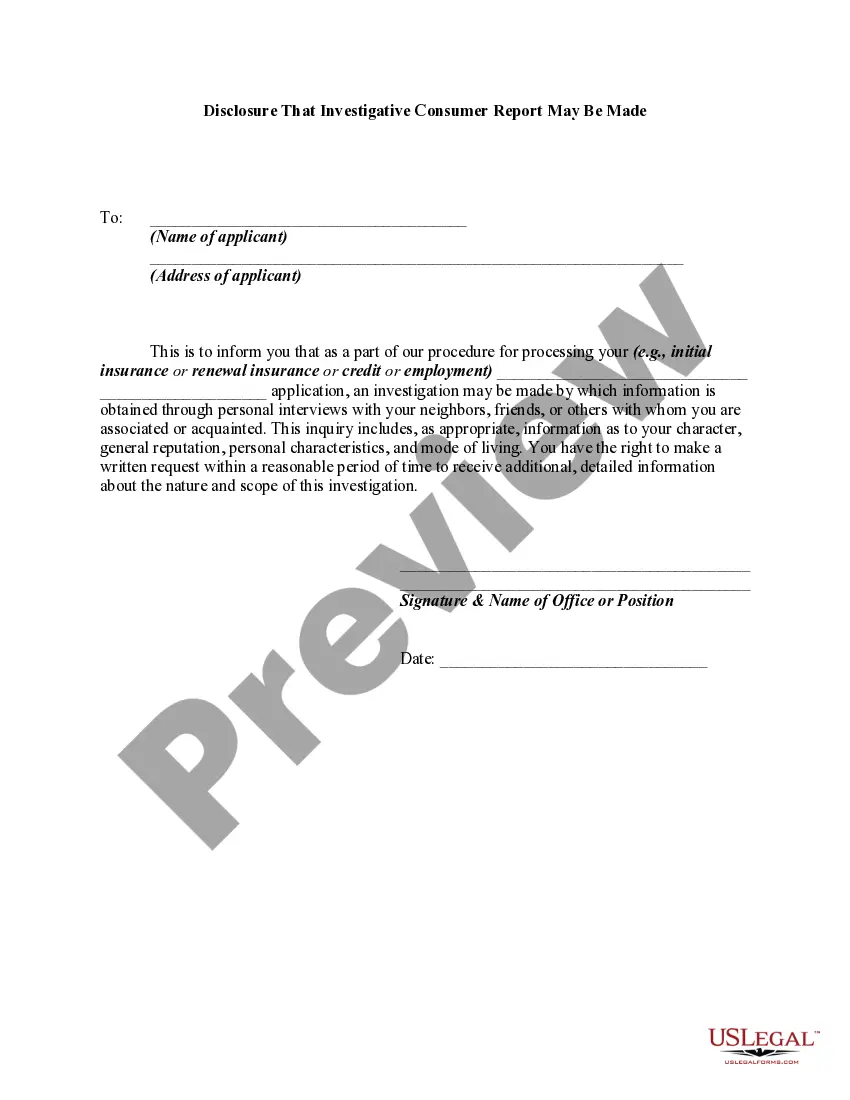
Consumer Reporting Agency Under Fcra In Wayne
Description

Get your form ready online
Our built-in tools help you complete, sign, share, and store your documents in one place.
Make edits, fill in missing information, and update formatting in US Legal Forms—just like you would in MS Word.
Download a copy, print it, send it by email, or mail it via USPS—whatever works best for your next step.
Sign and collect signatures with our SignNow integration. Send to multiple recipients, set reminders, and more. Go Premium to unlock E-Sign.
If this form requires notarization, complete it online through a secure video call—no need to meet a notary in person or wait for an appointment.
We protect your documents and personal data by following strict security and privacy standards.

Make edits, fill in missing information, and update formatting in US Legal Forms—just like you would in MS Word.

Download a copy, print it, send it by email, or mail it via USPS—whatever works best for your next step.

Sign and collect signatures with our SignNow integration. Send to multiple recipients, set reminders, and more. Go Premium to unlock E-Sign.

If this form requires notarization, complete it online through a secure video call—no need to meet a notary in person or wait for an appointment.

We protect your documents and personal data by following strict security and privacy standards.
Looking for another form?






Form popularity
FAQ
If you tell a CRA that your file contains inaccurate information, the CRA must investigate the items (usually within 30 days) by presenting to its information source all relevant evidence you submit, unless your dispute is frivolous. The source must review your evidence and report its findings to the CRA.
The compliance requirements for the credit reporting agencies include the following: Establish FCRA Policies. Review FCRA Provisions & Applicability. Establish Smooth Consumer Consent Acquisition Processes. Ensure Reports Are Used Only for Permissible Purposes. Provide Adverse Action Notices.
A creditor must notify the applicant of adverse action within: 30 days after receiving a complete credit application. 30 days after receiving an incomplete credit application. 30 days after taking action on an existing credit account.
The FCRA affords individuals a private right of action that can be pursued in federal or state court against CRAs, users of credit reports, and furnishers. In certain circumstances, individuals can obtain attorney's fees, court costs, and punitive damages.
Under section 609(a), a consumer reporting agency must, upon request, clearly and accurately disclose to the consumer “all information in the consumer's file at the time of the request” and “the sources of the information.” This requirement applies to all consumer reporting agencies.
A reasonable investigation under FCRA § 1681s-2(b) requires the furnisher to examine sufficient evidence to determine whether the disputed information is accurate.
While there are three national CRAs in the United States (Experian, Trans Union, and Equifax), private investigators, detective agencies, collection agencies, inspection bureaus, companies that sell information to insurance companies and assist in performing background checks, and college placement offices have been ...
"Account information disputed by consumer meets FCRA requirements" simply means that an investigation into a dispute is complete, and the bureau believes the account has no errors. The remark will not affect your credit by itself.
There are three big nationwide providers of consumer reports: Equifax, TransUnion, and Experian.
To report FCRA violations, you can file a complaint with the Consumer Financial Protection Bureau.
