Employment With Severance In Clark
Description

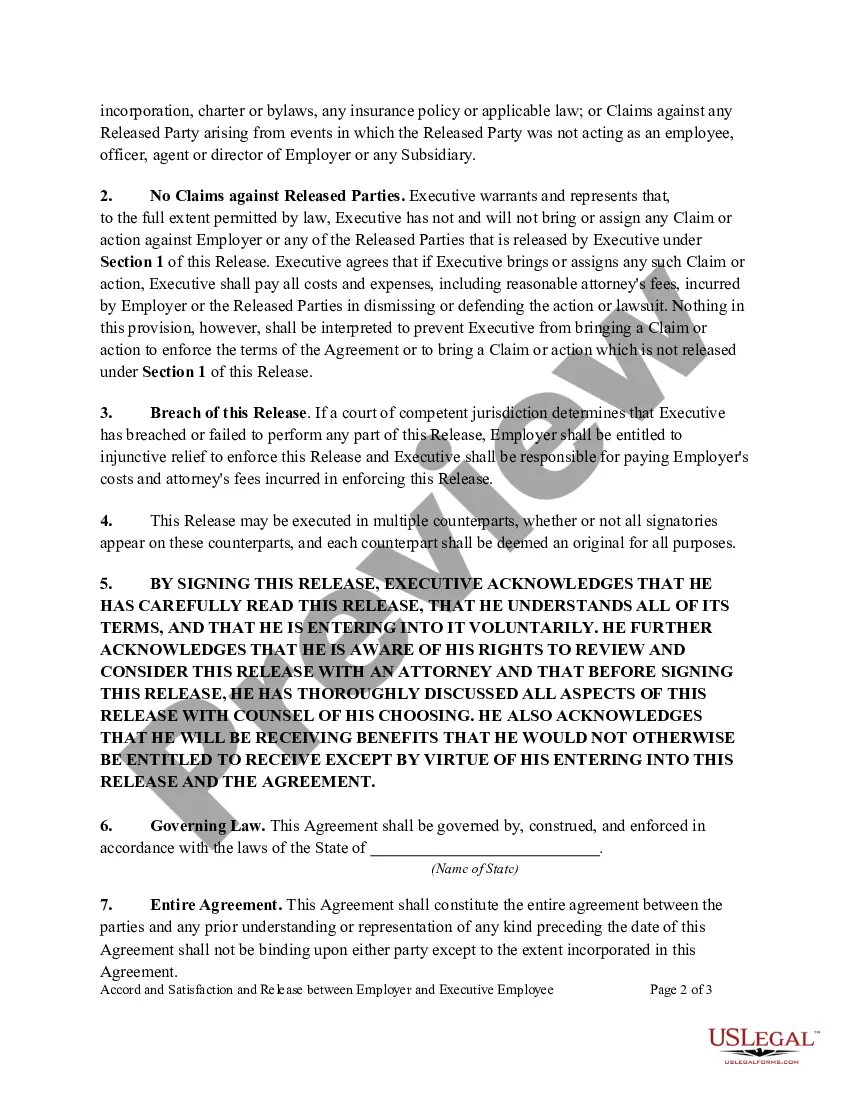
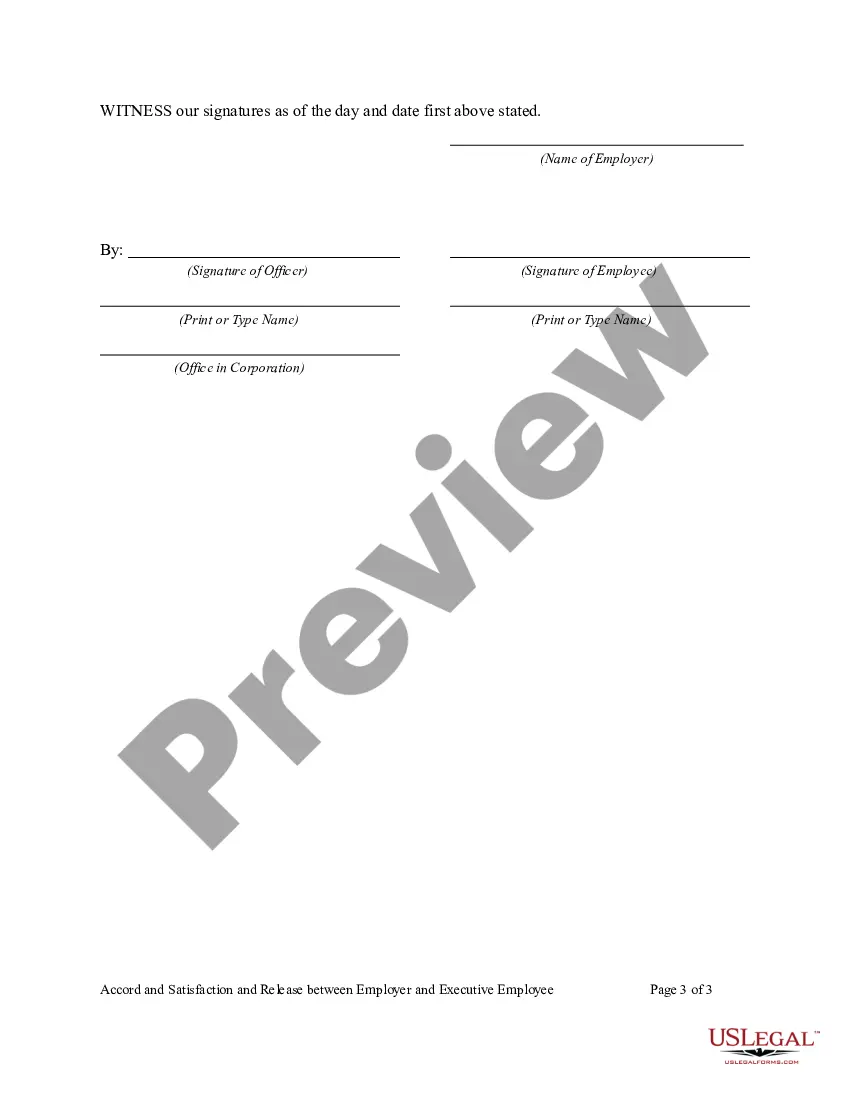
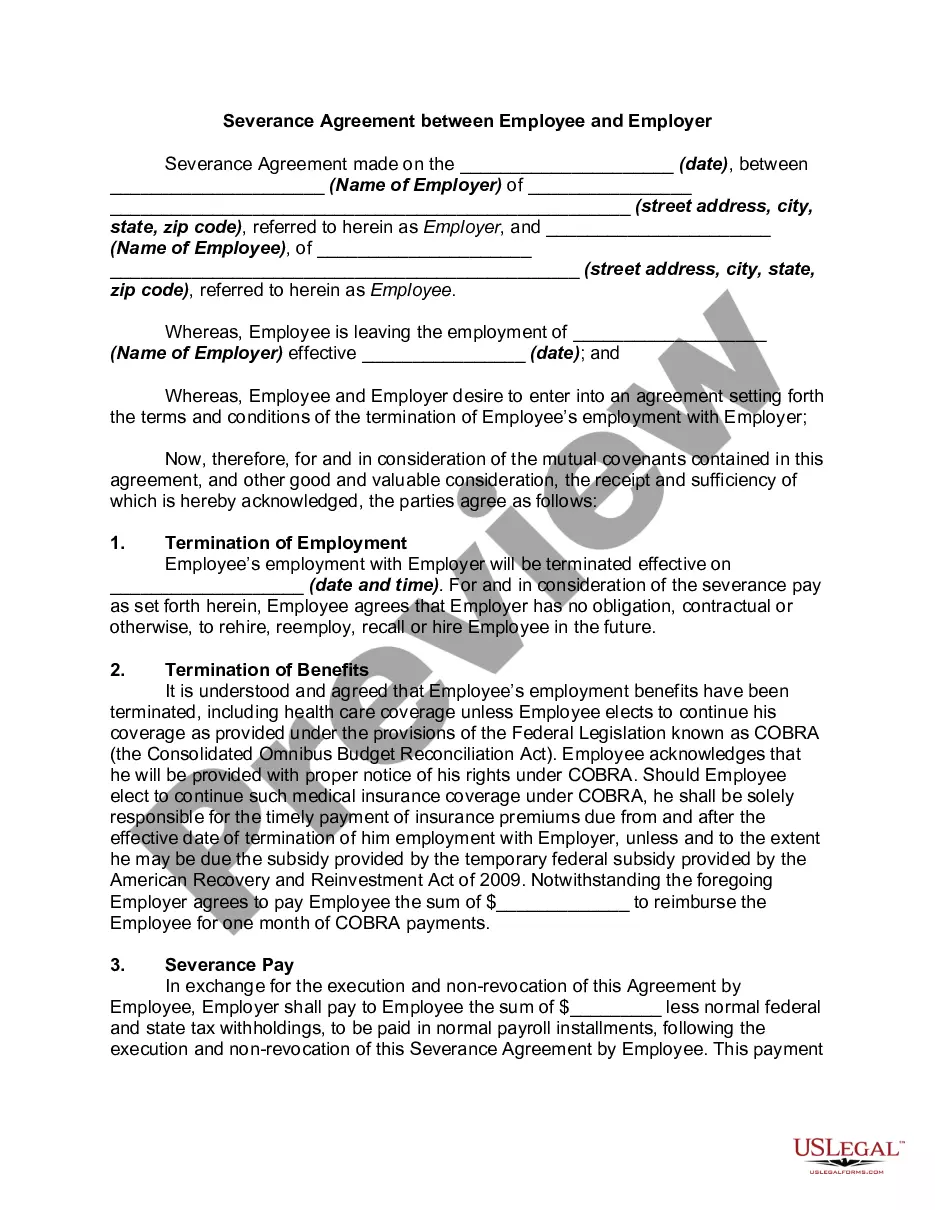
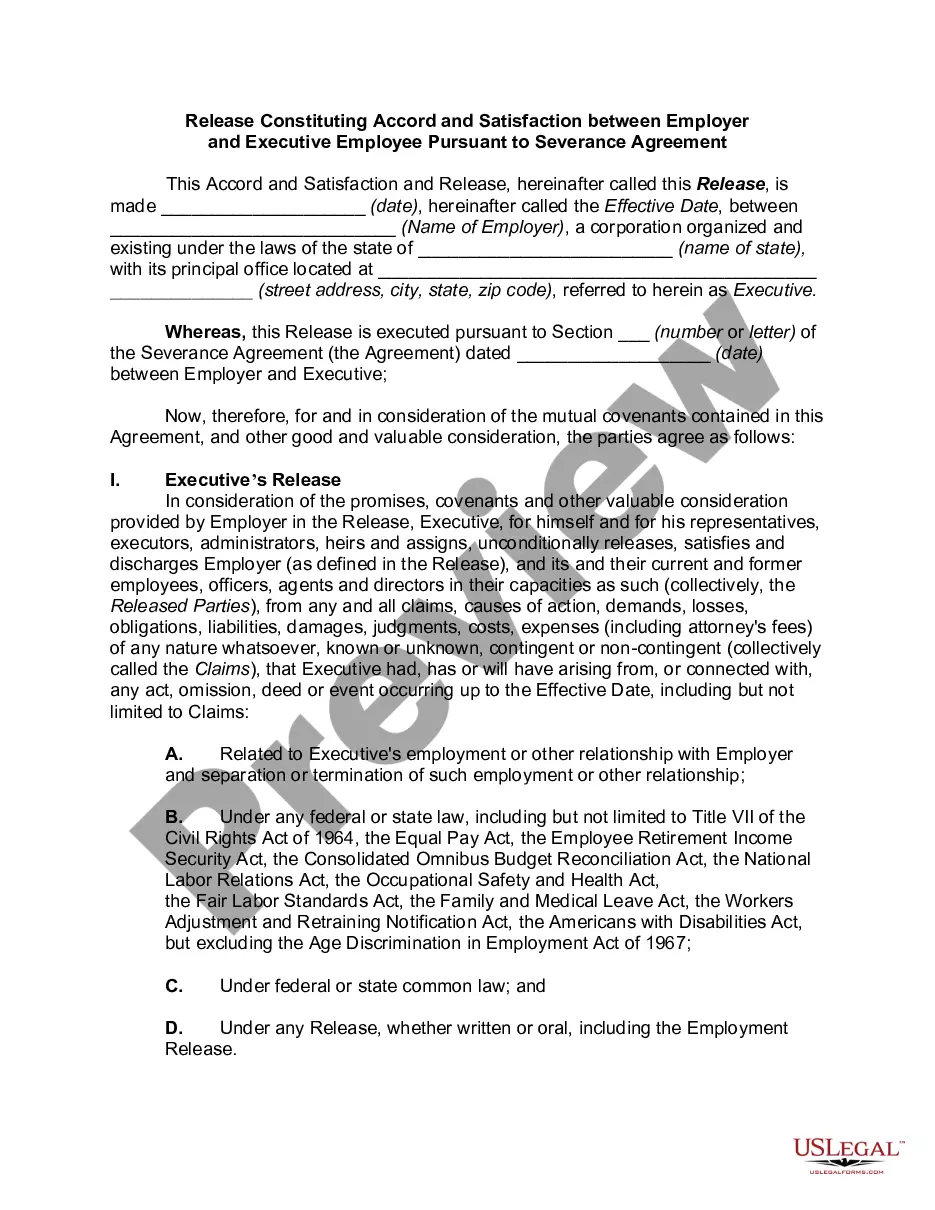
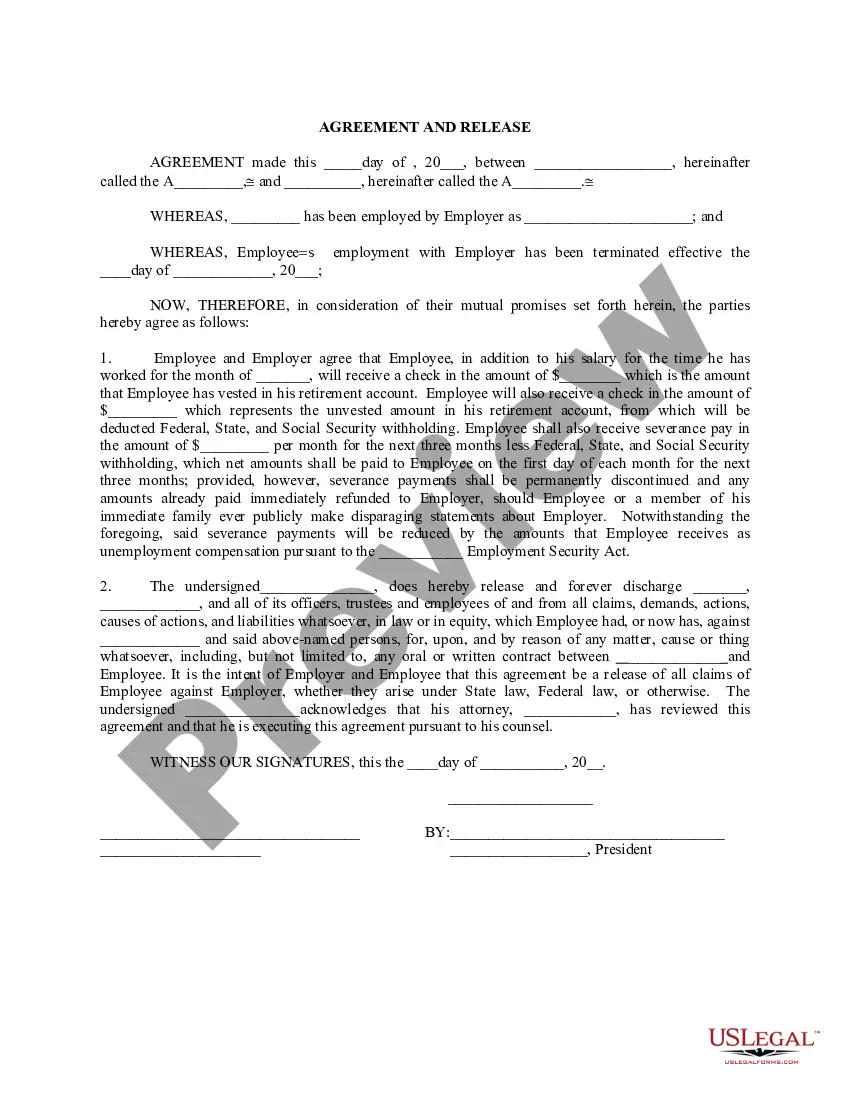
Get your form ready online
Our built-in tools help you complete, sign, share, and store your documents in one place.
Make edits, fill in missing information, and update formatting in US Legal Forms—just like you would in MS Word.
Download a copy, print it, send it by email, or mail it via USPS—whatever works best for your next step.
Sign and collect signatures with our SignNow integration. Send to multiple recipients, set reminders, and more. Go Premium to unlock E-Sign.
If this form requires notarization, complete it online through a secure video call—no need to meet a notary in person or wait for an appointment.
We protect your documents and personal data by following strict security and privacy standards.

Make edits, fill in missing information, and update formatting in US Legal Forms—just like you would in MS Word.

Download a copy, print it, send it by email, or mail it via USPS—whatever works best for your next step.

Sign and collect signatures with our SignNow integration. Send to multiple recipients, set reminders, and more. Go Premium to unlock E-Sign.

If this form requires notarization, complete it online through a secure video call—no need to meet a notary in person or wait for an appointment.

We protect your documents and personal data by following strict security and privacy standards.
Looking for another form?





Form popularity
FAQ
What is the downside to severance? The downside to severance includes financial drawbacks such as loss of steady income, potential loss of benefits, and uncertainty about future job prospects, as well as the impact on retirement savings and benefits.
Severance packages are intended to help ease the transition out of your terminated position. But while a severance package offer can be a great benefit, it can be important to give any offer careful consideration before accepting it because it is a contract between you and the company.
These include financial drawbacks such as loss of steady income and potential loss of benefits, as well as the uncertainty of future job prospects and impact on retirement savings and benefits.
A severance clause aims to ensure that a contract will survive the deletion of an unenforceable provision. For example, where a court later deems that a particular provision of a contract is no longer, or was never, enforceable, this deletion would not invalidate or deem unenforceable the entire contract.
Adam Neumann, the main founder of WeWork, negotiated a ~$1.7 billion severance package from SoftBank, operator of the Vision Fund, the largest venture capital fund in the world.
Extension of Benefits Under Rule of 70 To be eligible to retire, you must be at least age 55 with 10 years of service or age 65. Years of service for the “Rule of 70” eligibility purposes, means total years of employment from date of hire to date of termination.
Eligibility for Retiree Health and Life Insurance Benefits Rule of 70: the employee's age plus years of continuous, full-time service equal 70 or more, and the employee is at least age 55, with at least ten years of continuous, full-time service.
Severance packages are typically offered to executives and employees who are laid off due to downsizing or restructuring. They are not usually offered to people who resign or who are fired for poor performance or other causes. Our California employment attorneys offer a Severance Package Review & Consultation.