Mortgage Payoff Statement Form With Tax In Washington
Description
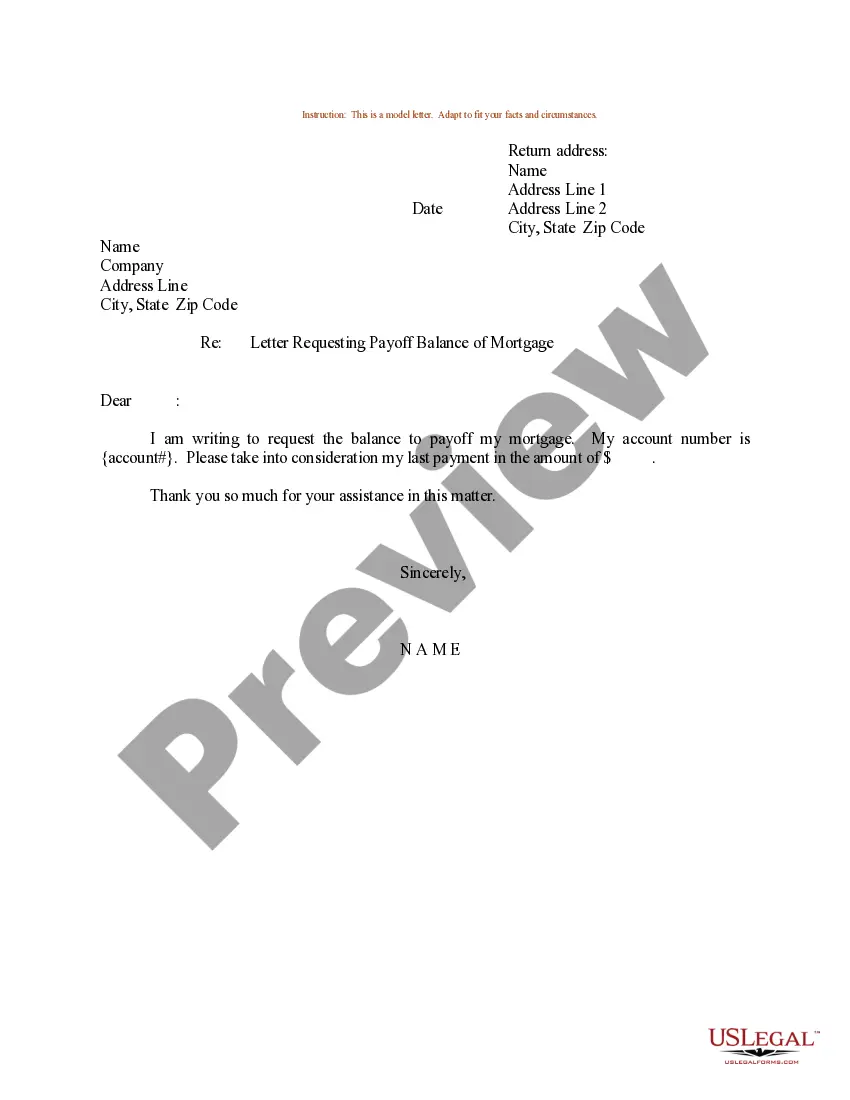
Get your form ready online
Our built-in tools help you complete, sign, share, and store your documents in one place.
Make edits, fill in missing information, and update formatting in US Legal Forms—just like you would in MS Word.
Download a copy, print it, send it by email, or mail it via USPS—whatever works best for your next step.
Sign and collect signatures with our SignNow integration. Send to multiple recipients, set reminders, and more. Go Premium to unlock E-Sign.
If this form requires notarization, complete it online through a secure video call—no need to meet a notary in person or wait for an appointment.
We protect your documents and personal data by following strict security and privacy standards.

Make edits, fill in missing information, and update formatting in US Legal Forms—just like you would in MS Word.

Download a copy, print it, send it by email, or mail it via USPS—whatever works best for your next step.

Sign and collect signatures with our SignNow integration. Send to multiple recipients, set reminders, and more. Go Premium to unlock E-Sign.

If this form requires notarization, complete it online through a secure video call—no need to meet a notary in person or wait for an appointment.

We protect your documents and personal data by following strict security and privacy standards.
Looking for another form?



Form popularity
FAQ
Washington's excise taxes apply to all business activities conducted in the state. Corporations, partnerships, sole proprietorships, joint ventures, nonprofit organizations, limited liability organizations, etc., conducting business in this state are all subject to these taxes, even if they do not have an office here.
Washington State Department of Licensing.
There are limited specific exemptions available for REET. To claim an exemption, list the exemption code in section 7 of the REET Affidavit. The exemption code must reference the Washington Administrative Code (WAC) or Revised Code of Washington (RCW) including the section and subsection.
Property taxes are included in mortgage payments in Washington State. They are one of the components that influence the size of your monthly payments. Washington state property taxes contribute to public services including schools, libraries, parks, and fire protection. Homes are assessed at 100% of fair market value.
Washington's excise taxes apply to all business activities conducted in the state. Corporations, partnerships, sole proprietorships, joint ventures, nonprofit organizations, limited liability organizations, etc., conducting business in this state are all subject to these taxes, even if they do not have an office here.
The following are generally exempt: Short-term capital gains (assets held for a year or less), meaning day traders with short-term sales are not impacted. Retirement accounts (e.g., IRAs or employer-sponsored plans). Real estate and land (normal real estate transaction taxes still apply).
The capital gains tax in Washington state is a 7% tax on profits from the sale of long-term assets (owned for over a year before selling them) over $270k for the 2024 tax year. For 2023, this number was $262,000. To be clear, this is NOT $270k of stock sales, it's $270k of long-term capital gains.

