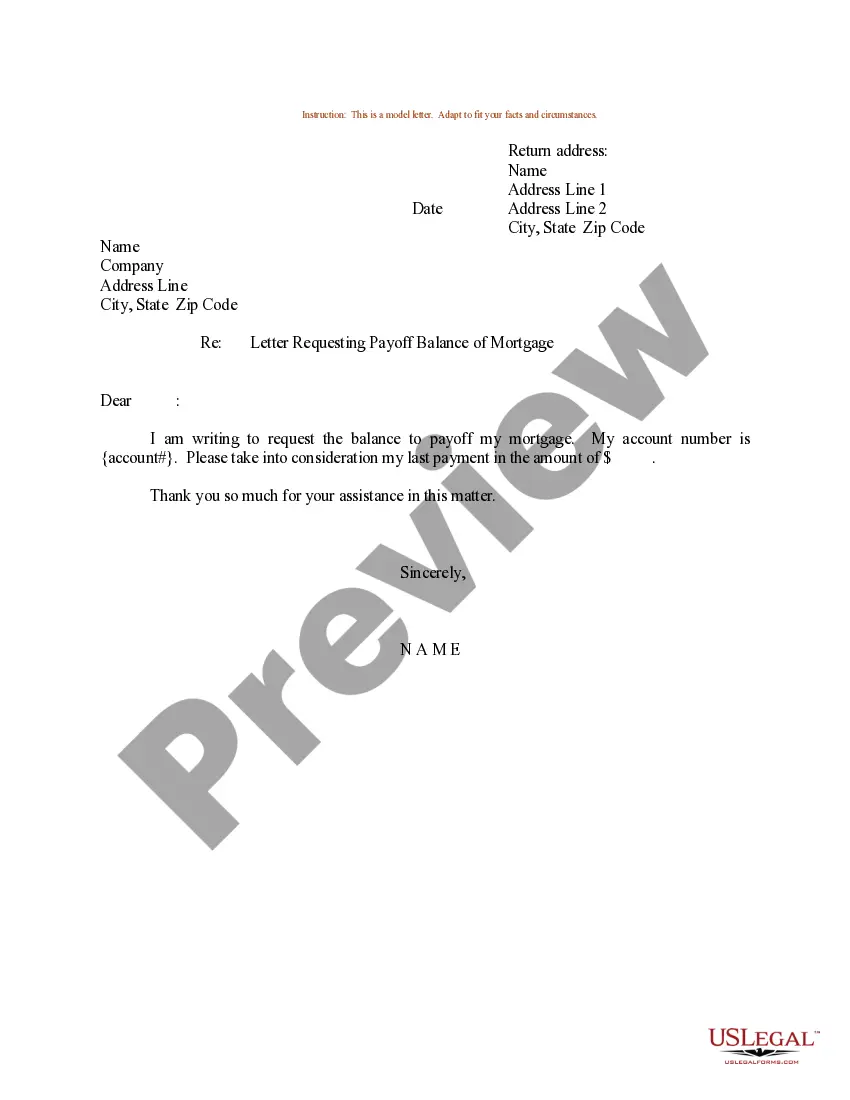
Payoff Statement Request Withdrawal In Orange
Description
Get your form ready online
Our built-in tools help you complete, sign, share, and store your documents in one place.
Make edits, fill in missing information, and update formatting in US Legal Forms—just like you would in MS Word.
Download a copy, print it, send it by email, or mail it via USPS—whatever works best for your next step.
Sign and collect signatures with our SignNow integration. Send to multiple recipients, set reminders, and more. Go Premium to unlock E-Sign.
If this form requires notarization, complete it online through a secure video call—no need to meet a notary in person or wait for an appointment.
We protect your documents and personal data by following strict security and privacy standards.

Make edits, fill in missing information, and update formatting in US Legal Forms—just like you would in MS Word.

Download a copy, print it, send it by email, or mail it via USPS—whatever works best for your next step.

Sign and collect signatures with our SignNow integration. Send to multiple recipients, set reminders, and more. Go Premium to unlock E-Sign.

If this form requires notarization, complete it online through a secure video call—no need to meet a notary in person or wait for an appointment.

We protect your documents and personal data by following strict security and privacy standards.
Looking for another form?






Form popularity
FAQ
The Ninth Judicial Circuit Court is located in the heart of Central Florida and is one of 20 judicial circuits in the state. Serving Orange and Osceola counties, the Ninth Circuit covers over 2,500 square miles and serves more than 1.9 million residents.
PROPOSED ORDER REQUIREMENTS Must be a Word document. No additional formatting – text boxes, macros, headers, footers, etc. Each order must be submitted as a separate document.
If “Agreed Orders” are provided, the title must indicate the substance of the order addition to the indication that it is an “agreed order.” All proposed orders of any type should be (1) accompanied with a cover letter indicating whether or not the form of the submitted order is agreed to by all opposing counsel and (2 ...
First, you'll need to contact your lender and let them know you want the information. Depending on your lender, you may have to sign in to an online account, call a helpline, or send a formal letter to start the request process.
Proposed orders for all Civil Court case types must be submitted directly to the court through the 15th Judicial Circuit's Online Scheduling System (OLS). Proposed orders cannot be submitted in person, by mail, by fax or by email to the court or to the Clerk's office.
You must state your objection in writing and file it with the court within 7 days after you receive a copy of the notice (form FOC 54).
To request a payoff statement, you will need to contact your lender or credit card company. You can typically request a payoff statement online, over the phone, or by mail. Make sure to provide your account information and specify that you are requesting a payoff statement.
Under federal law, the servicer must generally send you a payoff statement within seven business days of your request, subject to a few exceptions. (12 C.F.R. § 1026.36.)
To get a payoff letter, ask your lender for an official payoff statement. Call or write to customer service or make the request online. While logged into your account, look for options to request or calculate a payoff amount, and provide details such as your desired payoff date.

