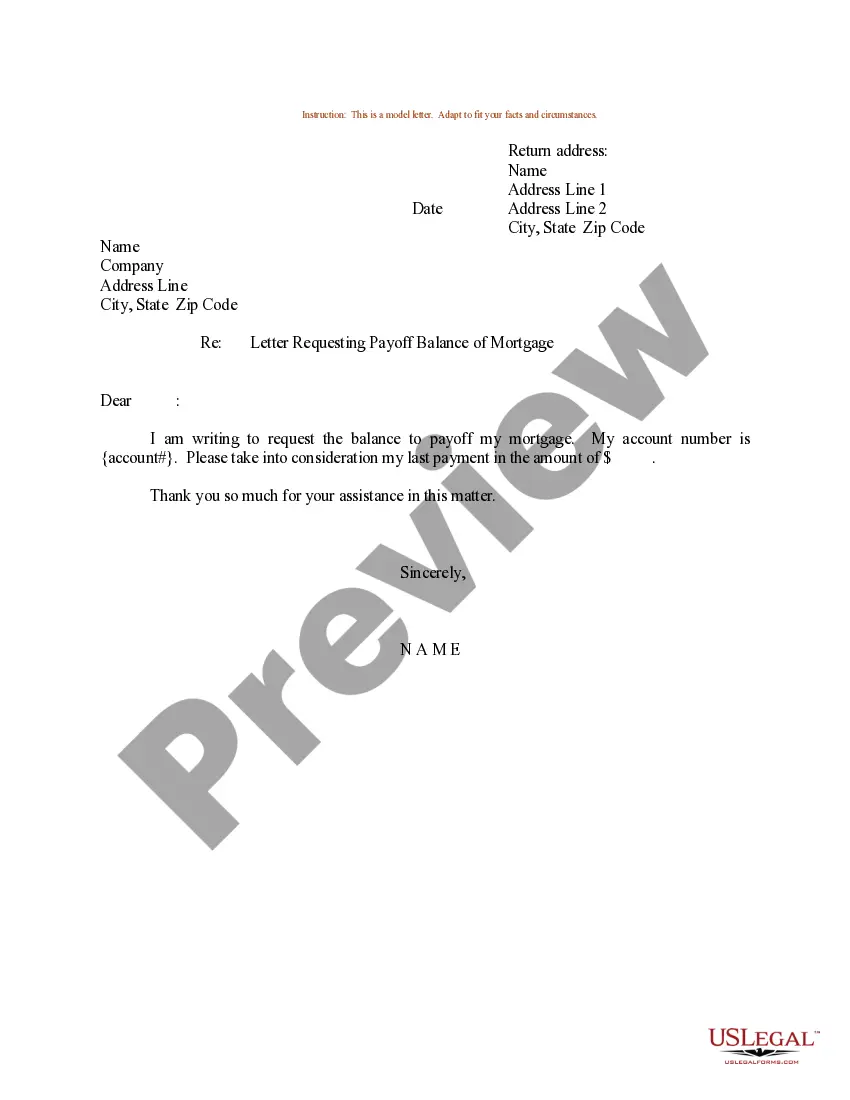
Payoff Letter Template With Logo In Orange
Description
Get your form ready online
Our built-in tools help you complete, sign, share, and store your documents in one place.
Make edits, fill in missing information, and update formatting in US Legal Forms—just like you would in MS Word.
Download a copy, print it, send it by email, or mail it via USPS—whatever works best for your next step.
Sign and collect signatures with our SignNow integration. Send to multiple recipients, set reminders, and more. Go Premium to unlock E-Sign.
If this form requires notarization, complete it online through a secure video call—no need to meet a notary in person or wait for an appointment.
We protect your documents and personal data by following strict security and privacy standards.

Make edits, fill in missing information, and update formatting in US Legal Forms—just like you would in MS Word.

Download a copy, print it, send it by email, or mail it via USPS—whatever works best for your next step.

Sign and collect signatures with our SignNow integration. Send to multiple recipients, set reminders, and more. Go Premium to unlock E-Sign.

If this form requires notarization, complete it online through a secure video call—no need to meet a notary in person or wait for an appointment.

We protect your documents and personal data by following strict security and privacy standards.
Looking for another form?




Form popularity
FAQ
It's okay to shrug off a LOD if it feels like a frivolous and vexatious claim. However, if you do not respond to the LOD after being issued one, your non-response will add credibility to the claim against you when the matter proceeds to court.
LOI is not binding and it has no legal effect whatsoever. Thus, any LOI which has been executed formerly shall be followed and formalised by an execution of MoU / MoA / CA.
It serves as a record of your demand/claim against the recipient and could be tendered as evidence in court should the need arises. Precedence shows that the Malaysian courts in certain cases deem a failure to reply a letter of demand as fatal.
In general, the statute of limitations for debt collection is six years from the due date. Making a claim after this limitation period has passed will become more difficult, this is why it is recommended to talk to one of our Malaysian lawyers once the payment becomes overdue and the late payment period has passed.
A final demand letter about arrears lays out what must be done to prevent further action, which may or may not be legal action. A final demand is not a statutory notification; meaning it is not explicitly required in law, but is it something the court would expect to have been sent should legal measures be taken.
A Letter of Demand is a written communication that serves as a formal notice to the debtor, demanding payment for an outstanding debt. It outlines the details of the debt, including the amount owed, the due date, and any interest or penalties incurred.
Clearly outline the specifics of the debt, including: Amount owed: Specify the exact amount due. Original due date: Mention when the payment was initially due. Current due date: Specify a new due date by which you expect payment. Interest or fees: If applicable, include any interest or late fees that have accrued.
The letter usually should include: Debtor's Details: Full name and contact information of the debtor. Your Business Details: Your company's information for reference. Invoice Reference: Specific details of the outstanding invoice(s), including dates, invoice numbers, and total amount due.
To send a debt collection letter, begin by composing a formal letter that clearly states the amount owed, the due date for payment, and any applicable interest or late fees; ensure it adheres to legal guidelines like the Fair Debt Collection Practices Act (FDCPA).

