Mortgage Payoff Statement Form With Tax In Contra Costa
Description
Get your form ready online
Our built-in tools help you complete, sign, share, and store your documents in one place.
Make edits, fill in missing information, and update formatting in US Legal Forms—just like you would in MS Word.
Download a copy, print it, send it by email, or mail it via USPS—whatever works best for your next step.
Sign and collect signatures with our SignNow integration. Send to multiple recipients, set reminders, and more. Go Premium to unlock E-Sign.
If this form requires notarization, complete it online through a secure video call—no need to meet a notary in person or wait for an appointment.
We protect your documents and personal data by following strict security and privacy standards.

Make edits, fill in missing information, and update formatting in US Legal Forms—just like you would in MS Word.

Download a copy, print it, send it by email, or mail it via USPS—whatever works best for your next step.

Sign and collect signatures with our SignNow integration. Send to multiple recipients, set reminders, and more. Go Premium to unlock E-Sign.

If this form requires notarization, complete it online through a secure video call—no need to meet a notary in person or wait for an appointment.

We protect your documents and personal data by following strict security and privacy standards.
Looking for another form?





Form popularity
FAQ
Copies of previous (up to 11 years) and current tax bills can be found on line by going to Account Lookup. Taxpayers may also call our office, 925-608-9500 and/or email Tax Information us to request a duplicate tax bill.
Declaration of Homestead – A document recorded by either a homeowner or head of household on his primary residence to protect his home from forced sale in satisfaction of certain types of creditors' claims. Decree of Distribution – Evidences the distribution of real property from the estate of a deceased person.
1. How do I get a copy of my property tax bill? Property tax bills are issued by the County of Los Angeles Treasurer and Tax Collector. If you did not receive or misplaced your tax bill, you can request a duplicate online at .
Your area's property tax levy can be found on your local tax assessor or municipality website, and it's typically represented as a percentage—like 4%. To estimate your real estate taxes, you merely multiply your home's assessed value by the levy.
Annual Secured Property Tax Bills are prepared and mailed by the Treasurer and Tax Collector in October of each year. The first installment of your tax bill is due on November 1 and becomes delinquent by the close of business on December 10.
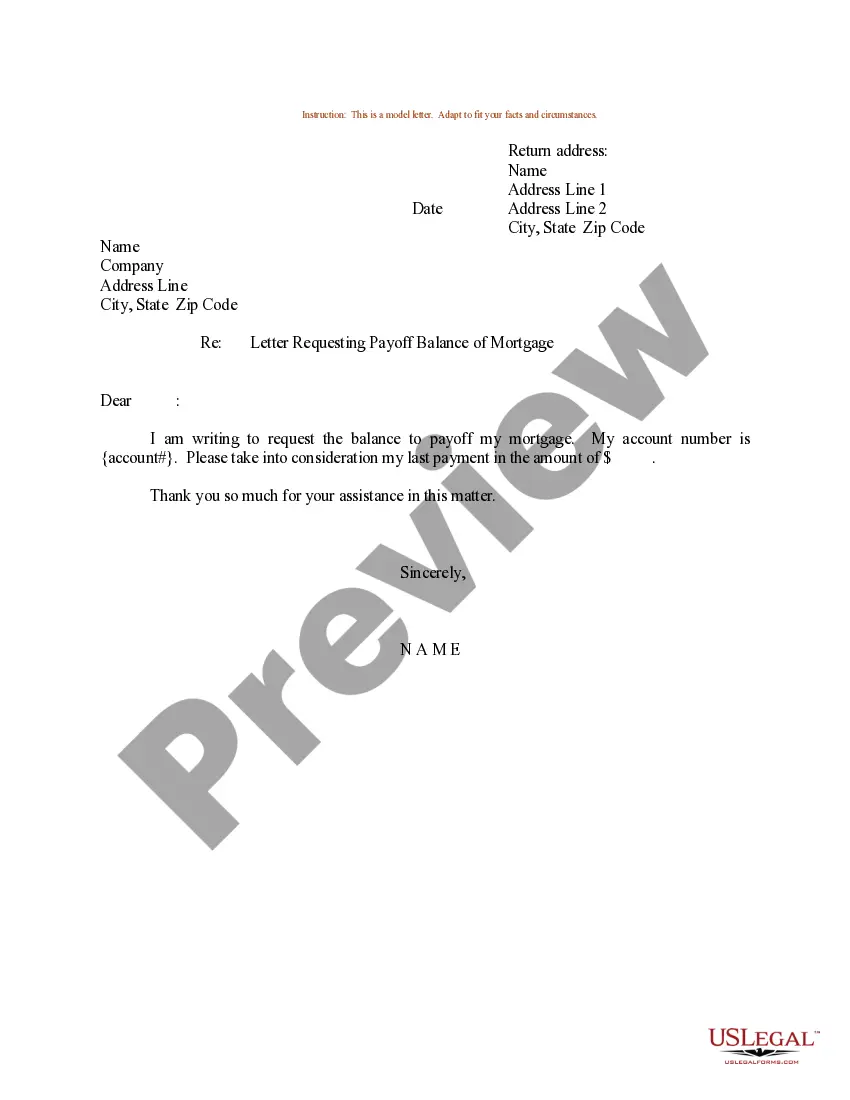
There's a process to getting the mortgage payoff statement. First, you'll need to contact your lender and let them know you want the information. Depending on your lender, you may have to sign in to an online account, call a helpline, or send a formal letter to start the request process.
You can get your mortgage info by going to your lender's website. Other documents, like your monthly mortgage bills and your Closing Disclosure (or HUD-1), will also have some of this information. Your lender should send you a 1098 by January 31.
To obtain the exemption for a property, you must be its owner or co-owner (or a purchaser named in a contract of sale), and you must live in the property as your principal place of residence. You must also file the appropriate exemption claim form with the Assessor.

