Pleading Paper For Court In Kings
Description
Get your form ready online
Our built-in tools help you complete, sign, share, and store your documents in one place.
Make edits, fill in missing information, and update formatting in US Legal Forms—just like you would in MS Word.
Download a copy, print it, send it by email, or mail it via USPS—whatever works best for your next step.
Sign and collect signatures with our SignNow integration. Send to multiple recipients, set reminders, and more. Go Premium to unlock E-Sign.
If this form requires notarization, complete it online through a secure video call—no need to meet a notary in person or wait for an appointment.
We protect your documents and personal data by following strict security and privacy standards.

Make edits, fill in missing information, and update formatting in US Legal Forms—just like you would in MS Word.

Download a copy, print it, send it by email, or mail it via USPS—whatever works best for your next step.

Sign and collect signatures with our SignNow integration. Send to multiple recipients, set reminders, and more. Go Premium to unlock E-Sign.

If this form requires notarization, complete it online through a secure video call—no need to meet a notary in person or wait for an appointment.

We protect your documents and personal data by following strict security and privacy standards.
Looking for another form?


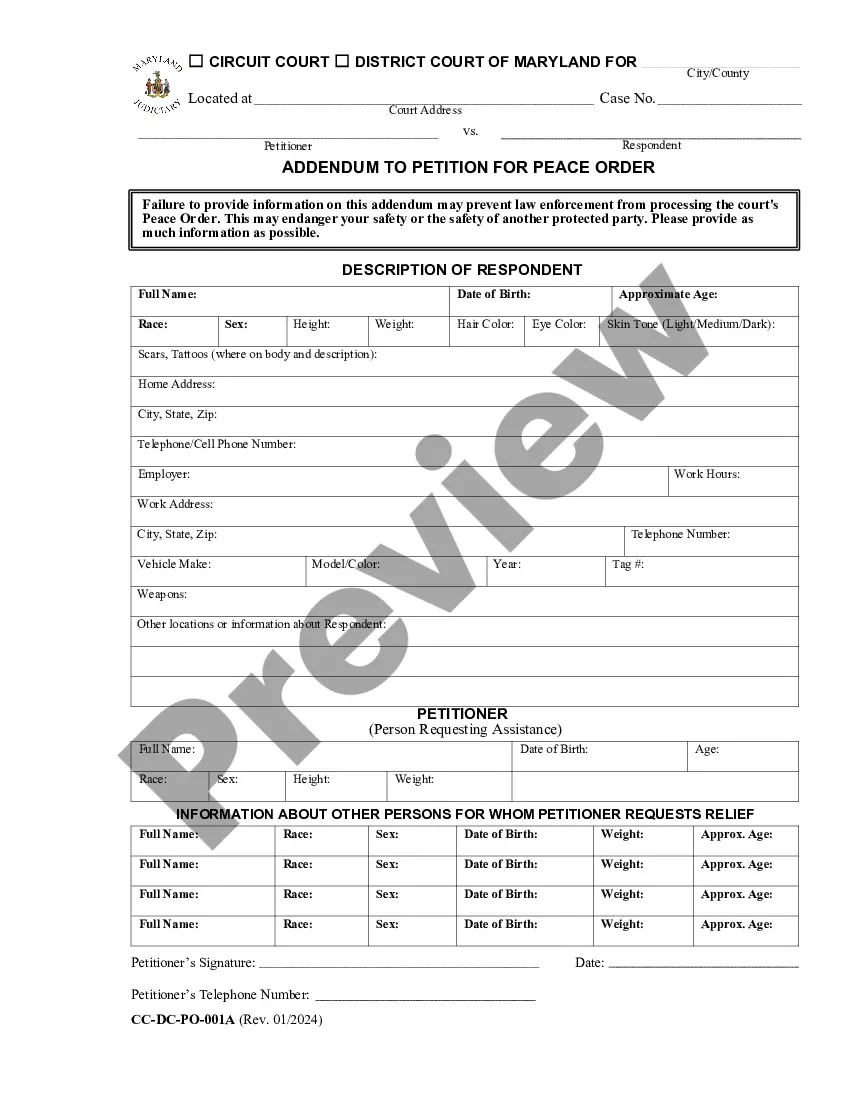



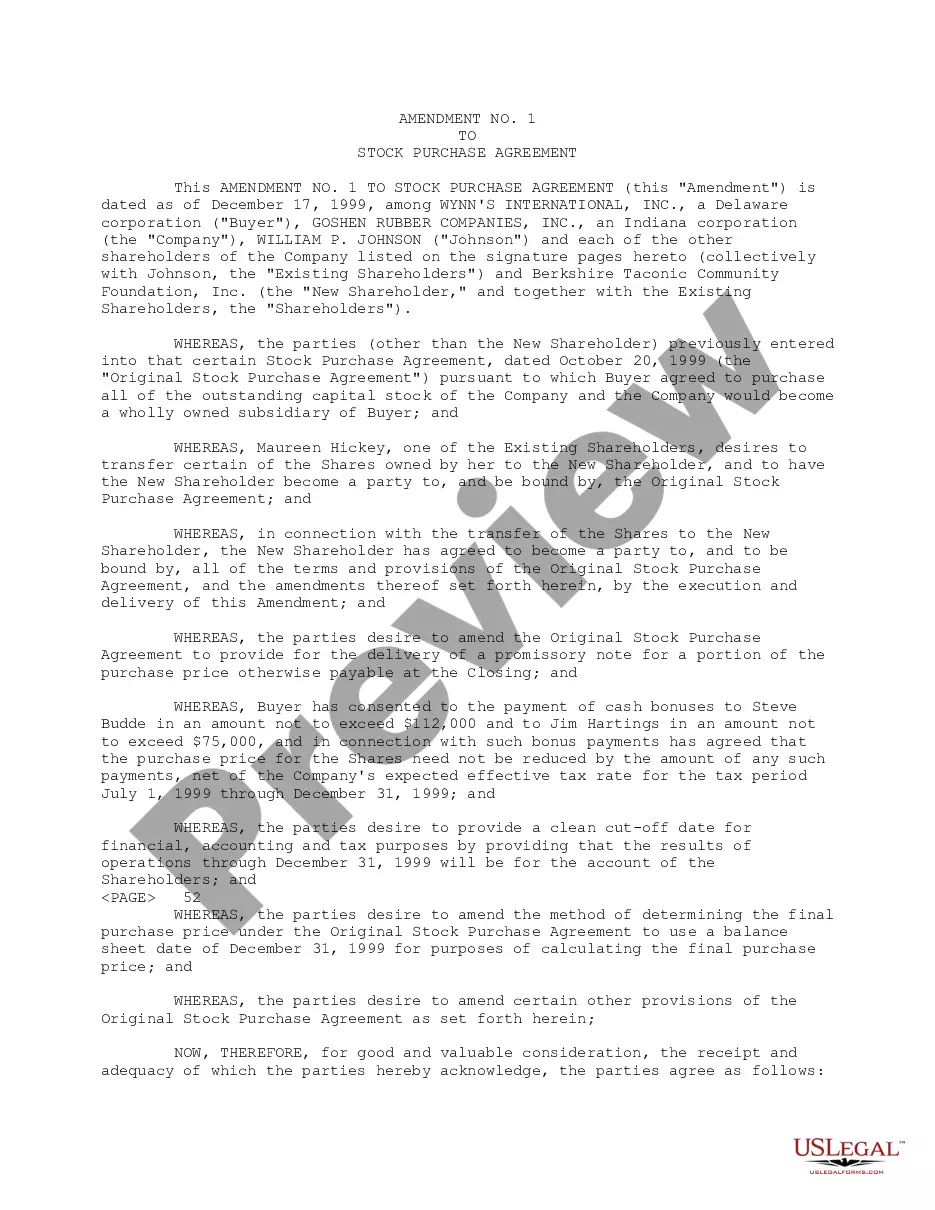



Form popularity
FAQ
Fact pleading, which is the standard in state court in California, requires one to provide to the court all facts that are needed to prove the cause of action.
Pleading Paper Your name must start on line 1. The Court name and location must start on line 8. The caption of the case must start on line 11. You must have a footer with the title of the document. After the caption (the box with the name of the Plaintiff/Respondent) you can use the space as needed, using double spacing.
Font size; printing. Unless otherwise specified in these rules, all papers filed must be prepared using a font size not smaller than 12 points.
You can also ask your court's Self-Help Center or public law library for a sample or blank pleading paper.
If you cannot find a Judicial Council Form for your exact legal problem, then you will need to create your own legal document on 28-line pleading paper in a very specific format.
The left margin of each page must be at least one inch from the left edge and the right margin at least 1/2 inch from the right edge. Rule 2.107 amended effective January 1, 2016; adopted effective January 1, 2007.
Headings and footnotes may be single-spaced. Quotations may be block-indented and single-spaced. Single-spaced means six lines to a vertical inch. (6) The margins must be at least 11/2 inches on the left and right and 1 inch on the top and bottom.
Aligning text with pleading line numbers To start aligning your text, use exact line spacing instead of single or double spacing. The pleading line number spacing is set to exactly 24 pt, so you have to ensure that the side numbering matches the spacing of the text, which should also be set to 24-point spacing.
“Pleading paper” is the format required for filing documents in court when there is no pre-printed form available. This pleading paper is blank and can be used anywhere 28-line paper is accepted. Check your court's local rules for other format requirements such as fonts, font size, and line spacing.
(a) Every pleading shall contain a caption setting forth: (1) The name of the court and county in which the action is brought. (2) The title of the action. (b) In a limited civil case, the caption shall state that the case is a limited civil case, and the clerk shall classify the case ingly.

