Modification Deed Trust Form For Uk In Pima
Description








Get your form ready online
Our built-in tools help you complete, sign, share, and store your documents in one place.
Make edits, fill in missing information, and update formatting in US Legal Forms—just like you would in MS Word.
Download a copy, print it, send it by email, or mail it via USPS—whatever works best for your next step.
Sign and collect signatures with our SignNow integration. Send to multiple recipients, set reminders, and more. Go Premium to unlock E-Sign.
If this form requires notarization, complete it online through a secure video call—no need to meet a notary in person or wait for an appointment.
We protect your documents and personal data by following strict security and privacy standards.

Make edits, fill in missing information, and update formatting in US Legal Forms—just like you would in MS Word.

Download a copy, print it, send it by email, or mail it via USPS—whatever works best for your next step.

Sign and collect signatures with our SignNow integration. Send to multiple recipients, set reminders, and more. Go Premium to unlock E-Sign.

If this form requires notarization, complete it online through a secure video call—no need to meet a notary in person or wait for an appointment.

We protect your documents and personal data by following strict security and privacy standards.
Looking for another form?







Form popularity
FAQ
In Arizona, deeds need to be signed, sealed and delivered to be valid. A deed is signed only by the grantor(s), not the grantee. A deed does not have to be recorded to be valid, but recording is very common.
To transfer ownership of a property to a relative in Arizona, it is necessary to complete and file a legal document known as a deed. The signed deed must then be recorded with the county's land records office where the property resides.
How long does a name change take? The time frame for completing a name change on a deed can vary by state and county. Once you have all the necessary documents, filing with the county recorder's office can be relatively quick, often within a few weeks to a few months.
To add someone to your house title, you must create a new deed that transfers the title of the property to both you and the other person.
You will need to record a deed to either change the name or ownership. The deed will need to contain the complete legal description of the parcel you wish to convey. We recommend you have the deed notarized prior to recording it with the county recorder's office.
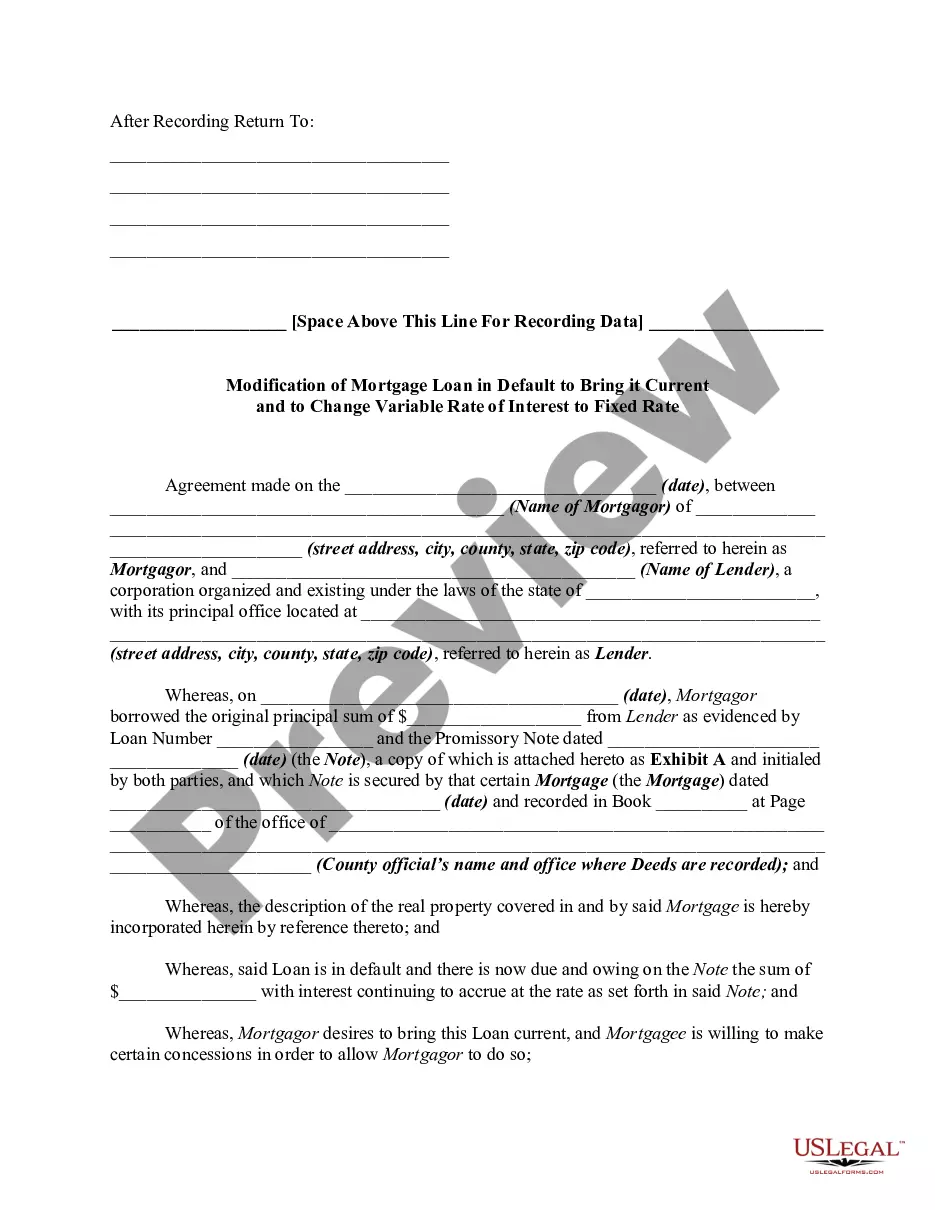
Deed of Trust Modification means, with respect to any Deed of Trust, a modification agreement entered into between the Borrower or the Project Owner, as applicable, and the Lender, modifying the terms and conditions of the Deed of Trust in order to (i) add to the lien of the Deed of Trust Additional Lots, or (ii) make ...
Arizona law requires notarization for the deed to be valid. File with the County Recorder: Once notarized, the quitclaim deed must be filed with the county recorder's office where the property is located. This step is crucial as it makes the deed part of the public record and completes the transfer process.
A deed of variation is a legal document that is used to change the details of an existing trust. In most circumstances, in order to properly execute a Deed of Variation, it is important that the Appointor (sometimes referred to as a Principal or Guardian) along with Trustee consents to the proposed change.
Drawbacks of Putting a House Into a Trust Loss of Control: Transferring a house into a trust means you lose direct control of it, with the trustees making decisions on your behalf. However, many types of trusts still allow the settlor to retain some control, especially with Living Trusts.
A deed of trust is a legal document that transfers the legal title of a property to a third party. Certain trusts may need to be registered with HMRC, further guidance on trusts can be found here: Register a trust as a trustee.
