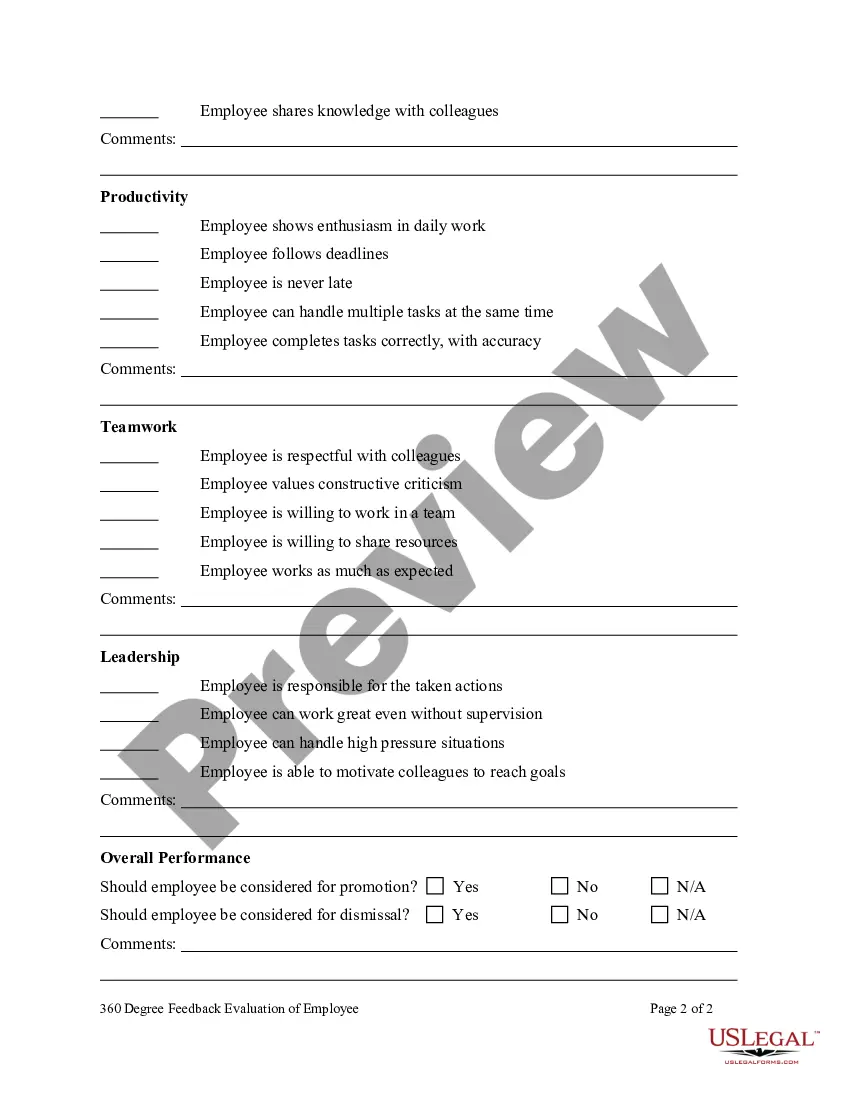
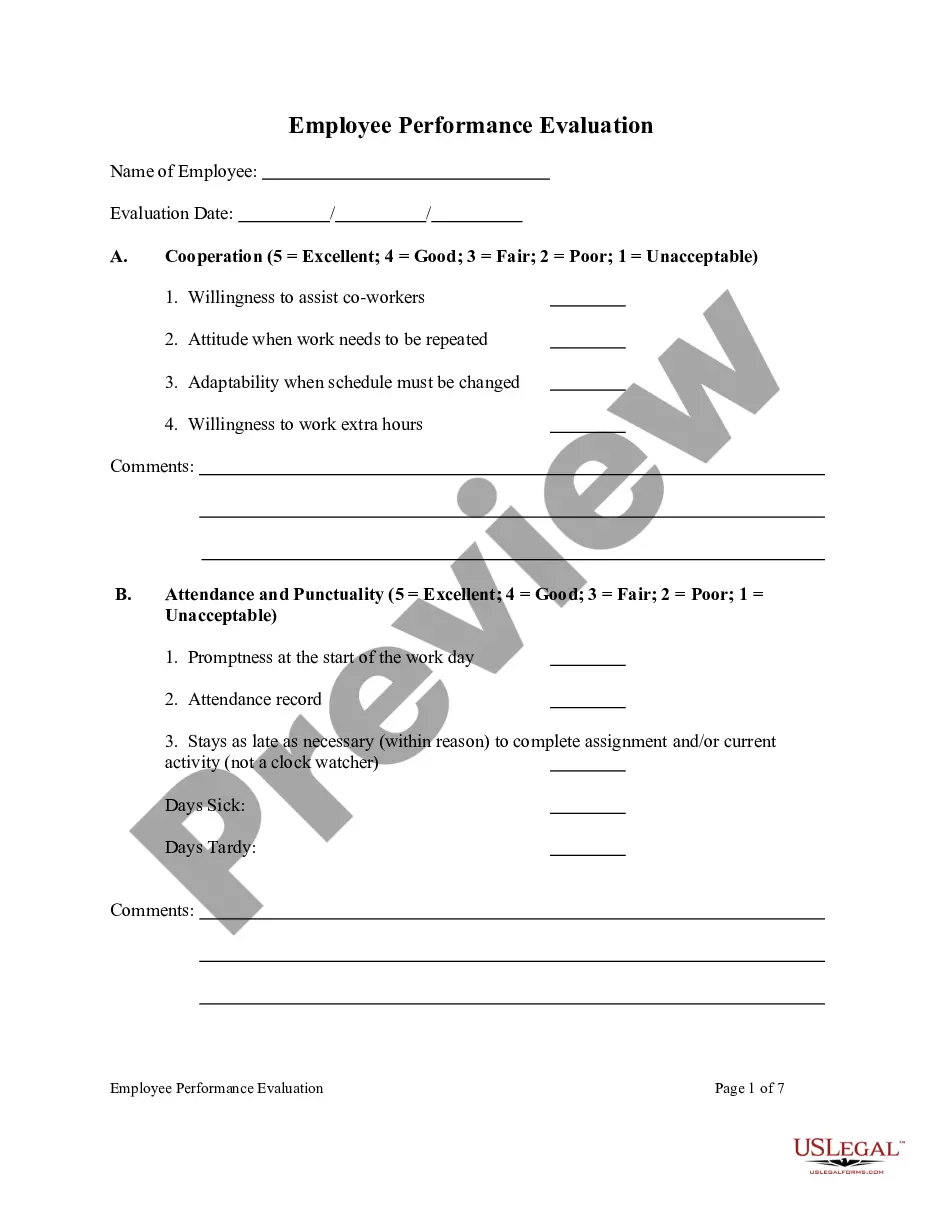
360 Feedback Form For Managers In San Bernardino
Description

Get your form ready online
Our built-in tools help you complete, sign, share, and store your documents in one place.
Make edits, fill in missing information, and update formatting in US Legal Forms—just like you would in MS Word.
Download a copy, print it, send it by email, or mail it via USPS—whatever works best for your next step.
Sign and collect signatures with our SignNow integration. Send to multiple recipients, set reminders, and more. Go Premium to unlock E-Sign.
If this form requires notarization, complete it online through a secure video call—no need to meet a notary in person or wait for an appointment.
We protect your documents and personal data by following strict security and privacy standards.

Make edits, fill in missing information, and update formatting in US Legal Forms—just like you would in MS Word.

Download a copy, print it, send it by email, or mail it via USPS—whatever works best for your next step.

Sign and collect signatures with our SignNow integration. Send to multiple recipients, set reminders, and more. Go Premium to unlock E-Sign.

If this form requires notarization, complete it online through a secure video call—no need to meet a notary in person or wait for an appointment.

We protect your documents and personal data by following strict security and privacy standards.
Looking for another form?

Form popularity
FAQ
Positive Feedback examples “I appreciate how you always listen to our ideas and encourage open communication within the team. “Your ability to stay calm under pressure sets a great example for the rest of us. “The way you break down complex projects into manageable tasks is incredibly helpful.
Focus on behaviour, not personality: Your feedback should address specific behaviours or actions rather than personal characteristics. This keeps the conversation professional and constructive. Be specific and provide examples: Vague feedback is not useful and can even cause undue frustration.
Positive 360 feedback examples The approach you have to resolving conflicts is commendable. Your active listening and tactful communication have helped to transform conflicts into opportunities for growth and team bonding.
Managerial feedback Example 1: “Your leadership skills have had a positive impact on the team. Your ability to motivate and inspire others to achieve their goals is commendable.” Example 2: “Your proactive approach to addressing customer concerns demonstrates your commitment to providing excellent service.
Positive feedback you can give: "Thank you for putting in the extra effort during this busy time at work. I understand that staying late isn't easy, but the team truly appreciates it. You are a valuable member of our team, and your positive attitude has helped us all continue to feel motivated."
360 Degree Feedback is an assessment system or process in which employees receive confidential, anonymous evaluations from the people who work around them. This typically includes manager, peers, and direct reports.
How to conduct 360 reviews Establish criteria for rating each employee. Invest time into developing useful, relevant questions that provide valuable insight. Choose who will assess each employee. Send surveys. Send the survey to the employee. Schedule the 360 evaluation. Review ratings with employee. Follow up on progress.
Writing Your Manager Review Address what is observable about outcomes, behaviors, and tasks. Describe how the performance has met or has not met expectations. Be direct and accountable by using "I" statements. Be specific, not global or broad, about the gaps (positive and negative) between performance and expectations.
Be constructive -- don't complain, and be genuine. The surest way to get your boss to put their defenses up is to tell them what they're doing wrong. Always couch your feedback as an opportunity to improve performance, or to optimize, or to get better outcomes.
360 feedback for managers includes input from peers, subordinates, supervisors, and self-evaluation. This gives you a holistic understanding of your performance from the perspective of multiple people.
