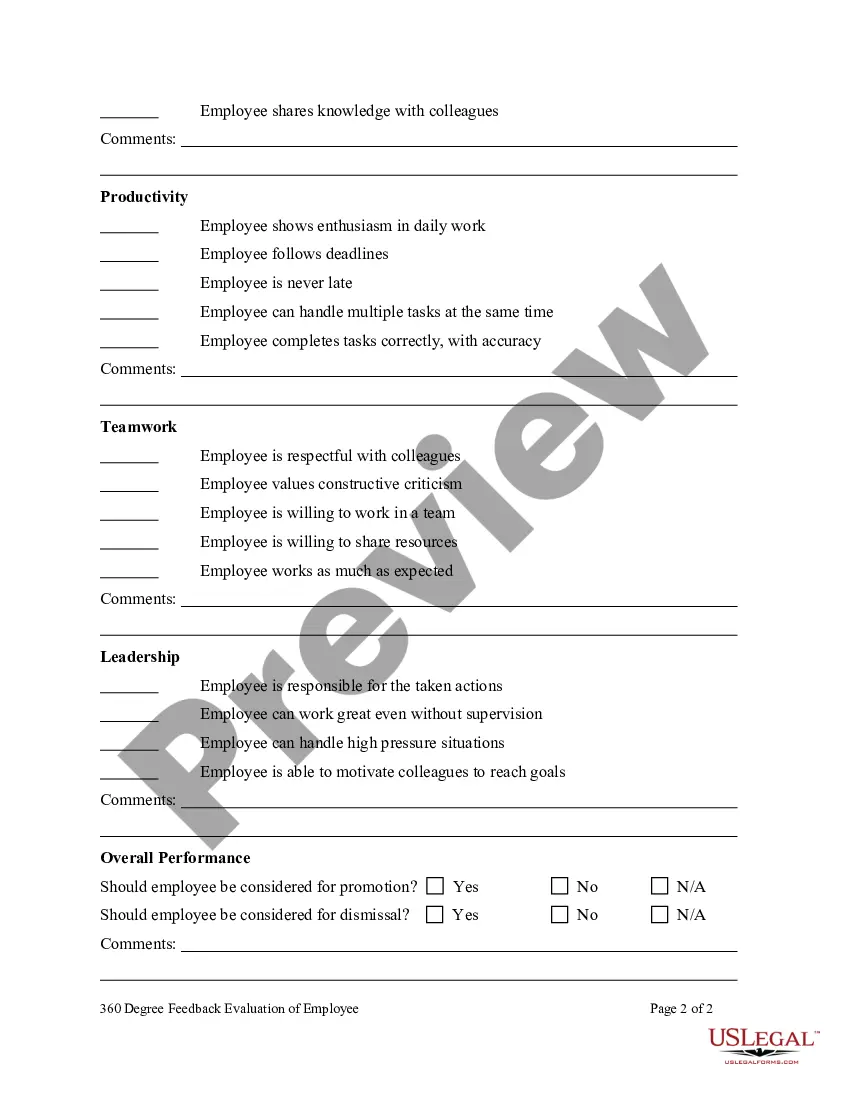
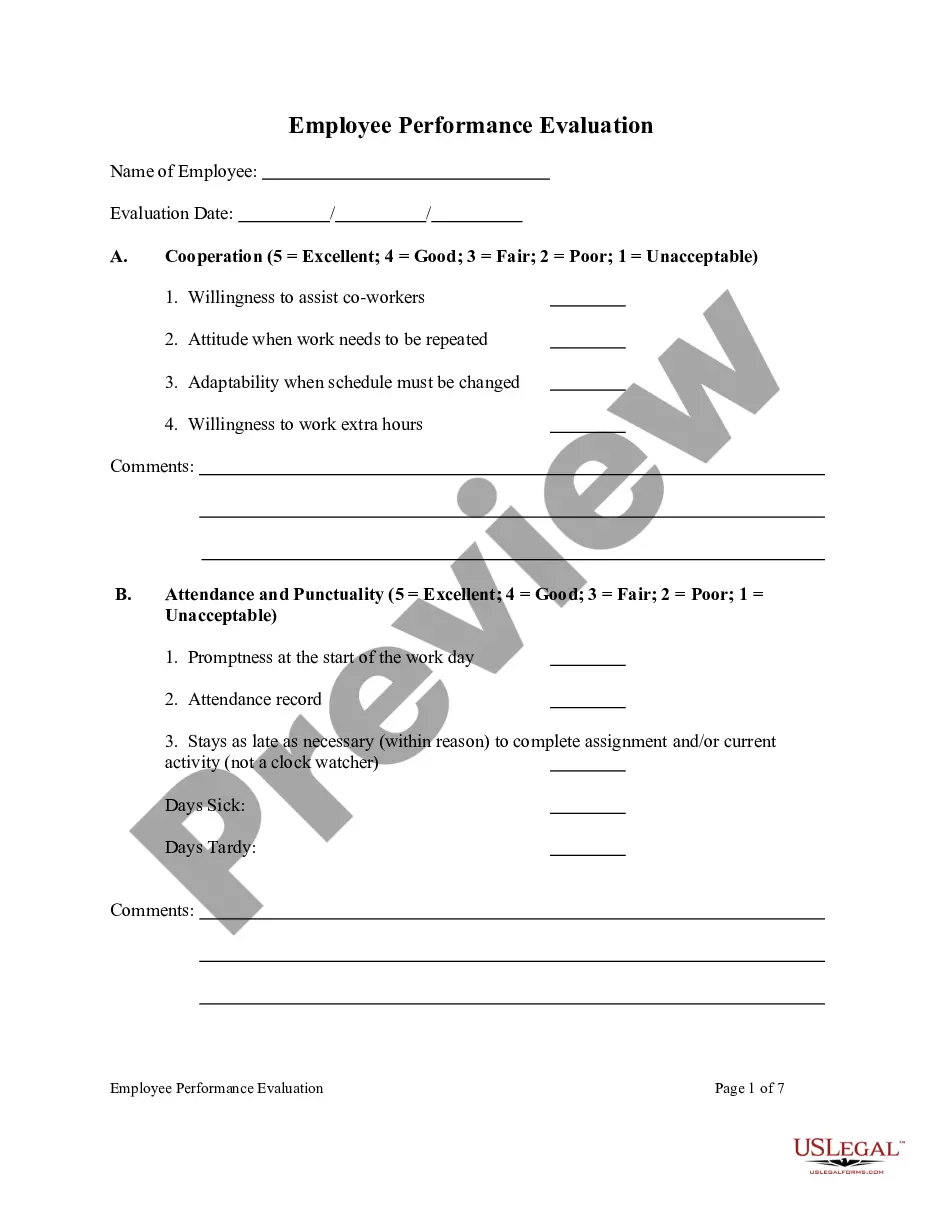
360 Degree Feedback Form For Doctors In Mecklenburg
Description

Get your form ready online
Our built-in tools help you complete, sign, share, and store your documents in one place.
Make edits, fill in missing information, and update formatting in US Legal Forms—just like you would in MS Word.
Download a copy, print it, send it by email, or mail it via USPS—whatever works best for your next step.
Sign and collect signatures with our SignNow integration. Send to multiple recipients, set reminders, and more. Go Premium to unlock E-Sign.
If this form requires notarization, complete it online through a secure video call—no need to meet a notary in person or wait for an appointment.
We protect your documents and personal data by following strict security and privacy standards.

Make edits, fill in missing information, and update formatting in US Legal Forms—just like you would in MS Word.

Download a copy, print it, send it by email, or mail it via USPS—whatever works best for your next step.

Sign and collect signatures with our SignNow integration. Send to multiple recipients, set reminders, and more. Go Premium to unlock E-Sign.

If this form requires notarization, complete it online through a secure video call—no need to meet a notary in person or wait for an appointment.

We protect your documents and personal data by following strict security and privacy standards.
Looking for another form?







Form popularity
FAQ
What are the 4 Components of 360-degree Performance Appraisal? Self-Assessment. Self-assessment is where the employee evaluates their performance. Peer Feedback. Incorporating peer feedback involves gathering input from colleagues who interact with the employee regularly. Manager Feedback. Subordinate Feedback.
360 Degree Feedback Examples for Communication “Emily is skilled at active listening, ensuring that everyone's concerns and ideas are heard.” “Michael could improve his communication by being more transparent about his thought process and decision-making.”
These steps can help you establish a 360 evaluation system. Establish criteria for rating each employee. Choose who will assess each employee. Send surveys. Send the survey to the employee. Schedule the 360 evaluation. Review ratings with employee. Follow up on progress.
How to design an effective 360 degree feedback questionnaire Identify the themes you want to measure. Create specific 360 questions based on your themes. Example 360 degree feedback questionnaire questions. Define your 360 degree feedback questionnaire rating scale. In conclusion.
A 360 review typically consists of managers receiving and analyzing employee feedback to look for notable patterns of behavior and positive/negative feedback and then creating a report. This can provide employees with constructive criticism without overwhelming them.
To ensure balanced and useful feedback, you should avoid inviting just those people with whom you get on best. 360 degree feedback is for your personal development and benefit and people usually find that the more constructive and useful comments are provided by people who are not close friends.
Open-ended questions for 360 degree feedback reviews What else would you like to share about this employee? What has this employee done particularly well? What would make this employee more effective in their role? What other comments do you have?
8-Step 360 Degree Feedback Process Timeline Define the Purpose of the 360 Degree Review. Select Raters. Design the Questionnaire. Communicate the 360 Degree Feedback. Distributing surveys. Collate and Analyze Feedback. Conduct Feedback Discussion. Implement Action Plan.
Writing samples, project-based learning demos, teacher-developed tests, lab journals, science projects, essays, reading response logs, research papers, rubric assessments, and other student work provide better evidence on a wider range of student knowledge, skills, and progress than do standardized tests.
The most common examples of rating scales are the Likert scale, star rating, and slider. For example, when you visit an online shopping site, you see a rating scale question when it asks you to rate your shopping experience. It is a popular choice for conducting market research.
