360 Feedback Examples For Peers
Description

Get your form ready online
Our built-in tools help you complete, sign, share, and store your documents in one place.
Make edits, fill in missing information, and update formatting in US Legal Forms—just like you would in MS Word.
Download a copy, print it, send it by email, or mail it via USPS—whatever works best for your next step.
Sign and collect signatures with our SignNow integration. Send to multiple recipients, set reminders, and more. Go Premium to unlock E-Sign.
If this form requires notarization, complete it online through a secure video call—no need to meet a notary in person or wait for an appointment.
We protect your documents and personal data by following strict security and privacy standards.

Make edits, fill in missing information, and update formatting in US Legal Forms—just like you would in MS Word.

Download a copy, print it, send it by email, or mail it via USPS—whatever works best for your next step.

Sign and collect signatures with our SignNow integration. Send to multiple recipients, set reminders, and more. Go Premium to unlock E-Sign.

If this form requires notarization, complete it online through a secure video call—no need to meet a notary in person or wait for an appointment.

We protect your documents and personal data by following strict security and privacy standards.
Looking for another form?


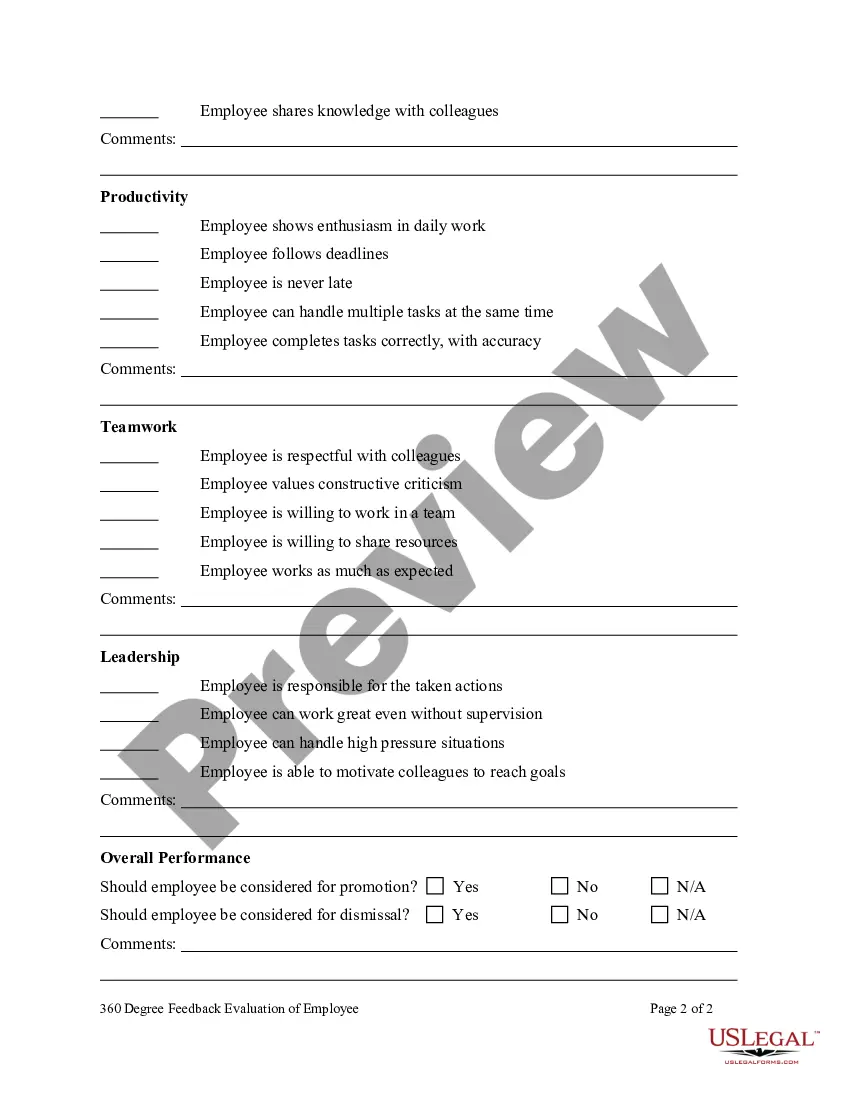
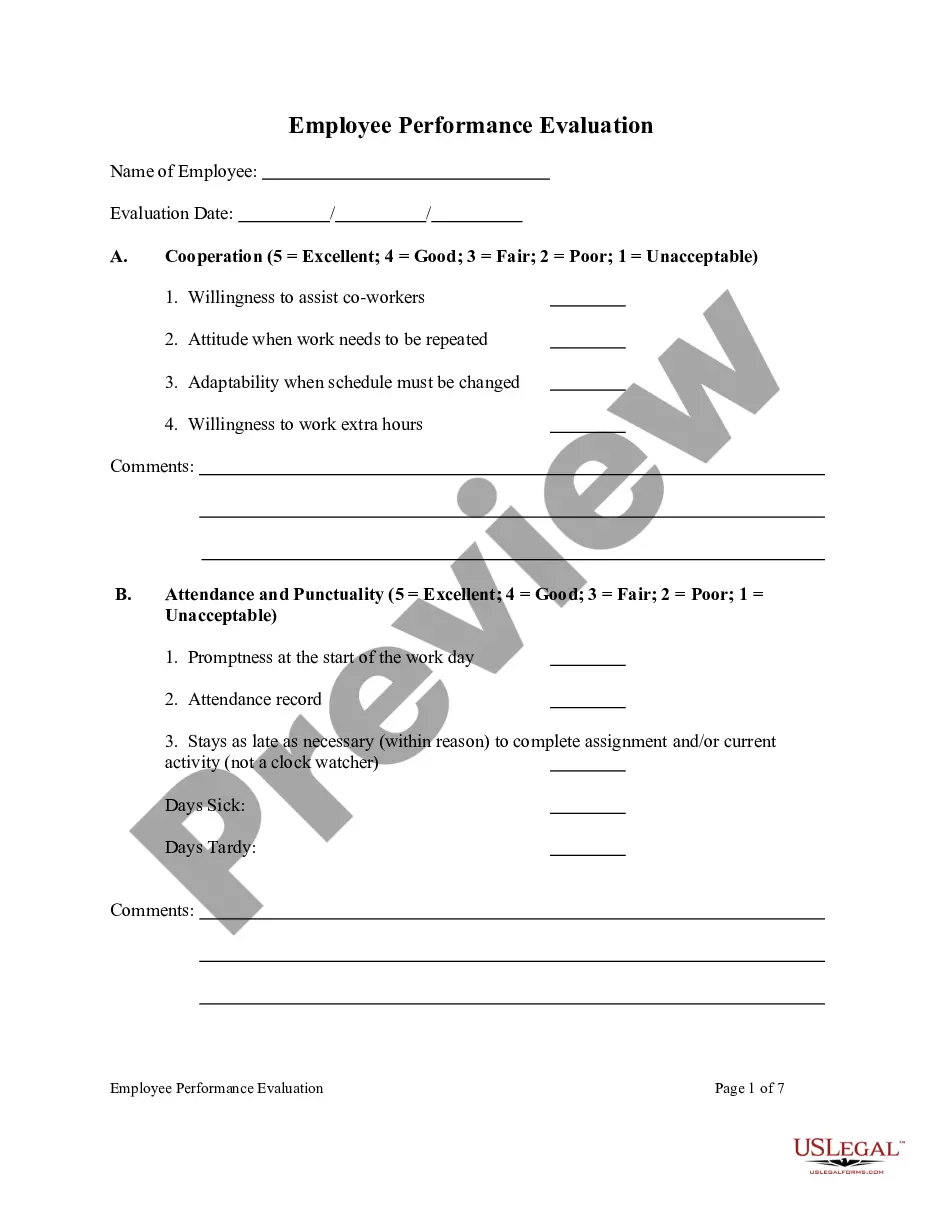
How to fill out 360 Degree Feedback Evaluation Of Employee?
Legal documentation administration can be daunting, even for seasoned professionals.
When seeking 360 Feedback Examples For Peers and lacking the opportunity to spend time hunting for the accurate and current version, the process can become overwhelming.
US Legal Forms caters to all your needs, from individual to commercial paperwork, all in one spot.
Employ advanced tools to complete and handle your 360 Feedback Examples For Peers.
Here are the actions to take after acquiring the form you require.
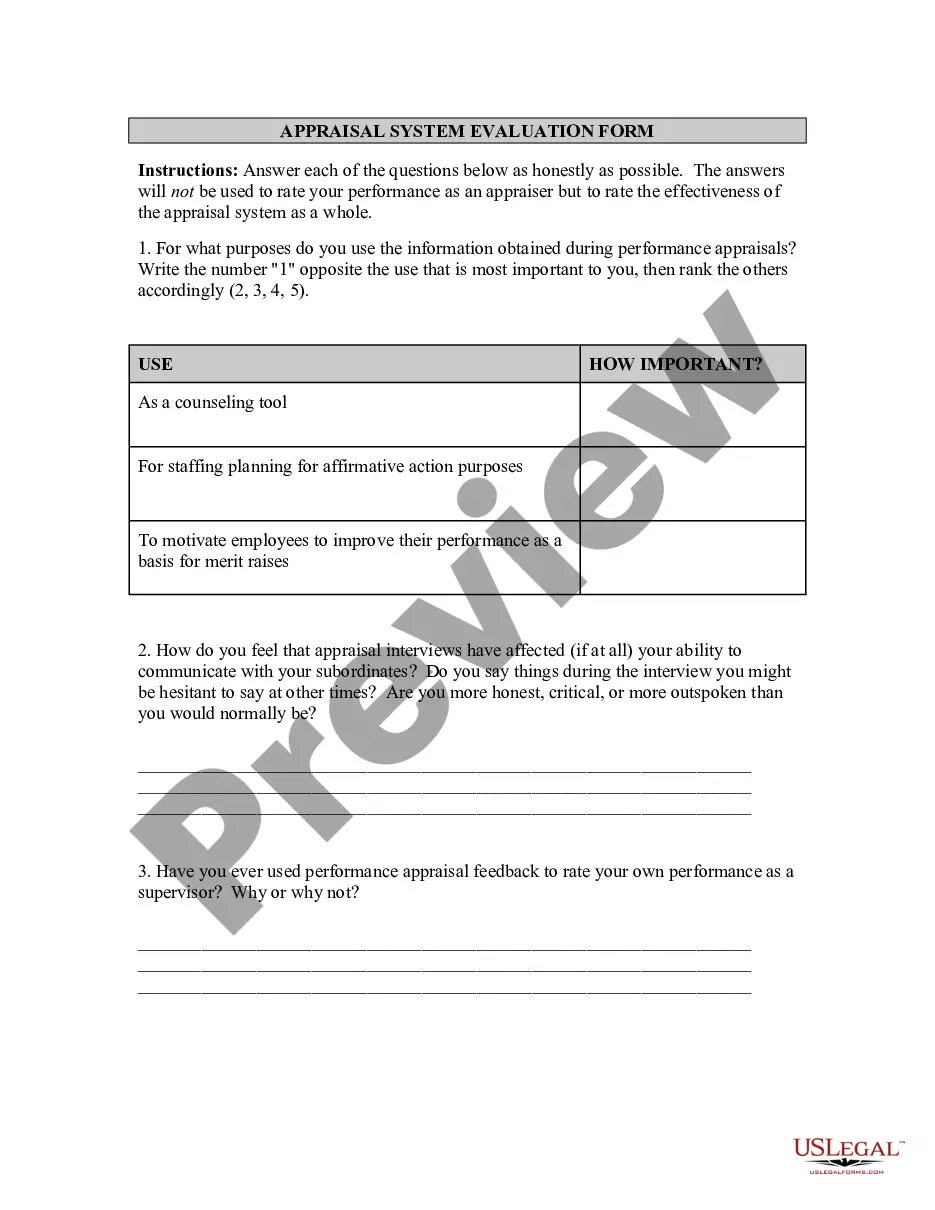
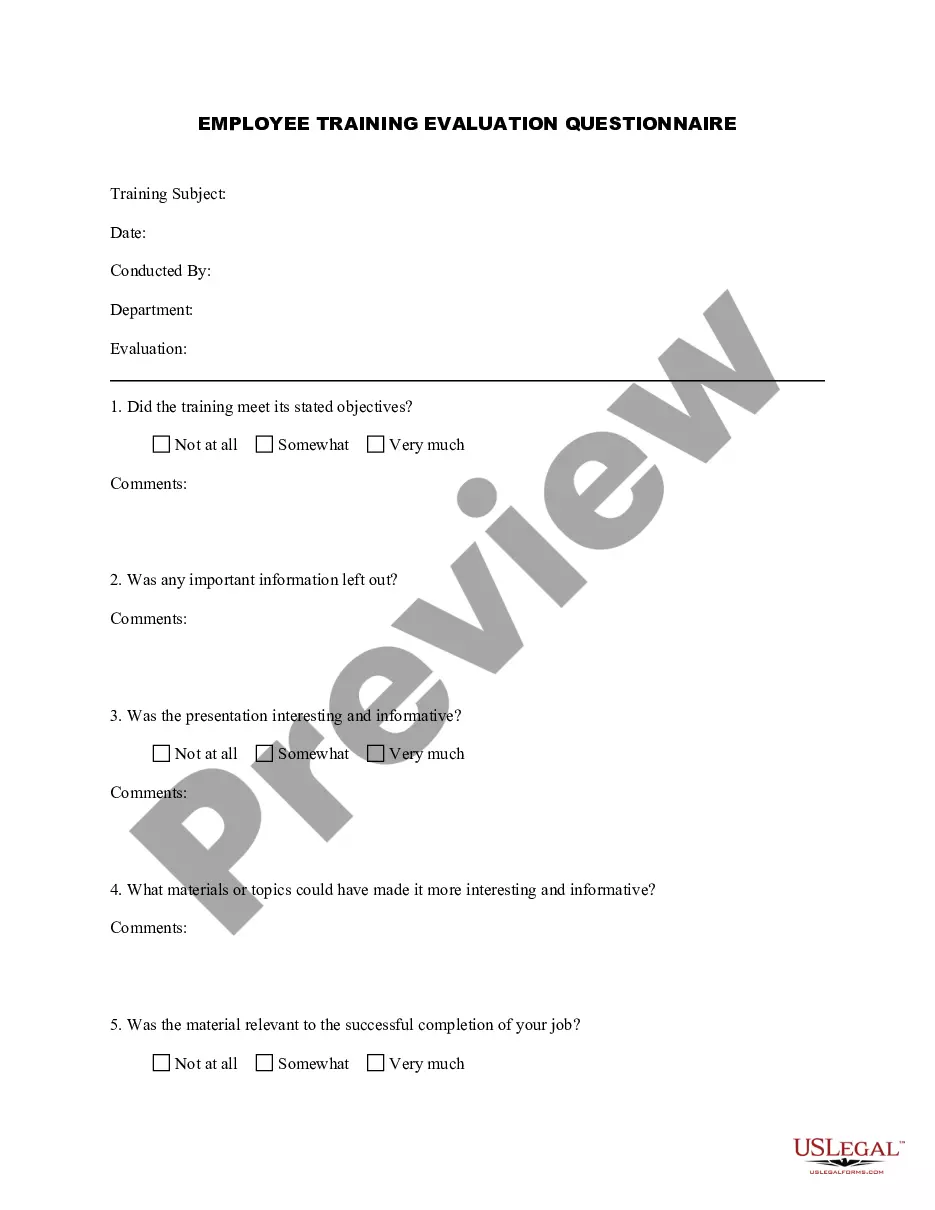
Confirm this is the correct document by previewing it and reviewing its description.
Ensure that the template is accepted in your state or county.
- Access a repository of articles, guides, handbooks, and materials pertinent to your circumstance and requirements.
- Save energy and time while searching for the documents you need by utilizing US Legal Forms’ comprehensive search and Preview feature to find 360 Feedback Examples For Peers and download them.
- If you have a monthly subscription, Log In to your US Legal Forms account, locate the form, and download it.
- Check your My documents tab to see the documents you have previously saved and manage your folders as desired.
- If it's your first time with US Legal Forms, sign up for an account to gain unlimited access to all the platform’s benefits.
Select Buy Now when you are prepared.
Choose a subscription option.
Select the file type you require, and then Download, complete, eSign, print, and send your documents.
Benefit from the US Legal Forms online library, supported by 25 years of expertise and reliability. Transform your routine document management into a straightforward and user-friendly process today.
- Utilize a comprehensive online form library that can significantly improve the way you navigate these challenges.
- US Legal Forms stands as a frontrunner in the online legal form industry, offering more than 85,000 state-specific legal documents available for your convenience.
- With US Legal Forms, you can gain access to localized legal and organizational documents.
Form popularity
FAQ
A good feedback message example could include something like, 'I appreciate your attention to detail in the recent project. It really helped us meet our deadlines effectively. For future projects, consider streamlining communication to improve team collaboration.' Utilizing 360 feedback examples for peers provides a framework for delivering valuable messages that drive improvement.
Giving feedback to peers can be a straightforward process when approached with care. Start by choosing an appropriate setting and focusing on being supportive. Use specific 360 feedback examples for peers to guide your conversation, ensuring your peers understand the intent behind your feedback, leading to constructive discussions.
Good examples of constructive feedback include pointing out how a colleague’s timely completion of a project positively affected the team’s goals. Additionally, suggesting how a different approach to a recent presentation could enhance clarity demonstrates effective feedback. By using 360 feedback examples for peers, you can ensure your feedback is actionable and leads to positive outcomes.
Writing feedback for peers involves being clear and constructive. Use specific examples to illustrate your points, highlighting both what was done well and what could be improved. By incorporating 360 feedback examples for peers, you can ensure that your feedback is not only helpful but also encourages collaboration and mutual support.
Organizing 360 feedback starts with defining the objectives and selecting participants who can provide diverse perspectives. Collect feedback through various methods such as surveys or interviews, ensuring anonymity for honest responses. After gathering the feedback, categorize it into themes and areas of strength or needed development, and consider using platforms like US Legal Forms for a structured approach to managing and analyzing feedback.
To write effective feedback for a colleague, start by being specific about their actions or contributions. Use clear language that describes the impact of their work, and offer a balanced view by mentioning both strengths and areas for improvement. When you include 360 feedback examples for peers, aim to foster a positive environment that encourages professional growth.
To cultivate an environment of continuous feedback, make it a regular practice rather than a one-time event. Encourage your colleagues to offer insights on an ongoing basis, perhaps during weekly check-ins. This establishes a culture of growth and development in line with the principles behind 360 feedback examples for peers.
To seek 360 feedback, initiate a process that involves your peers, supervisors, and even direct reports. You can create a structured survey or rely on templates provided by platforms like US Legal Forms. This structured approach encourages comprehensive feedback, ensuring you cover all aspects of your performance with 360 feedback examples for peers.
For effective feedback, consider asking questions that target key performance areas. Examples include, 'What do you think are my strengths in this project?' or 'How can I improve my communication with the team?' These types of questions help elicit constructive feedback aligned with 360 feedback examples for peers.
To ask for feedback politely, frame your request with appreciation for their input. You might say something like, 'I value your perspective and would appreciate your feedback on my recent project.' This approach makes it clear that you consider their opinions valuable and is aligned with seeking 360 feedback examples for peers.