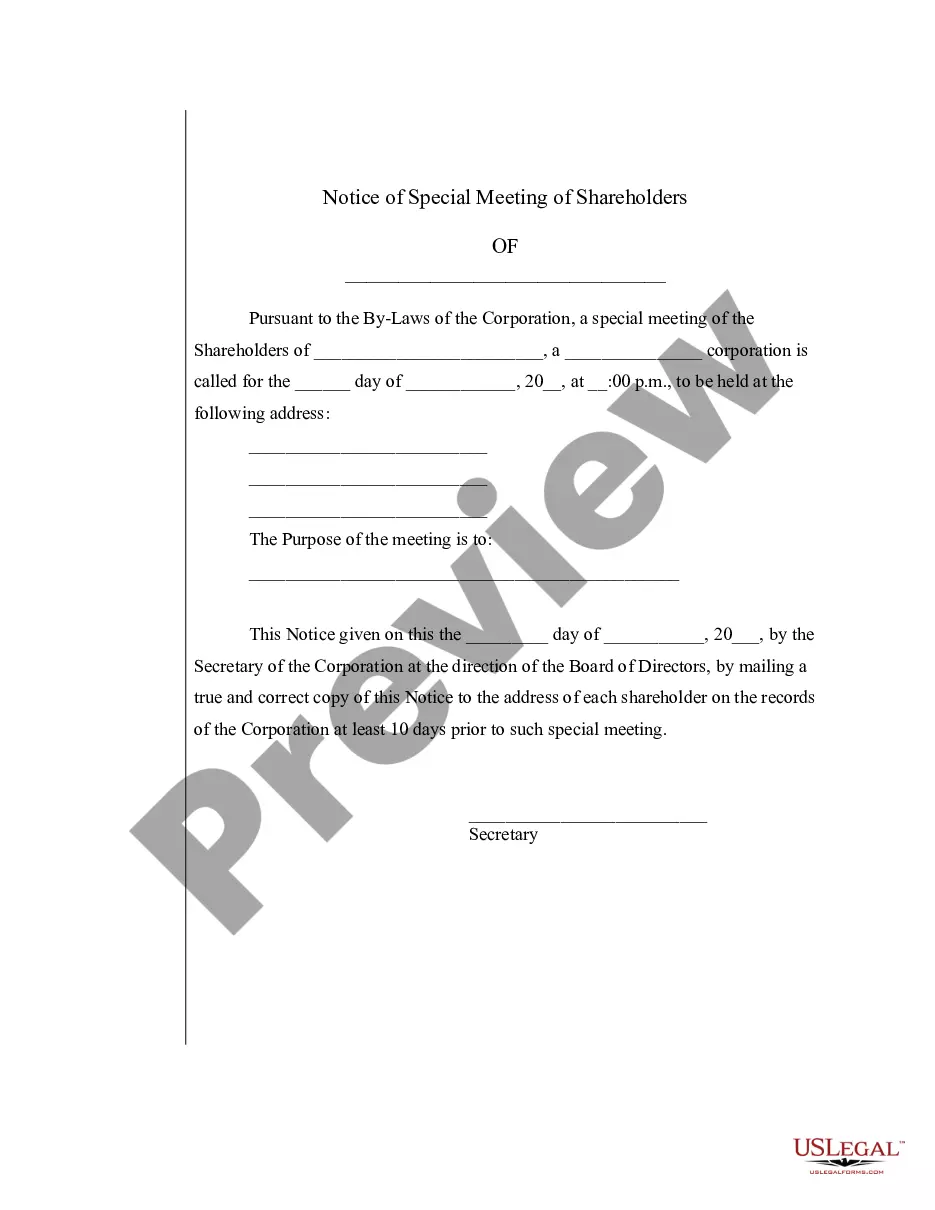
Special Meeting Sample For Hoa In Utah
Description



Get your form ready online
Our built-in tools help you complete, sign, share, and store your documents in one place.
Make edits, fill in missing information, and update formatting in US Legal Forms—just like you would in MS Word.
Download a copy, print it, send it by email, or mail it via USPS—whatever works best for your next step.
Sign and collect signatures with our SignNow integration. Send to multiple recipients, set reminders, and more. Go Premium to unlock E-Sign.
If this form requires notarization, complete it online through a secure video call—no need to meet a notary in person or wait for an appointment.
We protect your documents and personal data by following strict security and privacy standards.

Make edits, fill in missing information, and update formatting in US Legal Forms—just like you would in MS Word.

Download a copy, print it, send it by email, or mail it via USPS—whatever works best for your next step.

Sign and collect signatures with our SignNow integration. Send to multiple recipients, set reminders, and more. Go Premium to unlock E-Sign.

If this form requires notarization, complete it online through a secure video call—no need to meet a notary in person or wait for an appointment.

We protect your documents and personal data by following strict security and privacy standards.
Looking for another form?




Form popularity
FAQ
Occasionally, special meetings need to be called because of an urgent or special matter. ing to Robert's Rules of Order, special meetings always require previous notice. Here are a few valid reasons for calling a special meeting: An urgent matter needs to be dealt with before the next regular meeting.
Utah law does not require any particular amount of reserves for associations.
For example, a company may call a special meeting to discuss a major decision, such as a merger or acquisition. A school board may call a special meeting to address a specific issue, such as a budget shortfall.
Your meeting minutes should include: Motions: who made them, who seconded them and if they were approved or not. Voting: who voted in favor, dissented and abstained. Old business and if it was resolved. New business and when it will be addressed in the future. Actions that were taken during the meeting.
Dissolving an HOA in Utah requires following legal steps outlined in the governing documents and state laws. This includes a majority vote by members and settling any outstanding financial obligations. Homeowners need to consult these documents and legal counsel to successfully navigate the process.
Ordinary resolution requires a simple majority vote (50% +1) while Special resolution requires a higher majority vote (typically 75% or more) Ordinary resolution is used for routine or regular matters while Special resolution is used for important or significant matters.
Frequency: AGMs are annual, whereas SGMs are held as needed. Agenda: AGMs have a broad agenda covering the entire year's activities, while SGMs focus on specific issues. Initiation: AGMs are mandatory, but SGMs can be called by either the management committee or members.
A quick definition of special meeting: A special meeting is a gathering of people that is called for a specific purpose or reason. It is different from a regular meeting because it is not scheduled in advance and is only held when necessary.

