Letter For Money In California
Description
Get your form ready online
Our built-in tools help you complete, sign, share, and store your documents in one place.
Make edits, fill in missing information, and update formatting in US Legal Forms—just like you would in MS Word.
Download a copy, print it, send it by email, or mail it via USPS—whatever works best for your next step.
Sign and collect signatures with our SignNow integration. Send to multiple recipients, set reminders, and more. Go Premium to unlock E-Sign.
If this form requires notarization, complete it online through a secure video call—no need to meet a notary in person or wait for an appointment.
We protect your documents and personal data by following strict security and privacy standards.

Make edits, fill in missing information, and update formatting in US Legal Forms—just like you would in MS Word.

Download a copy, print it, send it by email, or mail it via USPS—whatever works best for your next step.

Sign and collect signatures with our SignNow integration. Send to multiple recipients, set reminders, and more. Go Premium to unlock E-Sign.

If this form requires notarization, complete it online through a secure video call—no need to meet a notary in person or wait for an appointment.

We protect your documents and personal data by following strict security and privacy standards.
Looking for another form?

Form popularity
FAQ
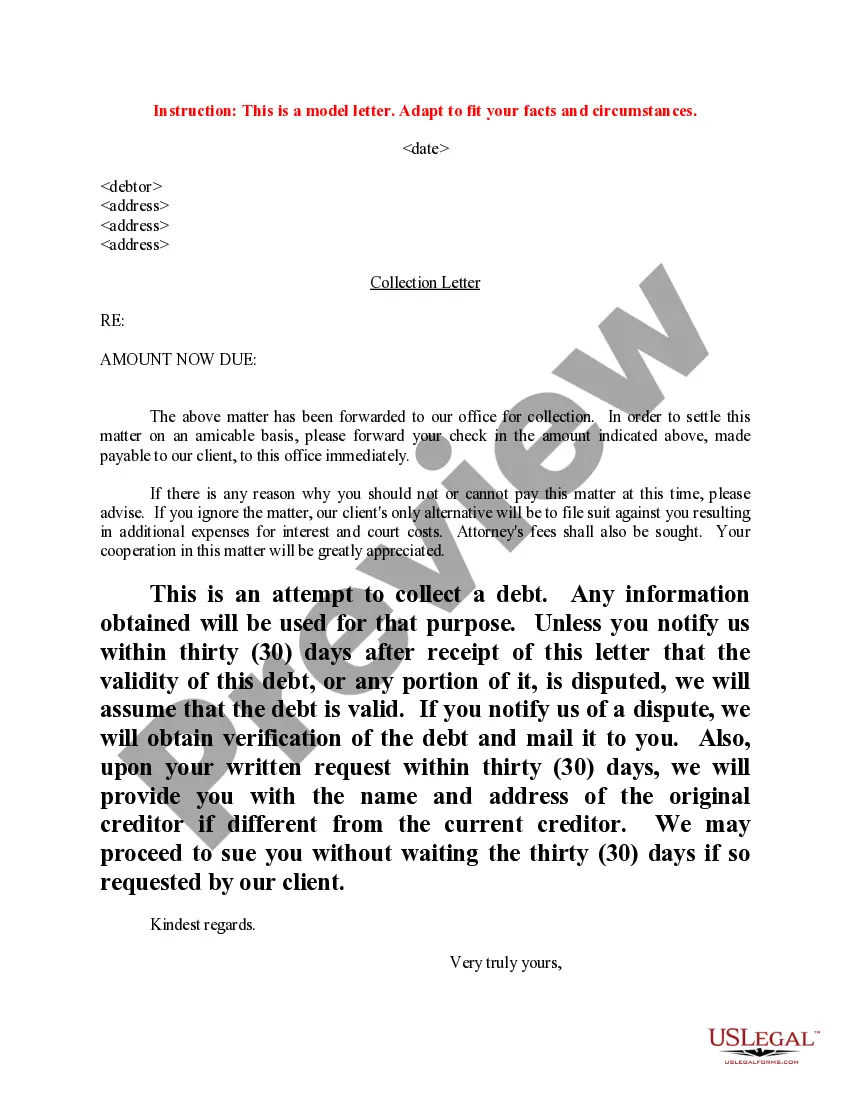
Demand Letter Components Facts of the case. An outline of what happened. Statement of the issue. A brief description of the problem. Demand. The dollar amount or action necessary to resolve the case. Response deadline. The date by which the recipient must respond. Noncompliance consequences.
You can write it yourself. A demand letter is literally what it says, letter that demands something. It's not legally significant. Most people don't take them seriously unless they're from a lawyer, though.
You must write the demand letter with as little emotion as possible. Try to be neutral, clear and calm in tone. Stick to the facts about what you agreed to, what's owed, the timeline for the other person or entity to respond, and what they must do to fulfill their obligations. Avoid emotions and opinions.
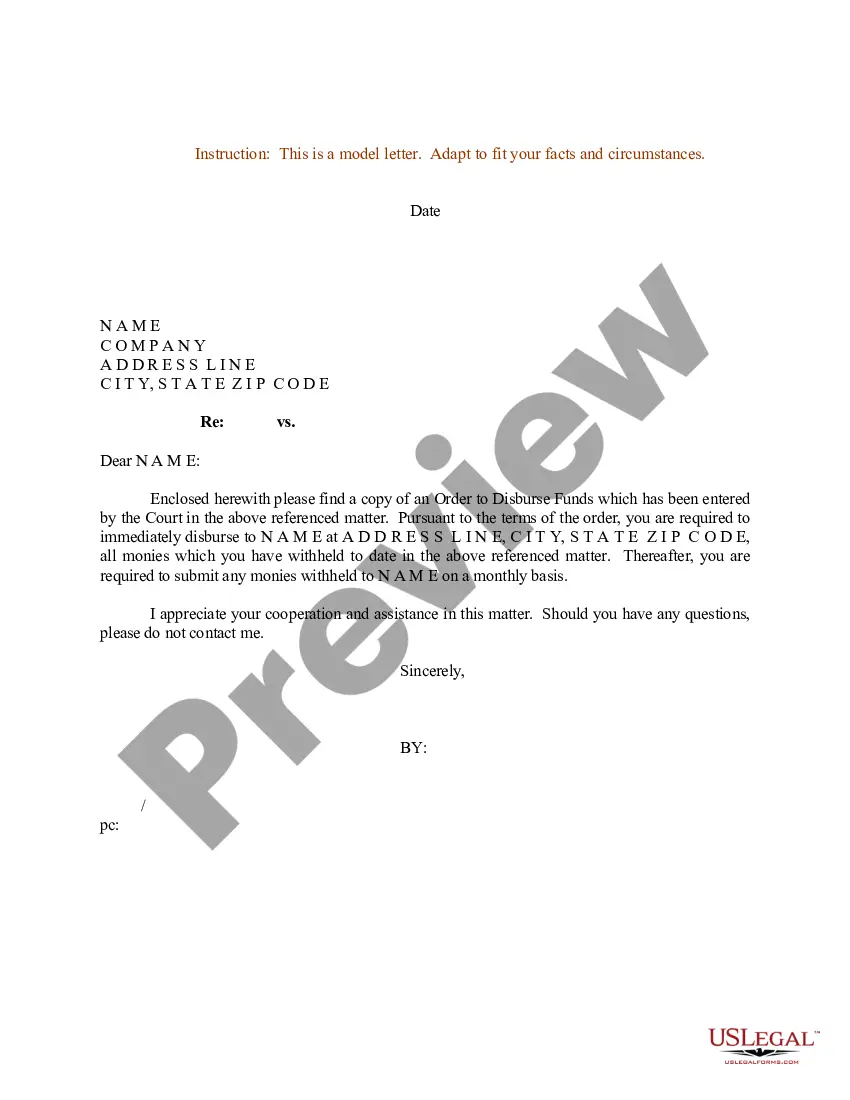
Demand letters play a crucial role in the judgment collection process. They serve not only as a request for payment but also as a critical step toward enforcing the judgment. This letter clearly communicates the amount owed, sets a specific date for compliance, and can even help avoid the need for further legal action.
Demand Letter Components Facts of the case. An outline of what happened. Statement of the issue. A brief description of the problem. Demand. The dollar amount or action necessary to resolve the case. Response deadline. The date by which the recipient must respond. Noncompliance consequences.
``I hope this message finds you well. I'm writing to inquire about the status of the $X payment for (project/service) that was due on (date). Please advise when I can expect to receive the funds. I'm available to discuss any issues you may be having with the invoice.''
I am applying to make a repayment arrangement on the grounds of financial hardship. I assume you will stay all enforcement action while you consider my application. If this is not possible, please let me know immediately in writing. I have been in financial hardship because (give a reason).
The Nuts and Bolts of a Demand Letter Gather complete information before you start writing. Describe your injuries and medical treatment. List your medical expenses, lost wages, and non-economic damages. Make a settlement demand. Include a deadline for legal action if you want to, but don't bluff.
Present the facts Your description of damages may take up most of the body of the letter. Make sure your demand letter ends by affirming your willingness to pursue legal action if not satisfied. If you're the victim of negligence, you have every right to demand due compensation.
