Notice Stockholders Meeting For Pta In Queens
Description
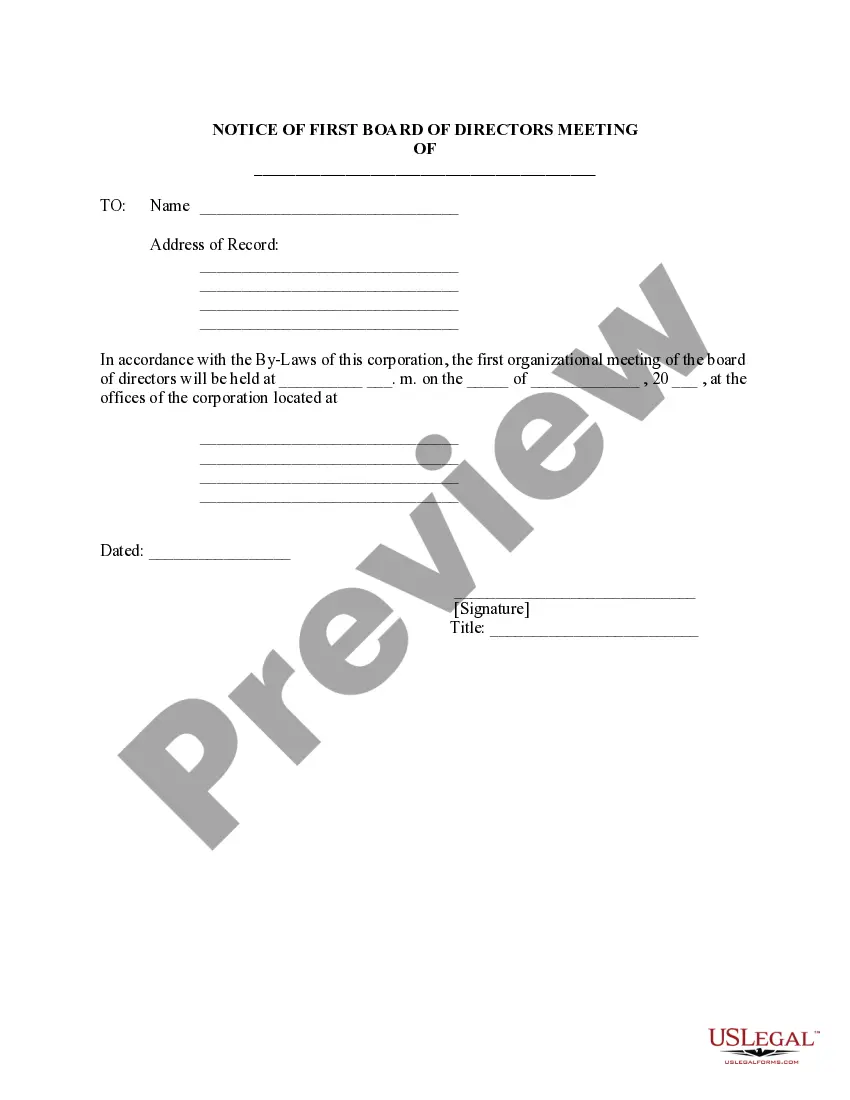


Get your form ready online
Our built-in tools help you complete, sign, share, and store your documents in one place.
Make edits, fill in missing information, and update formatting in US Legal Forms—just like you would in MS Word.
Download a copy, print it, send it by email, or mail it via USPS—whatever works best for your next step.
Sign and collect signatures with our SignNow integration. Send to multiple recipients, set reminders, and more. Go Premium to unlock E-Sign.
If this form requires notarization, complete it online through a secure video call—no need to meet a notary in person or wait for an appointment.
We protect your documents and personal data by following strict security and privacy standards.

Make edits, fill in missing information, and update formatting in US Legal Forms—just like you would in MS Word.

Download a copy, print it, send it by email, or mail it via USPS—whatever works best for your next step.

Sign and collect signatures with our SignNow integration. Send to multiple recipients, set reminders, and more. Go Premium to unlock E-Sign.

If this form requires notarization, complete it online through a secure video call—no need to meet a notary in person or wait for an appointment.

We protect your documents and personal data by following strict security and privacy standards.
Looking for another form?


Form popularity
FAQ
PTAs often organize educational programs, workshops, guest speakers, field trips and other initiatives aimed at enriching students' learning experiences. These activities provide extra educational opportunities beyond the standard curriculum, broadening students' horizons and fostering a love for learning.
Working together, we promote the welfare of children and youth in home, school, community, and place of worship; raise the standards of home life; secure adequate laws for the care and protection of children and youth; bring into closer relation the home and the school, that parents and teachers may cooperate ...
PTAs encourage and facilitate parental involvement in school activities and decision-making processes. When parents are engaged and take part in school affairs, it creates a positive and supportive environment for students.
Parents can establish PTAs that are inclusive and representative of the school community's cultures, family structures (single parent, blended, etc.), and abilities. (Invite the principal to become a member.) PTAs must value and embrace all parents and caregivers in order to implement successful school programs.
The true mission of the PTO is to support the school and its students in a more holistic, organizational sense. Being a PTO member means having a say in school events, organizing educational opportunities, coordinating volunteers, and contributing in ways that go beyond monetary donations.
Main duties: Provide leadership. Sign the approved minutes of the last meeting. Set the agenda for meetings. Get to know members of the committee. Run meetings in an efficient and timely manner ensuring that everyone is able to contribute. Agree a date for the next meeting. Welcome and involve new members.
A PA becomes a PTA if parents vote to include school staff members. Parent members of a PTA may vote to revert back to a PA.

