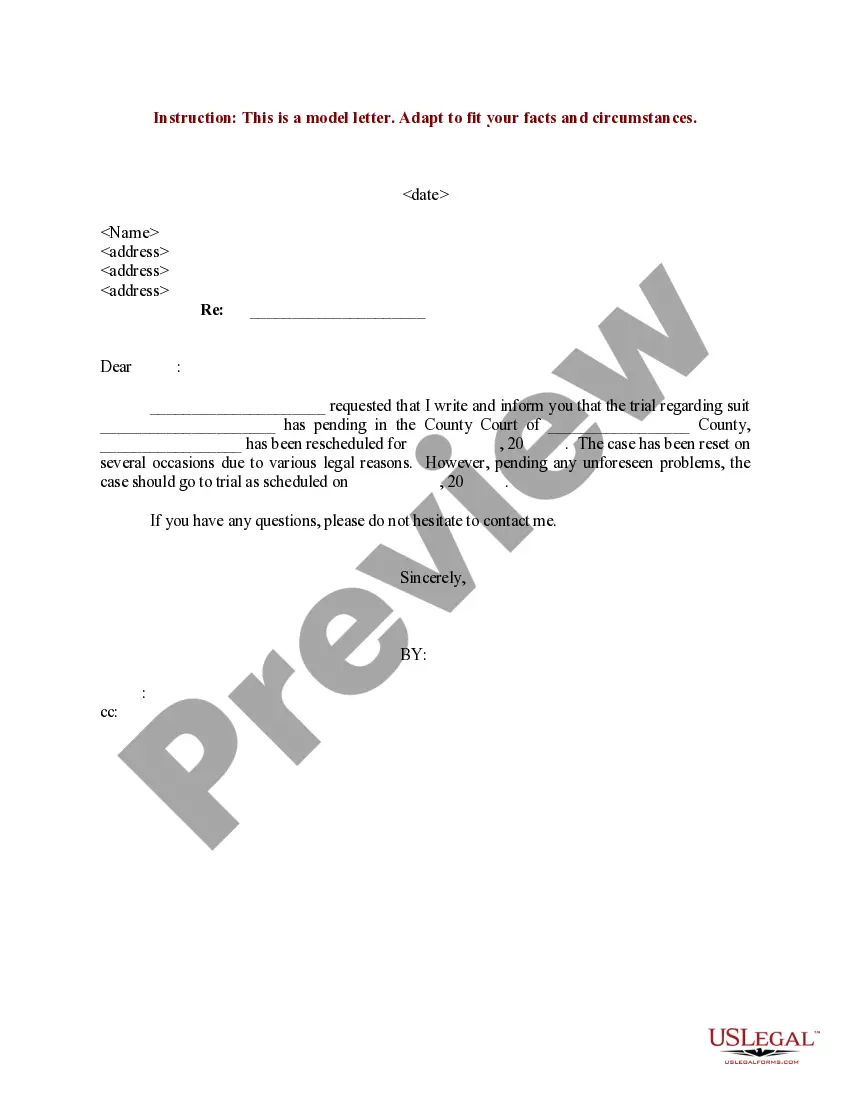
Court Letter Sample For Student In Cook
Description




Get your form ready online
Our built-in tools help you complete, sign, share, and store your documents in one place.
Make edits, fill in missing information, and update formatting in US Legal Forms—just like you would in MS Word.
Download a copy, print it, send it by email, or mail it via USPS—whatever works best for your next step.
Sign and collect signatures with our SignNow integration. Send to multiple recipients, set reminders, and more. Go Premium to unlock E-Sign.
If this form requires notarization, complete it online through a secure video call—no need to meet a notary in person or wait for an appointment.
We protect your documents and personal data by following strict security and privacy standards.

Make edits, fill in missing information, and update formatting in US Legal Forms—just like you would in MS Word.

Download a copy, print it, send it by email, or mail it via USPS—whatever works best for your next step.

Sign and collect signatures with our SignNow integration. Send to multiple recipients, set reminders, and more. Go Premium to unlock E-Sign.

If this form requires notarization, complete it online through a secure video call—no need to meet a notary in person or wait for an appointment.

We protect your documents and personal data by following strict security and privacy standards.
Looking for another form?




Form popularity
FAQ
How to Write a Good Court Statement Be clear and concise in your writing. Keep your sentences and paragraphs short, making them easier to read and understand. Make sure all of your facts are accurate and complete. Proofread your statement before submitting it to the court.
You start by addressing the letter to the Honorable Judge so and so, and begin with Your honor. You end with respectfully yours, and then sign your name (write your name in block letters underneath your signature.
Open with a respectful greeting Regardless of the content of your letter, try to begin with a friendly and respectful greeting. Use the recipient's full name and open with a salutation such as “dear Miss. Adkins”, followed by “I hope this letter finds you well.”
Follow the order of this format, leaving a space in between each section: Your Information (first thing that goes on the inside of the letter) Name. The Date. The Judge's Information. Honorable Judge First Name Last Name. What the Letter Is Going to Address. Salutation. Body. Signature.
In person: In an interview, social event, or in court, address a judge as “Your Honor” or “Judge last name.” If you are more familiar with the judge, you may call her just “Judge.” In any context, avoid “Sir” or “Ma'am.” Special Titles.
Person's name has always been a loving and caring friend/family member/co-worker since we first met. That is why I am writing this letter to defend person's name, because he/she has always been a respected person in the community, and a genuine person to everyone he/she has come across.
Tips for Writing a Letter to a Judge: Be Respectful: Use formal language and address the judge appropriately. Be Concise: Keep the letter focused and to the point. Provide Relevant Information: Stick to facts and avoid emotional appeals that lack substance.
A good character letter can be incredibly helpful to a defendant's case. Writing such a letter can be a challenge, particularly for those who are inexperienced with the criminal justice system. Read on to learn more about how to write a top-notch letter of support.
Follow the order of this format, leaving a space in between each section: Your Information (first thing that goes on the inside of the letter) Name. The Date. The Judge's Information. Honorable Judge First Name Last Name. What the Letter Is Going to Address. Salutation. Body. Signature.
Elements: full mailing address of the sender. date on which letter is written. address of person to whom letter is addressed. subject line. salutation. body (the main message) complimentary closing. signature line (be sure to sign your letter)

