Meeting Annual Consider With Example In Sacramento
Description



Get your form ready online
Our built-in tools help you complete, sign, share, and store your documents in one place.
Make edits, fill in missing information, and update formatting in US Legal Forms—just like you would in MS Word.
Download a copy, print it, send it by email, or mail it via USPS—whatever works best for your next step.
Sign and collect signatures with our SignNow integration. Send to multiple recipients, set reminders, and more. Go Premium to unlock E-Sign.
If this form requires notarization, complete it online through a secure video call—no need to meet a notary in person or wait for an appointment.
We protect your documents and personal data by following strict security and privacy standards.

Make edits, fill in missing information, and update formatting in US Legal Forms—just like you would in MS Word.

Download a copy, print it, send it by email, or mail it via USPS—whatever works best for your next step.

Sign and collect signatures with our SignNow integration. Send to multiple recipients, set reminders, and more. Go Premium to unlock E-Sign.

If this form requires notarization, complete it online through a secure video call—no need to meet a notary in person or wait for an appointment.

We protect your documents and personal data by following strict security and privacy standards.
Looking for another form?




Form popularity
FAQ
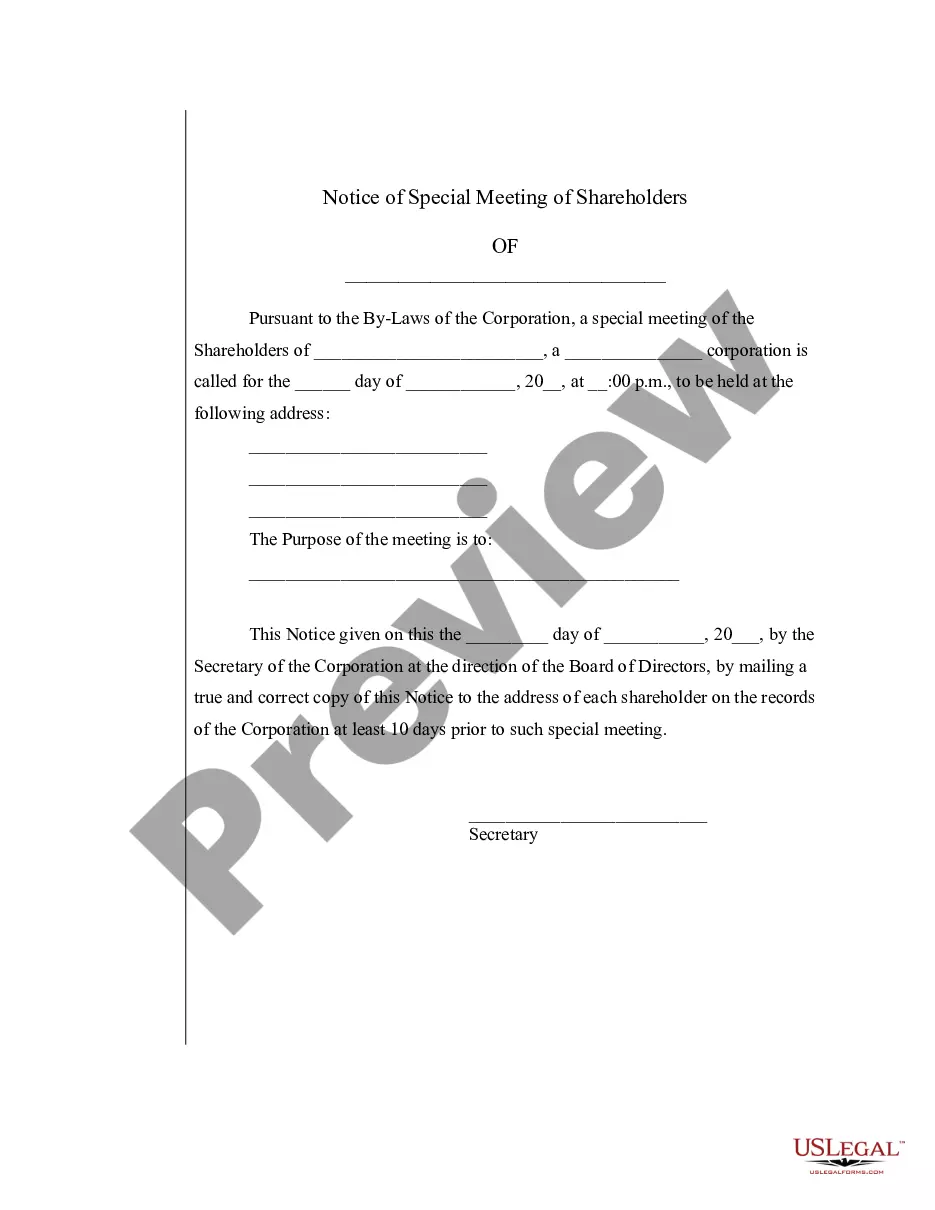
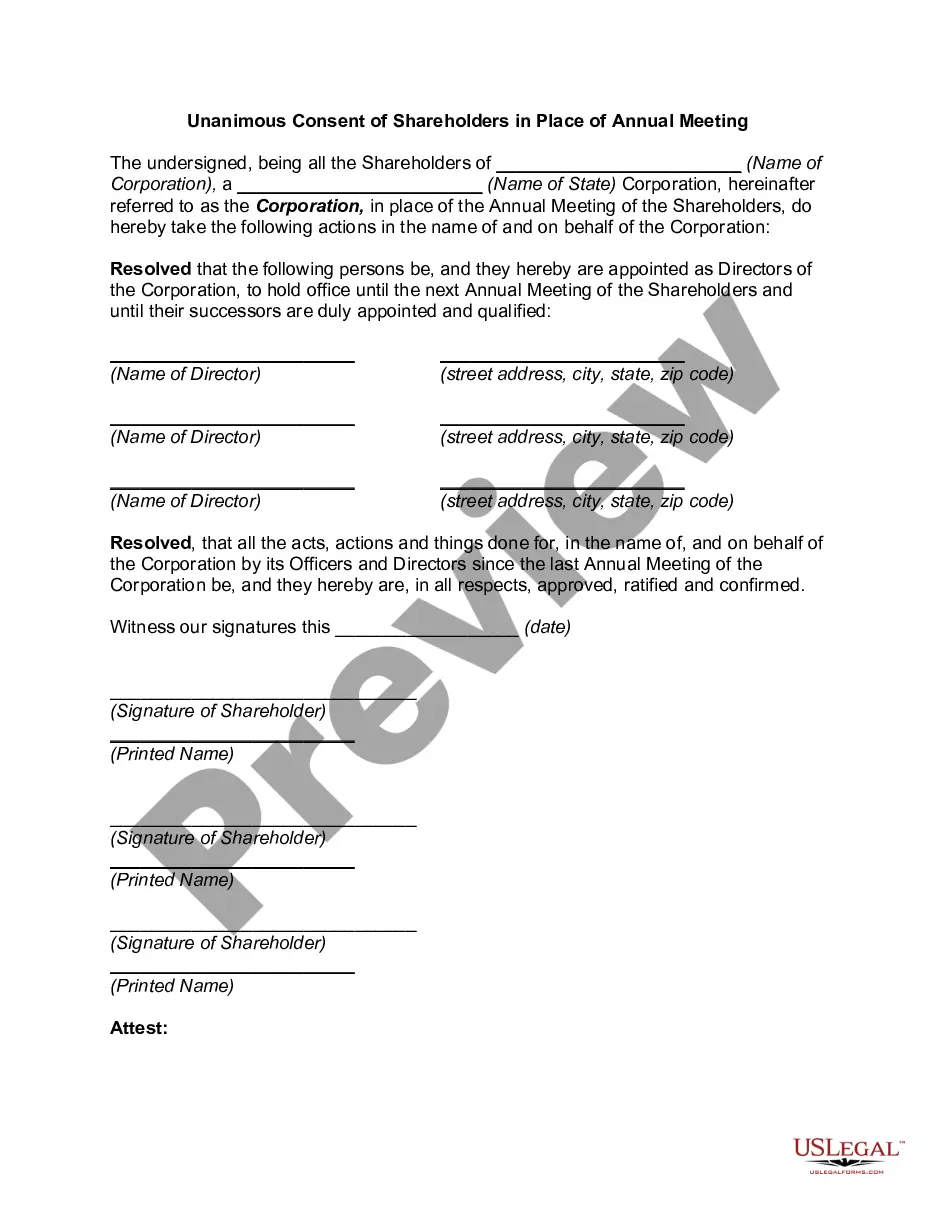
For example, an annual general meeting (AGM) provides an opportunity for the board of directors and shareholders to come together, review the company's performance, and discuss its future direction.
The purpose of the annual meeting is for shareholders to elect the directors. Therefore, holders of voting stock elect either the whole board of directors when there is a single class of directors or some fraction of the board in, for example, staggered boards.
Generally speaking, annual meetings are a formal discussion of a company's goals, strategy, financial situation, proposed changes to governance documents, or other pending decisions that require a vote by or approval of the business's owners.
The typical AGM agenda includes reviewing financial reports, approving dividends, appointing auditors, and addressing shareholder concerns. Compliance with statutory requirements ensures the meeting's legitimacy and adherence to corporate governance laws.
Issues Undertaken at Annual General Meeting Consideration of annual accounts. Discussion of the director's report and the auditor's report. Appointment and fixing of the remuneration of the statutory auditors. Appointing replacement directors in place of existing directors retiring.
The AGM Agenda Welcome and apologies. Minutes of previous AGM. President's report. CEO's report (if applicable) Presentation of Financial reports. Constitution amendments (if any) Elections. Life Memberships (if any)
A domestic (California) or foreign (out–of–state or out–of–country) corporation, cooperative, limited liability company and limited partnership can dissolve, surrender or cancel by filing the applicable termination form(s) online at bizfileOnline.sos.ca.
A Statement of Information must be filed either every year for California stock, cooperative, credit union, and all qualified out-of-state corporations or every two years (only in odd years or only in even years based on year of initial registration) for California nonprofit corporations and all California and ...
To change the California registered agent for a corporation or LLC, all you need to do is provide a completed Statement of Information form to the California Secretary of State (SOS). Submit the statement of information by mail, online (corporations only) or in person.
Hold a board meeting Unlike a sole proprietorship, a corporation is required to appoint a board of directors. The board will need to hold a vote to dissolve the company. While some states don't require a minimum vote, others might require that a majority or two-thirds of the board vote in favor of dissolution.

