Sample Letter Rejecting Settlement Offer Without Prejudice Template In Utah
Description





Form popularity
FAQ
Possible Legal Action: If negotiations don't yield a satisfactory offer, a lawsuit may become necessary, requiring additional time and resources. Risk of Lower Final Settlement: In some cases, litigation may lead to a settlement lower than the initial offer, depending on the court's decision.
If you disagree with the offer, you can decline it. However, rejecting a settlement offer isn't as simple as saying, “Sorry, I won't accept it.” Instead, before rejecting a settlement offer, it's important to think through this decision.
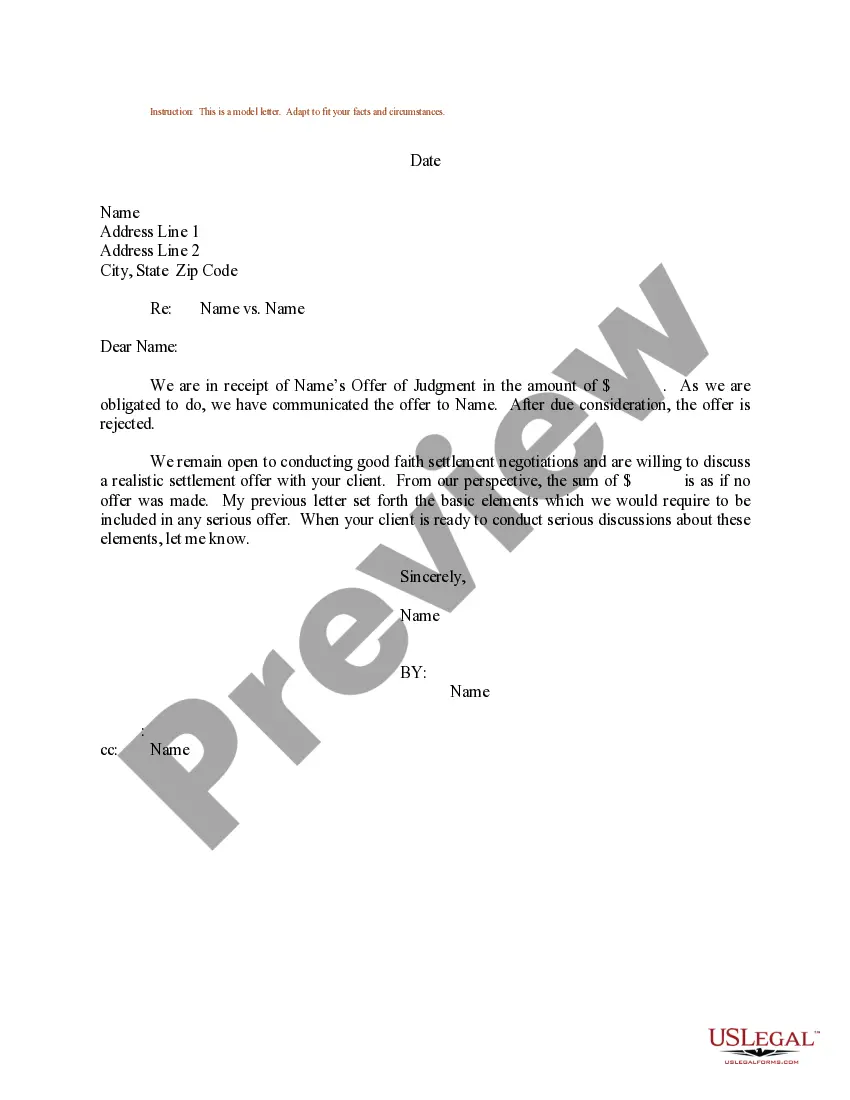
If you choose to reject the low settlement offer, you must communicate your decision to the claims adjuster. Your legal representative can help you write a letter that states your intentions. Within the letter, you can indicate that you reject the offer and highlight why you deserve a higher settlement amount.
Possible Legal Action: If negotiations don't yield a satisfactory offer, a lawsuit may become necessary, requiring additional time and resources. Risk of Lower Final Settlement: In some cases, litigation may lead to a settlement lower than the initial offer, depending on the court's decision.
Communications marked as 'without prejudice' cannot be used by the other party as evidence in court. This means that parties can speak openly about the matters in dispute without the risk of the other party using that information against them later.
A significant misconception needs addressing: you can't overturn a settlement agreement simply because you've changed your mind or found a better deal. The grounds for challenging these agreements are specific and limited: Fraud or misrepresentation. Actual duress or coercion.
Provide specific reasons for your rejection, highlighting the damages and losses not covered by the proposed settlement. These reasons could include medical expenses, lost wages, property damage, pain and suffering, and other relevant costs.
Your letter in response to a settlement offer 1) In your introduction, start by saying that you are surprised and a little hurt that your employer wishes to terminate your employment. Then state how hard you have worked and how much your job means to you. This will elicit sympathy and create goodwill.
This letter should clearly state the reasons for rejecting the offer, such as it not providing maximum compensation for the damages incurred. Provide specific reasons for your rejection, highlighting the damages and losses not covered by the proposed settlement.
If you find the offer unacceptable, your attorney can draft a formal letter and propose a counteroffer. This letter should clearly state that the initial offer is unacceptable and refute any inaccuracies in the insurance adjuster's statements.

