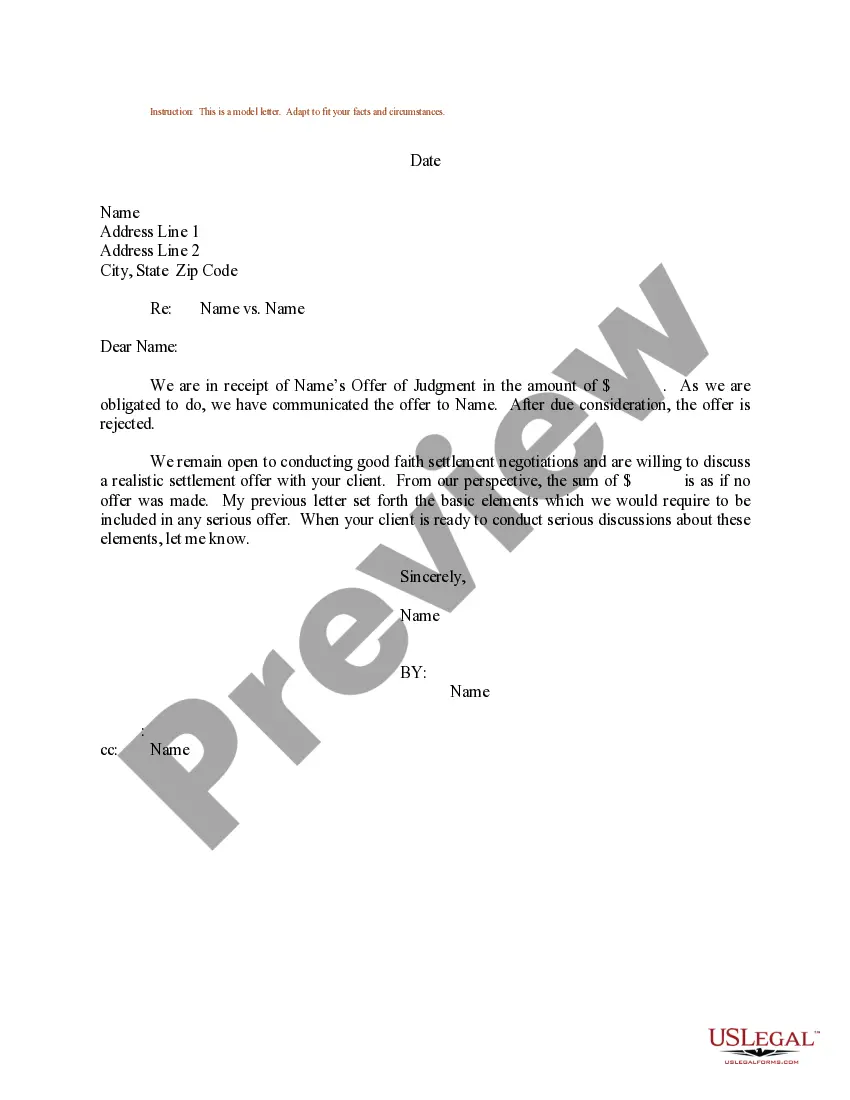
Sample Letter Rejecting Settlement Offer For Credit Card Debt In Tarrant
Description


Get your form ready online
Our built-in tools help you complete, sign, share, and store your documents in one place.
Make edits, fill in missing information, and update formatting in US Legal Forms—just like you would in MS Word.
Download a copy, print it, send it by email, or mail it via USPS—whatever works best for your next step.
Sign and collect signatures with our SignNow integration. Send to multiple recipients, set reminders, and more. Go Premium to unlock E-Sign.
If this form requires notarization, complete it online through a secure video call—no need to meet a notary in person or wait for an appointment.
We protect your documents and personal data by following strict security and privacy standards.

Make edits, fill in missing information, and update formatting in US Legal Forms—just like you would in MS Word.

Download a copy, print it, send it by email, or mail it via USPS—whatever works best for your next step.

Sign and collect signatures with our SignNow integration. Send to multiple recipients, set reminders, and more. Go Premium to unlock E-Sign.

If this form requires notarization, complete it online through a secure video call—no need to meet a notary in person or wait for an appointment.

We protect your documents and personal data by following strict security and privacy standards.
Looking for another form?


Form popularity
FAQ
Negotiating with debt collectors is a four-step process. Verify the legitimacy of both the debt and the collector. Review your finances and choose your most affordable payment option. Negotiate with the debt collector. Get agreements in writing.
Most debt settlement letters include: The date, name, and address of the credit card company. A notation after the address that this is regarding a hardship letter. The credit card number and amount of the debt. A short statement of your financial situation, why you're in that situation, and why full payment is a hardship.
Tip for Drafting an Effective Settlement Letter Be concise. Your letter might be 20-30 pages long if your claim is complex. Be organized. Reread your letter to make sure you haven't said anything that the opposing party can twist around to use against you. Be polite and professional.
Although the average settlement amounts to 50.7% of what you originally owed, that number is a bit skewed. If your debts are still with the original creditor, settlement amounts tend to be much higher. You can end up paying up to 80% of what you owe if the debt is still with the original creditor.
Dear Mr./Ms. Adjuster: Pursuant to our phone conversation on insert date, please accept this letter as confirmation that we have agreed to settle, in full, my above-referenced claim for personal injuries for the amount of: Agreed to Final Settlement Amount. Thank you for your prompt attention to this matter.
This letter should clearly state the reasons for rejecting the offer, such as it not providing maximum compensation for the damages incurred. Provide specific reasons for your rejection, highlighting the damages and losses not covered by the proposed settlement.
However, refusing a settlement offer does extend the life of your claim and delays when you receive compensation. If you have pressing medical bills or other expenses, this is a factor to consider. You'll also need to invest more time and energy into your case, including providing more documentation of your damages.
I am writing in response to the settlement offer you presented on Settlement Offer Date, related to claim number Claim Number for the incident that occurred on Incident Date. After careful consideration, I must reject this offer as it does not meet my needs based on the severity and ongoing nature of my injuries.
Treat the following as a set of general guidelines: Gather complete information before you start writing. Describe your injuries and medical treatment. List your medical expenses, lost wages, and non-economic damages. Make a settlement demand. Include a deadline for legal action if you want to, but don't bluff.
If you are not happy with the settlement agreement, then there are a number of routes you can take. You can reject the agreement outright and make a claim to the employment tribunal. Such a claim would need to be made within 3 months (less one day) from the last day of your employment.

