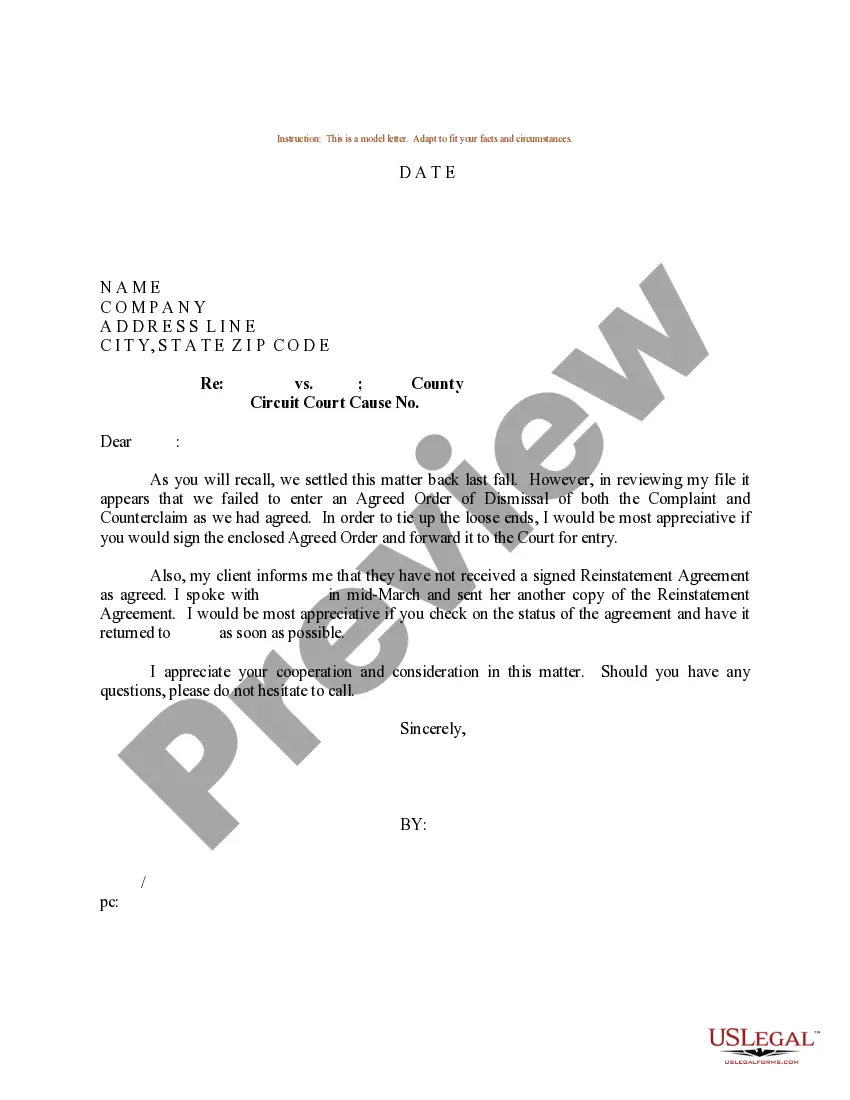
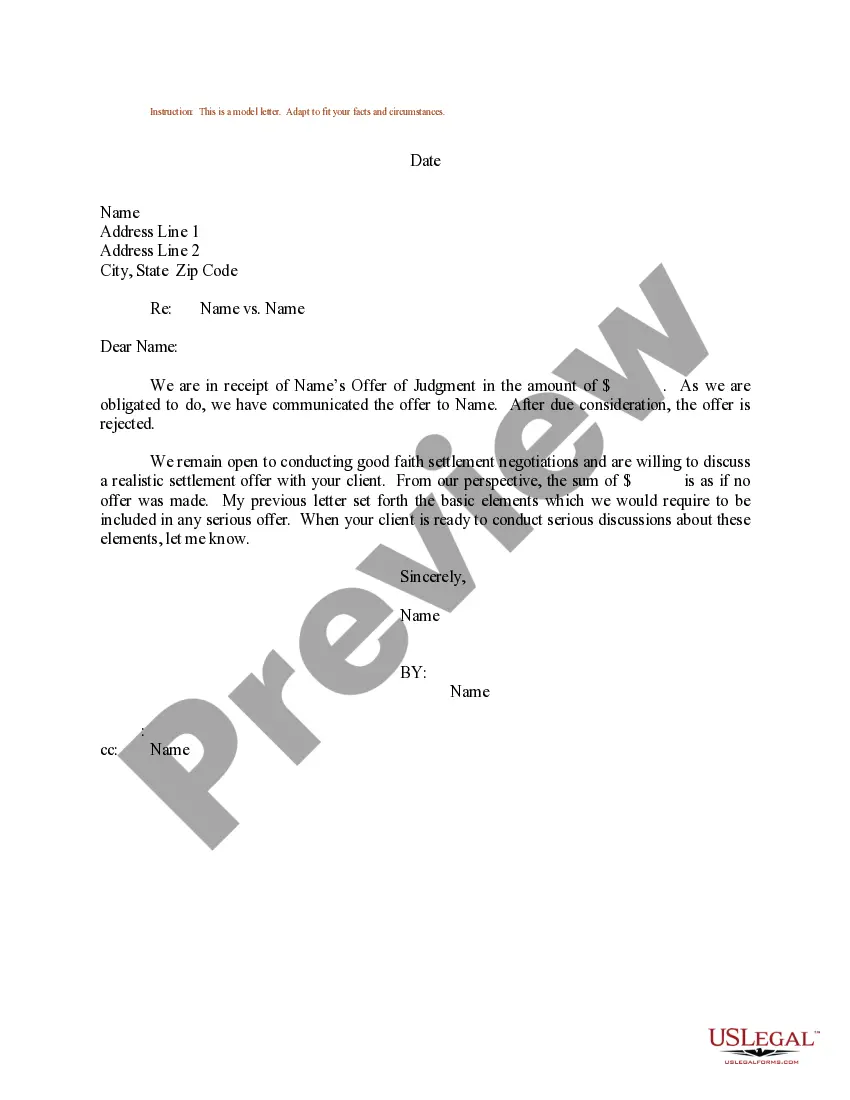
Sample Settlement Letter Without Prejudice
Description

Get your form ready online
Our built-in tools help you complete, sign, share, and store your documents in one place.
Make edits, fill in missing information, and update formatting in US Legal Forms—just like you would in MS Word.
Download a copy, print it, send it by email, or mail it via USPS—whatever works best for your next step.
Sign and collect signatures with our SignNow integration. Send to multiple recipients, set reminders, and more. Go Premium to unlock E-Sign.
If this form requires notarization, complete it online through a secure video call—no need to meet a notary in person or wait for an appointment.
We protect your documents and personal data by following strict security and privacy standards.

Make edits, fill in missing information, and update formatting in US Legal Forms—just like you would in MS Word.

Download a copy, print it, send it by email, or mail it via USPS—whatever works best for your next step.

Sign and collect signatures with our SignNow integration. Send to multiple recipients, set reminders, and more. Go Premium to unlock E-Sign.

If this form requires notarization, complete it online through a secure video call—no need to meet a notary in person or wait for an appointment.

We protect your documents and personal data by following strict security and privacy standards.
Looking for another form?






How to fill out Sample Letter To Opposing Attorney Declining Settlement Offer?
Red tape necessitates exactness and correctness.
If you do not handle filling out documentation like Sample Settlement Letter Without Prejudice on a daily basis, it may lead to some confusion.
Choosing the appropriate sample from the start will guarantee that your document submission will proceed smoothly and avoid any troubles of resending a document or completely restarting the process.
Finding the correct and updated templates for your documentation is just a few minutes away with an account at US Legal Forms. Sidestep the red tape issues and simplify your form-related tasks.
- Locate the template using the search function.
- Confirm that the Sample Settlement Letter Without Prejudice you found is suitable for your state or locality.
- Examine the preview or read the description that provides details about the template's usage.
- If the result corresponds with your search, click the Buy Now button.
- Select the appropriate option from the suggested subscription plans.
- Log In to your account or create a new one.
- Finalize the purchase using a credit card or PayPal payment method.
- Download the document in your preferred format.
Form popularity
FAQ
To make a settlement offer, consider the key points of the dispute and your desired outcome. Draft a letter that articulates your offer, including compensation details and any conditions you require for acceptance. Make sure to communicate in a professional tone, as this can facilitate productive discussions. For effective examples, check a sample settlement letter without prejudice that aligns with your situation.
Writing a settlement offer letter involves clearly expressing your position regarding a potential resolution. Begin with a brief introduction and summarize the context of the dispute. Next, state your proposed terms for settlement, ensuring they are reasonable and fair. You may find that looking at a sample settlement letter without prejudice can help you format your offer appropriately.
To write a settlement letter, start by clearly stating your intent to resolve a dispute. Include pertinent details such as the parties involved, the background of the case, and any relevant documentation. Ensure that your letter is respectful and concise, while outlining your demands comprehensively. For inspiration, you can refer to a sample settlement letter without prejudice to structure your own effectively.
To make a final settlement offer, determine a reasonable amount based on previous discussions and the context of your case. Clearly present your offer in a concise letter, ensuring that you express your hope for resolving the matter swiftly. A sample settlement letter without prejudice can serve as a valuable resource in crafting this important communication.
When writing a letter for a final settlement, begin by summarizing the negotiation history and highlighting previous communication. Clearly outline your final offer while expressing a willingness to resolve the matter amicably. A well-crafted letter can pave the way for a quick closure and reduce the potential for further disputes.
A simple settlement agreement should clearly state the identities of both parties, the dispute, and the agreed terms. Use straightforward language to avoid confusion, ensuring that each party knows their responsibilities. You could utilize a sample settlement letter without prejudice to help structure your agreement properly.
To write a strong settlement letter, focus on clarity and persuasion. Begin with a straightforward opening, outline your position, and provide a reasonable settlement offer that encourages a fair resolution. Support your request with factual evidence and a respectful tone, making it easier for the recipient to see the benefits of your proposal.
An example of a settlement offer letter should begin with your contact information, followed by the recipient's address. Clearly specify your claims, the settlement amount you propose, and any terms associated with the offer. This clarity ensures both parties understand the intentions and can facilitate negotiations.
A sample letter for a settlement offer typically includes an introduction, a summary of the dispute, and the proposed terms of the settlement. Be sure to state how the proposed settlement benefits both parties. A well-structured sample settlement letter without prejudice can guide your writing process and help you communicate effectively.
To write a letter requesting a settlement, start by clearly stating your intent and the context of the dispute. Be polite and concise, outlining the key facts and the settlement you are proposing. You might also want to provide supporting documentation to strengthen your position and encourage a positive response.

