Sample Letter For Settlement Offer In Maricopa
Description


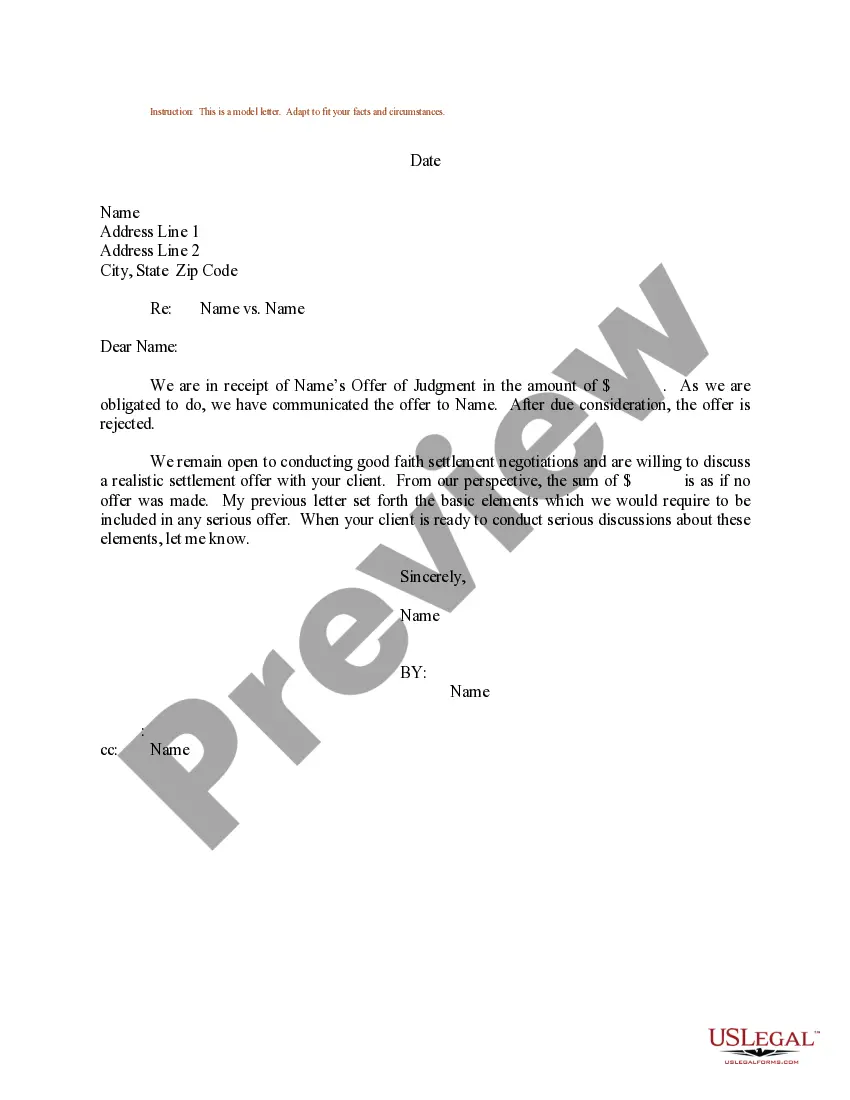
Get your form ready online
Our built-in tools help you complete, sign, share, and store your documents in one place.
Make edits, fill in missing information, and update formatting in US Legal Forms—just like you would in MS Word.
Download a copy, print it, send it by email, or mail it via USPS—whatever works best for your next step.
Sign and collect signatures with our SignNow integration. Send to multiple recipients, set reminders, and more. Go Premium to unlock E-Sign.
If this form requires notarization, complete it online through a secure video call—no need to meet a notary in person or wait for an appointment.
We protect your documents and personal data by following strict security and privacy standards.

Make edits, fill in missing information, and update formatting in US Legal Forms—just like you would in MS Word.

Download a copy, print it, send it by email, or mail it via USPS—whatever works best for your next step.

Sign and collect signatures with our SignNow integration. Send to multiple recipients, set reminders, and more. Go Premium to unlock E-Sign.

If this form requires notarization, complete it online through a secure video call—no need to meet a notary in person or wait for an appointment.

We protect your documents and personal data by following strict security and privacy standards.
Looking for another form?
Form popularity
FAQ
A small claims lawsuit is a voluntary and simplified procedure. Small claims court may only decide lawsuits in which the plaintiff's claims are not more than $3,500 and the defendant's counterclaims are not more than $3,500, not counting interest and costs.
Every county in Arizona has at least two justice courts. The justice courts have exclusive authority to hear cases in which the amount in controversy is $10,000 or less. Cases in which the amount in controversy is greater than $10,000 must be filed in the superior court.
Exclusive of interest and costs, a small claims lawsuit cannot have a claim amount for more than $3,500. If you wish to file a lawsuit for an amount over $3,500, but less than $10,000, you may file a civil lawsuit in the justice court.
Conclusion: Going to small claims court may be worth it for $500, but it will determine how you weigh your costs versus benefits. At a minimum, it is worth it to send a demand letter.
A small claims lawsuit is a claim against another party for damages of an amount less than $3,500.00. These lawsuits are designed to resolve civil disputes in front of a small claims hearing officer or a Justice of the Peace.
1. Your Mandatory Settlement Conference (MSC) Brief begins with a factual background This may serve to introduce the family. Highlight important background details. Existing temporary orders are briefly summarized. Special problems should be brought to the court's attention and a solution proposed.
If the court conducts a settlement conference, each party must submit, but not file, a settlement conference memorandum to the court no later than 5 days before the settlement conference. Unless the court orders otherwise, settlement conference memoranda must be served on every other party.
Felony Settlement Conference (FSC): An FSC. takes place before the preliminary hearing. It is an informal discussion between the prosecution and the defense attor- neys in front of the judge in which they exchange infor- mation and try to negotiate a resolution to the case. This hearing may occur several times.
A settlement conference is a pre-trial meeting between parties with their attorneys (if parties are represented) and a judicial officer/judge pro tempore acting as a neutral facilitator, who evaluates the strengths and weaknesses of their case and assists them in reaching agreement.
Settlement Conferences as a Method of Alternative Dispute Resolution in Arizona. A settlement conference is like a mediation, but with the use of a third-party appointed by the Court. This third party is typically a judge, but could be, in some jurisdictions, another legal professional.

