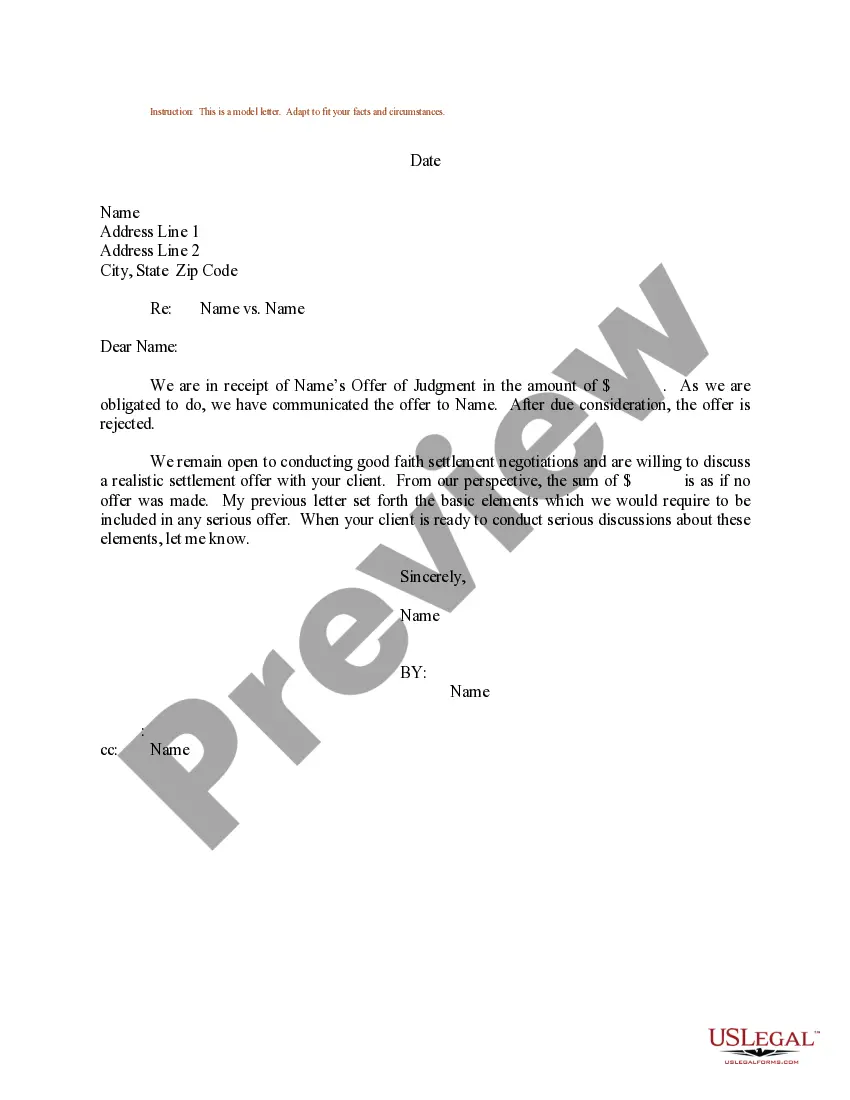
Settlement Offer Rejection Letter Sample Without Prejudice In Fulton
Description


Get your form ready online
Our built-in tools help you complete, sign, share, and store your documents in one place.
Make edits, fill in missing information, and update formatting in US Legal Forms—just like you would in MS Word.
Download a copy, print it, send it by email, or mail it via USPS—whatever works best for your next step.
Sign and collect signatures with our SignNow integration. Send to multiple recipients, set reminders, and more. Go Premium to unlock E-Sign.
If this form requires notarization, complete it online through a secure video call—no need to meet a notary in person or wait for an appointment.
We protect your documents and personal data by following strict security and privacy standards.

Make edits, fill in missing information, and update formatting in US Legal Forms—just like you would in MS Word.

Download a copy, print it, send it by email, or mail it via USPS—whatever works best for your next step.

Sign and collect signatures with our SignNow integration. Send to multiple recipients, set reminders, and more. Go Premium to unlock E-Sign.

If this form requires notarization, complete it online through a secure video call—no need to meet a notary in person or wait for an appointment.

We protect your documents and personal data by following strict security and privacy standards.
Looking for another form?




Form popularity
FAQ
“Without Prejudice” is a legal term used to indicate that statements, negotiations, or documents cannot be used as evidence in court if settlement discussions fail. It encourages open communication between parties to resolve disputes without fear of prejudicing their legal position.
Possible Legal Action: If negotiations don't yield a satisfactory offer, a lawsuit may become necessary, requiring additional time and resources. Risk of Lower Final Settlement: In some cases, litigation may lead to a settlement lower than the initial offer, depending on the court's decision.
Additionally, the prosecutor is likely to dismiss the charges “without prejudice.” That means that they could re-file the charges within a certain period of time. This may happen if there is not enough evidence or the prosecutor believes doing so is in the interest of justice.
Communications marked as 'without prejudice' cannot be used by the other party as evidence in court. This means that parties can speak openly about the matters in dispute without the risk of the other party using that information against them later.
If you choose to reject the low settlement offer, you must communicate your decision to the claims adjuster. Your legal representative can help you write a letter that states your intentions. Within the letter, you can indicate that you reject the offer and highlight why you deserve a higher settlement amount.
If you disagree with the offer, you can decline it. However, rejecting a settlement offer isn't as simple as saying, “Sorry, I won't accept it.” Instead, before rejecting a settlement offer, it's important to think through this decision.
How Should I Respond to a Low Settlement Offer? Try to remain calm and examine the offer. After receiving a low settlement offer, the most important thing to do is to stay calm. Provide a formal, written response. Formulate your counteroffer. Settle after you've recovered.
'Without Prejudice' allows both parties to be transparent in negotiations without fear of exposure in Court. It's important for parties to know that they can be honest and provide confidential information without the opposing side using this information against them down the track.
This letter should clearly state the reasons for rejecting the offer, such as it not providing maximum compensation for the damages incurred. Provide specific reasons for your rejection, highlighting the damages and losses not covered by the proposed settlement.
A case dismissed with prejudice is over and done with, once and for all, and can't be brought back to court. A case dismissed without prejudice means the opposite. It's not dismissed forever. The person whose case it is can try again.

